What does robot downtime actually cost you?
A robot that's down isn't just a broken machine — it's the shift it was covering, done some other, more expensive way. Here's how to think about the real cost of robot downtime, and what to check before you buy.
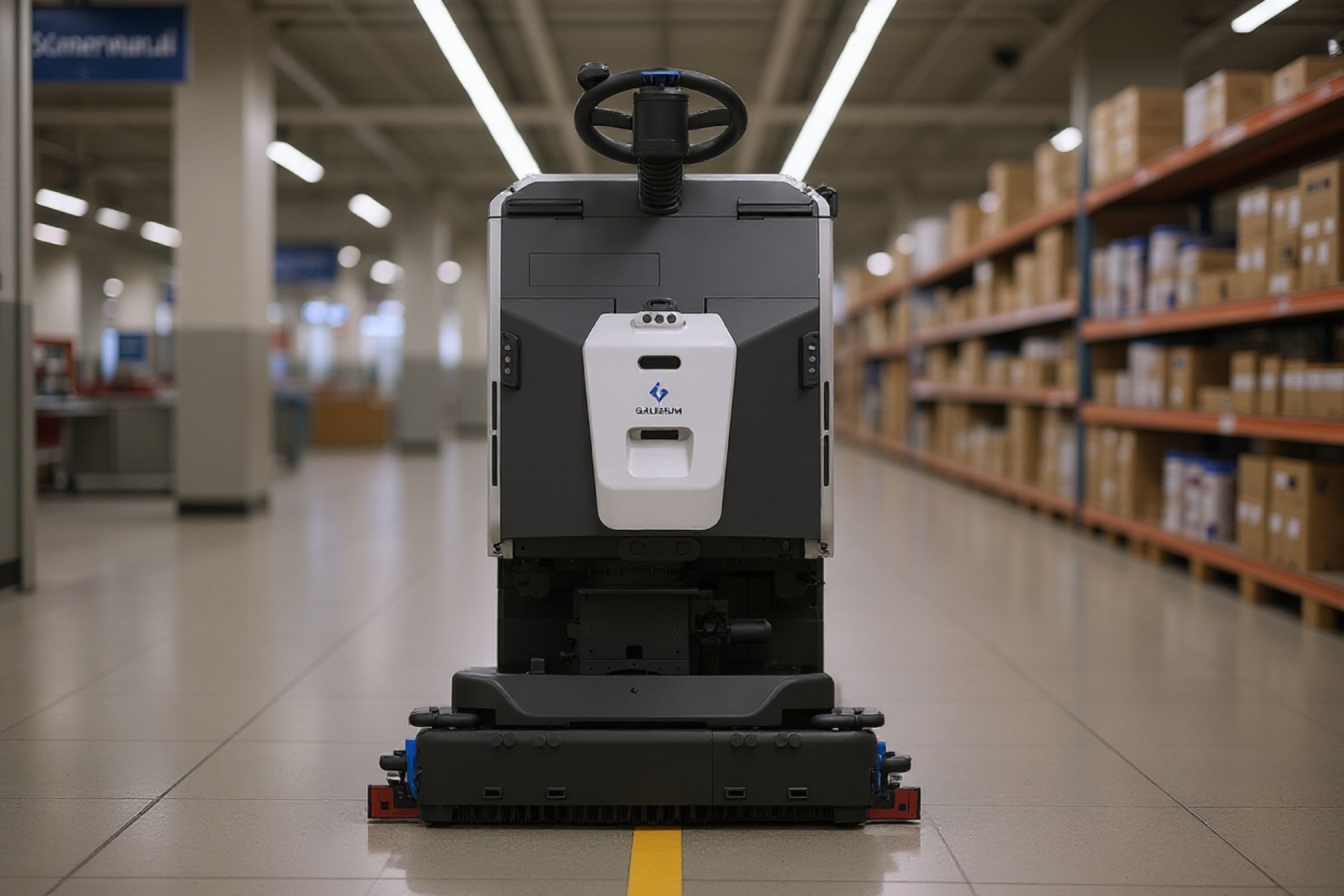
Most robot buyers price the robot. Almost none price the day it breaks.
That's the gap this post fills. Our ROI and payback post covers whether a robot is worth buying in the first place — the investment question. This one covers a narrower, sharper question: what actually happens, and what it actually costs, when the robot you already bought stops working.
Downtime isn't the robot cost — it's the labor cost that comes back
A working robot replaces a shift of labor. A broken robot doesn't remove that labor need — it just hands it back to you, usually on short notice, usually at a worse rate than what you were paying before you had a robot.
That's the real math of downtime: it's not the cost of the machine sitting idle. It's the cost of covering the work it was doing, some other way, while it's out.
- Overtime or temp labor to cover the shift the robot was running.
- The work simply not getting done — a floor that doesn't get cleaned, a delivery that doesn't run, a site that goes unwatched for a night.
- Lost proof of service — for cleaning contracts especially, a skipped run is a skipped log entry, which is a harder conversation with the client who's paying for consistent coverage.
One widely cited industry comparison in the cleaning-robot space (published by RobotLAB, a competing robot reseller, as part of their own cost math) puts a robot's daily operating cost near $27 against roughly $144 for an eight-hour human shift. Take that as directional, not a number to build your budget on — but it shows the shape of the problem: the entire case for a robot rests on it actually running. A robot priced at a fraction of a shift's labor stops being a bargain the moment it's down and you're back to paying the $144.
The three things that actually determine your downtime cost
Not every failure costs the same. Three things decide how bad a given breakdown actually is for you.
- How fast someone can tell what's wrong. A robot that won't move could be a dead battery, a jammed brush, a software fault, or a real hardware failure — and those have wildly different fixes. Without remote diagnostics, every failure defaults to "wait for a technician to show up and look at it," which turns a five-minute fix into a multi-day one.
- How far the nearest technician is. If your service provider's nearest tech is a plane ride away, a same-day fix is not physically possible. Distance to the fix is often the single biggest driver of how many days you lose.
- Whether there's a backup unit. A single-robot operation with no spare has zero redundancy — one fault takes the whole job offline. A rental model that keeps a backup unit on hand turns "your robot is broken" into "we swapped it," which is a same-day event instead of a week-long one.
None of these show up on a spec sheet. They only show up in how the service is actually built — which is exactly what a lot of buyers skip evaluating until the first breakdown.
Why this bites hardest on a purchase, not a rental
If you own the robot outright, downtime is entirely your problem to solve: your call to the OEM, your wait for a part, your decision about temp labor while it's out. If the OEM's US service footprint is thin, "waiting for a technician" can mean waiting for someone to fly in.
That's the case for renting the robot as a service instead of buying it. We own the maintenance, repairs, and a backup unit as part of every deployment — we keep backups on hand, and if a robot goes down, we swap it so you keep working instead of waiting. The downtime risk moves off your books and onto ours, which is the whole point of paying monthly instead of owning the machine.
See RaaS vs. buying: the real total cost for how that plays out across a robot's full life, not just the bad days.
What to ask before you buy — the downtime checklist
Before you sign for any commercial robot, get straight answers on these:
- What's the remote-diagnosis capability? Can a technician tell what's wrong without a truck roll?
- What's the actual on-site response time, not the marketing number — and does it change based on where you are?
- Is there a backup or loaner unit, or are you down until the original is fixed?
- Who owns the fix — you, coordinating between the OEM and a repair shop, or one accountable partner?
- What's covered vs. billed — parts, labor, and travel, spelled out before something breaks, not after.
How we handle it
We service every robot we deploy across all 50 US states, backed by 1,700+ service engineers in the US across 85+ metros with closest-hub dispatch. Same-day service in NY, LA, Chicago, DFW, the Bay Area, Boston, Atlanta, Houston, and Phoenix. 10-minute remote triage during business hours, 24-hour nationwide on-site dispatch, and 24/7 emergency response — plus a backup unit on rentals, so a fault is a swap, not a shutdown.
A broken robot is our problem, not your downtime. Get a free site assessment and we'll tell you, honestly, what service actually looks like for your site before you commit to anything.