Robots for senior living: the honest buyer guide
Delivery, floor-cleaning, and safety robots that run the repetitive trips and open floors — so caregivers spend their hours with residents, not carts.
Senior-living and assisted-care communities use three robot types: delivery robots that run meals, linens, mail, and supplies across a large floor plate; autonomous scrubbers that keep dining rooms and corridors clean; and safety/companion robots that support wellness checks and engagement. The bar is resident safety — quiet, predictable, fall-aware operation in an occupied community. Service Robot Co. picks the unit, finances it, deploys it to your protocol, and services it nationwide.
Pricing and specs on this page are publicly-reported market ranges, framed as estimates — not quotes. We confirm the real numbers for your site in an assessment.
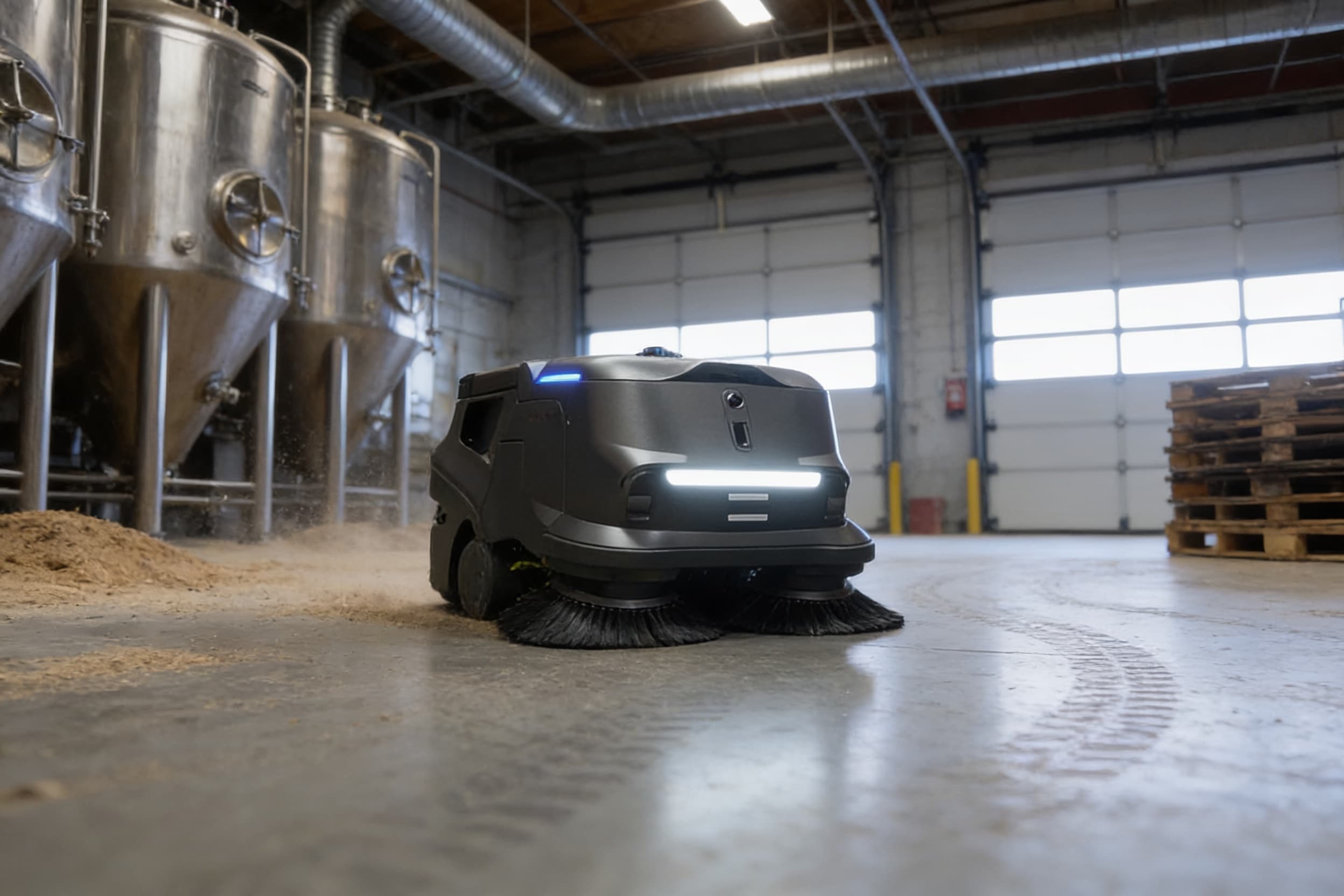
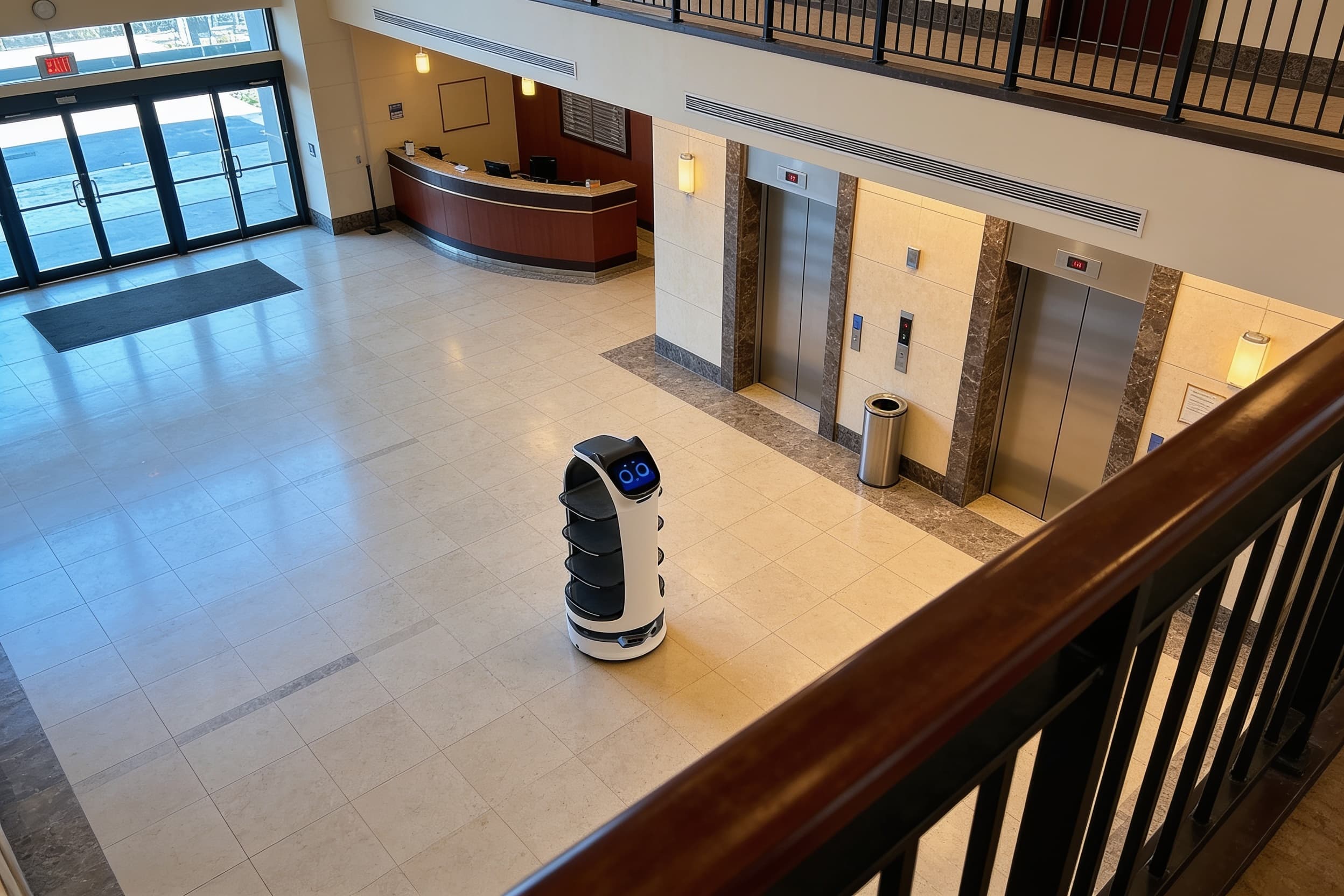
Industry photo — placeholder
Real robot mid-task on a working site for senior living, staff nearby — candid daylight, real site, de-branded
swap for real, de-branded media before deploy — design-language §8.3
What robots do in senior living
A senior-living community runs on care hours, and the constant problem is staffing those hours against a tight caregiver labor market. Robots take the repetitive, non-care trips back: a delivery robot runs meal trays from the kitchen to the dining room and to residents, plus linens, mail, and supplies across a large single-story or multi-floor plate; an autonomous scrubber keeps the dining room, corridors, and common areas clean; and safety or companion robots support wellness checks, reminders, and engagement between caregiver rounds.
What makes senior living different is the resident. The unit shares space with people who may use walkers and wheelchairs, who startle, and who move unpredictably — so quiet, slow, predictable, fall-aware behavior is the whole game. A robot that is reliable and unobtrusive around residents gives caregivers real hours back; one that is loud, fast, or erratic is a hazard. That makes the deployment and the resident-safety setup the deciding factors, not the spec sheet.
Coverage
Service nationwide.
Service nationwide. 3,000+ service engineers across all 50 US states, 85+ metros with closest-hub dispatch. 10-minute remote triage, 24-hour on-site dispatch, 24/7 emergency response.
All 50
US states covered
85+
metros with closest-hub dispatch
3,000+
service engineers in the US
Remote triage
10-minute remote triage during business hours
Nationwide dispatch
24-hour nationwide on-site dispatch
Emergency response
24/7 emergency response
What a senior-living community actually needs from a robot
A senior-living robot shares space with vulnerable residents, so the requirements are about safe, calm, predictable operation — not throughput.
- Resident-safe behavior — quiet, slow, predictable navigation that yields to residents, walkers, and wheelchairs and never startles. This is the single most important requirement.
- Fall-awareness and obstacle handling — reliable detection and a wide berth around people who may move unpredictably; the unit must never become a trip hazard.
- Multi-floor where needed — communities with multiple floors need secure elevator integration; a single-story plate needs a unit that covers a large footprint reliably.
- Dignity and engagement fit — a delivery or companion robot is part of residents’ daily environment; it should feel calm and helpful, not clinical or intrusive.
- A staff workflow that fits — caregivers load, charge, and oversee the unit between rounds; the deployment has to fit how the community actually runs, with a local owner for the basics.
Which robots fit senior living
The categories that earn their keep here, with the OEM units we see most — picked OEM-neutrally for your building.
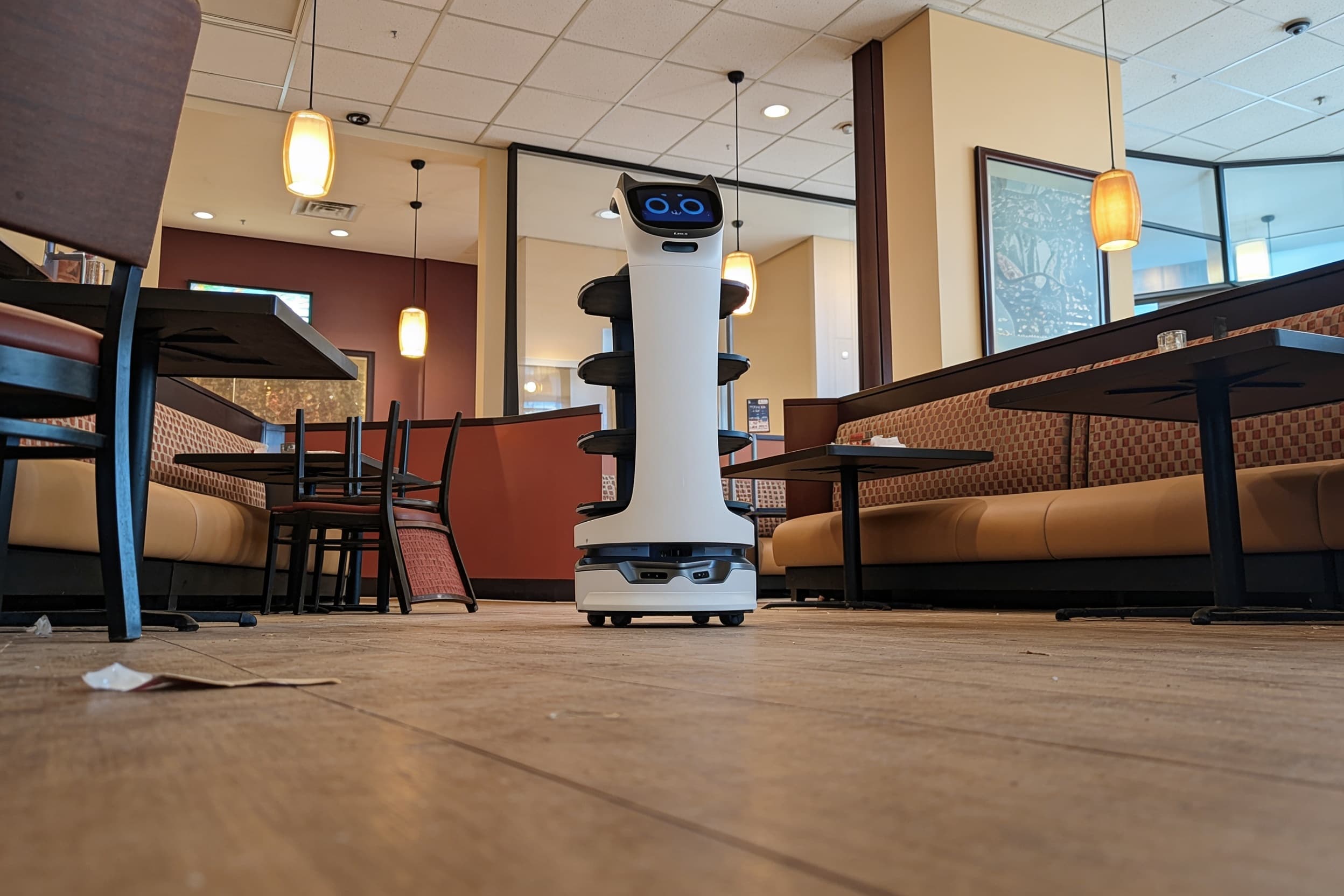
Delivery robots
Run meal trays, linens, mail, and supplies across a large floor plate so caregivers spend their hours with residents instead of pushing carts.
Representative OEMs: Pudu, Keenon, Bear Robotics, LG CLoi
Read the buyer guide →Cleaning robots (scrubbers)
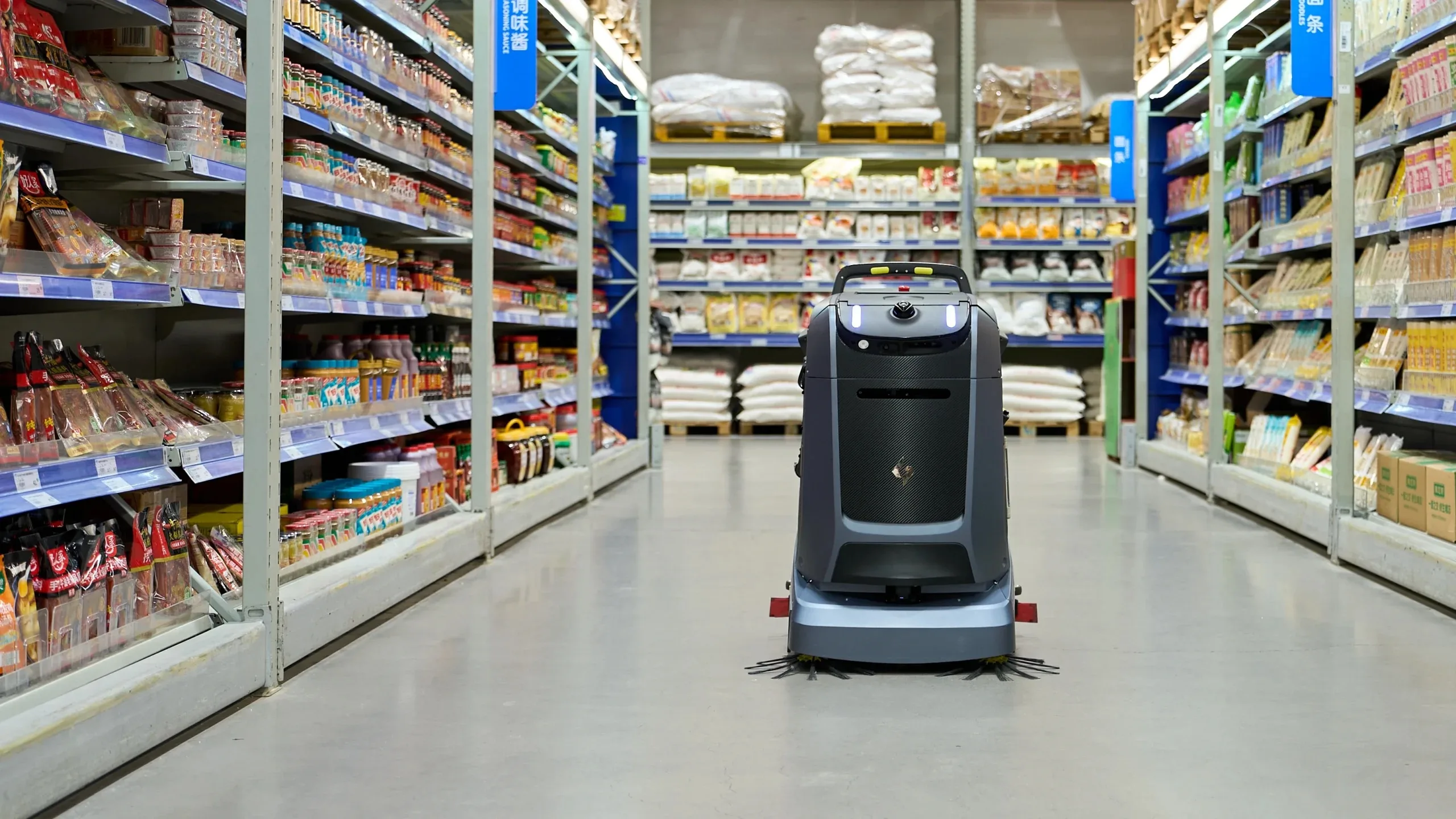
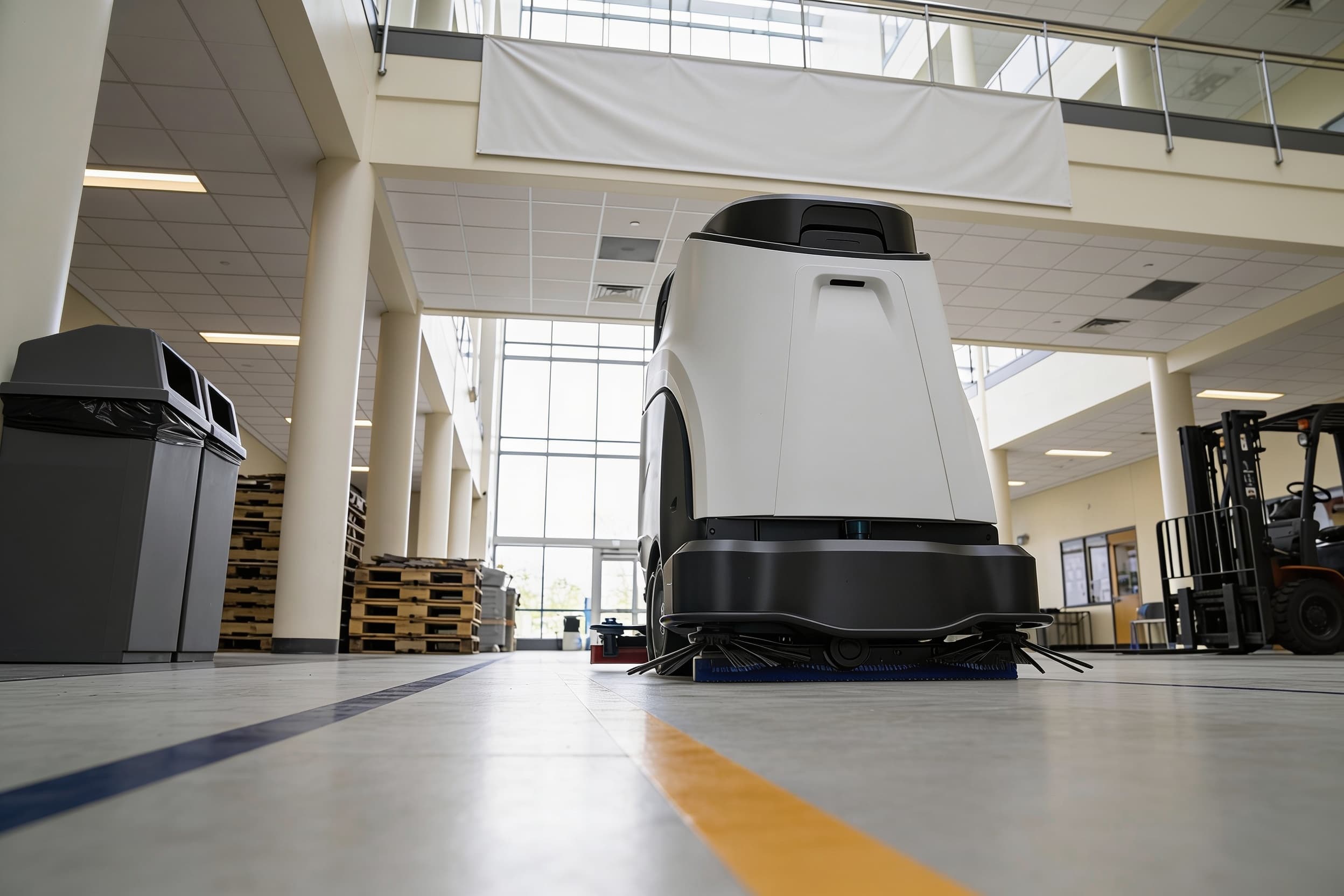
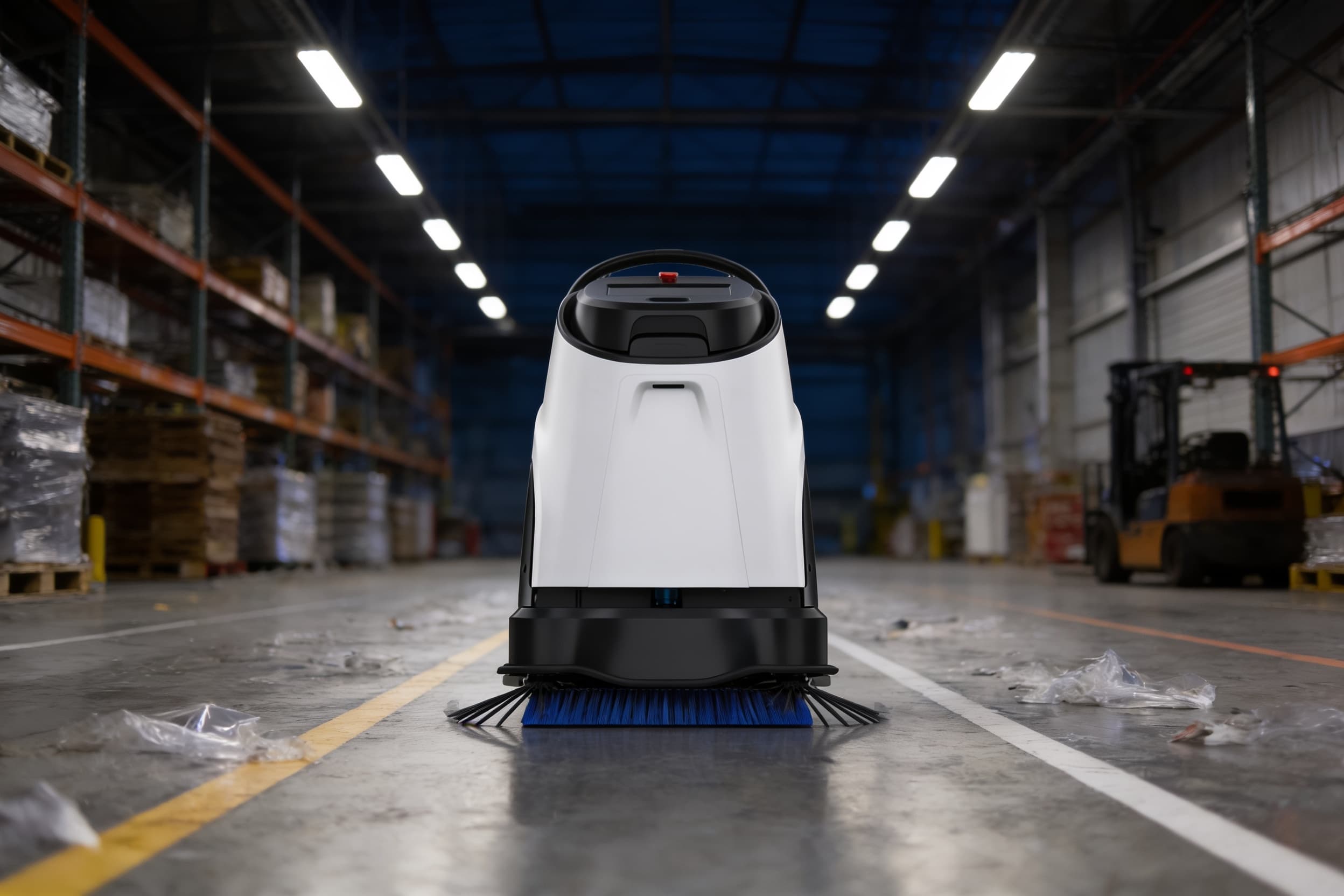
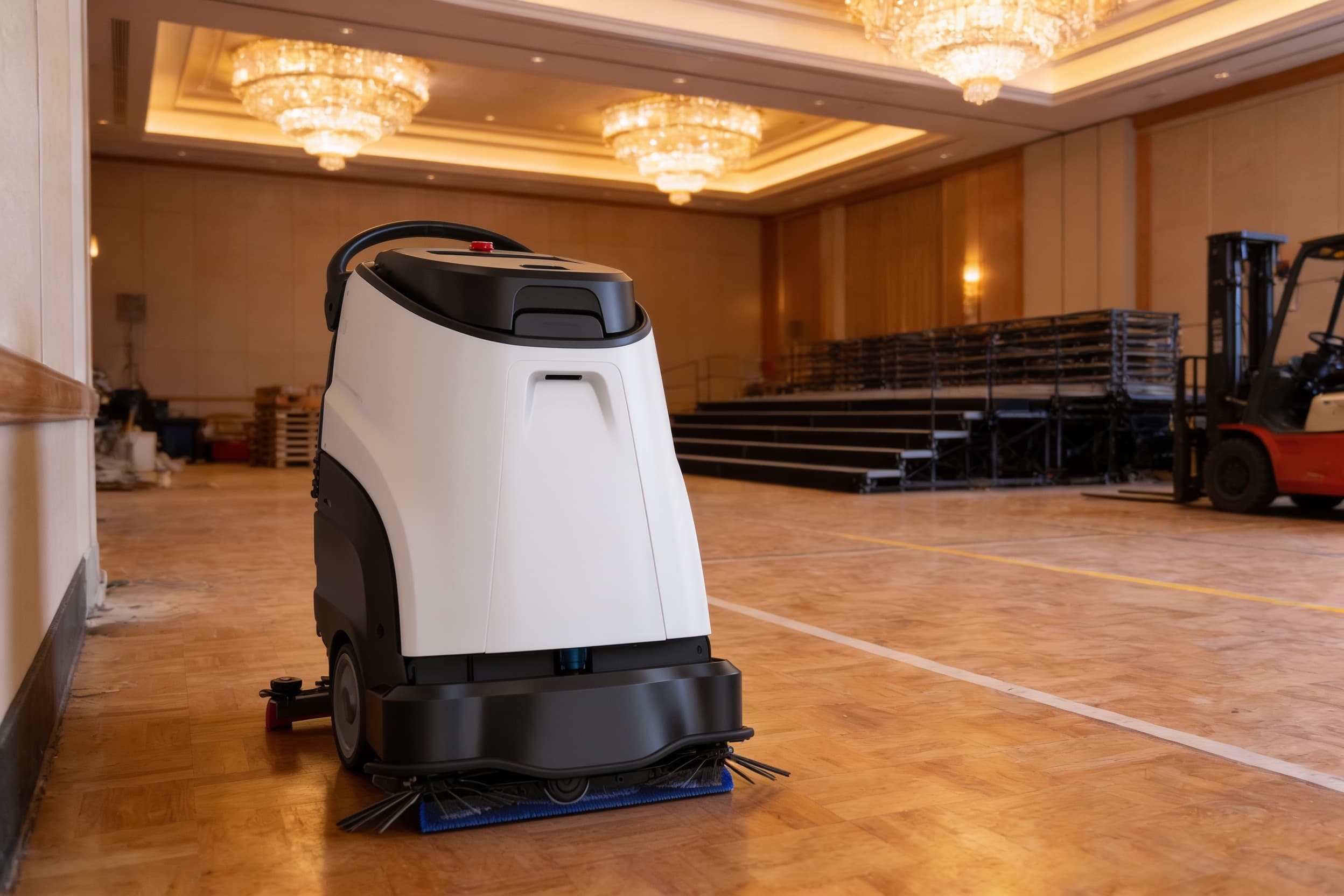
Scrub and vacuum dining rooms, corridors, and common areas on a schedule, so housekeeping spends its hours on resident rooms and detail.
Representative OEMs: Gausium Phantas, Pudu CC1, ICE Cobotics
Read the buyer guide →Safety / companion robots
Support wellness checks, reminders, and engagement between caregiver rounds — a supplement to staff, never a replacement for care.
Representative OEMs: Companion / telepresence units
In senior living, resident safety is the spec
Every other vertical optimizes a robot for throughput; senior living optimizes it for calm. The unit shares space with residents who may use mobility aids, who startle easily, and who move in ways a warehouse robot’s navigation was never tuned for. So the deciding requirements are quiet operation, slow and predictable motion, a wide berth around people, and reliable detection that yields rather than negotiates. A robot that is fast and efficient but unsettling in a resident corridor is the wrong robot, no matter how good its delivery numbers look.
This is why the deployment matters more here than almost anywhere. Speed and stop zones tuned to a community, not a loading dock; routes that avoid the most congested resident areas at the busiest times; staff trained on how the unit behaves; and a clear local owner for loading and charging. We treat resident safety as the spec for the install — and we will tell a community honestly when a space or a workflow is not ready for an autonomous unit.
Buy vs. RaaS for senior living
Senior-living operators favor Robotics-as-a-Service because care budgets do not absorb a fleet of machines easily and a robot that fails in a resident community cannot sit idle. RaaS folds the robot, the resident-safe deployment, the service, and a backup into one monthly fee — delivery units around ~$335–$550/month, scrubbers around ~$600–$2,000/month. A larger community or a multi-site operator with steady utilization may buy outright once a model is proven. We surface both, with the per-community math, in a quote.
Senior-living robots by job
The robot categories a senior-living community uses, with representative OEM units and illustrative pricing. Figures are publicly-reported market ranges, framed as "starting around" — not quotes.
| Job | Robot type | Representative OEMs | Illustrative cost |
|---|---|---|---|
| Meal / linen / supply delivery | Delivery robot | Pudu, Keenon, Bear Robotics, LG CLoi | ~$16k–$18k buy · ~$335–$550/mo RaaS |
| Dining-room & corridor cleaning | Autonomous scrubber-vac | Gausium Phantas, Pudu CC1, ICE Cobotics | ~$22k–$96k buy · ~$600–$2,000/mo RaaS |
| Wellness checks & engagement | Safety / companion robot | Companion / telepresence units | Quote-based — varies by program |
Illustrative only — publicly-reported ranges, not quotes. Exact pricing depends on configuration, term, community size, and the resident-safety work your site requires. We confirm the real number for your community in a quote; we do not publish any OEM’s exact contract price as a fact.
The labor case for senior-living robots (illustrative)
The payback in senior living is caregiver hours given back to residents — the work the community exists for. A delivery robot on RaaS (~$335–$550/month) absorbs the meal, linen, and supply runs so caregivers stay with residents; an autonomous scrubber on RaaS (~$600–$900/month for a mid-size unit) runs roughly 4–6× cheaper than a full-time overnight cleaner (~$3,500–$4,500/month all-in) on the open-floor portion of dining rooms and corridors.
The honest framing: a robot never replaces care or a caregiver — it takes the non-care trips and the open floor so the human hours go where they matter. Companion robots supplement engagement between rounds; they are not a substitute for human contact. We build the per-community side-by-side in a quote.
- Delivery robot on RaaS: ~$335–$550 / month — illustrative.
- Mid-size scrubber on RaaS: ~$600–$900 / month — illustrative.
- Full-time overnight cleaner (all-in): ~$3,500–$4,500 / month — illustrative.
- Robots take non-care work; they never replace caregivers or human contact.
- These are illustrative ranges with stated assumptions, not a guaranteed result.
When a senior-living robot is the wrong call
A senior-living robot is the wrong fit when the community or the workflow is not ready:
- Corridors too narrow or congested for a unit to keep a safe, wide berth around residents and mobility aids — resident safety comes first.
- A small community with short runs — a caregiver is faster than a robot navigating the gap, with less risk.
- Multiple floors with no elevator that supports secure integration where the work genuinely needs them.
- A team or culture not ready to fold an autonomous unit into resident space — the resident experience has to come first, honestly assessed.
- No local owner for loading, charging, and the daily basics — even a serviced robot needs a local hand.
Why a senior-living operator should buy through an integrator, not a bare OEM
A robot OEM ships a community a machine and a login. Tuning it for resident safety, financing it, mapping resident-safe routes, training caregivers, and fixing it fast when it fails is left to a care team that is already short-staffed — and the consequences of getting resident-safety setup wrong are not the same as a dropped plate in a restaurant.
Service Robot Co. is the one vendor for all five, and OEM-neutral about which unit. We pick the right senior-living robot, surface buy-vs-RaaS financing, deploy it tuned for resident safety, integrate the elevator where needed, train your caregivers, and service it through a US engineer network with a backup ready. You get a resident-safe, working deployment — and an honest answer when a space is not ready for one.
Common questions
- What robots do senior-living communities use?
- Senior-living and assisted-care communities use three main robot types: delivery robots that run meals, linens, mail, and supplies across a large floor plate (e.g. Pudu, Keenon, Bear Robotics, LG CLoi); autonomous scrubbers that keep dining rooms and corridors clean (e.g. Gausium, Pudu, ICE Cobotics); and safety/companion robots that support wellness checks and engagement between rounds. The bar throughout is resident safety.
- Are robots safe to use around elderly residents?
- They have to be — resident safety is the whole spec in senior living. The right unit runs quiet, slow, and predictable, keeps a wide berth around residents, walkers, and wheelchairs, and yields rather than negotiates. That is set in the deployment (speed and stop zones tuned to the community, routes that avoid congested areas at busy times, staff training), not just the robot. We will tell a community honestly when a space is not ready for an autonomous unit.
- Do senior-living robots replace caregivers?
- No. A robot takes the non-care trips — meals, linens, supplies — and the open-floor cleaning so caregivers spend their hours with residents. Companion robots supplement engagement between rounds; they are not a substitute for human contact or care. The point is to give caregiver hours back to residents, not to thin the care team.
- How much do senior-living robots cost?
- Delivery robots run roughly $16k–$18k to buy or ~$335–$550/month on RaaS; autonomous scrubbers run roughly $22k–$96k to buy or ~$600–$2,000/month on RaaS; companion-robot pricing is quote-based and varies by program. These are illustrative market ranges, not quotes — community size and the resident-safety work affect the real number, which we confirm in a quote.
- Can a senior-living operator rent robots instead of buying?
- Yes, and most do. On Robotics-as-a-Service the capital stays free, the resident-safe deployment and service are folded in, and the downtime risk sits with the vendor with a backup ready. A larger community or multi-site operator with steady utilization may buy outright once a model is proven. We surface both, with the per-community math, in a quote.
Go deeper
Other industries
Start with a free site assessment.
We walk your site, learn the job, and tell you which unit fits — OEM-neutrally — before you commit a dollar. If nothing fits yet, we say so.