Skip to content

Hospital robots · buyer guide

Nurses with patients, not carts.

Delivery, UV disinfection, and floor-cleaning robots that give clinical staff their hours back — matched to your safety standards, infection-control protocol, and corridors.

All 50
US states served
85+
metros, closest-hub dispatch
<10 min
24/7 tech support
24/7
emergency response
No. 01Your world

Hospitals use three robot types: delivery robots that move medications, lab specimens, linens, and meal trays between wards; disinfection robots (UV-C or spray) for terminal cleaning and infection control; and autonomous scrubbers that keep long corridors clean. The buyer concern is safety and compliance — ANSI/RIA R15.08 and ISO 3691-4 govern mobile-robot operation around people. Service Robot Co. picks the right unit, finances it, deploys it to your protocol, and services it nationwide.

Clinical staff lose hours every shift to walking: specimens to the lab, supplies from central stores, meal trays, a floor scrubber to chase. Three robot categories take that work back. Enclosed delivery robots carry medications, lab samples, linens, and trays point-to-point; disinfection robots handle terminal cleaning and infection control; autonomous scrubbers keep the long corridors clean. What makes a hospital different is the constraints: a sanitation-sensitive, occupied, 24/7 building, elevator integration across floors, and the mobile-robot safety standards the whole deployment has to meet. Get those right and clinical staff get real hours back. Get them wrong and you own an expensive cart in a closet.

Pricing and specs on this page are publicly-reported market ranges, framed as estimates, not quotes. We confirm the real numbers for your site in an assessment.

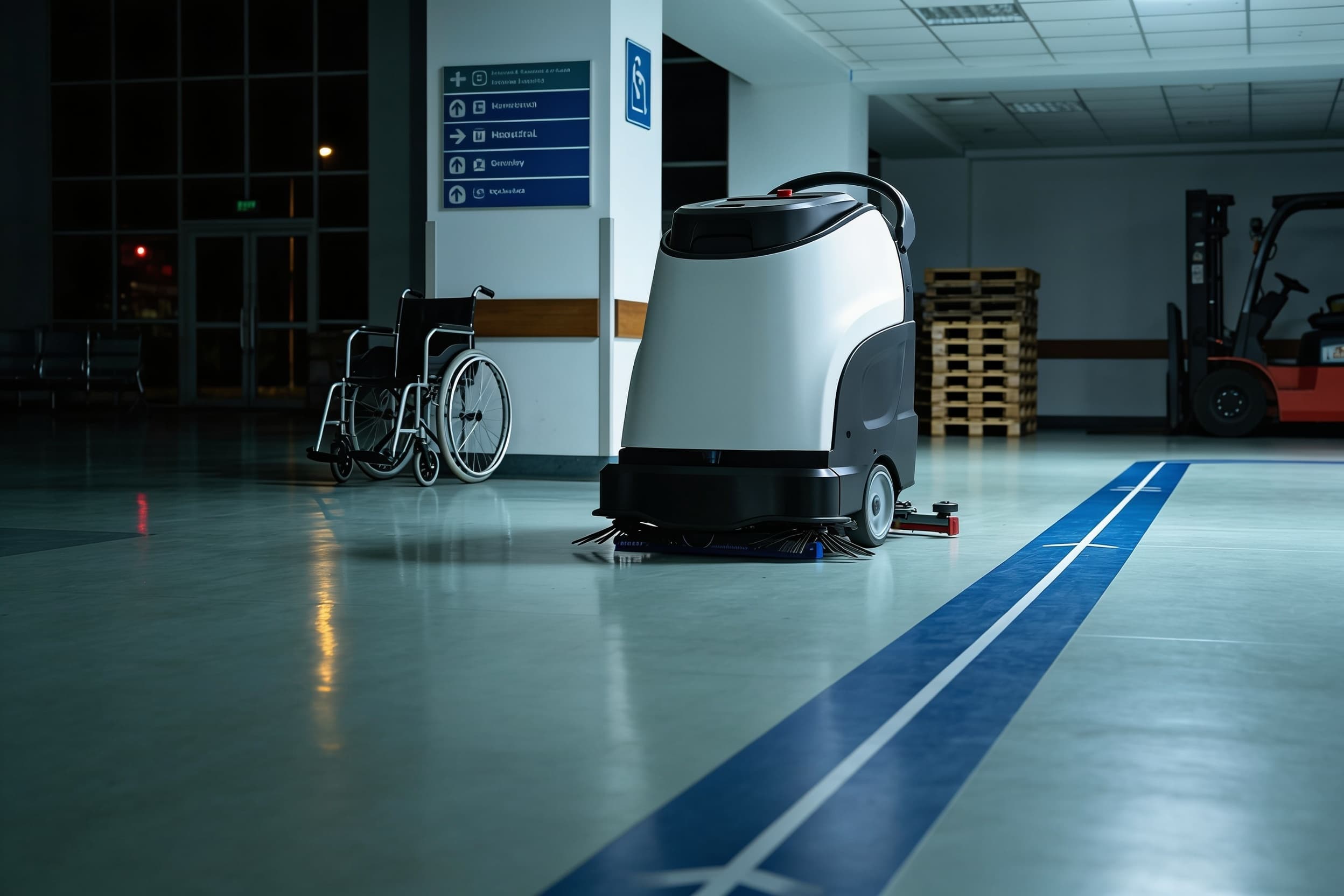
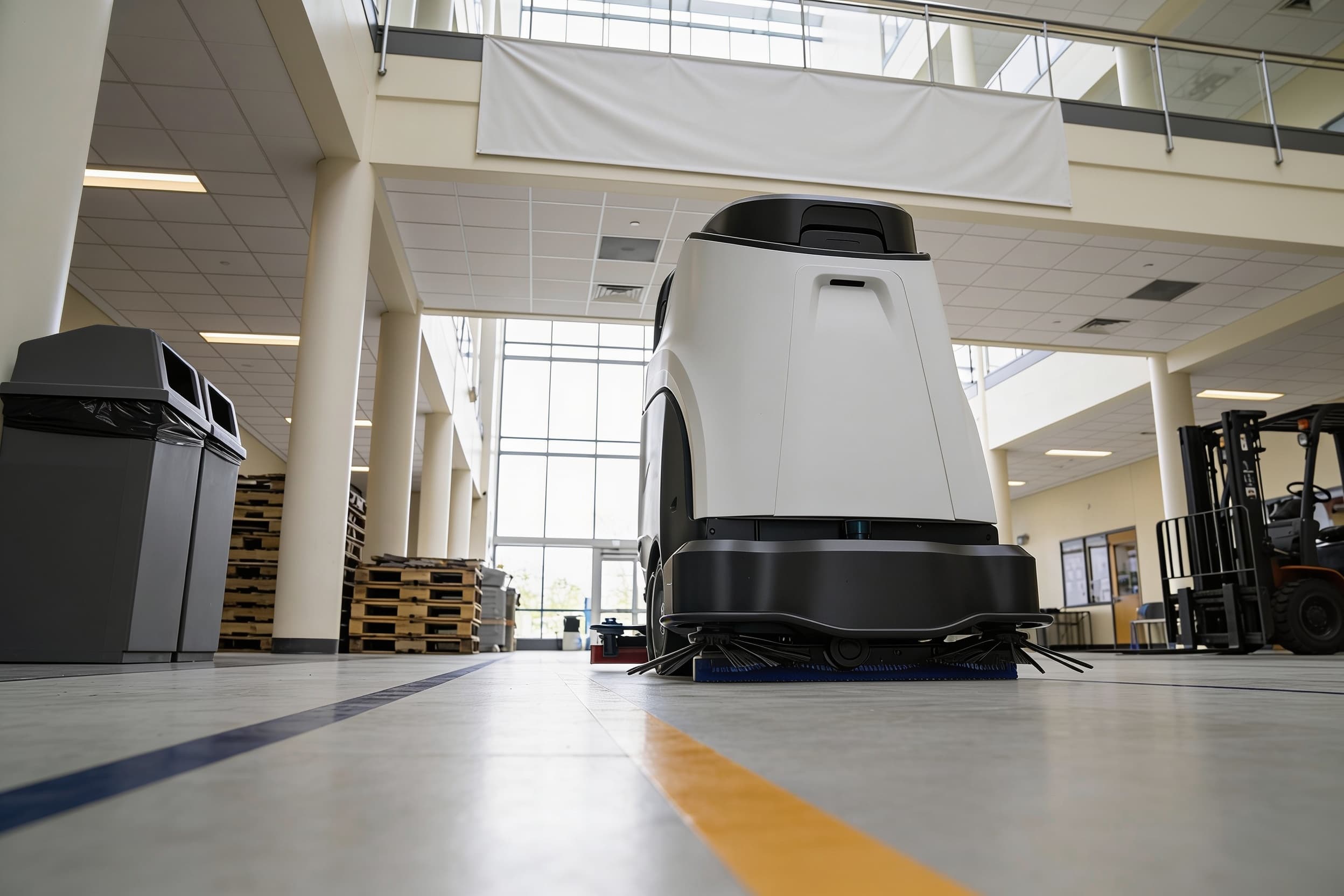
An autonomous floor scrubber working a hospital corridor
Hospital corridor
No. 02The shift

A shift in your hospital

A hospital day is a chain of repetitive trips. Here is where a robot quietly takes each one.

  1. Stage 01

    Morning med pass

    Medications and lab specimens start moving between wards and the lab.

    What the robot takes

    An enclosed delivery robot runs the loop with a locked, logged carrier.

  2. Stage 02

    Supply runs

    Techs walk central-supply items and linens to the floors, trip after trip.

    What the robot takes

    The delivery robot takes the point-to-point runs, riding the elevator where the building allows.

  3. Stage 03

    Meal service

    Trays travel from the kitchen to wards on a tight schedule.

    What the robot takes

    Tray runs ride the robot so staff stay on the floor.

  4. Stage 04

    Room turnover

    Discharged rooms need terminal cleaning before the next patient.

    What the robot takes

    Disinfection robots run the protocol after EVS finishes the room.

  5. Stage 05

    Overnight corridors

    Long corridors need scrubbing in a building that never closes.

    What the robot takes

    A scrubber covers the open floor without a person behind it all night.

Field notes

Cited industry data · no house numbers

$21B

The commercial cleaning-robot market by 2030, tripling on ~24% annual growth.

Grand View Research, 2024

45-55%

Labor share of a commercial cleaning contract.

Level CFO benchmark, 2026

50%+

Two in five cleaning contractors run annual staff turnover above fifty percent.

Cleaning industry survey, 2026

No. 03The crew

The crew that works here.

Each one rented, deployed, serviced, and backed up by us.

See the lineup
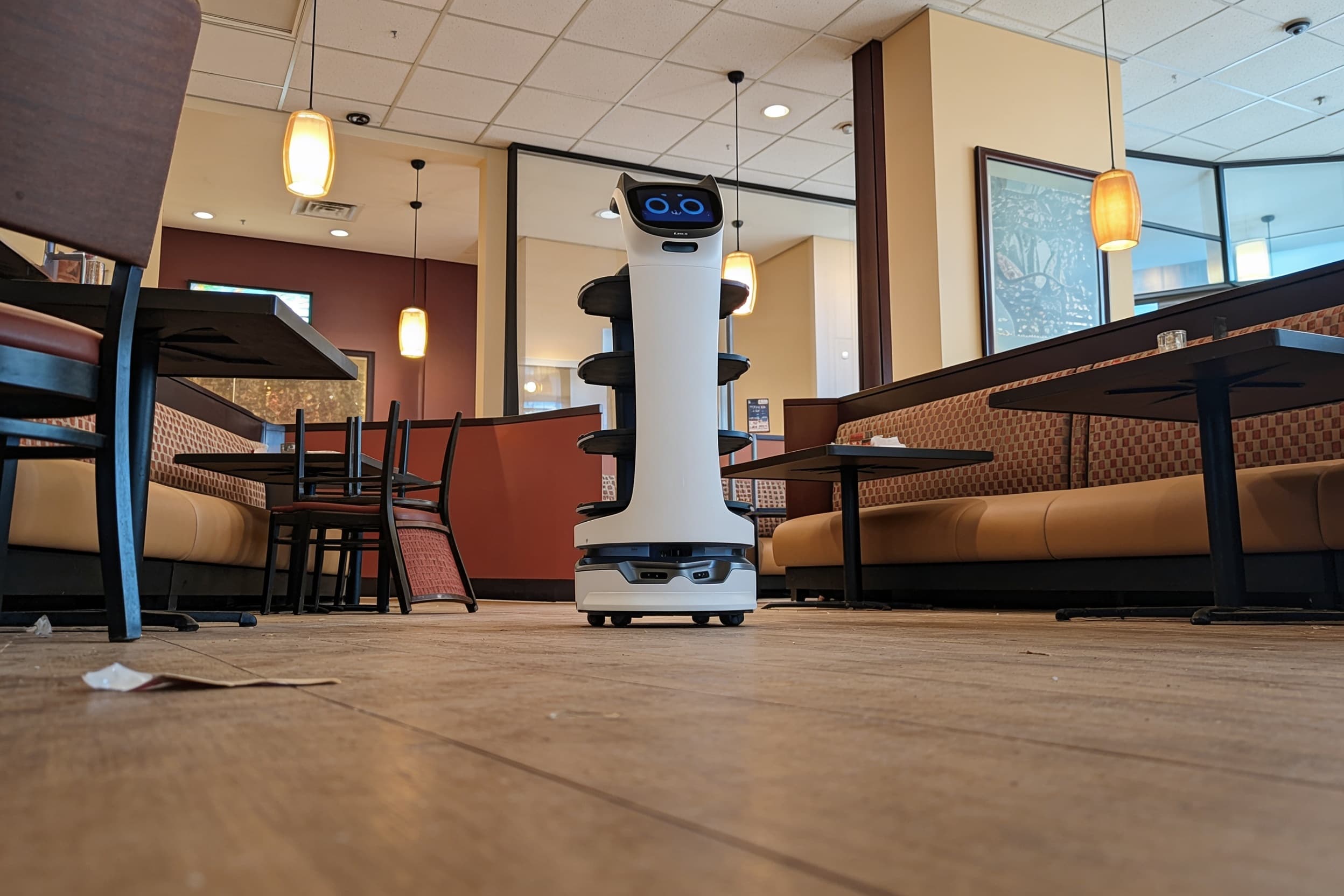
  1. A delivery robot serving tables in a busy restaurant dining roomDelivery robotsAutonomous indoor delivery for restaurants, hotels, hospitals, and offices.
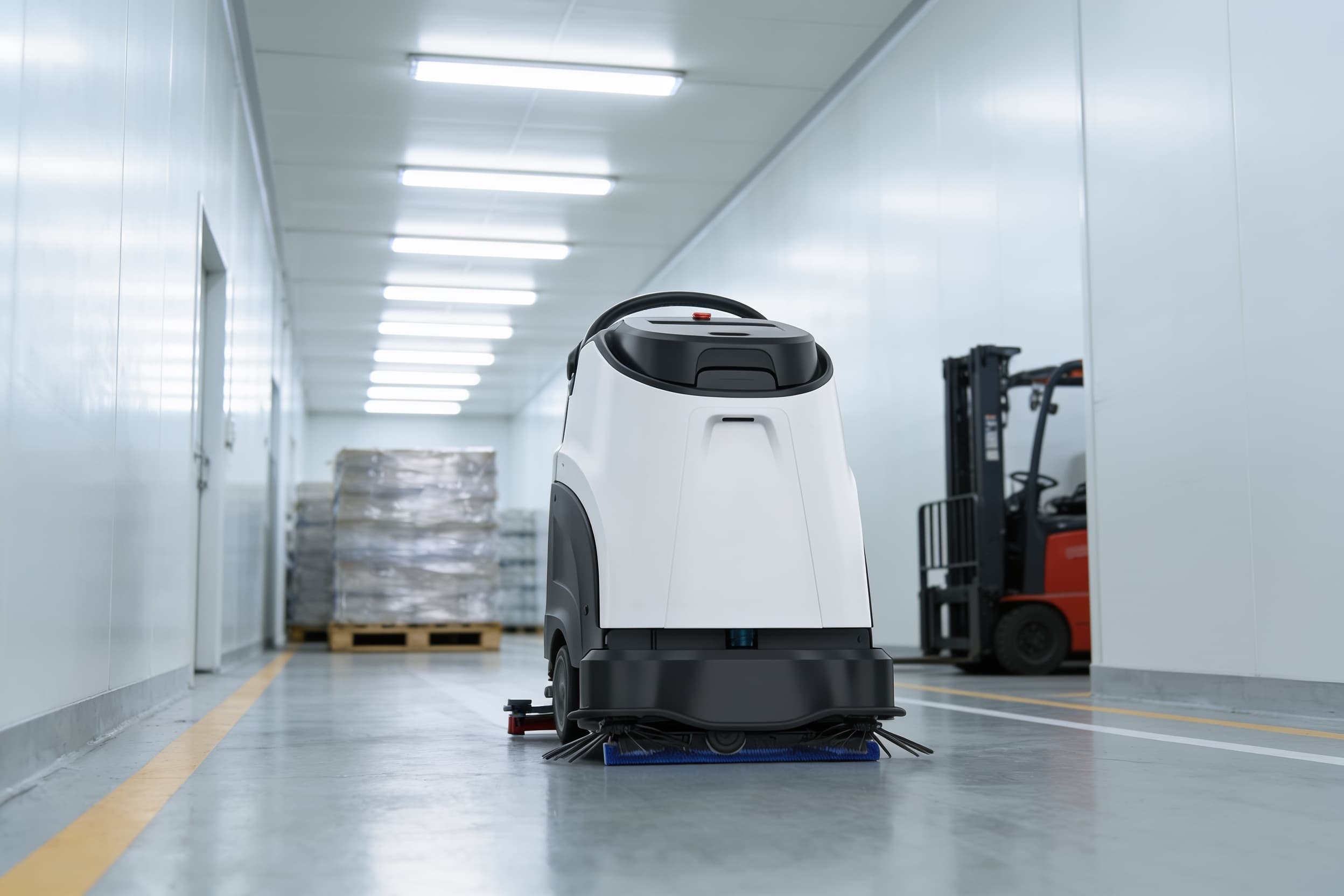
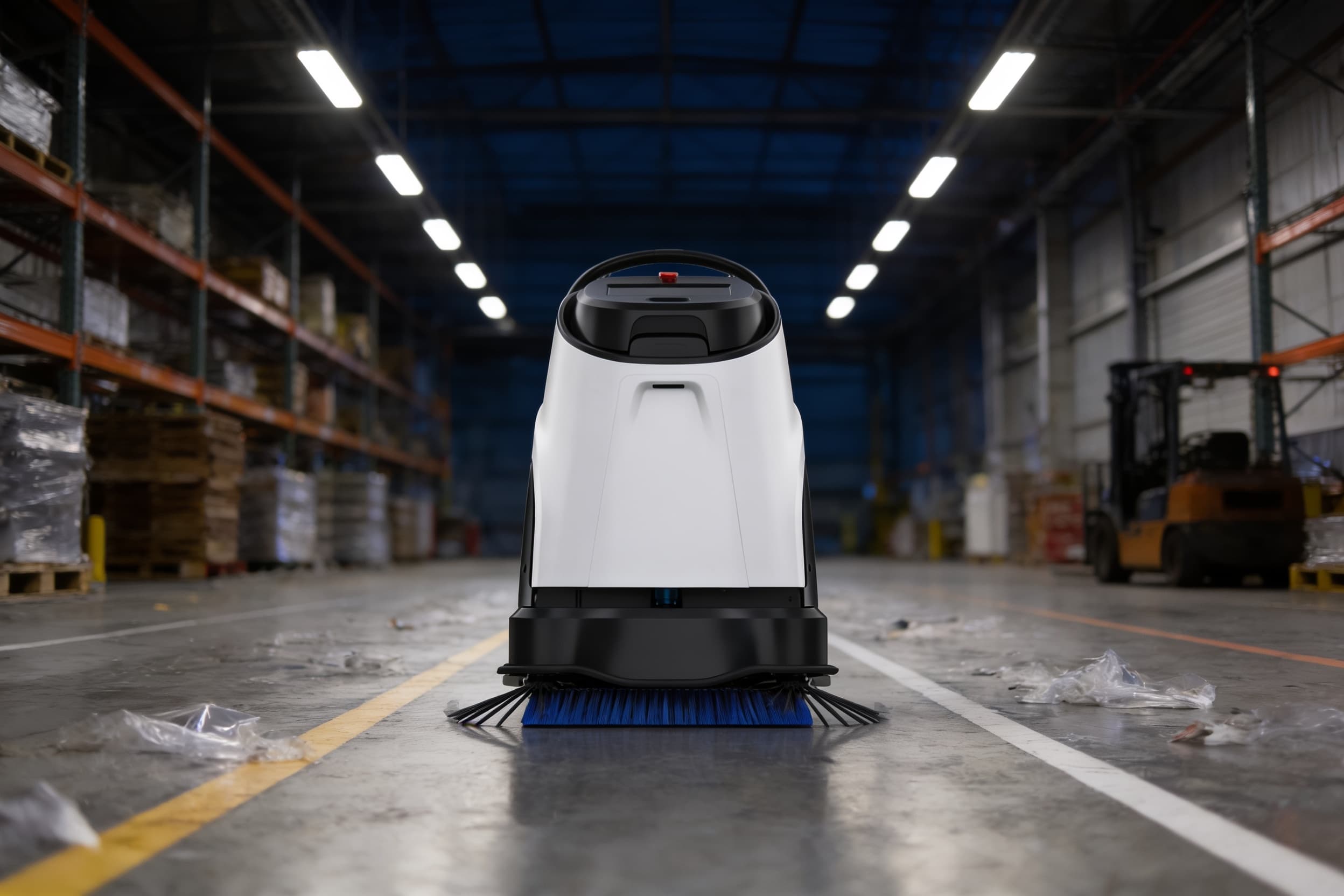
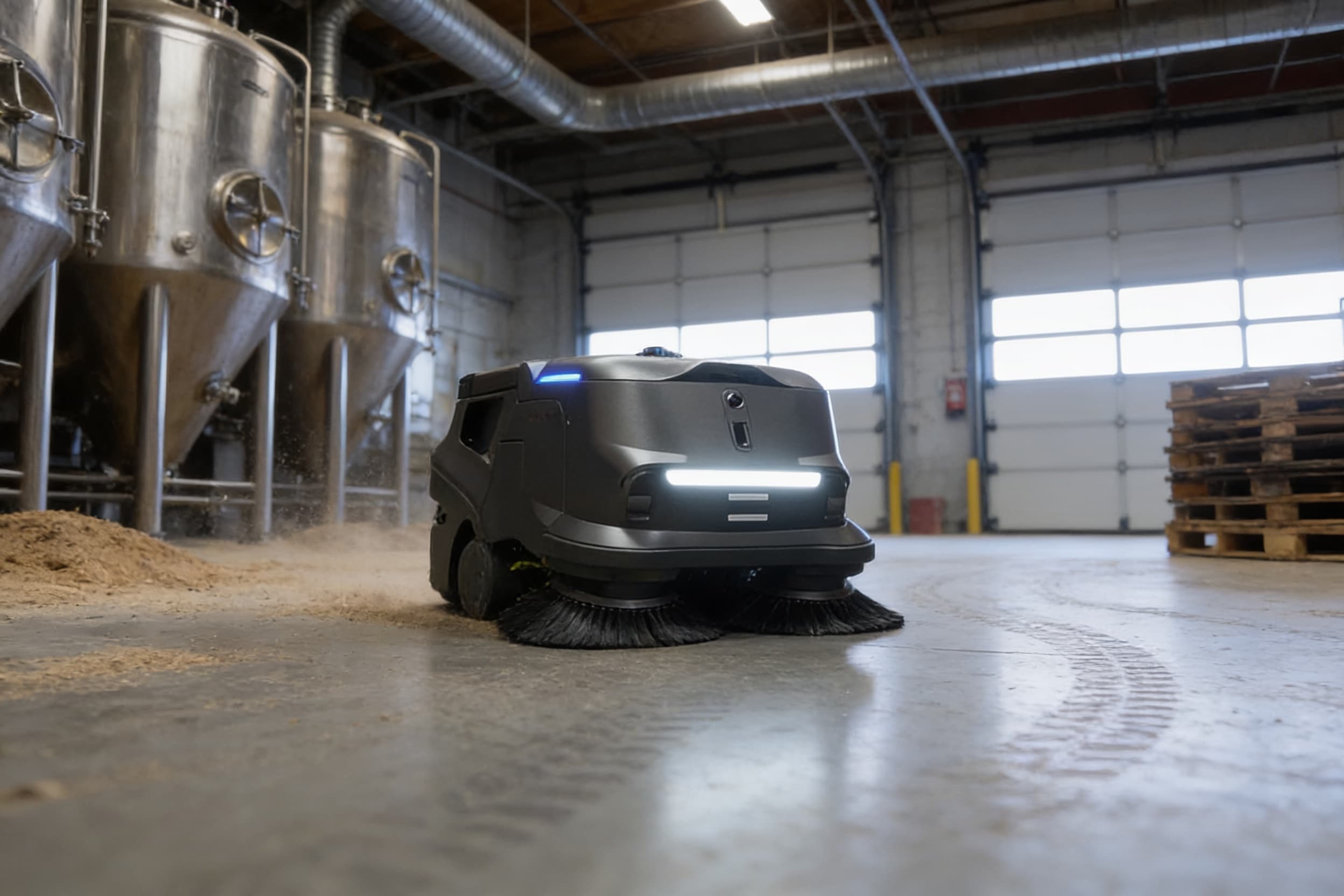
  2. An autonomous floor-scrubbing robot cleaning a warehouse floorCleaning robotsAutonomous floor scrubbers and vacuums for large commercial spaces.
  3. And moreThe full lineup, from scrubbers to humanoids, every one serviced nationwide.
No. 04The site survey

What decides whether it works.

The things we check on a walkthrough, before anyone talks about robots.

  1. 01
    A cleaning robot working a hospital corridor

    The corridors

    Beds, carts, visitors, and staff share them around the clock. The robot has to hold a route without ever blocking egress.

  2. 02
    A compact cleaning robot working a cafeteria dining floor after the lunch rush

    The cafeteria and dining floors

    Meal service turns the cafeteria over three times a day. A compact unit resets the dining floor between waves without pulling EVS off the wards.

  3. 03
    A compact cleaning robot working a lobby floor before the morning shift

    The pre-dawn window

    The atrium and public floors get their pass before the morning shift arrives. The window is short, and the route has to finish inside it every night.

No. 05Up close

A closer look.

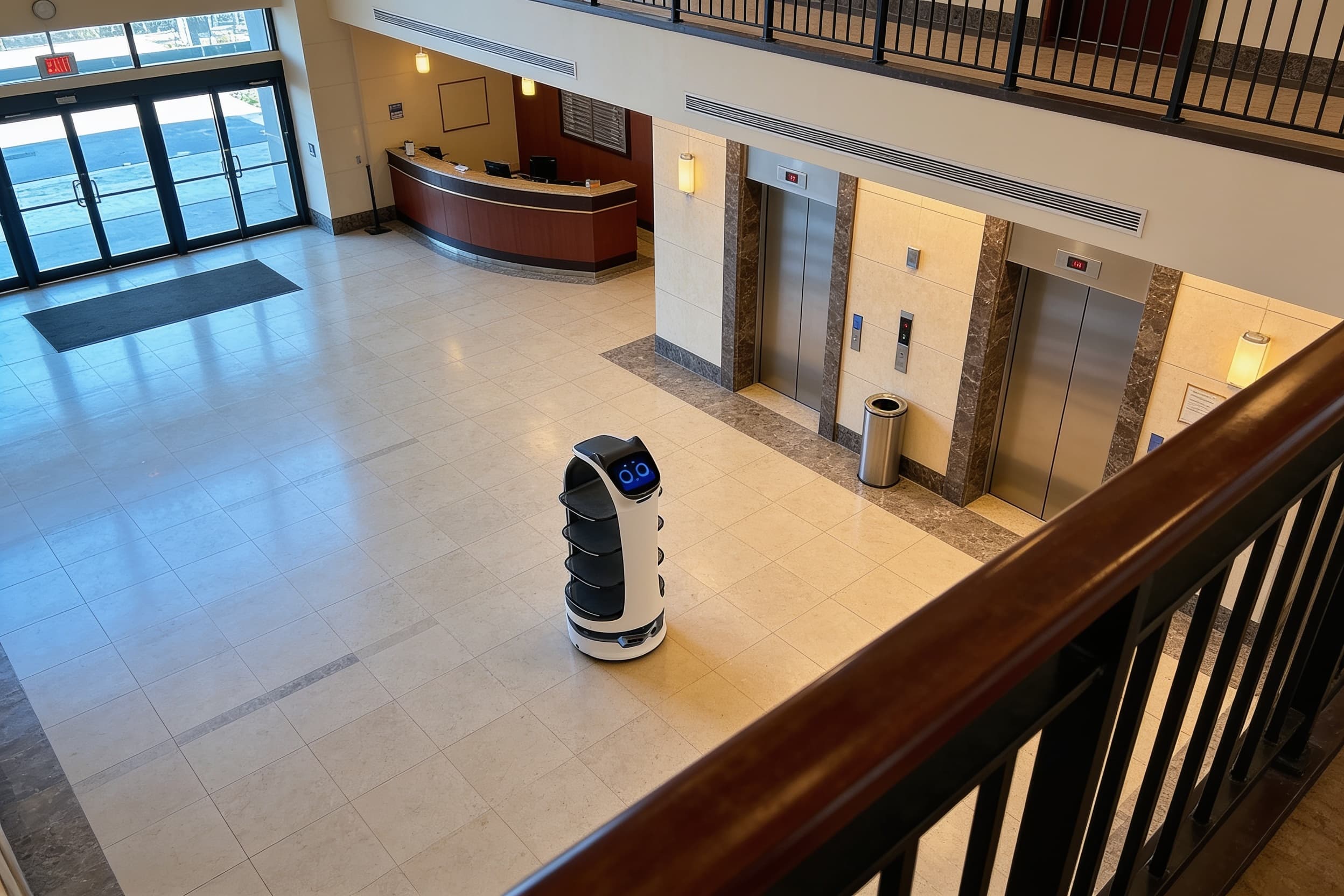
A tray-carrying delivery robot crossing a lobby floor

How the standards (R15.08 and ISO 3691-4) shape the deployment

ANSI/RIA R15.08 is the US safety standard for industrial mobile robots — it defines how an autonomous mobile robot must detect and respond to people, mark its zones, and behave around a human in its path. ISO 3691-4 is the international standard for driverless industrial trucks. Neither is a box you check on the robot; both describe how the whole deployment — speed zones, sensor coverage, signage, staff training, and the building itself — has to be set up so the unit is safe in an occupied hospital.

This is exactly why a hospital should not buy a bare robot and self-deploy it. The OEM ships a machine that is capable of compliant operation; making the actual deployment compliant in your corridors is integration work. We treat the standard as the spec for the install, not an afterthought — speed and stop zones mapped to your traffic, sensors validated for your layout, and staff trained on how the unit behaves before it runs a live floor.
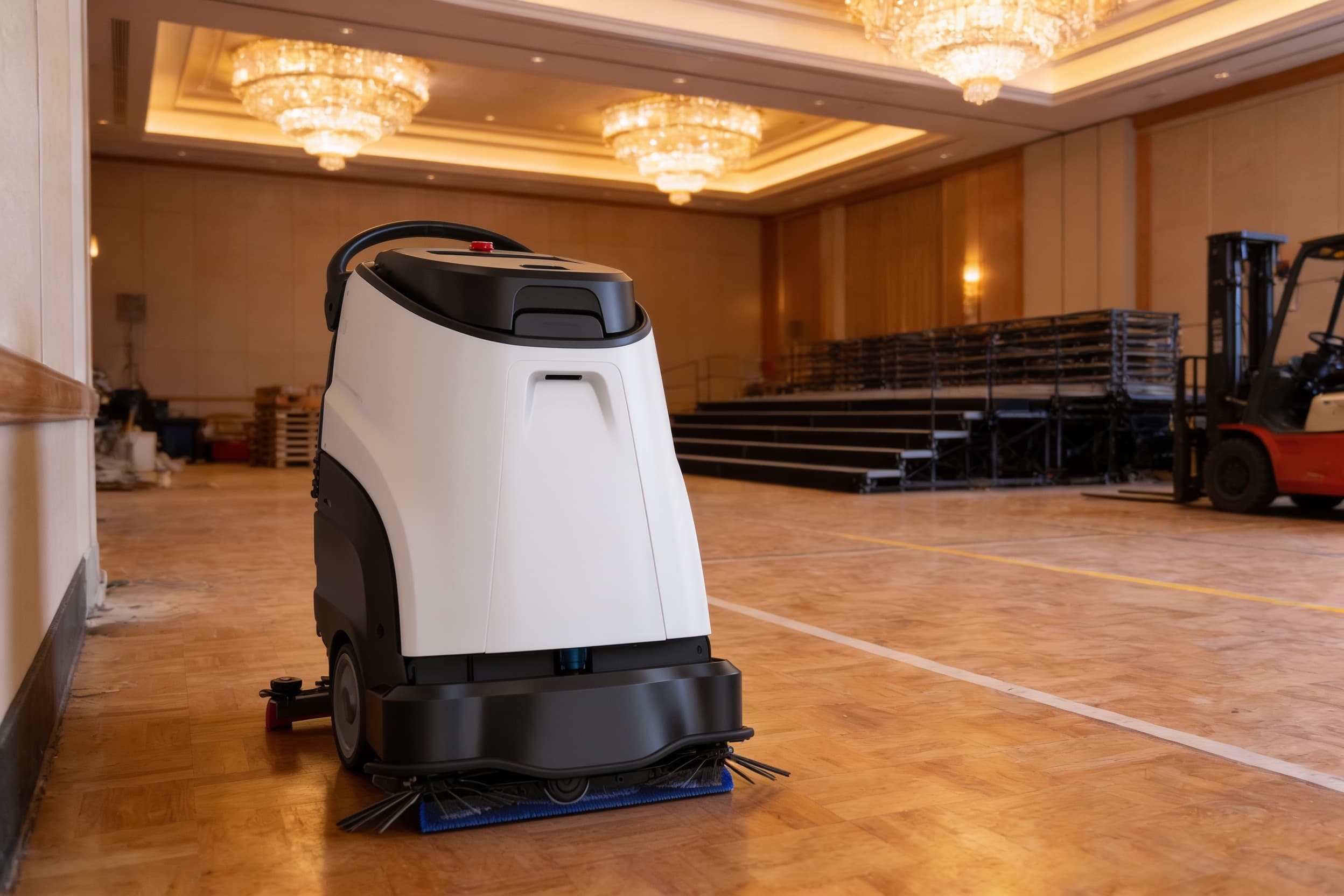
A compact cleaning robot working a quiet, warm-lit corridor

Buy vs. RaaS in a hospital

Hospital capital budgets do not absorb a fleet of $16k–$96k machines easily, and a robot that fails in a clinical setting cannot sit idle waiting on an overseas parts queue. Robotics-as-a-Service (RaaS) folds the robot, the compliant deployment, the service, and a backup unit into one monthly fee — which is why most health systems start on RaaS for delivery and cleaning. Outright purchase makes sense once a model is proven across the system and biomed can carry the upkeep. We surface both, with the real total-cost math, in a quote.

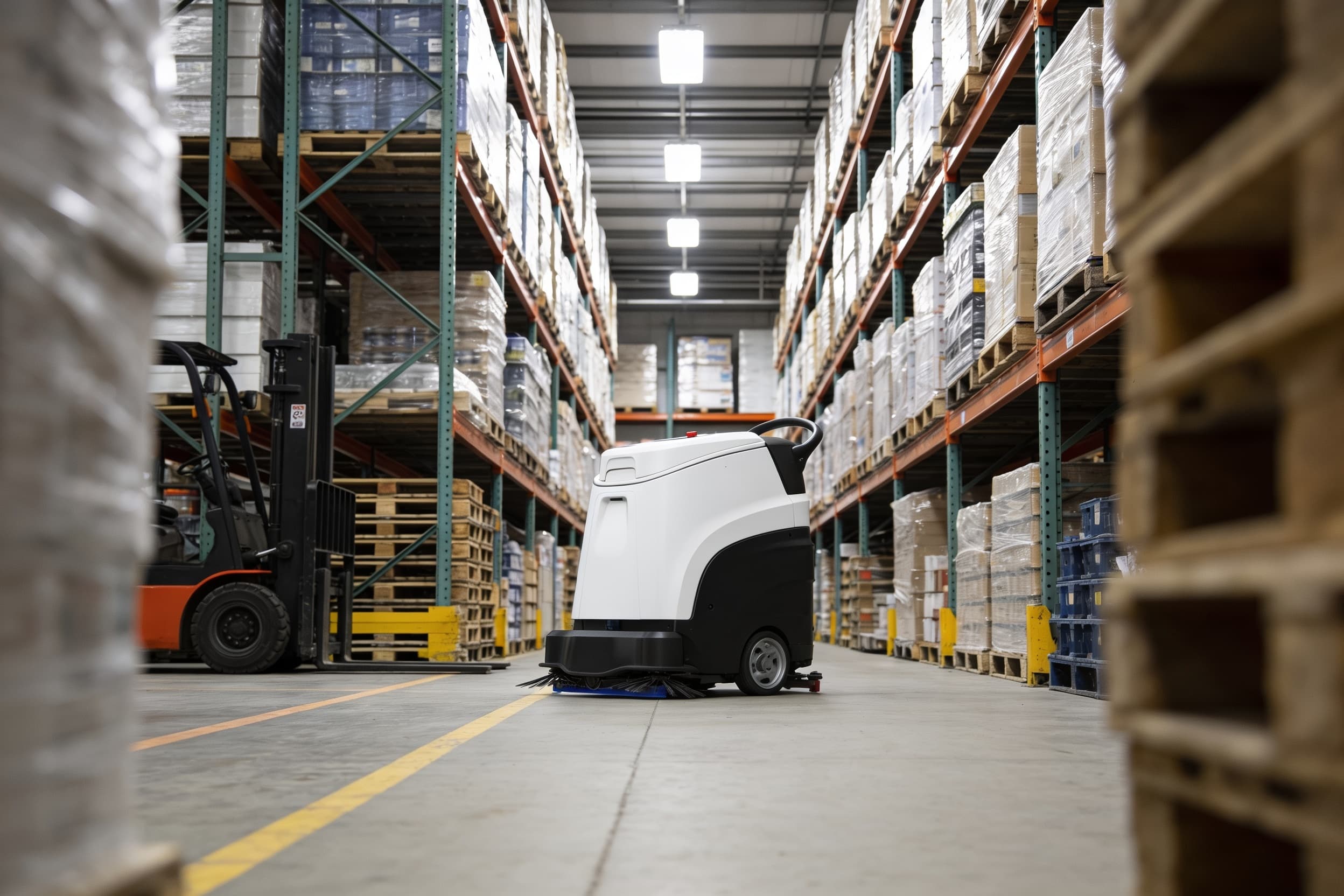
A floor scrubber working a back-of-house supply aisle

The labor case for hospital robots (illustrative)

The payback in a hospital is clinical hours, not just labor rate. When a nurse or a tech stops walking specimens to the lab and supplies from central stores, those minutes go back to patient care — the work the building exists for. A delivery robot on RaaS (~$335–$550/month) absorbs the repetitive runs; an autonomous scrubber on RaaS (~$600–$900/month for a mid-size unit) runs roughly 4–6× cheaper than a full-time overnight cleaner (~$3,500–$4,500/month all-in) on the open-corridor portion of the job.

The honest framing: this is not a headcount cut, it is a reach multiplier and a safety play. The robot runs the trips and the open floor so staff do the work that needs a clinician or an EVS specialist. We build the real side-by-side — including the compliant-deployment cost — in a quote.

  • Delivery robot on RaaS: ~$335–$550 / month — illustrative.
  • Mid-size scrubber on RaaS: ~$600–$900 / month — illustrative.
  • Full-time overnight cleaner (all-in): ~$3,500–$4,500 / month — illustrative.
  • These are illustrative ranges with stated assumptions, not a guaranteed result.
A compact cleaning robot working an open lounge floor

Why a hospital should buy through an integrator, not a bare OEM

A robot OEM ships a hospital a machine and a login. Everything that decides whether it is safe and useful in a clinical building — picking the right enclosed unit, financing it, making the deployment meet R15.08 / ISO 3691-4, integrating the elevator, training EVS and nursing, and fixing it fast when it fails mid-shift — is left to the hospital, usually across several vendors and a slow support queue.

Service Robot Co. is the one vendor for all five, and OEM-neutral about which unit. We pick the right hospital robot for your protocol, surface buy-vs-RaaS financing, deploy it to the safety standard, integrate the elevator where the building supports it, train your staff, and service it through a US engineer network with a backup ready. You get a compliant, working deployment — not a robotics project on a clinical director’s desk.

No. 06The requirements

What a hospital actually needs from a robot

Before any model comparison, a hospital has hard requirements a consumer-grade demo will not surface. These are the ones that decide whether a deployment is safe and compliant — not just whether the robot moves.

  1. Safety standards around people

    ANSI/RIA R15.08 (the US standard for industrial mobile robots) and ISO 3691-4 (driverless industrial trucks) govern how an autonomous mobile robot operates safely around staff and patients. The deployment, not just the robot, has to meet them.

  2. Infection control

    delivery units that carry specimens or meds need enclosed, lockable, wipeable carriers; disinfection robots (UV-C or electrostatic spray) must fit your terminal-cleaning protocol and EVS workflow without creating exposure risk.

  3. Multi-floor via elevator integration

    a hospital robot that cannot call and ride an elevator is stuck on one floor. This is a building-by-building question; not every elevator stack supports secure integration.

  4. Chain-of-custody for specimens and medications

    a closed, access-controlled cabinet with a logged hand-off, so a lab sample or a controlled medication is never left exposed in a corridor.

  5. Occupied-building behavior

    the unit runs corridors full of beds, carts, visitors, and staff, 24/7, without blocking egress or a fire route. Crowd handling and reliable obstacle avoidance matter more than top speed.

No. 07Compare the options

Hospital robots by job

The three robot categories a hospital uses, with representative OEM units and illustrative pricing. Figures are publicly-reported market ranges, framed as "starting around" — not quotes.

JobRobot typeRepresentative unitIllustrative cost
Specimen / med / supply deliveryEnclosed delivery robotAn enclosed delivery robot, a delivery robot, and a hospital logistics robot~$16k–$18k buy · ~$335–$550/mo RaaS
Terminal cleaning / infection controlUV-C or spray disinfection robotA UV disinfection robotQuote-based — varies by protocol
Corridor & common-area cleaningAutonomous scrubberA large-area scrubber, a rival large scrubber, and a compact combo scrubber~$22k–$96k buy · ~$600–$2,000/mo RaaS

Illustrative only — publicly-reported ranges, not quotes. Exact pricing depends on configuration, term, volume, region, and the compliance work your building requires. We confirm the real number for your site in a quote; we do not publish any OEM’s exact contract price as a fact.

No. 08The cost picture

Rent it, or buy it yourself.

Most sites here start on a monthly rental. The contrast with owning the machine, point by point.

Rent from us

One cost. We carry the machine, the service, and the spare.

  • Upfront cost

    One predictable monthly rental.

  • Maintenance

    Included. We service it and carry the parts.

  • When it breaks

    We swap in a backup unit and you keep your schedule.

  • Scaling

    Add units for the busy months, hand them back after.

  • Who owns the risk

    We own the machine, the service, and the downtime.

Buy it yourself

The machine is yours. So is everything after.

  • Upfront cost

    $4-50k per machine, before it does a day of work.

  • Maintenance

    Your team, or a service contract you manage.

  • When it breaks

    You lose the time while it waits on a fix.

  • Scaling

    Idle hardware on the books in the slow season.

  • Who owns the risk

    All of it sits on your side of the ledger.

Ranges are publicly-reported market figures, not quotes. We confirm the real number for your site in a quote.

Want the full math? The robot pricing & RaaS guide has real ranges by robot type and the rent-vs-buy breakdown.

Honest fit check

When a hospital robot is the wrong call

We would rather tell you no than sell you a cart that lives in a closet. A hospital robot is the wrong fit when:

  • Your corridors are narrow, cluttered, and constantly reconfigured — the unit spends its run blocked, and re-mapping overhead outweighs the savings.
  • The runs are too short to matter (lab two doors from the ward) — a person is faster than a robot navigating the gap.
  • No elevator in the stack supports secure integration and the work genuinely needs multiple floors — forcing it is a non-starter.
  • Nobody on site will own the daily basics (charging, loading, cleaning the carrier) — even a serviced robot needs a local hand.
  • The clinical or compliance review has not been done — a hospital should never run an autonomous unit on a live floor before the safety setup is validated.

Support & service

Service nationwide.

All 50US states covered
<10 min24/7 tech support
Regionalservice engineers in all 50 states
24/7emergency response
  • 24-hour nationwide on-site dispatch.
  • 10-minute remote triage during business hours.
No. 09On site

Where you'll see it working.

An autonomous floor scrubber working a hospital corridor
Hospital corridor
A compact cleaning robot in a hospital common area
Common area
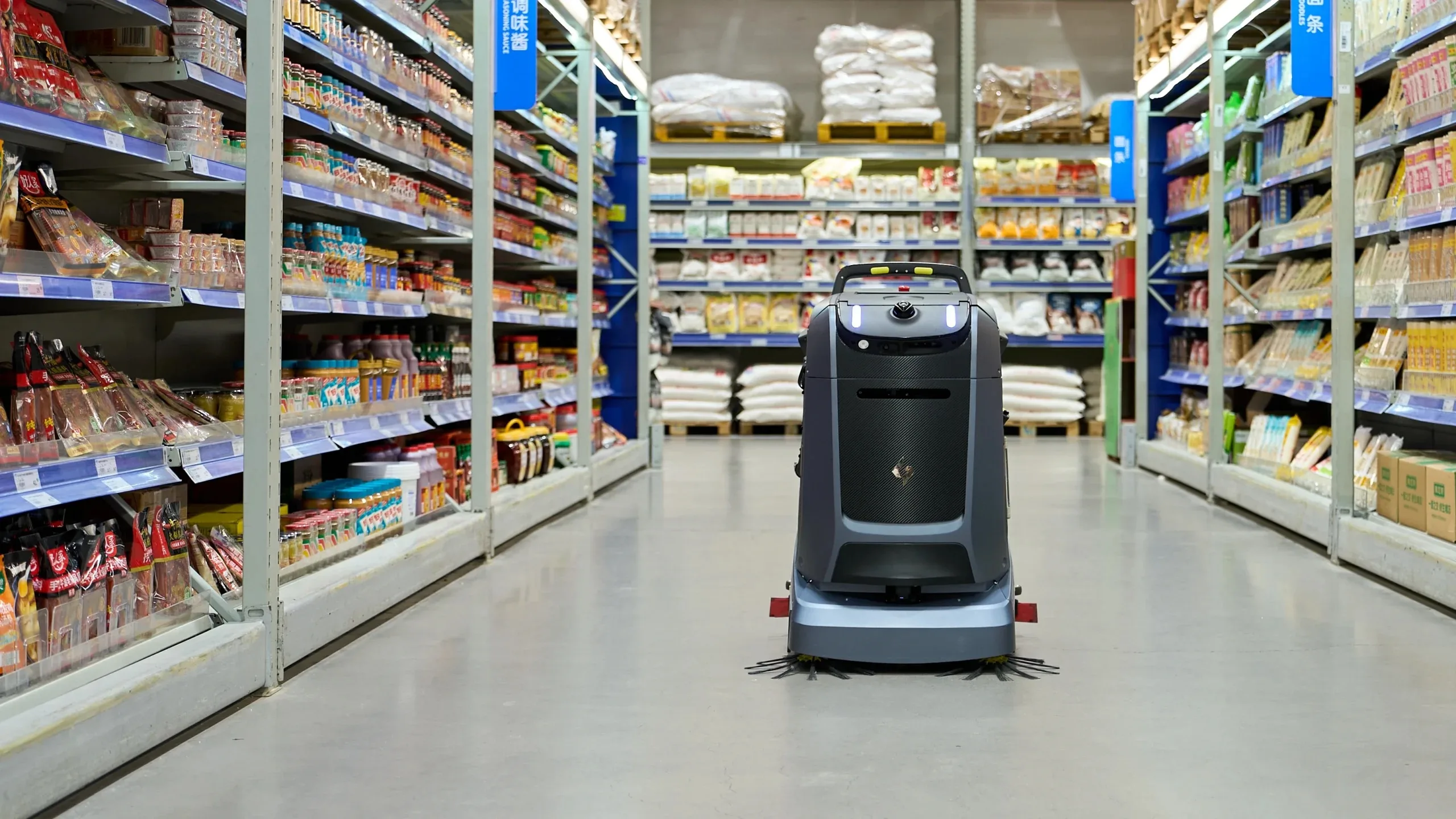
A large-area cleaning robot covering a hospital floor
Main floor
Camera at the edge of a hospital parking structure
Parking structure
Floor scrubber on a sterile clean-corridor floor
Sterile corridor
Access controllers in the IT room
IT room
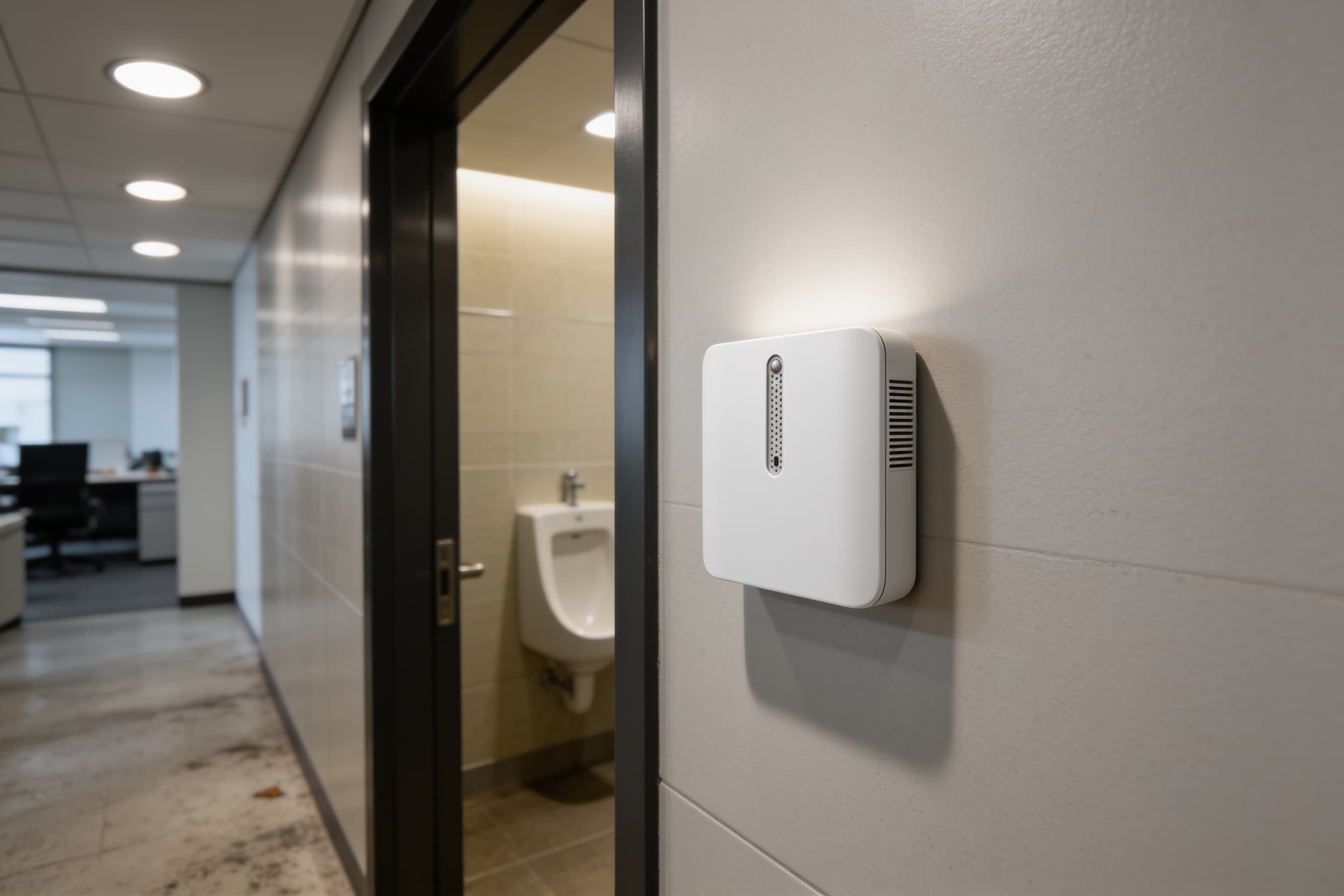
Sensor plugged into a corridor wall outlet
Corridor sensor
Panic button tucked under a hospital reception desk
Reception desk
A security camera on the lobby ceiling near reception
Reception camera
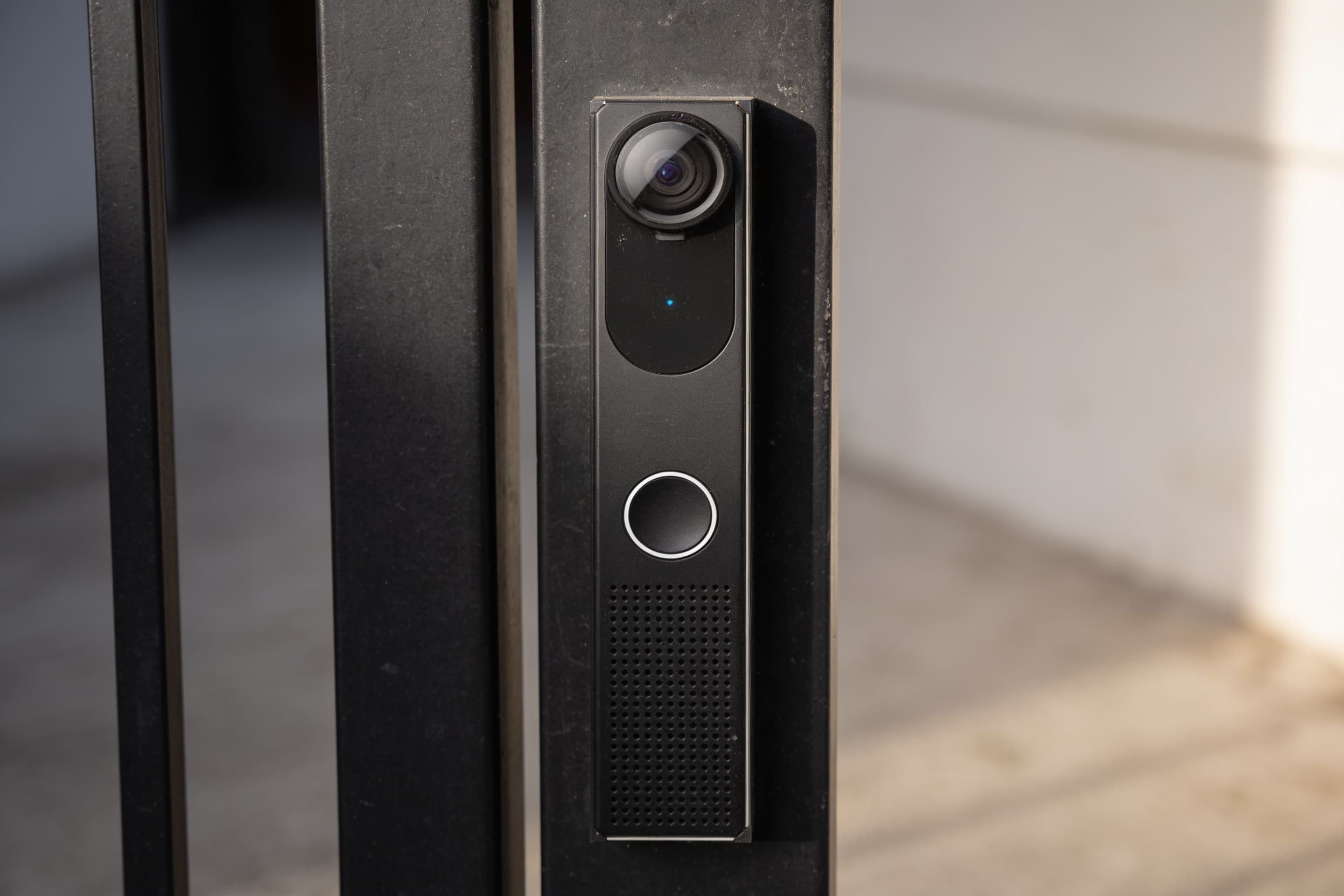
An access reader on the suite door at standard height
Ward door
An access reader on the entry portal at head height
Entrance access
A floor-cleaning robot working the floor of a tech-office cafeteria after lunch
Cafeteria
No. 10Proof

Deployments we can point to.

A hospital pharmacist organizes medications in a clinical pharmacy workspace.Lead case study6,350 Pharmacy hours savedHospital Pharmacy Case Study: 6,350 Hours ReclaimedA regional hospital pharmacy inside a midsize health system reclaimed 6,350 hours after shifting routine medication and supply runs to a hospital delivery robot.Read the case study
  1. Hospital Delivery Case Study: 5 to 10 Minutes Saved Per PatientA documented hospital delivery robot case shows how a 600-plus-bed academic hospital saved 5 to 10 minutes per patient in oncology infusion.5 to 10 min saved per patient
  2. Hospital Delivery Robot Case Study: 79,575 Yen in Net Monthly SavingsIn a COVID isolation ward, a delivery robot cut red-zone runs, PPE use, and nursing transport time, producing about 79,575 yen in monthly net savings.¥79,575/mo Net monthly savings
No. 11From our blog

Reading for the decision you are making.

All articles

Common questions

Hospitals use three main robot types: enclosed delivery robots that move lab specimens, medications, linens, and meal trays between wards; disinfection robots that run UV-C or electrostatic-spray terminal cleaning for infection control; and autonomous scrubbers that keep long corridors clean. The right mix depends on your workflows, building, and safety protocol.

Want one working for you?

We walk your site, learn the job, and tell you which unit fits, OEM-neutrally, before you commit a dollar. If nothing fits yet, we say so.

Find the robot that fits your site.

Free site assessment. We tell you what actually works before you spend a dollar.