
Key takeaways
- Mobile robots can document isolation-room conditions consistently, but they do not replace fixed monitors, formal airflow testing, or clinical judgment.
- Pressure, airflow direction, temperature, and door state must be captured together because each reading supplies context the others lack.
- Calibration controls, repeat readings, and human escalation are essential when measurements approach a facility limit.
- Corridor-first routes, cleanable hardware, restricted imaging, and short data retention reduce infection-control and privacy exposure.
How do mobile robots check isolation rooms?
A sensor-equipped mobile robot can travel a scheduled hospital route, stop at a validated observation point, read the installed pressure display, inspect an approved airflow indicator, record room temperature, and confirm whether the door is closed. Each observation receives a room identifier, timestamp, route status, and confidence flag, giving facilities and infection-prevention teams a repeatable environmental record.
The robot is an observation platform, not the authority that certifies an airborne infection isolation room. Fixed pressure monitors, building controls, balancing work, and staff procedures remain primary. The robot adds an independent set of eyes and can flag display errors, open doors, missing indicators, or gradual drift between manual rounds.
According to the Centers for Disease Control and Prevention, airborne infection isolation rooms should maintain negative pressure of at least 2.5 pascals, equal to 0.01 inch of water gauge, relative to the corridor. The CDC also calls for at least 12 air changes per hour in new or renovated rooms and at least 6 in existing rooms, with airflow directed into the room.
What should the robot observe at each doorway?
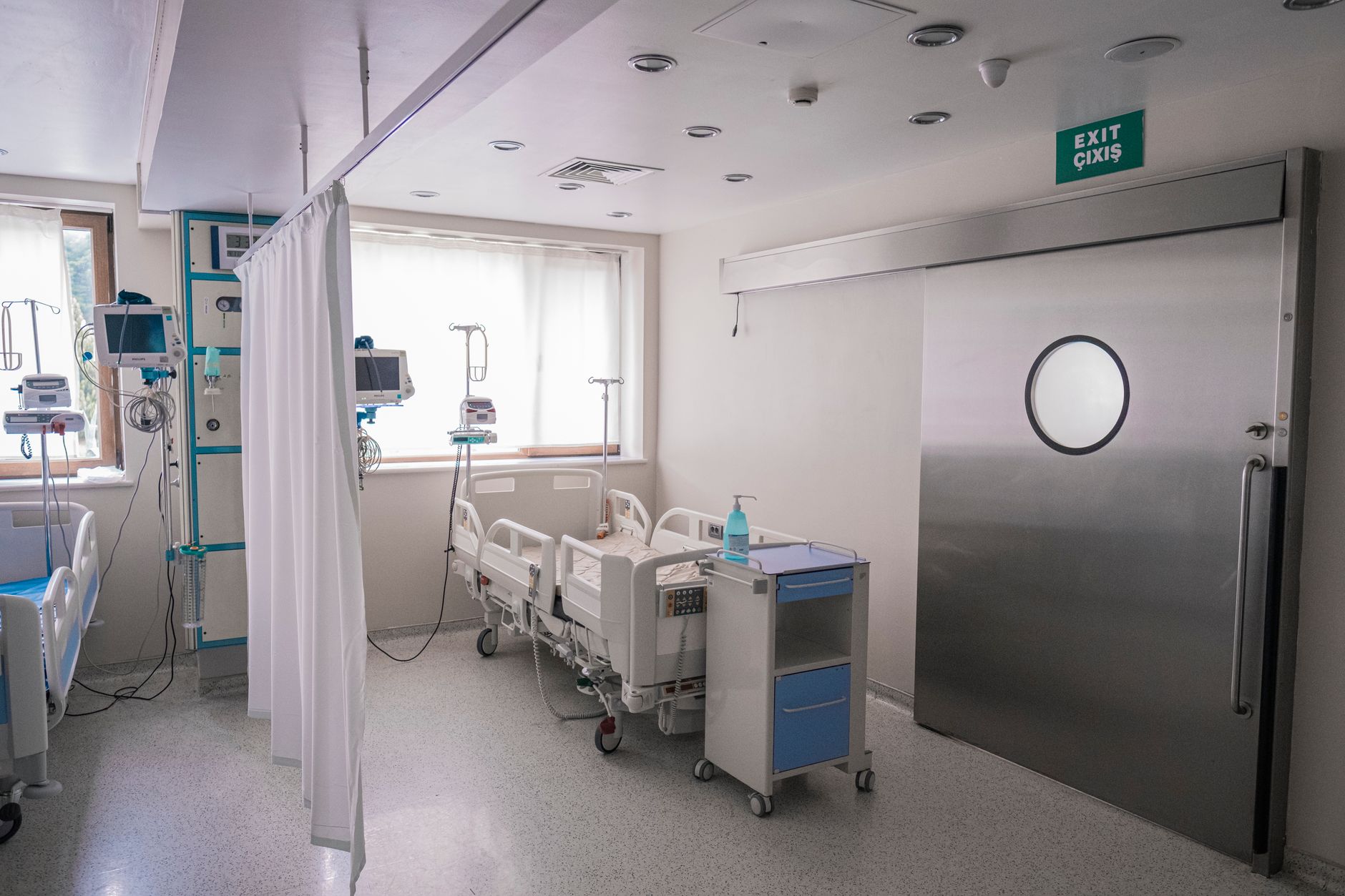
A useful record combines several observations rather than reducing the round to a single pressure number. The route specification should define the exact stopping location, camera angle, sensor dwell period, accepted display format, and room operating state.
Pressure and airflow are related but not interchangeable. A camera can read a wall display, while a validated airflow probe or visible flutter indicator can show direction at the doorway. Neither observation establishes the room's air-change rate, which requires ventilation measurements and room-volume calculations by qualified personnel.
- Pressure display: displayed differential, alarm state, units, optical-reading confidence, and an image-free verification record where possible.
- Airflow: approved indicator direction or probe result at a repeatable location with the door closed.
- Temperature: measured value compared with the hospital's approved operating band, plus the recent trend rather than an isolated reading alone.
- Door state: open, closed, latched, obstructed, or moving, with enough timing context to distinguish normal passage from a door left ajar.
Why do door state and timing matter?
A pressure reading taken as someone enters is not equivalent to one taken after the door closes and airflow settles. The robot should wait outside the swing path, detect the completed door cycle, apply the facility-approved settling period, and then collect the observation. Repeated traffic should produce a deferred check, not a misleading pass or fail.
The CDC says airflow direction should be checked with the door closed. Its tuberculosis guidance describes holding a smoke tube about 2 inches from the base of the closed door, but an autonomous robot should not release test smoke unless the hospital has explicitly approved the method, payload, detector implications, and operating procedure.
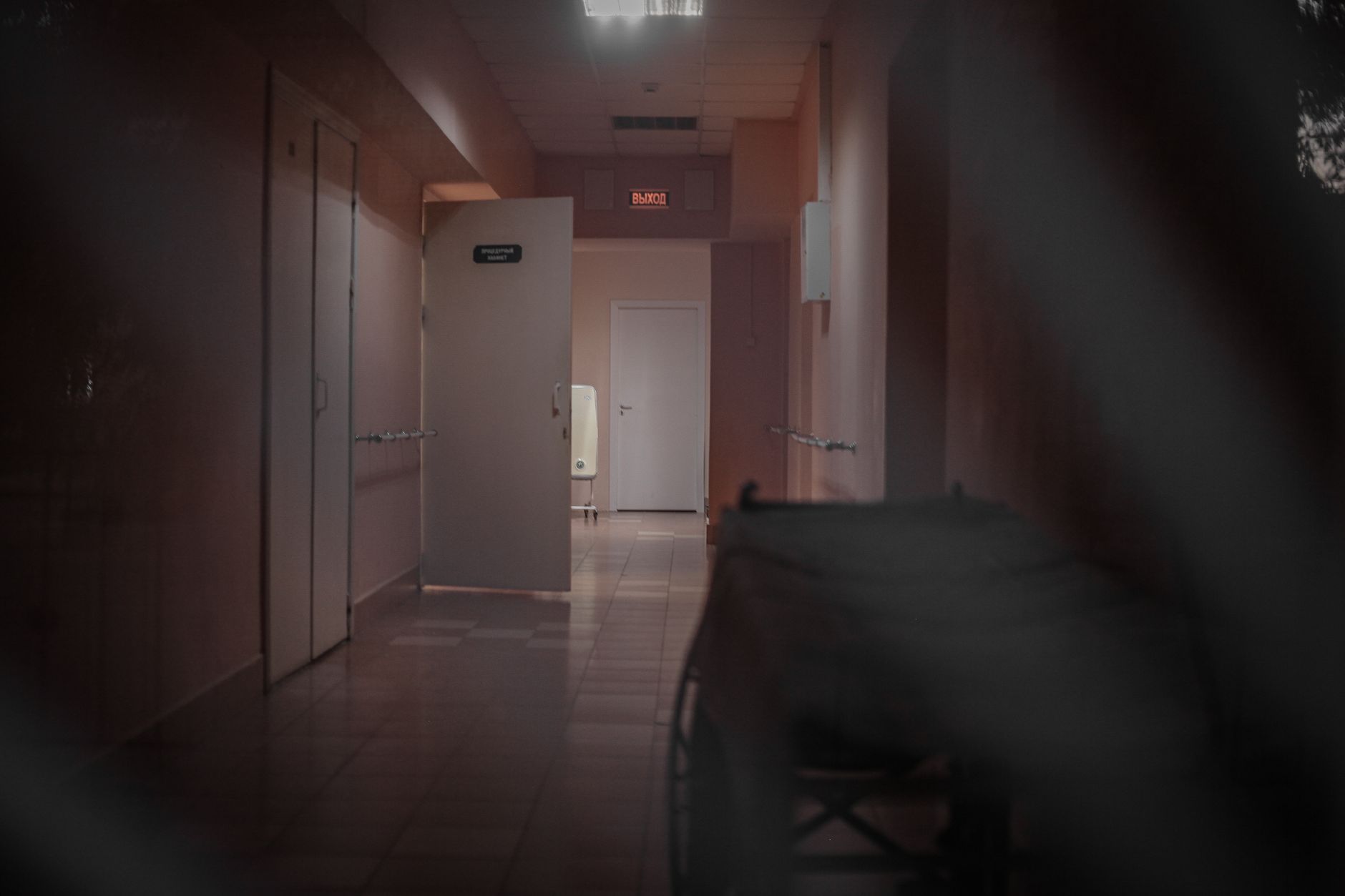
Most rounds can remain corridor-side. Entering an occupied isolation room increases clinical coordination, disinfection, navigation, and privacy requirements without necessarily improving the pressure-display observation.
How should measurements be validated and calibrated?
Start with a measurement plan approved by facilities engineering and infection prevention. It should identify the hospital's controlling standard, allowable uncertainty, acceptance thresholds, reference locations, calibration records, and the action taken when the robot disagrees with the installed monitor.
The National Institute of Standards and Technology does not prescribe one universal recalibration interval. NIST says the interval depends on accuracy requirements, contractual or regulatory obligations, instrument stability, and environmental effects. Hospitals should therefore begin conservatively, compare the payload against traceable references, chart drift, and adjust the interval from evidence.
Optical readings need quality controls too. Glare, condensation, damaged displays, unit changes, and partially obscured digits can corrupt machine reading. Low-confidence results should retain the room and timestamp but go to human review instead of being silently converted into measurements.
Can a robot detect a bad reading before raising an alarm?
Yes, but only through bounded verification. On an unexpected value, the robot can confirm that it reached the correct waypoint, stopped moving, observed a closed door, repeated the reading, and checked for an active fixed-monitor alarm. It should never keep retrying long enough to delay notification of a potentially unsafe room.
Independent confirmation matters because instruments can drift. The CDC's tuberculosis guidance cites a study of 38 isolation rooms in which half of the continuous monitors indicated the opposite direction from the airflow observed at the door. The lesson is not to distrust monitoring. It is to preserve redundancy, calibration, and visual or physical verification.
What infection-control controls belong in the deployment?
The safer design begins with cleanable surfaces, sealed seams, minimal crevices, protected sensor windows, and documented compatibility with hospital disinfectants. The CDC advises healthcare facilities to define responsibility, frequency, methods, and products for cleaning portable equipment, while following equipment care instructions and considering damage from repeated chemical exposure.
Write the robot into the hospital's environmental-services procedures before go-live. Assign responsibility for the chassis, wheels, bumpers, touchscreen, sensor mast, and charging area. Define what happens after contamination, a spill, entry into an isolation room, terminal cleaning, and maintenance by an outside engineer.
Routes should follow infection-prevention policy, avoid unnecessary room entry, and prevent the machine from carrying contamination between clinical zones. A hospital disinfection robot or infection control robot performs a different job from an environmental inspection robot, so purchasing language and staff training should keep those functions distinct.

How can hospitals protect patient privacy?
Design the route to collect environmental facts, not patient information. Aim cameras tightly at pressure displays and door hardware, disable audio unless a documented need exists, perform optical recognition on the device when practical, and discard source frames after extracting the approved fields. Avoid storing faces, names, room boards, screens, conversations, or clinical activity.
If the robot creates, receives, maintains, or transmits electronic protected health information, the hospital must address the applicable HIPAA safeguards. The Department of Health and Human Services identifies access control, audit controls, integrity protections, authentication, and transmission security among the Security Rule's technical requirements.
HHS also says covered entities should limit protected health information to the minimum necessary for the intended purpose. Apply that principle through role-based access, encrypted transmission, logged exports, defined retention, credential rotation, remote-support controls, and a privacy review of every sensor mode.
What should happen when a reading drifts?
Escalation rules should be written by the hospital, tied to its approved limits, and tested during the pilot. The robot can classify evidence and notify people, but it should not independently declare a room safe, change ventilation settings, or direct patient movement.
The CDC recommends checking and documenting negative airflow daily, especially while an isolation room is occupied. Its tuberculosis guidance also calls for a check before occupancy, daily visual checks for occupied rooms, and monthly checks for rooms held available but not used for suspected or confirmed tuberculosis patients.
- Invalid observation: repeat once after confirming waypoint, door state, display visibility, and sensor health, then route unresolved data to human review.
- Early drift: create a facilities notification when a valid trend moves toward the hospital's limit, even though the room still passes.
- Threshold breach or reversed airflow: immediately notify the designated clinical, facilities, and infection-prevention contacts and follow the hospital's room-use contingency procedure.
- Monitor disagreement: treat the room status as unresolved, preserve both readings, and request verification with an approved reference method.
From pilot route to maintained hospital program
A pilot should cover representative rooms, corridor traffic, door types, lighting conditions, wireless dead zones, cleaning procedures, and simulated alarms. Acceptance testing should measure completed observations, false alerts, missed displays, localization errors, privacy exceptions, and notification delivery, not merely whether the robot finishes its route.
Service Robot Co. acts as an OEM-neutral, vendor neutral robot integrator for U.S. businesses. For this use case, that means selecting an appropriate inspection platform and sensor package, then handling robot deployment and integration, site assessment mapping, staff training, financing, go-live support, and robot maintenance service planning.
Hospitals can evaluate an inspection robot lease, autonomous mobile robot leasing, commercial robot leasing, purchase, or leasing structure without splitting responsibility among unrelated vendors. Service Robot Co. supports the lifecycle through a nationwide U.S. engineer network, with remote triage and on-site dispatch. One partner and one number matter when an environmental route becomes part of daily patient-safety operations.