
Commercial delivery robots · guide
The back-and-forth, handled.
Wheeled robots that run the back-and-forth in restaurants, hotels, and hospitals - compared across the main OEMs, with which unit fits which vertical.
- All 50
- US states served
- 10 min
- 24/7 triage
- 24/7
- emergency response
Who this is for
Built for high-traffic floors that run staff off their feet.
Restaurants & hospitality
Especially high-volume and hot-pot / buffet operators - we already service delivery robots on live restaurant floors.
Senior living
Amenity, meal, and supply runs across a big floor, so staff stay with residents.
What it is
A commercial delivery robot is a wheeled robot that carries food, room service, samples, or supplies point-to-point indoors on its own. The right unit depends on your vertical - restaurant, hotel, or hospital. Service Robot Co. picks the OEM, leases it to you, deploys it, and services it nationwide.
Specs on this page are publicly reported, not guarantees. We confirm the right unit and the lease payment for your site in an assessment.
See it running on your floor.
We scope the work on a site assessment and prove the system on your operation before you commit.
Inside the operation
One delivery run, stage by stage.
The operation is the same loop your staff walk all shift. Here is where the robot takes the trip.
- 1
Load
Plates, amenities, or samples go on at the kitchen, back of house, or lab.
AutomatesOpen trays for food running; lockable cabinets for samples and linens.
- 2
Navigate
The run crosses hallways, dining rooms, and moving people.
AutomatesThe robot weaves crowds and chairs on routes mapped at deployment.
- 3
Ride
Multi-floor runs need the elevator.
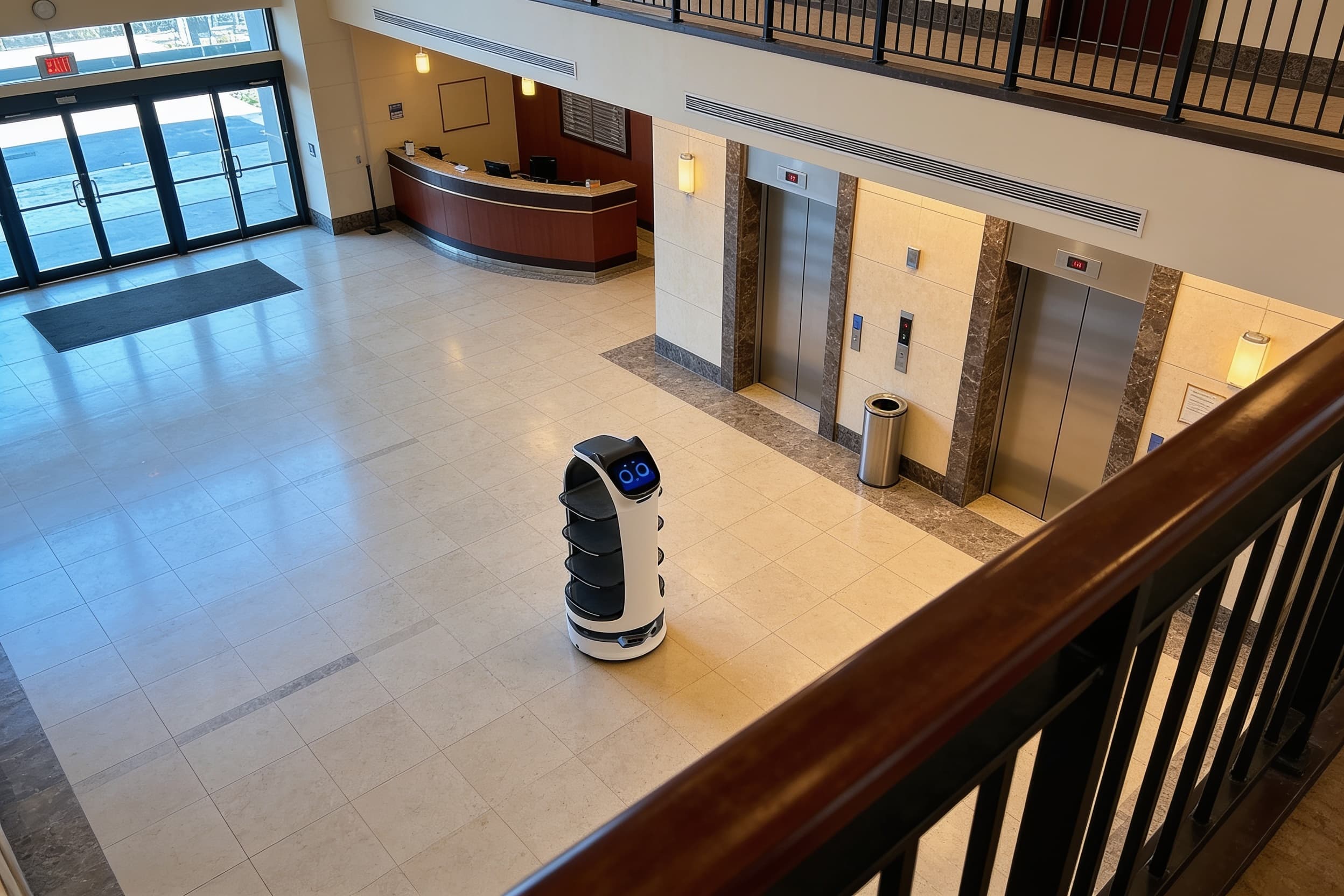
AutomatesThe robot calls and rides it, where the building supports the integration.
- 4
Hand off
The load reaches the table, the guest door, or the ward.
AutomatesThe unit waits at its station and presents the load.
- 5
Return
Empties and bussing go back the other way.
AutomatesThe same unit runs the return loop, trip after trip.
Field notes
75-80%
Annual restaurant floor-staff turnover.
National Restaurant Association, 2025
70%
Operators who say they cannot fill open roles.
National Restaurant Association, 2025
~2x
Hospitality turnover versus the all-industry average.
US Bureau of Labor Statistics, 2025
RoboCare™
Service nationwide.
- 24/7 support.
- 10-minute technical-specialist triage.
- Regional service engineers in every state we service.
- 3 check visits a year.
- 12-month warranty.
The operation, up close
What actually decides the outcome.
How a delivery robot fits each vertical
The same category looks different in each setting, and the wrong form factor is the most common mistake. Pick the unit by the run it has to make, not by the demo.
- Restaurants - a tray-carrier (a food-running robot) runs plates from the kitchen to the table and bussing back during a rush, so servers cover more tables. A greeter/marketing unit (a delivery robot) handles seating + light delivery up front.
- Hotels & resorts - a closed-cabinet unit delivers room service, towels, and amenities from the back of house to the guest door, usually with elevator integration so it runs multiple floors.
- Hospitals & clinics - an enclosed, lockable-tray unit (a delivery robot) moves lab samples, medications, and supplies between wards so clinical staff stay with patients.
- Senior living & offices - amenity, mail, and supply runs across a large floor plate, freeing staff for resident- and guest-facing work.
Leasing delivery robots
We lease delivery robots through financing on a 3-year lease with one fixed payment. A single restaurant or hotel often runs one or two units and the payback is driven by labor hours saved, so a lease fits - it keeps the capital free. RoboCare™ covers it: 24/7 support with 10-minute triage.
The labor case for delivery robots
A delivery robot earns its keep by giving staff their steps back. In a restaurant, a server can spend a third of a shift walking plates and bussing; a tray-carrier absorbs those trips so the same servers cover more tables and tips go up. In a hospital or hotel, the runs a robot takes off clinical or housekeeping staff are hours those staff give back to patients and guests.
The honest framing: this is not a headcount cut, it is a reach multiplier. The robot runs the repetitive trips so your people do the work that needs a human - the table, the patient, the guest. Run it against your real shift and we will build the side-by-side in a quote.
- Payback driver: server/staff trips absorbed, not headcount removed.
What the OEM does not do
Five things an integrator carries that a bare OEM does not.
Getting the robot is the easy part. This is the rest of the job.
Sales, neutrally
We pick the right unit for your floor from the whole market, instead of fitting your operation to the one product a maker happens to sell.
Integration
We wire the robot into the software that runs your operation, so it knows what to do next. A robot with no hook-up is an expensive paperweight.
Financing
A lease through financing on one fixed payment, with the real total-cost math, so your finance team can plan around it.
Deployment
Mapping, setup, safety, and commissioning on a live floor. The part most direct customers underestimate, and where projects stall.
Nationwide service
RoboCare™: 24/7 support with 10-minute triage and regional service engineers in every state we service. The one thing most OEMs cannot offer a US customer.
All five, carried for you.
Tell us the floor and the job. We answer with the unit, the math, and the plan.
Get a quoteFrom our blog
Reading for the decision you are making.
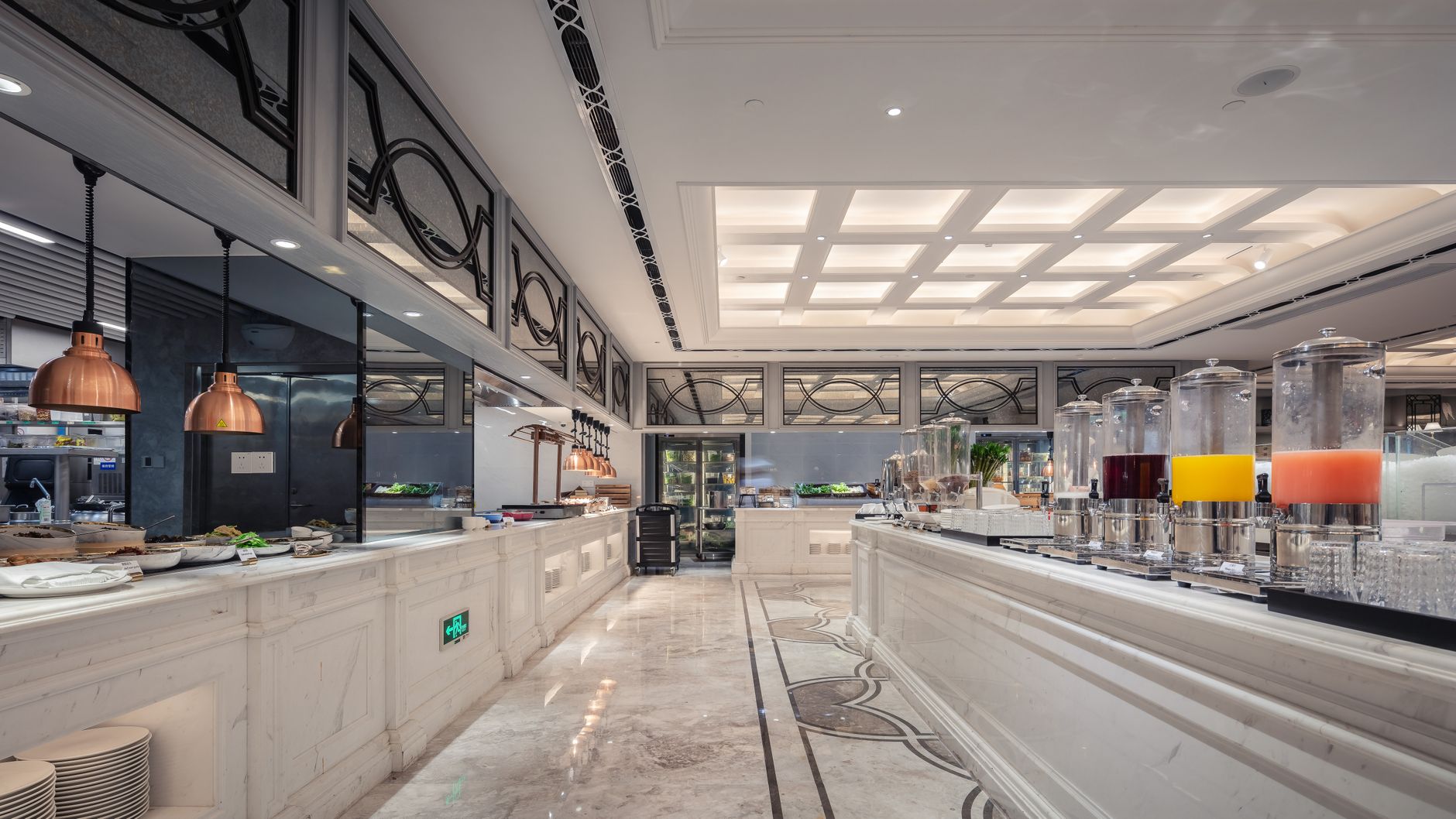 Use casesRyugujo Spa Hotel: Bella and CC1 Cut Buffet Cleaning TimeRyugujo Spa Hotel Mikazuki uses Pudu Bella and CC1 for buffet service and floor care. What US resort hotels should copy on time savings and staffing.
- Use casesAMRs for Campus Commissary Route DeliveryLearn how campus commissaries use AMRs for timed food, ingredient, and supply routes, with safe carts, access control, and return logistics.
 Trends & dataCleaning Robots Rise as Hospitality Robots SlipIFR's 2025 data shows cleaning robot sales up 34% while hospitality fell 11%. Here is what task clarity and deployment friction mean for buyers.
 Industry newsWhat D.C.'s 2026 Robot Permits Mean for DeploymentsD.C.'s latest sidewalk robot permits show how geofencing, route limits, and public-space rules are becoming real deployment constraints.
Two ways to start
An integrator, or direct from the OEM.
A comparison of the two routes, not a knock on any one maker. Many OEMs partner with integrators precisely to close this gap.
Robots on this operation
The machines doing the work.
Compare the options
Comparison
Commercial delivery robots compared
The main options and their lead units, with the vertical each fits best.
| Form factor | Best-fit vertical |
|---|---|
| Multi-tray carrier | Restaurants - running + bussing |
| Greeter + light delivery | Restaurants / retail front-of-house |
| Enclosed heavy-load cabinet | Bussing, hospitals, back-of-house |
| Multi-tray carrier | Restaurants, hotels |
| Compact tray carrier | Smaller dining rooms |
| Tray carrier | Restaurants, hospitality |
| Shelf / cabinet carrier | Hotels, hospitality, facilities |
Representative units only. We confirm the right unit and the lease payment for your site in a quote after a free site assessment.
What to weigh when you compare delivery units
The factors that decide whether the robot runs your building, not a demo floor.
| Factor | Why it matters |
|---|---|
| Form factor (open tray vs. closed cabinet) | Open trays suit food running; closed, lockable cabinets suit samples, meds, linens, and bussing. The wrong one is the most common selection mistake. |
| Multi-floor / elevator integration | Hotels and hospitals need the robot to call and ride elevators. Confirm the building supports it before you commit - not every site does. |
| Payload + tray count | How much it carries per trip drives how many trips it saves. Match it to your real run, not the peak spec. |
| Navigation in crowds | A dining-room unit has to weave around moving people and chairs reliably. Crowd handling, not top speed, is what earns its keep. |
We confirm these against your real floor plan and runs on a walkthrough before recommending a unit.
On the floor
Where you'll see it working.
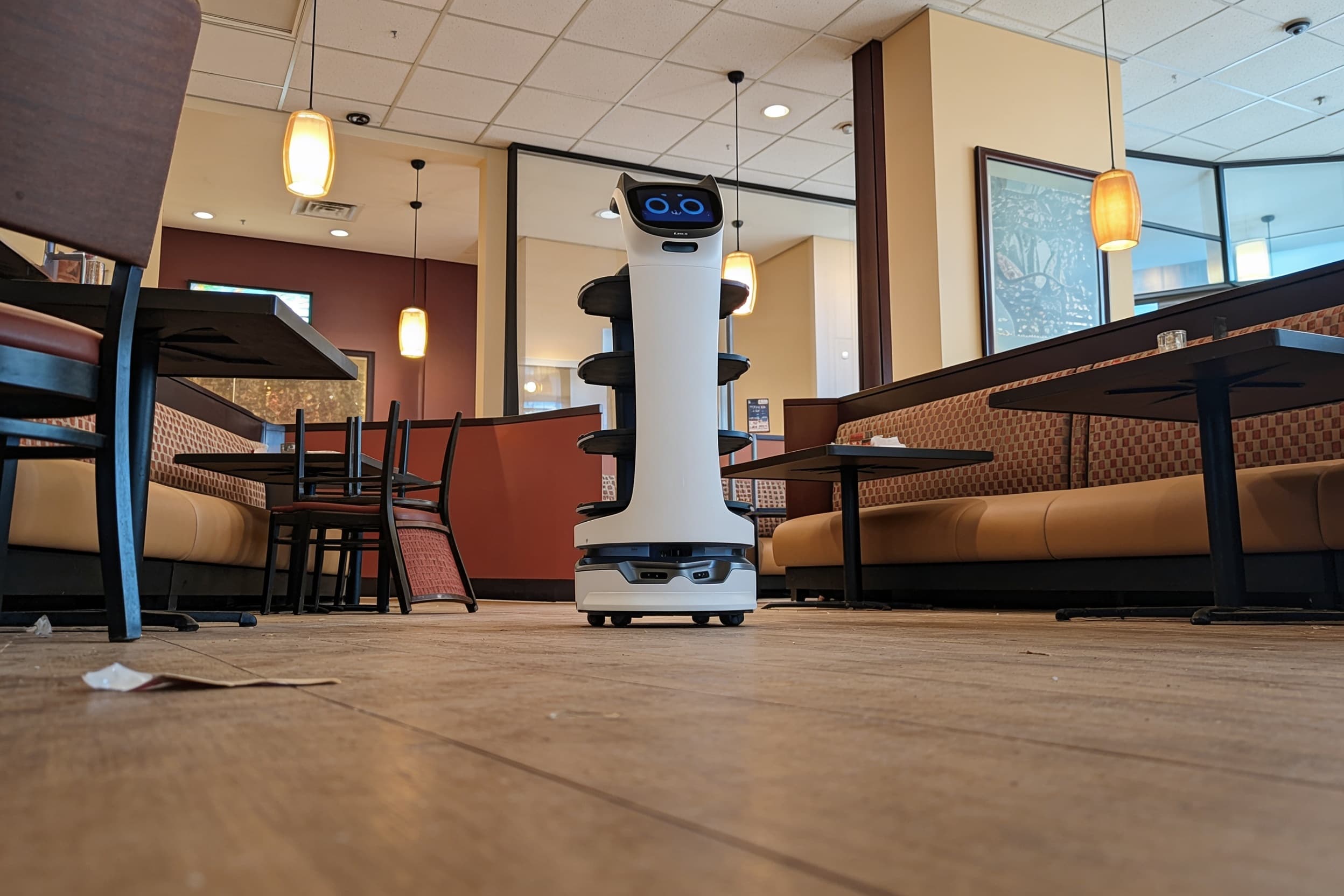
Decision guide
Which delivery robot fits your operation?
Route yourself by vertical and run. We confirm the fit - including any elevator integration - on a walkthrough.
Restaurant running plates + bussing during a rush
A multi-tray, food-running robot. Crowd navigation and tray count matter most.
Restaurant that also wants greeting / seating help up front
A greeter delivery robot for front-of-house, optionally paired with a tray carrier for the floor.
Hotel delivering room service + amenities across floors
A closed-cabinet delivery unit with elevator integration. Multi-floor support is the decider.
Hospital moving samples, meds, and supplies between wards
An enclosed, lockable-tray delivery robot that keeps the load secure and runs corridors reliably.
Senior living / large office doing mail + amenity runs
A shelf or cabinet carrier matched to your floor plate, deployed to run the repetitive loops staff walk today.
Honest fit check
Who a delivery robot is NOT for
A delivery robot is the wrong call when the building or the runs do not suit it:
- Tight, cramped dining rooms with no clear robot lane - it will get stuck behind chairs and people more than it helps.
- Heavy stairs / split levels with no elevator the robot can use - it cannot climb, and forced multi-floor without elevator integration is a non-starter.
- Very short runs (kitchen two steps from the pass) - a person is faster than a robot that has to navigate the gap.
- Operations unwilling to adjust flow even slightly - the robot needs a lane and a docking spot; a building that cannot give it either will fight it.
- A single low-volume run with no labor to redeploy - utilization is too low to pay back.
Proof
Deployments we can point to.
Common questions
Cities we serve
Deep local pages for the metros where we have the most delivery robots demand.
Start with a free site assessment.
We walk your site, learn the job, and tell you which unit fits, OEM-neutrally, before you commit a dollar. If nothing fits yet, we say so.
Find the robot that fits your site.
Free site assessment. We tell you what actually works before you spend a dollar.