Robots for retail: the honest buyer guide
Floor-scrubbing and inventory-scanning robots that run safely near shoppers — keeping floors clean and shelves accurate without pulling staff off the floor.
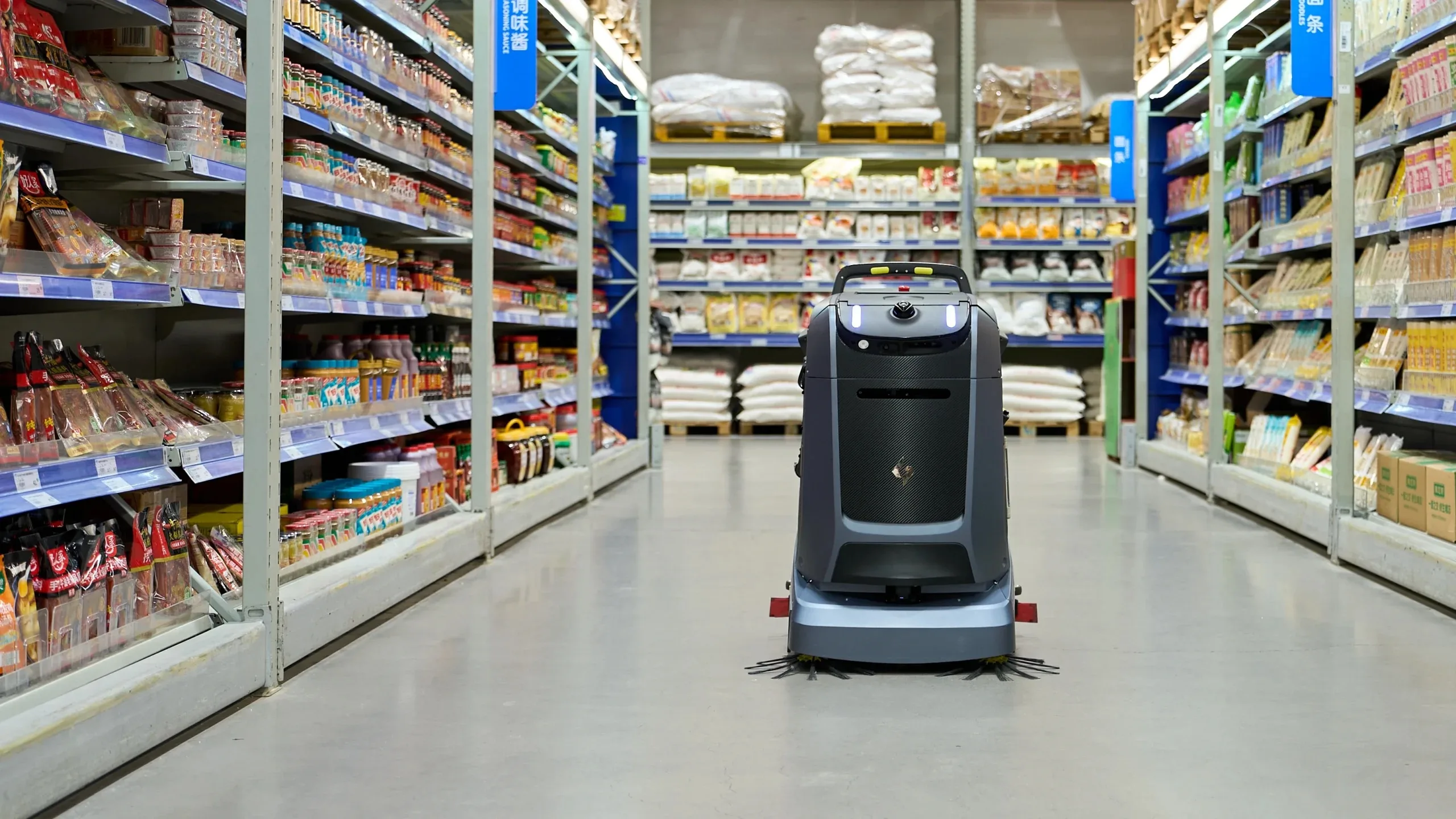
Retail uses two robot types: autonomous floor scrubbers that keep grocery and big-box sales floors clean — often during open hours, safely near shoppers — and inventory/shelf-scanning robots that drive the aisles capturing out-of-stocks, price errors, and planogram gaps. Lead cleaning OEMs are Gausium, Pudu, and ICE Cobotics; scrubber buy prices run roughly $22k–$96k, or ~$600–$2,000/month on RaaS. Service Robot Co. picks the unit, finances it, deploys it, and services it nationwide.
Pricing and specs on this page are publicly-reported market ranges, framed as estimates — not quotes. We confirm the real numbers for your site in an assessment.
Industry photo — placeholder
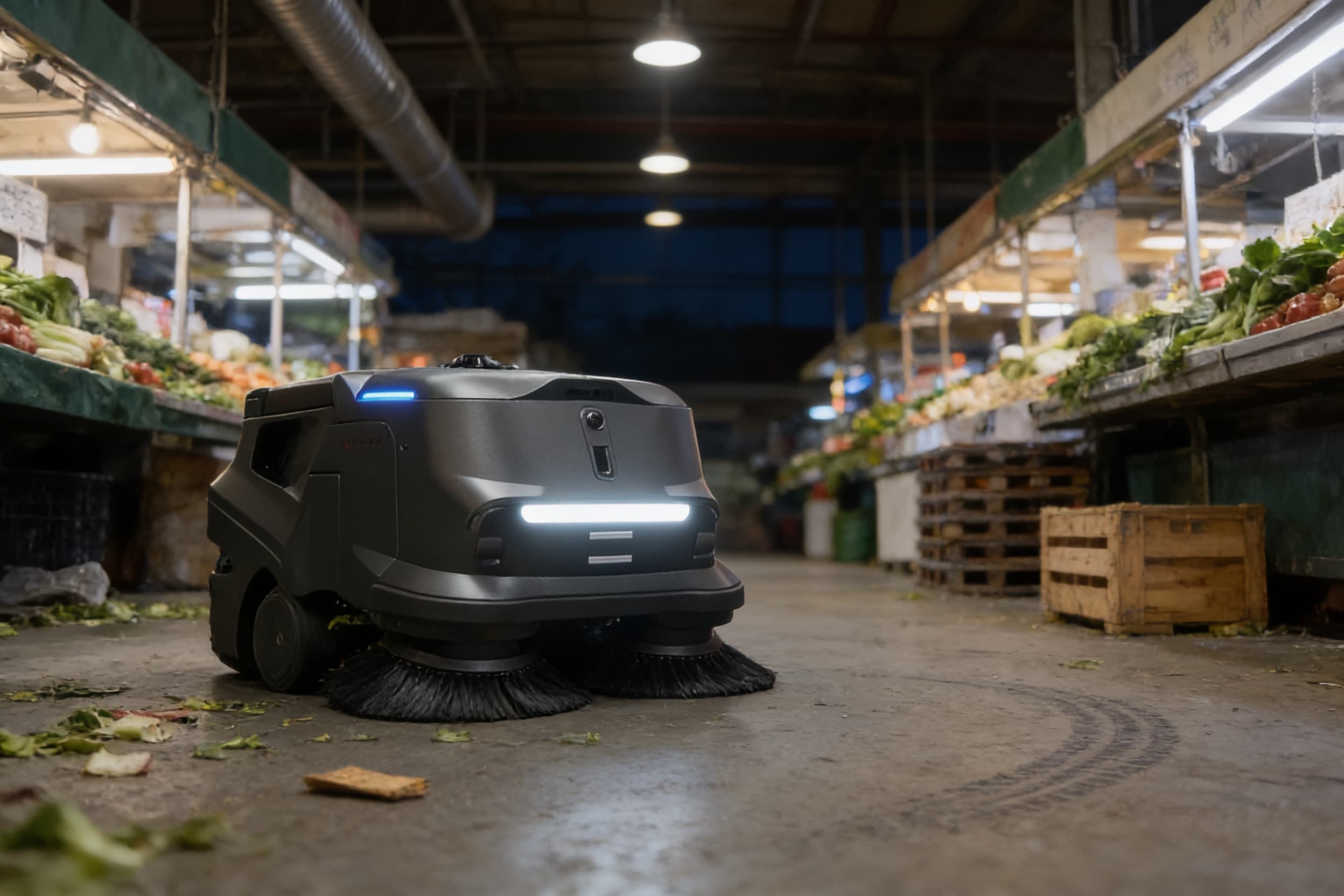
Real robot mid-task on a working site for retail, staff nearby — candid daylight, real site, de-branded
swap for real, de-branded media before deploy — design-language §8.3
What robots do in retail
A retail floor has two repetitive, never-finished jobs: keeping the sales floor clean, and keeping the shelves accurate. Two robot categories take them. An autonomous scrubber-vac keeps the floor clean — increasingly during open hours, running safely near shoppers on a schedule rather than only after close. An inventory or shelf-scanning robot drives the aisles capturing out-of-stocks, misplaced items, price-label errors, and planogram gaps, so staff fix problems instead of hunting for them.
Retail is a daytime, public, mixed-surface environment, which shapes the fit: the unit has to run safely and unobtrusively around shoppers, handle the mix of polished floor and entrance mats, and navigate aisles that get reset and re-merchandised. The decision is matching the unit to your store footprint and surfaces, then making sure someone maps the floor and keeps it serviced — the part a bare-OEM purchase leaves to the store team.
Coverage
Service nationwide.
Service nationwide. 3,000+ service engineers across all 50 US states, 85+ metros with closest-hub dispatch. 10-minute remote triage, 24-hour on-site dispatch, 24/7 emergency response.
All 50
US states covered
85+
metros with closest-hub dispatch
3,000+
service engineers in the US
Remote triage
10-minute remote triage during business hours
Nationwide dispatch
24-hour nationwide on-site dispatch
Emergency response
24/7 emergency response
What a retail floor actually needs from a robot
A retail robot works a public, daytime floor, so the requirements are about safe, unobtrusive operation around shoppers — not just coverage rate.
- Safe daytime operation around shoppers — the unit runs while the store is open, so reliable obstacle avoidance, predictable behavior, and a non-intrusive footprint matter more than top speed.
- Mixed-surface handling — polished sales floor, entrance mats, tile, and the occasional spill are different jobs; confirm the unit handles your real surfaces.
- Aisle navigation through resets — shelves get re-merchandised and aisles get reconfigured; the unit (and its map) has to keep up without a re-survey every week.
- For inventory robots — accurate shelf-scanning that feeds your systems (out-of-stocks, price errors, planogram compliance) in a form your team can act on, not a data dump.
- A charging dock out of the shopper path — the unit needs a home base that does not block an aisle or an entrance.
Which robots fit retail
The categories that earn their keep here, with the OEM units we see most — picked OEM-neutrally for your building.
Cleaning robots (scrubber-vacs)
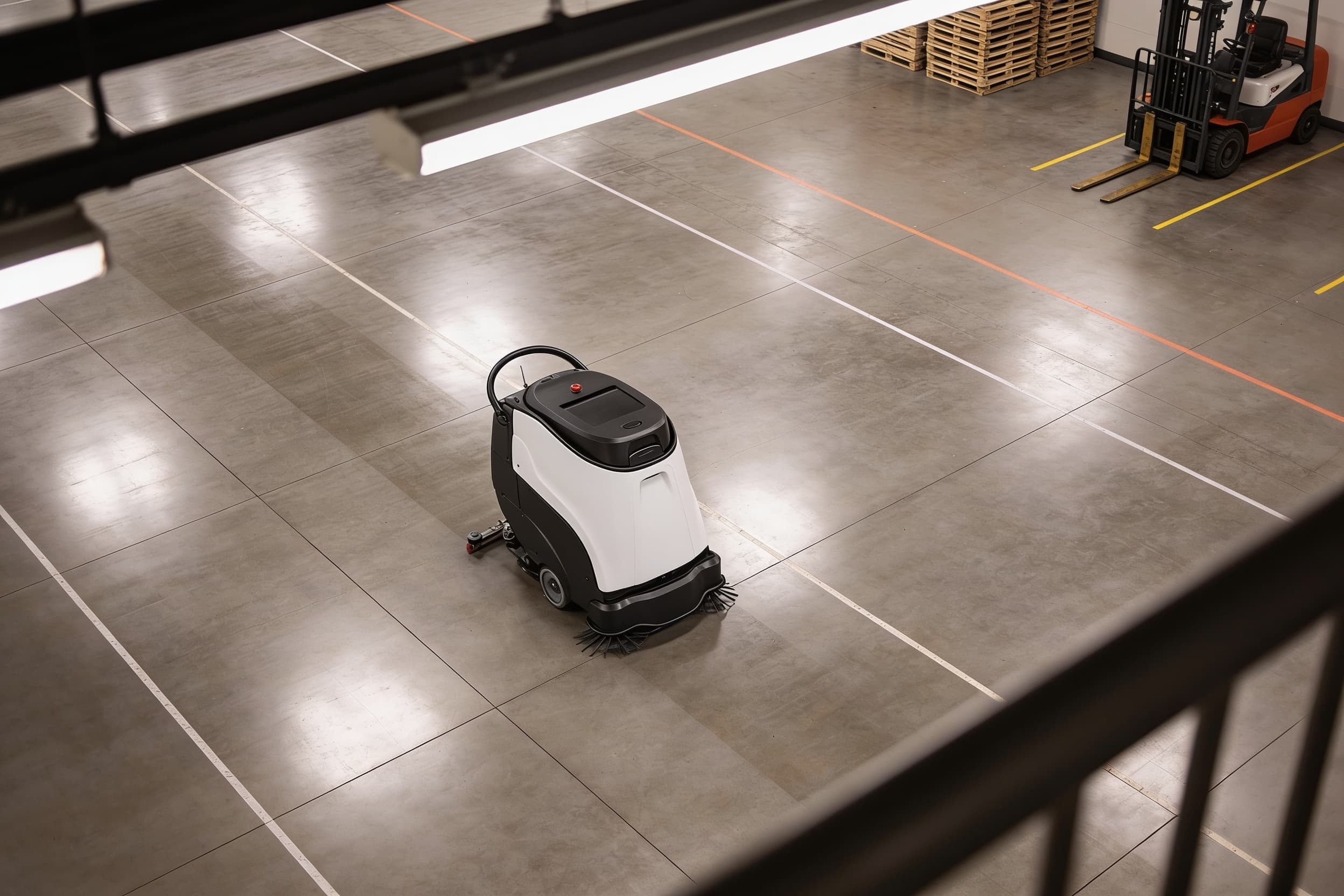
Scrub and vacuum the sales floor — increasingly during open hours, safely near shoppers — so staff spend their hours on service, not pushing a machine.
Representative OEMs: Gausium Phantas, Pudu CC1, ICE Cobotics Cobi 18
Read the buyer guide →Inventory / shelf-scanning robots
Drive the aisles capturing out-of-stocks, misplaced items, price-label errors, and planogram gaps so staff fix problems instead of hunting for them.
Representative OEMs: Aisle-scanning inventory robots (e.g. Simbe Tally-class)
Cleaning during open hours is the retail shift that changed the math
Retail cleaning used to mean an overnight crew. The newer compact scrubber-vacs changed that: they run safely near shoppers during open hours on a schedule, which means a store can keep the floor clean continuously instead of only after close — and skip a chunk of the overnight labor that is hardest to staff. The unit owns the open sales floor; staff handle spills, restrooms, and detail. A mid-size scrubber-vac (Pudu CC1, Gausium Phantas, ICE Cobi 18-class) is the typical fit for a grocery or big-box footprint.
The honest caveat: a daytime cleaning robot has to be genuinely unobtrusive and reliable around shoppers, or it becomes a liability instead of an asset. This is exactly why the deployment — mapping the floor, setting the schedule, validating the behavior around people, and keeping it serviced — matters as much as the machine. A scrubber that freezes in a busy aisle is worse than no scrubber.
Buy vs. RaaS for retail
Multi-store retailers favor Robotics-as-a-Service because it standardizes the fleet across locations on one monthly fee (~$600–$2,000/month per scrubber) with deployment, service, and a backup folded in — no capital tied up per store and no per-location maintenance program to staff. A single high-volume store with steady utilization may buy outright (~$22k–$96k). For inventory robots, pricing is typically a per-store subscription. We surface both, and the per-location math, in a quote.
Retail robots by job
The robot categories a retail floor uses, with representative OEM units and illustrative pricing. Figures are publicly-reported market ranges, framed as "starting around" — not quotes.
| Job | Robot type | Representative OEMs | Illustrative cost |
|---|---|---|---|
| Sales-floor cleaning (daytime-safe) | Compact scrubber-vac | Pudu CC1, Gausium Phantas, ICE Cobi 18 | ~$22k–$96k buy · ~$600–$2,000/mo RaaS |
| Inventory / shelf scanning | Aisle-scanning inventory robot | Simbe Tally-class | Per-store subscription · quote-based |
Illustrative only — publicly-reported ranges, not quotes. Exact pricing depends on configuration, term, store count, and region. We confirm the real number for your stores in a quote; we do not publish any OEM’s exact contract price as a fact.
The labor case for retail robots (illustrative)
A retail cleaning robot earns its keep on the open sales floor — the repetitive 70–80% of floor area a crew burns out on. A mid-size scrubber-vac on RaaS (~$600–$900/month) runs roughly 4–6× cheaper than a full-time overnight cleaner (~$3,500–$4,500/month all-in) on that open-floor portion, and running it during open hours skips a chunk of the hardest-to-staff overnight labor. An inventory robot’s payback is different: it surfaces out-of-stocks and price errors continuously, so staff fix lost-sale problems faster instead of hunting for them.
The honest framing: the robot does not replace the store team, it redeploys it — off the open floor and the aisle-by-aisle audit, onto service, spills, detail, and acting on what the inventory scan finds. We build the per-store side-by-side in a quote.
- Mid-size scrubber-vac on RaaS: ~$600–$900 / month — illustrative.
- Full-time overnight cleaner (all-in): ~$3,500–$4,500 / month — illustrative.
- Inventory robots pay back on lost-sale recovery and labor freed from manual audits.
- These are illustrative ranges with stated assumptions, not a guaranteed result.
When a retail robot is the wrong call
A retail robot is the wrong fit when the store or the floor does not suit it:
- A small footprint chopped into tight aisles — a person is faster than a robot that spends its run turning and re-docking.
- Floors that are mostly detail (lots of edges, fixtures, and mats, little open run) — robots own open floor, not corners.
- Aisles reconfigured constantly with heavy daily resets — re-mapping overhead can outweigh the savings.
- A single low-traffic store with a cleaner already on staff and no plan to redeploy them — utilization is too low to pay back.
- No one will own the daily empty/refill and the basics — even a serviced robot needs a local hand.
Why a retailer should buy through an integrator, not a bare OEM
A robot OEM ships a store a scrubber and a login — and a multi-store retailer ends up with a different vendor, a different support queue, and a different maintenance story per location. Picking the right daytime-safe unit, financing a fleet, mapping each floor, training each store team, and getting a fast fix when one goes down is left to the retailer to coordinate at scale.
Service Robot Co. is the one vendor for all five, and OEM-neutral about which unit. We pick the right retail robot, surface buy-vs-RaaS fleet financing, deploy and map each store, train the team, and service the fleet through a US engineer network with backups ready — one contract and one number across locations. You get a standardized, serviced fleet, not a different robot problem in every store.
Common questions
- What robots do retail stores use?
- Retail uses two main robot types: autonomous floor scrubber-vacs that keep grocery and big-box sales floors clean — increasingly during open hours, safely near shoppers (e.g. Pudu CC1, Gausium Phantas, ICE Cobotics) — and inventory/shelf-scanning robots that drive the aisles capturing out-of-stocks, price errors, and planogram gaps (e.g. Simbe Tally-class). The right mix depends on your footprint and where your labor goes.
- Can a cleaning robot run while the store is open?
- Yes — the newer compact scrubber-vacs run safely near shoppers during open hours on a schedule, so a store keeps the floor clean continuously instead of only after close, and skips a chunk of hard-to-staff overnight labor. It has to be genuinely unobtrusive and reliable around people, which is why the deployment and service matter as much as the machine.
- How much do retail cleaning robots cost?
- Compact scrubber-vacs run roughly $22k–$96k to buy or ~$600–$2,000/month on Robotics-as-a-Service with deployment and service folded in; inventory robots are typically a per-store subscription. These are illustrative market ranges, not quotes — store count and surfaces affect the real number, which we confirm in a quote.
- What does a retail inventory robot do?
- An inventory or shelf-scanning robot drives the aisles capturing out-of-stocks, misplaced items, price-label errors, and planogram gaps, then feeds your systems so staff fix lost-sale problems instead of hunting for them aisle by aisle. The payback is on lost-sale recovery and the labor freed from manual shelf audits.
- Can a retailer rent robots across many stores?
- Yes — multi-store retailers usually run Robotics-as-a-Service so the fleet is standardized on one monthly fee with deployment, service, and backups folded in, under one contract and one point of contact across locations. A single high-volume store with steady utilization may buy outright. We surface both, with the per-store math, in a quote.
Go deeper
The robots
Other industries
Start with a free site assessment.
We walk your site, learn the job, and tell you which unit fits — OEM-neutrally — before you commit a dollar. If nothing fits yet, we say so.