Skip to content
Warehouse robots · buyer guide

Robots for warehouses: the honest buyer guide

AMRs, tuggers, autonomous forklifts, goods-to-person, and scrubbers that move material and clean floors — without adding headcount you cannot hire.

Warehouses use the widest robot mix: autonomous mobile robots (AMRs) and tuggers that move totes, carts, and pallets; autonomous forklifts (e.g. Seegrid Lift CR1) that lift and stack; goods-to-person systems that cut picker walking; and autonomous scrubbers for the big floors. The choice turns on whether your routes change (AMR) or are fixed (AGV) and on what deployment requires. Service Robot Co. picks the right unit, finances it, deploys it, and services it nationwide.

Pricing and specs on this page are publicly-reported market ranges, framed as estimates — not quotes. We confirm the real numbers for your site in an assessment.

What robots do in warehouses

A warehouse or 3PL site has the most repetitive, physical, hard-to-staff work of any vertical — and the deepest robot toolkit to take it on. Material moves between pick faces, packing, and dock doors; pallets get lifted and stacked; pickers walk miles a shift; and acres of floor need cleaning. Four robot categories cover it: autonomous mobile robots (AMRs) and tuggers that haul totes, carts, and pallets across the floor; autonomous forklifts that lift and stack; goods-to-person systems that bring shelves and totes to a stationary picker; and autonomous scrubbers for the open slab.

The defining question in a warehouse is whether your floor and routes change or stay fixed — that is the AMR-vs-AGV decision, and it is worth getting right before you compare any two machines. The second question, the one that quietly decides total cost, is what deployment requires: a unit that needs guide-path install, re-racking, or a shutdown can cost far more than a more expensive machine that needs none. The newer collaborative units that learn a route by being walked it are winning for exactly that reason.

Coverage

Service nationwide.

Service nationwide. 3,000+ service engineers across all 50 US states, 85+ metros with closest-hub dispatch. 10-minute remote triage, 24-hour on-site dispatch, 24/7 emergency response.

All 50

US states covered

85+

metros with closest-hub dispatch

3,000+

service engineers in the US

Remote triage

10-minute remote triage during business hours

Nationwide dispatch

24-hour nationwide on-site dispatch

Emergency response

24/7 emergency response

What a warehouse actually needs from a robot

A warehouse robot moves real weight near people, so the requirements are about fit, safety, and deployment cost — not the brochure’s peak throughput.

  • The right navigation model — does your layout change (favor an AMR, free navigation, no infrastructure) or is the route fixed and high-volume (an AGV may be cheaper)? Decide this first; our AMR-vs-AGV guide goes deep.
  • Honest deployment cost — guide-path install, re-racking, or a shutdown is the hidden cost. A zero-infrastructure unit that learns its route can beat a cheaper machine that needs a construction project.
  • Load fit — pallet vs. cart vs. tote, and how heavy, sets the whole machine class. Match the unit to your real loads, not the peak spec.
  • Safety around people — these carry hundreds to thousands of pounds near staff; the safety setup and collaborative behavior matter as much as payload (ANSI/RIA R15.08 and ISO 3691-4 govern mobile-robot and driverless-truck safety).
  • Peak-season flexibility — demand spikes and passes; renting lets you add units for the busy months and scale back without idle hardware on the books.

Which robots fit warehouses

The categories that earn their keep here, with the OEM units we see most — picked OEM-neutrally for your building.

Autonomous mobile robots (AMRs)

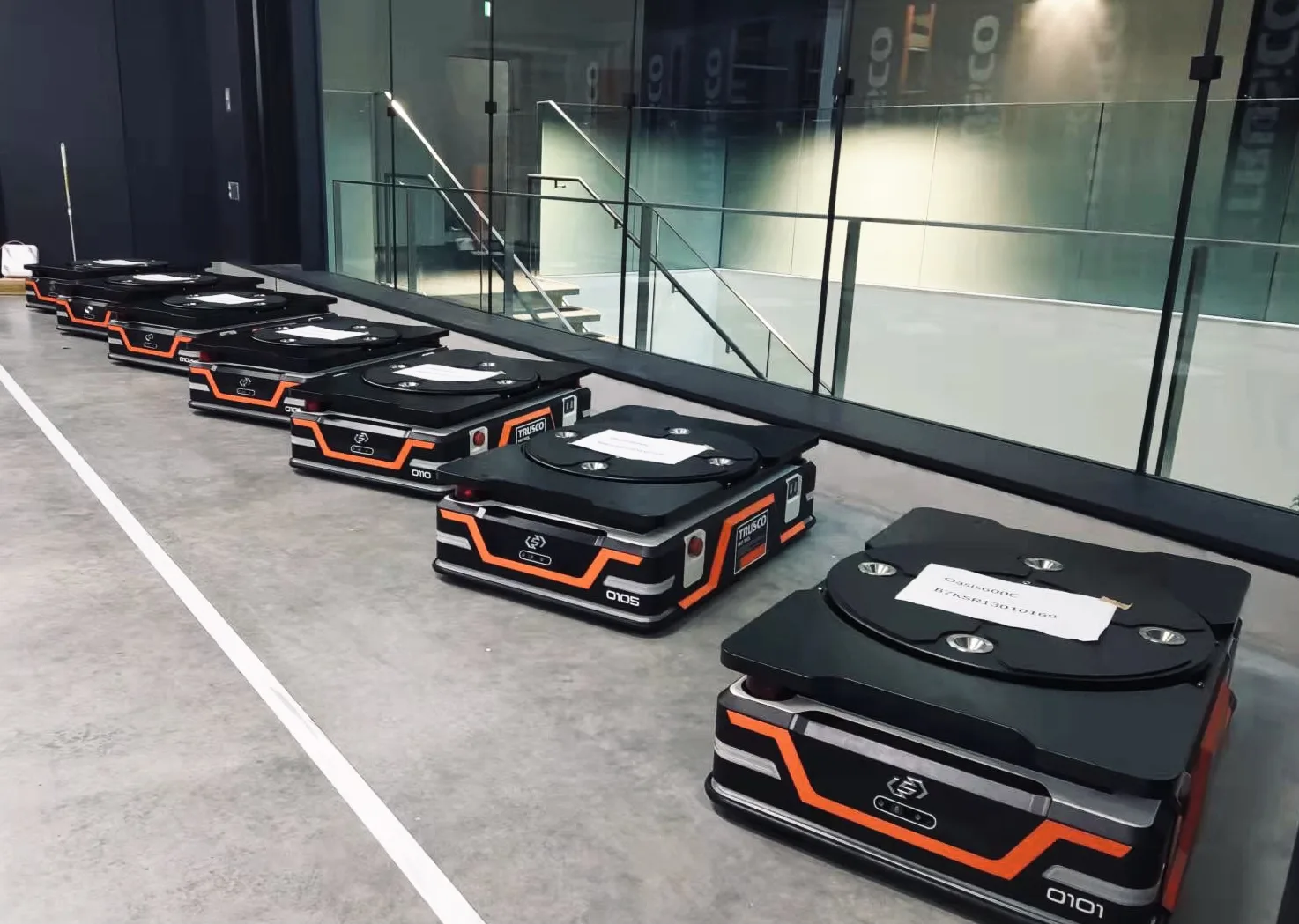
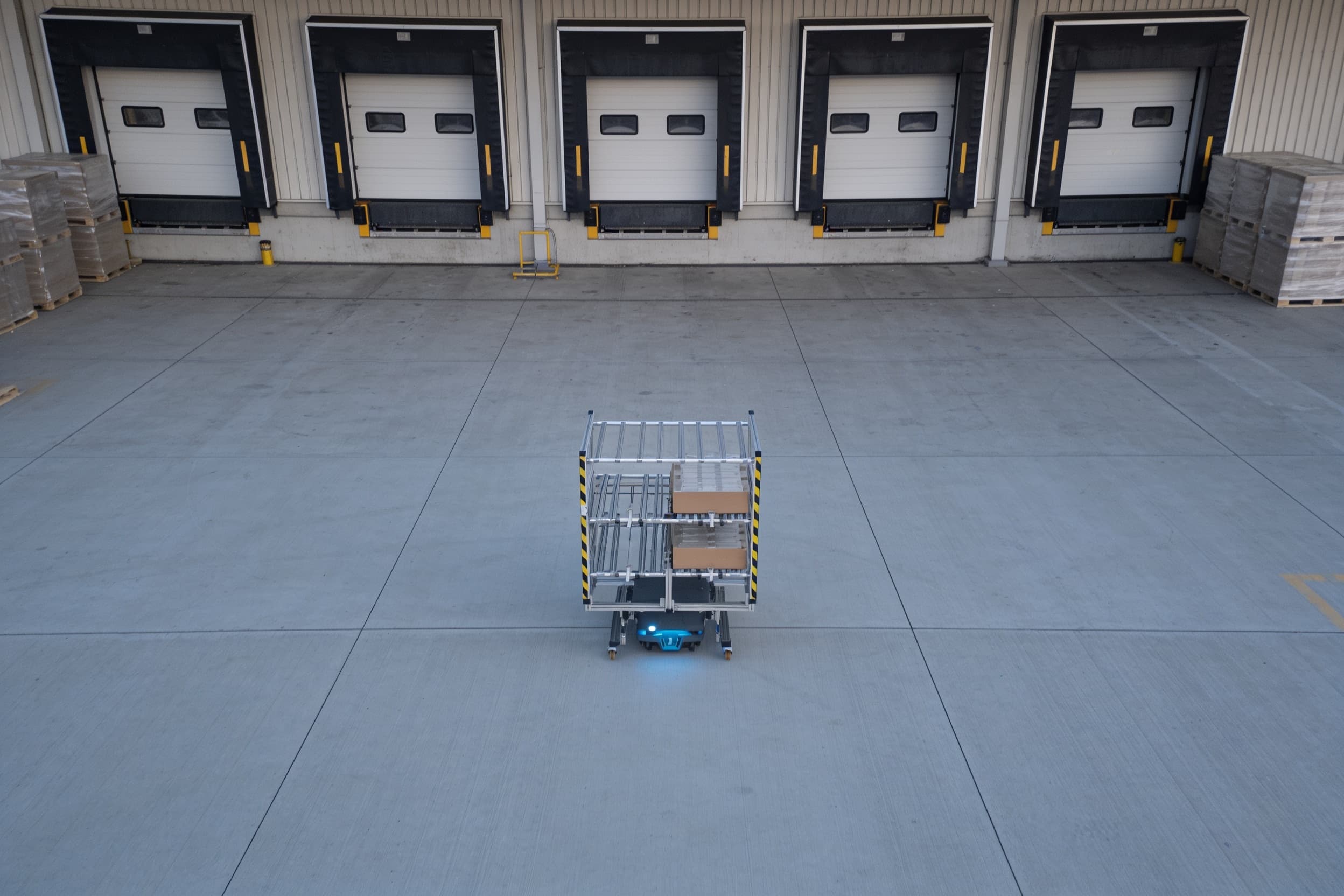
Haul totes, carts, and pallet loads point-to-point across a changing floor with free navigation and no fixed track.

Representative OEMs: AMR-class pallet and tote movers

Read the buyer guide →

Autonomous tuggers

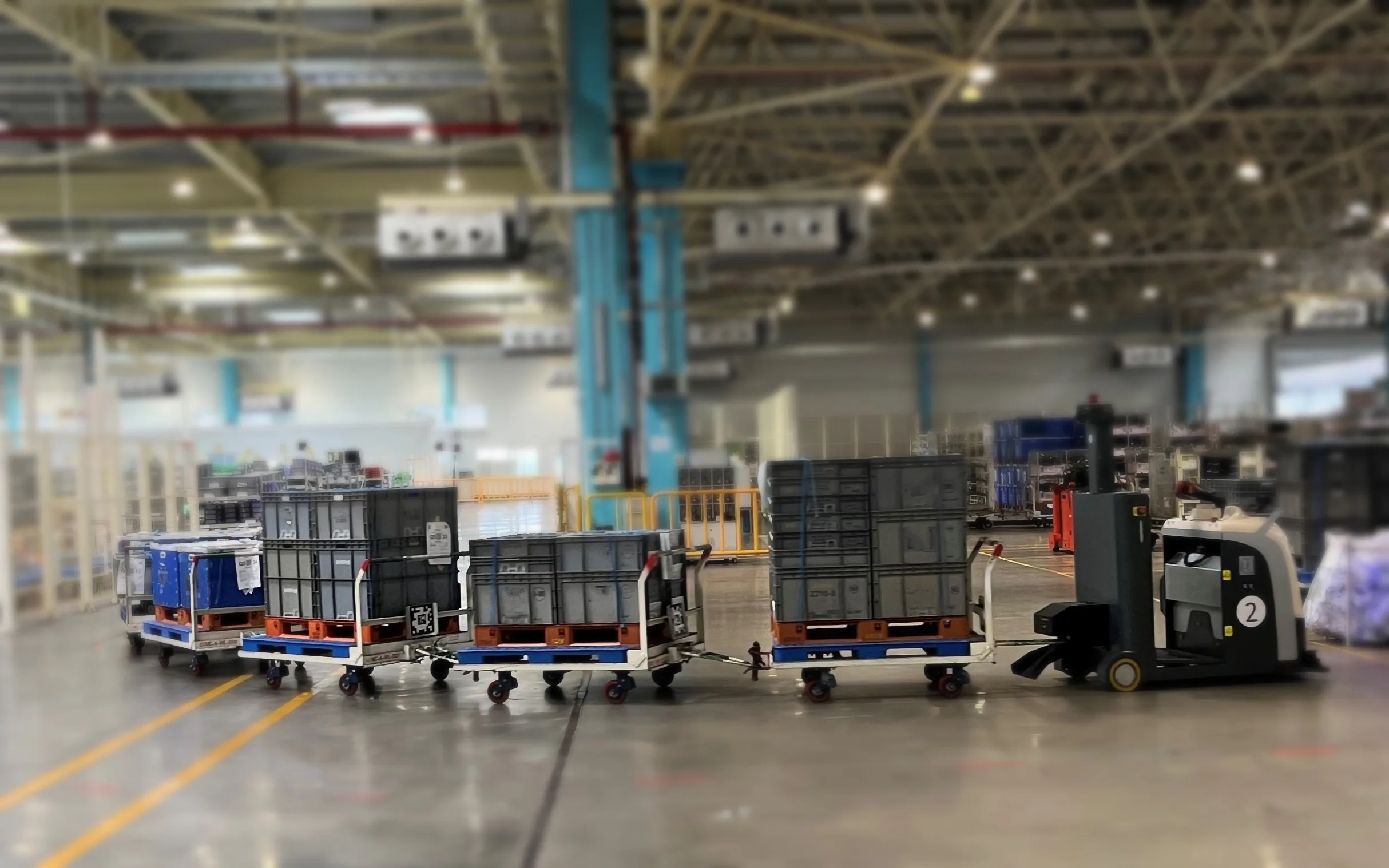
Tow a train of carts on repetitive milk runs with zero infrastructure change — the newer collaborative units learn the route by being walked it.

Representative OEMs: Peer Robotics Peer 3000 (~3,000-lb class)

Read the buyer guide →

Autonomous forklifts

Pick up, move, and stack pallets without a driver where forklift drivers are hard to staff and the moves are repetitive.

Representative OEMs: Seegrid Lift CR1 (~4,000-lb class)

Read the buyer guide →

Cleaning robots (scrubbers)

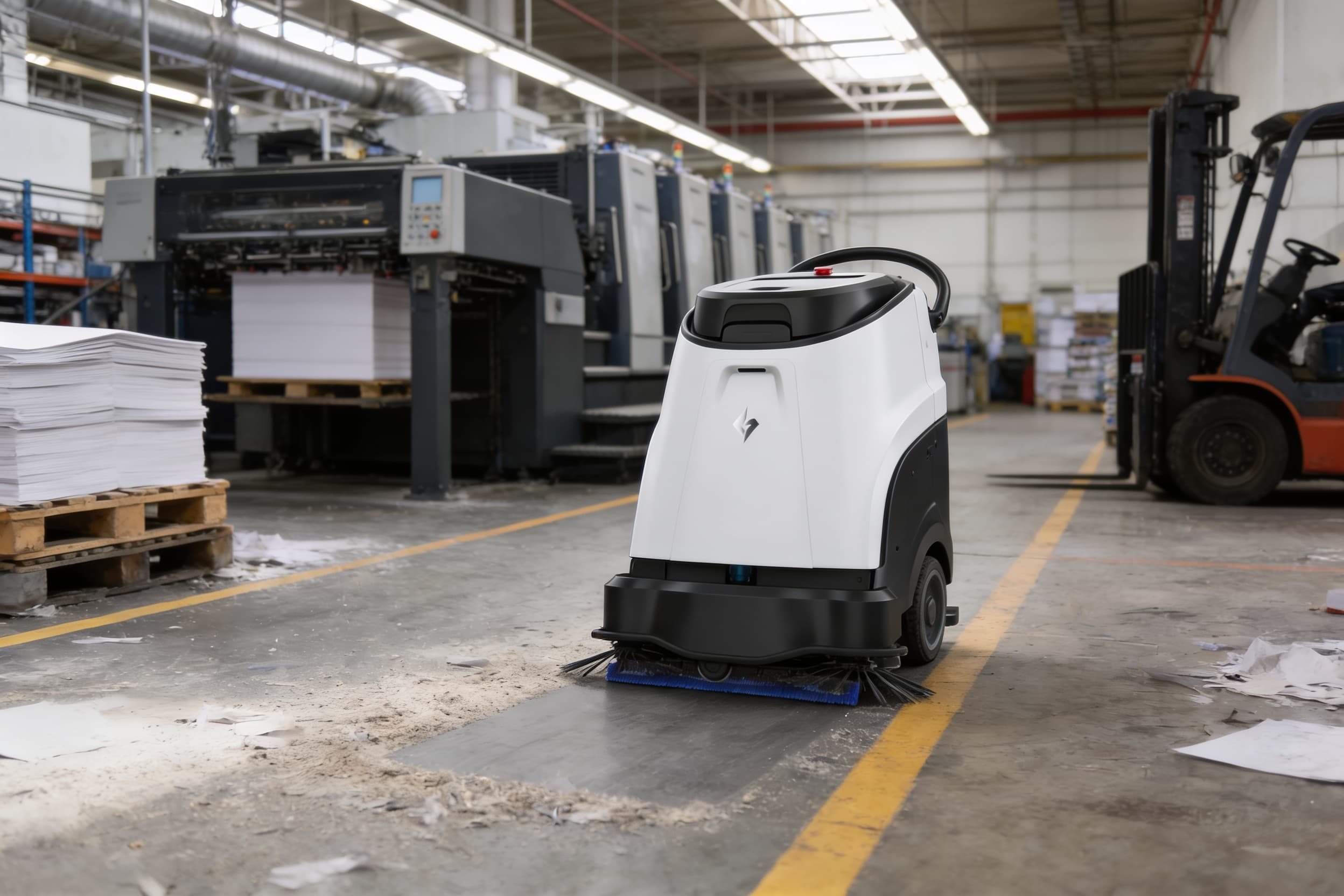
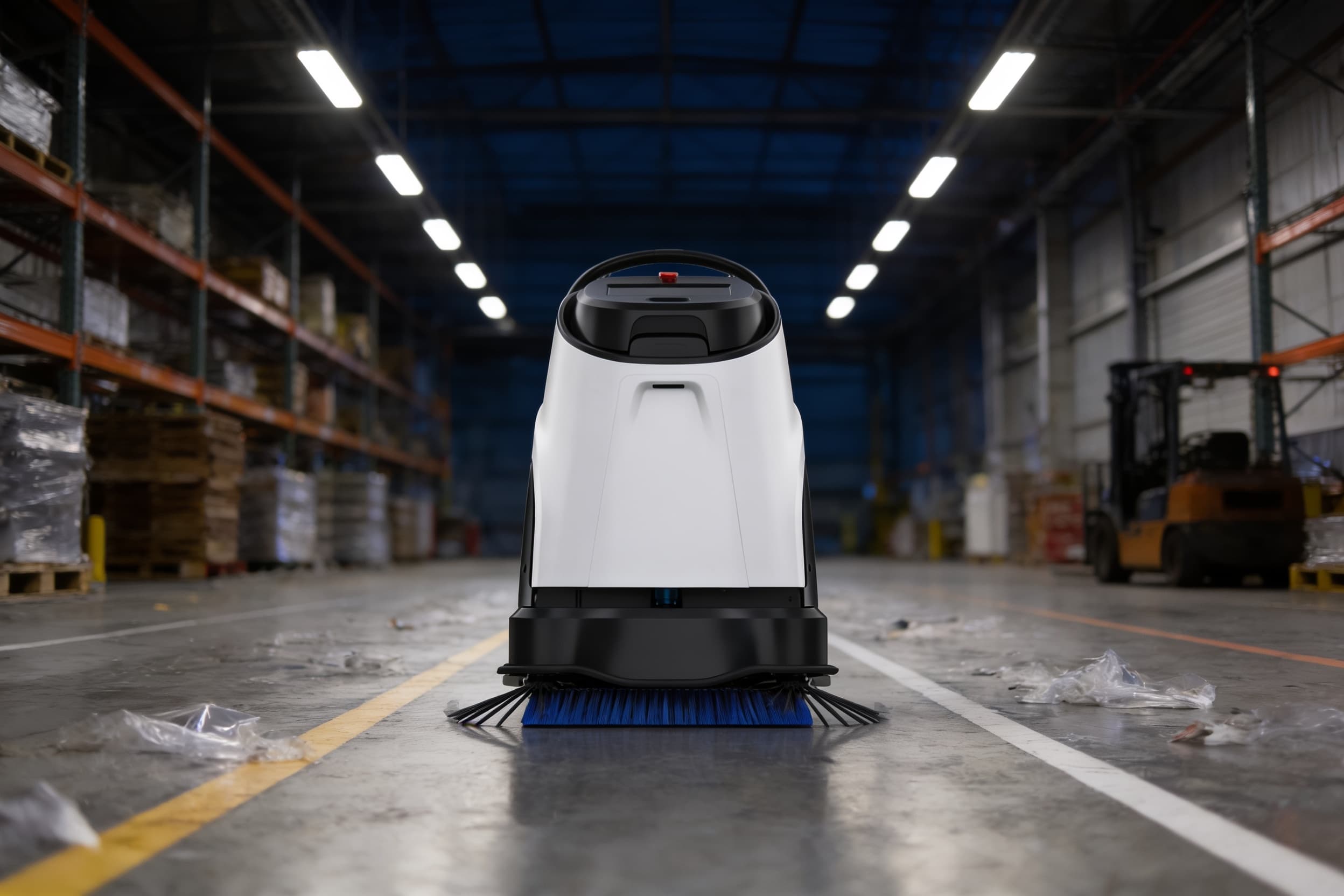
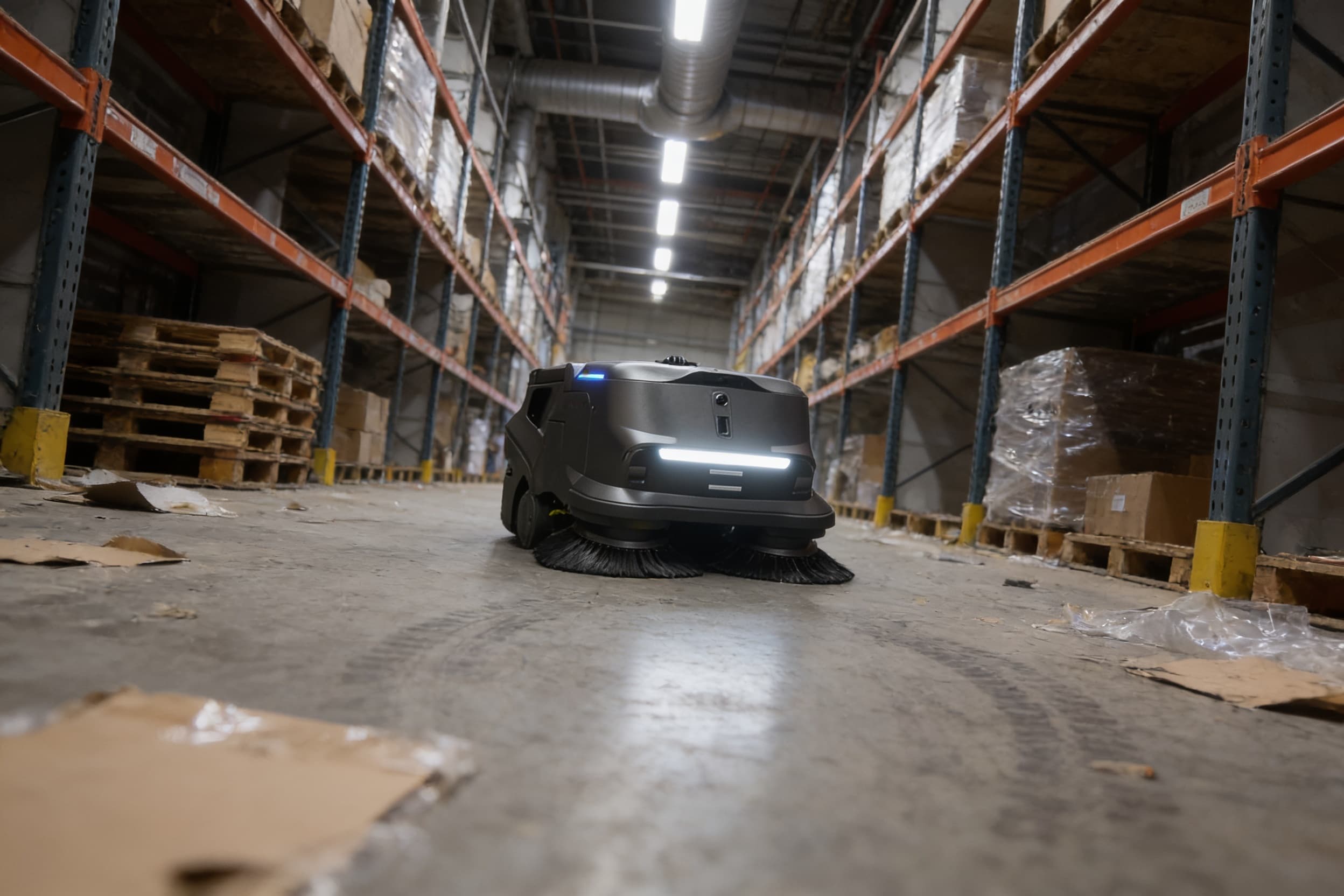
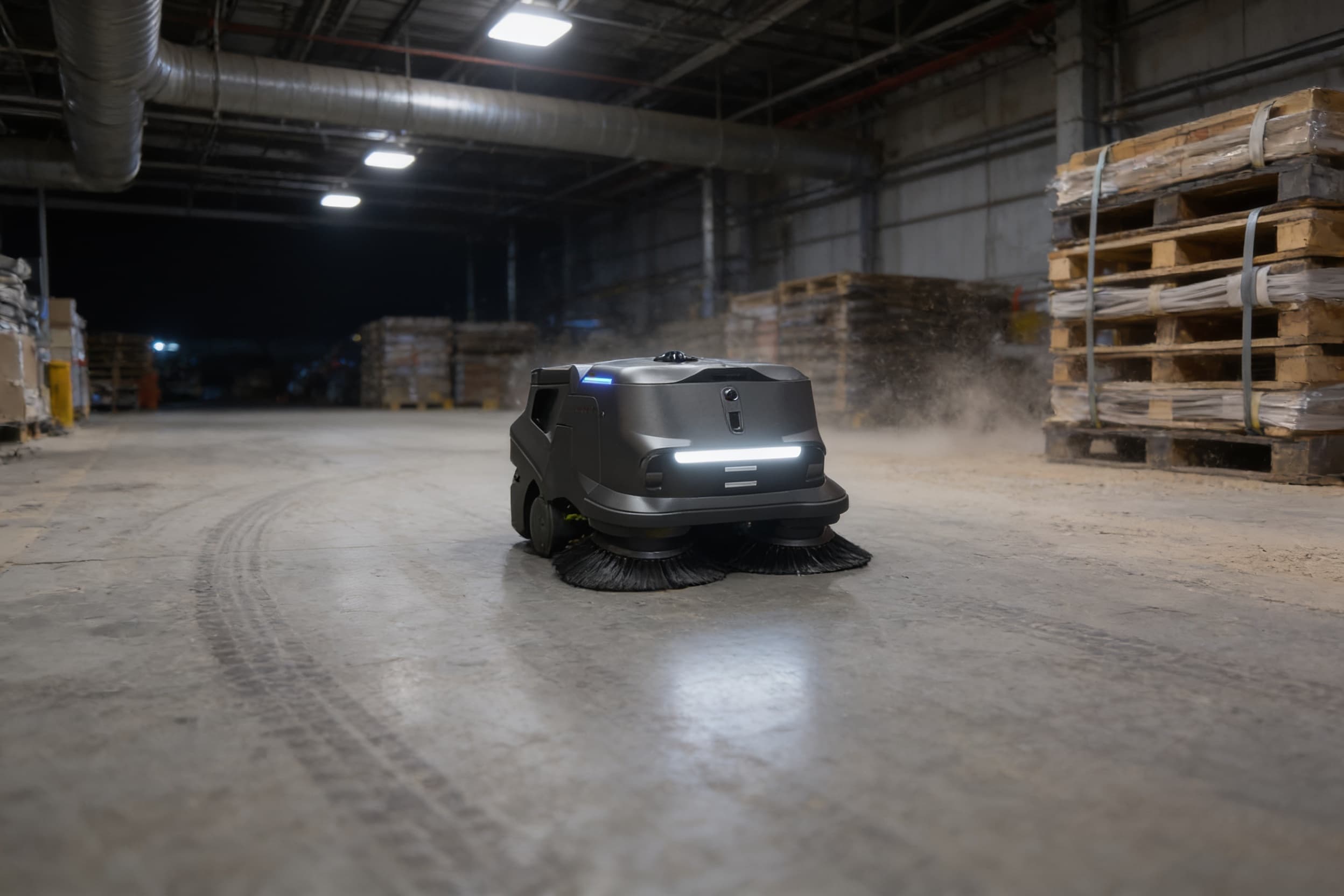
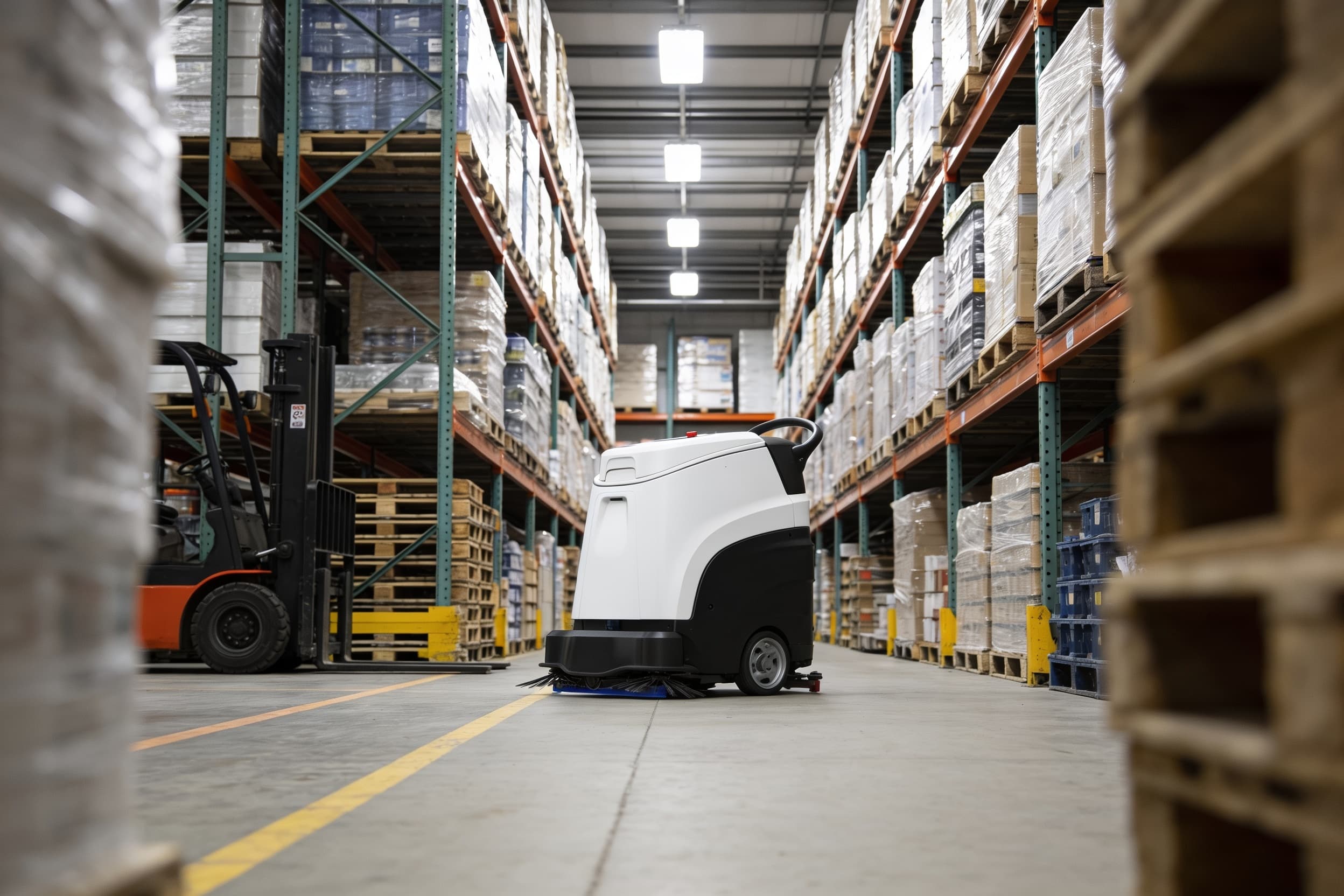
Scrub and sweep the big open slab overnight or alongside a shift, covering the ground a crew burns out on.

Representative OEMs: Gausium Scrubber 75, Avidbots Neo 2, Pudu CC1

Read the buyer guide →

Start with AMR vs AGV, then with what deployment requires

Most warehouse robot mistakes are made before any model is compared, by picking the wrong category. An AGV follows a fixed guide path you install — reliable and cheap on a route that never changes, but it stops when the path is blocked and re-routing means re-installing the guide. An AMR carries its own map, navigates freely with SLAM and LiDAR, routes around people and obstacles, and adapts as the floor changes with no infrastructure to install. Fixed high-volume lane → an AGV is often fine; changing layout, mixed routes, or no shutdown possible → an AMR. Our AMR-vs-AGV guide is the neutral, deeper read.

The second decider is deployment. The cheapest robot on the spec sheet is not cheap if it needs a re-racked warehouse or a shutdown to run. This is why the newer collaborative tuggers and AMR-class movers — which learn a route by being walked it, with zero infrastructure change — are winning: you add automation without a construction project. We weight "what does deployment actually require?" heavily when we recommend a unit.
Buy vs. RaaS for a warehouse

Warehouse robots span inexpensive scrubbers to capital-class forklifts, and the buy-vs-RaaS math turns on utilization and what deployment requires. Robotics-as-a-Service folds the robot, the deployment, the service, and a backup into one monthly fee — which fits peak-season flexibility and keeps idle hardware off the books in the slow months. Outright purchase fits a steady, high-utilization line once the model is proven and your team can carry the upkeep. For heavy material-handling units, the deployment cost (infrastructure) often matters more than the unit price — we model the real total cost, including buy-vs-RaaS, in a quote.

Warehouse robots by job

The robot categories a warehouse uses, with representative OEM units and what deployment requires. Capacities are the published class; treat all figures as illustrative, not quotes.

JobRobot typeRepresentative unitInfrastructure
Move totes / carts / pallets (changing routes)AMRAMR-class pallet & tote moversNone — free navigation
Tow carts on milk runsAutonomous tuggerPeer Robotics Peer 3000 (~3,000 lb)Zero change — learns the route
Lift & stack palletsAutonomous forkliftSeegrid Lift CR1 (~4,000 lb)Vision-guided, minimal
Cut picker walkingGoods-to-personAMR-driven shelf / tote systemsPicking station + software
Clean the open slabAutonomous scrubberGausium Scrubber 75, Avidbots Neo 2None — runs your aisles

Illustrative only — representative units and published capacity classes, not quotes or guaranteed specs. We confirm the exact model, capacity, deployment requirement, and terms for your facility in a quote.

The case for warehouse automation (illustrative)

The payback in a warehouse is driven by hard-to-staff roles, retention, and injury risk — not just labor rate. Forklift drivers and cart-pushers are among the hardest roles to hire and keep, and manual lifting and towing carry real injury cost. A robot that takes the repetitive pallet moves, milk runs, or picker walking gives those hours back and removes the heaviest, most injury-prone motion from people. On the cleaning side, an autonomous scrubber on RaaS (~$600–$900/month for a mid-size unit) runs roughly 4–6× cheaper than a full-time overnight cleaner (~$3,500–$4,500/month all-in) on the open-floor portion.

The honest framing: heavy material-handling units are capital-class decisions where deployment cost can dwarf the unit price, so a zero-infrastructure unit on a steady route pays back far faster than a cheaper machine that needs a re-rack first. We build the real side-by-side — including deployment and buy-vs-RaaS — in a quote.

  • Mid-size scrubber on RaaS: ~$600–$900 / month — illustrative.
  • Material-handling payback drivers: hard-to-staff roles, retention, injury-risk reduction.
  • Deployment cost (infrastructure) often matters more than the unit price.
  • These are illustrative ranges with stated assumptions, not a guaranteed result.

When a warehouse robot is the wrong call

Warehouse robots span cheap scrubbers to capital-class forklifts; they are the wrong call when:

  • Volume is low and irregular — the payback period stretches past the point it makes sense.
  • Loads and routes change constantly with no stable pattern to automate — automate the steady process, not the chaos.
  • The only viable unit needs major infrastructure (re-racking, guide-path install) you cannot justify — the construction cost can dwarf the robot.
  • You need it live next week — heavy-load deployment and safety setup take real time.
  • No one will own day-to-day operation and safety oversight on site — these run near people and need a local owner.

Why a warehouse should buy through an integrator, not a bare OEM

Material handling is where the bare-OEM gap hurts most. The machines carry weight, run near people, and a real deployment often spans several vendors — the AMR or forklift OEM, the safety integrator, the financing. Stitching that together and owning the downtime when a six-figure deployment stalls is a heavy lift for an operations team that already has a warehouse to run.

Service Robot Co. is the one vendor for all five, and OEM-neutral about which unit. We pick the right warehouse robot — weighting what deployment really requires — surface buy-vs-RaaS financing, deploy and integrate it safely to the mobile-robot safety standards, train your team, and service it through a US engineer network with a backup ready. You get a working deployment, not a multi-vendor project to project-manage.

Common questions

What robots do warehouses use?
Warehouses use the widest robot mix: autonomous mobile robots (AMRs) and tuggers that move totes, carts, and pallets; autonomous forklifts (e.g. Seegrid Lift CR1, ~4,000-lb class) that lift and stack; goods-to-person systems that cut picker walking; and autonomous scrubbers (e.g. Gausium, Avidbots) for the big floors. The right mix turns on whether your routes change and on what deployment requires.
Should a warehouse use an AMR or an AGV?
Use an AMR when your floor layout changes, you run mixed routes, or you cannot shut down to install track — it navigates freely with SLAM and LiDAR and needs no infrastructure. Use an AGV for one fixed, very high-volume route that rarely changes, where it is often cheaper per unit. This is the first decision to get right; our AMR-vs-AGV guide is the neutral, deeper read.
Do warehouse robots need guide tracks or floor changes?
Not the newer ones. AMRs navigate your existing aisles with no fixed track, and collaborative tuggers like the Peer Robotics Peer 3000 (~3,000-lb class) learn a route by being walked it — zero infrastructure change. AGVs and some systems do need installed guide paths. Because deployment cost (re-racking, guide-path install, shutdowns) often matters more than unit price, we weight it heavily when recommending a unit.
How much can an autonomous forklift lift?
Representative autonomous forklifts like the Seegrid Lift CR1 are in the ~4,000-lb class for pallet handling and stacking. Exact capacity depends on the model and configuration — we confirm the right unit for your loads in a quote. These are published class figures, illustrative, not guaranteed specs.
Can I rent warehouse robots just for peak season?
Yes. On Robotics-as-a-Service you add units for the busy months and scale back after, with deployment, service, and a backup folded into one monthly fee — so you are not holding idle hardware in the slow season. For heavy material-handling units the deployment cost often matters more than the rate; we model the real total cost, including buy-vs-RaaS, in a quote.
Warehouse automation · the full reference

What "warehouse automation" actually means

Warehouse automation is the use of robots, machines, and software to do the moving, storing, picking, loading, and counting work that people used to do by hand in a distribution center. It splits cleanly into three layers: the physical robotics that move and handle goods (mobile robots, forklifts, storage-and-retrieval systems, picking arms, dock loaders, inventory drones); the software layer that decides and orchestrates (the warehouse management, execution, and control systems, plus robot fleet managers); and the integrators who connect the two — picking the right mix, deploying it safely, financing it, and keeping it running. Most buyers over-focus on the first layer and under-plan the other two, which is exactly where deployments stall.

There is no single "warehouse robot." A modern facility runs a mix matched to its work: autonomous mobile robots (AMRs) and tuggers for floor transport, automated storage-and-retrieval systems (ASRS) and goods-to-person for dense storage and picking, autonomous forklifts for pallets, piece-picking arms for eaches, dock-loading robots for trailers, inventory drones for counting, and floor scrubbers for the slab — all coordinated by warehouse software. The right question is never "which robot is best?" It is "which jobs in my building are repetitive, physical, and hard to staff, and what is the simplest reliable automation for each?"

Analysts size the broader warehouse-automation market in the tens of billions of dollars and growing at double-digit annual rates through the end of the decade, with the fastest growth in mobile robots, goods-to-person, and the newest category — autonomous trailer loading and unloading. (Those figures are third-party analyst estimates, cited as ranges, not our own measurement.) The practical takeaway for an operator is simpler: the labor to run a warehouse is the hardest it has ever been to hire and keep, and automation is moving from "nice to have" to "the only way to staff the floor."

Every warehouse-automation category, explained

The full robot-and-software taxonomy — grouped by the job the machine does. Representative OEMs are publicly-known examples, listed neutrally; we are not a reseller of any of them.

Move material across the floor (transport)

Robots that carry loads point-to-point — totes, carts, and pallets — between receiving, storage, picking, packing, and the dock. This is the most-deployed and fastest-growing physical category.

AMR — autonomous mobile robots

Self-navigating robots that build and carry their own map (SLAM + LiDAR), route around people and obstacles, and adapt as the floor changes — no fixed track to install. They share the floor safely with staff.

  • Collaborative AMRs (cobot-AMRs) that run uncaged alongside people
  • Tugger / tow-tractor AMRs that pull cart trains on milk runs
  • Pallet-mover / pallet-jack AMRs for autonomous pallet transport
  • Heavy-payload industrial AMRs (roughly 150–1,900 kg class)

Representative OEMs: MiR, OTTO Motors, Peer Robotics, Vecna Robotics, FlexQube

Also called: autonomous mobile robot, AMR robot, warehouse AMR, collaborative mobile robot, no-infrastructure AMR, reflectorless-navigation AMR.

Go deeper →

AGV — automated guided vehicles

Fixed-path vehicles that follow magnetic tape, wire, laser reflectors, or floor QR codes. Deterministic and reliable on one high-volume route that rarely changes — but they stop when the path is blocked and re-routing means re-installing the guide.

  • LGVs (laser-guided vehicles, reflector-based)
  • Wire- and tape-guided tuggers and unit-load carriers

Representative OEMs: Toyota, Jungheinrich, Rocla / Mitsubishi Logisnext, KION/Linde

Also called: automated guided vehicle, AGV warehouse, AGV vs AMR, laser-guided vehicle, magnetic-tape AGV.

Go deeper →

Autonomous forklifts & lift trucks

Driverless pallet trucks, stackers, reach trucks, counterbalanced forklifts, and very-narrow-aisle turret trucks that pick up, move, and stack pallets without an operator where forklift drivers are hard to staff and the moves are repetitive.

  • Autonomous pallet truck / pallet jack
  • Autonomous stacker and reach truck (incl. double-deep)
  • Autonomous counterbalanced forklift
  • Very-narrow-aisle (VNA) / turret truck for high-density racking

Representative OEMs: Seegrid, Jungheinrich, KION/Linde (MATIC), STILL (iGo), Balyo-driven trucks, Cyngn DriveMod

Also called: autonomous forklift, automated forklift, self-driving forklift, robotic forklift, automated guided forklift, AGF, automated reach truck, VNA AGV.

Go deeper →

Store and retrieve densely (ASRS & goods-to-person)

Systems that pack inventory into the smallest footprint and bring it to a stationary picker — instead of sending a picker walking to the inventory. Goods-to-person is the dominant high-throughput picking model.

Cube / grid ASRS (cASRS)

A dense grid of stacked bins with robots that ride on top, retrieving bins on demand. The most space-efficient storage per square foot; sold through certified integrators rather than direct.

  • Cube-grid systems with top-running robots
  • E-grocery fulfillment grids with bot swarms

Representative OEMs: AutoStore, Ocado

Also called: automated storage and retrieval system, ASRS, AS/RS, cube storage ASRS, robotic cube storage, goods-to-person system.

Go deeper →

Rack-climbing & case-handling robots (mASRS / ACR)

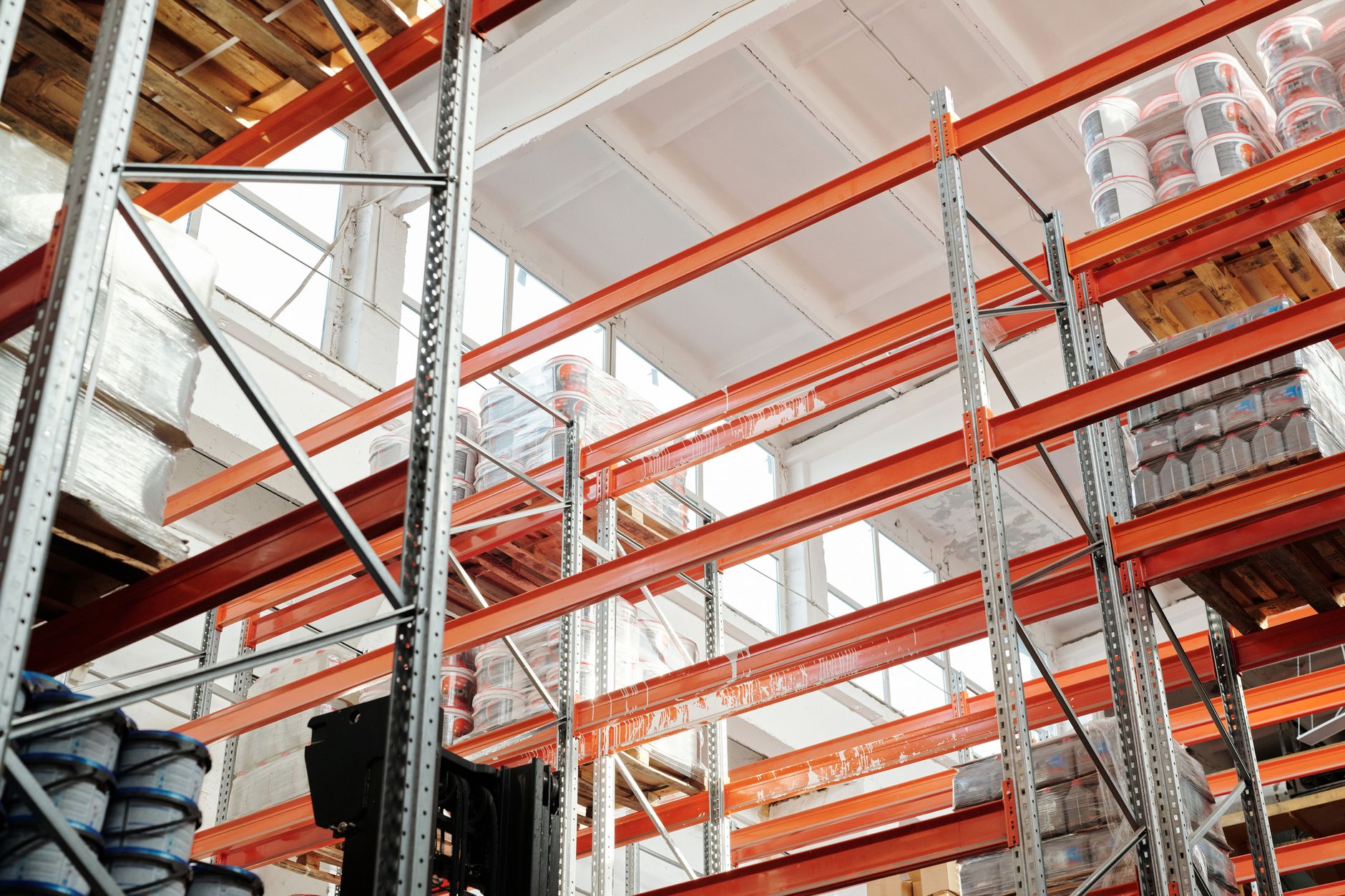
Tall mobile robots that climb standard or purpose-built racking to pull totes and cartons — reusing existing racking in many cases, which keeps the deployment CAPEX lower than a fixed crane system.

  • Rack-climbing 3D AMRs (no dig-depth)
  • Autonomous case-handling robots (ACR) with telescopic/fork mechanisms

Representative OEMs: Exotec (Skypod), Hai Robotics (HaiPick)

Also called: rack climbing robot, 3D climbing AMR, ACR robot, autonomous case-handling robot, tote-to-person, bin-to-person picking.

Go deeper →

Shuttle, shelf-to-person & crane ASRS

Rail shuttles per level, floor robots that lift portable shelf pods to a pick station, deep-lane pallet shuttles, and aisle-running stacker cranes — the established families of automated storage, matched to load size and throughput.

  • Shuttle-based ASRS (one shuttle per level)
  • Shelf-to-person / floor-robot AMR (lifts shelf pods)
  • Mini-load (tote/case) and unit-load (pallet) crane ASRS
  • Pallet / radio / 4-way deep-lane shuttle ASRS
  • Vertical lift / carousel modules (VLM / VCM)

Representative OEMs: Geek+, SSI Schaefer, Swisslog, Dematic, Kardex

Also called: shuttle ASRS, shelf-to-person robot, mini-load AS/RS, unit-load ASRS, pallet shuttle system, vertical lift module, VLM warehouse.

Go deeper →

Full-DC autonomous case handling

End-to-end systems that store items in their original cases (no totes) and run the whole inbound-to-outbound flow with a fleet of robots and arms — the most ambitious, highest-CAPEX automation tier.

  • Native case-handling storage structures
  • Robotic case break-pack and smart pallet build

Representative OEMs: Symbotic

Also called: full DC automation, native case handling, end-to-end warehouse automation.

Go deeper →

Pick individual items (piece-picking arms)

Robotic arms with vision and AI that grasp individual SKUs from bins and totes — the hardest manipulation problem in the warehouse, and the one moving fastest with AI foundation models.

Piece / each-picking arms

Vision-guided arms that grasp individual items from bins, totes, or a conveyor and place them into orders, put-walls, or sorter inductions. Modern systems handle SKUs they have never seen before ("zero-shot").

  • Each / piece picking from bins and totes
  • Random (unstructured) bin picking
  • Robotic sorter induction and put-wall automation
  • Robotic depalletizing / palletizing

Representative OEMs: RightHand Robotics, Berkshire Grey, Plus One Robotics, Ambi Robotics

Also called: robotic piece picking, automated piece picking, each picking robot, AI warehouse picking robot, vision-guided robotic picking, pick-and-place robot warehouse, robotic depalletizing.

Foundation-model (physical-AI) picking

Picking driven by large vision-language-action models and learned world models that generalize across items with little or no per-SKU training — the leading edge of "physical AI" in the warehouse.

  • Vision-language-action (VLA) picking models
  • Learned world models for grasp + placement prediction
  • Supervised autonomy (a remote human resolves exceptions)

Representative OEMs: Covariant, Sereact, Dexterity, Nimble

Also called: foundation model robotics warehouse, VLA model picking robot, physical AI warehouse, zero-shot robotic picking, supervised autonomy robotics, human-in-the-loop warehouse robot.

Load and unload trailers (the dock category)

The freshest, fastest-growing category — and the one with the clearest, most quantified pain (labor, detention, dwell time, forklift safety). Three distinct approaches fit three distinct dock profiles.

Mobile-platform trailer transfer (ALR)

Automated loading robots that ARE the freight carrier — a fleet of low platforms drives a whole palletized trailer load on or off in roughly five minutes, with no Wi-Fi, no IT integration, and no dock modifications. Best for palletized freight and closed-loop shuttle routes.

  • Whole-trailer transfer platforms (closed-loop and distribution)
  • AMR pallet-jack / counterbalance load-unload

Representative OEMs: Slip Robotics (SlipBot / SlipLift), Navflex

Also called: autonomous trailer loading robot, automated truck loading system, ATLS, ALR automated loading robot, load trailer in 5 minutes, no-infrastructure trailer loading, forklift-free trailer loading.

In-trailer robotic-arm unloaders

A mobile-base arm that reaches into a floor-loaded (loose-carton) trailer and unloads it carton-by-carton onto a conveyor — the right tool when freight is loose-loaded rather than palletized.

  • Suction / vacuum carton unloaders
  • Vision-guided multi-pick arms

Representative OEMs: Boston Dynamics (Stretch), Pickle Robot, Contoro

Also called: robotic trailer unloading, automated truck unloading, floor-loaded trailer unloading robot, detrucking robot, case unloading robot, lumper replacement robot.

Conveyor-based truck loading (ATLS)

Embedded floor conveyors — chain, skate, roller, slat, or belt — that slide a full trailer load in or out in minutes. The highest-throughput option, but infrastructure-intensive: it requires fixed dock and often trailer modifications, so it only pays off on a dedicated, high-volume lane.

  • Moving-floor and chain / skate / roller conveyor systems
  • Slip-sheet and slip-chain transfer

Representative OEMs: Joloda Hydraroll, Ancra Systems

Also called: automated truck loading system, ATLS, conveyor trailer loading, moving floor trailer loading, dock automation.

Count and monitor inventory (drones & scanning)

Autonomous robots and drones that count, locate, and audit inventory continuously — replacing manual, ladder-and-clipboard cycle counts and surfacing discrepancies in real time.

Inventory drones & autonomous scanning

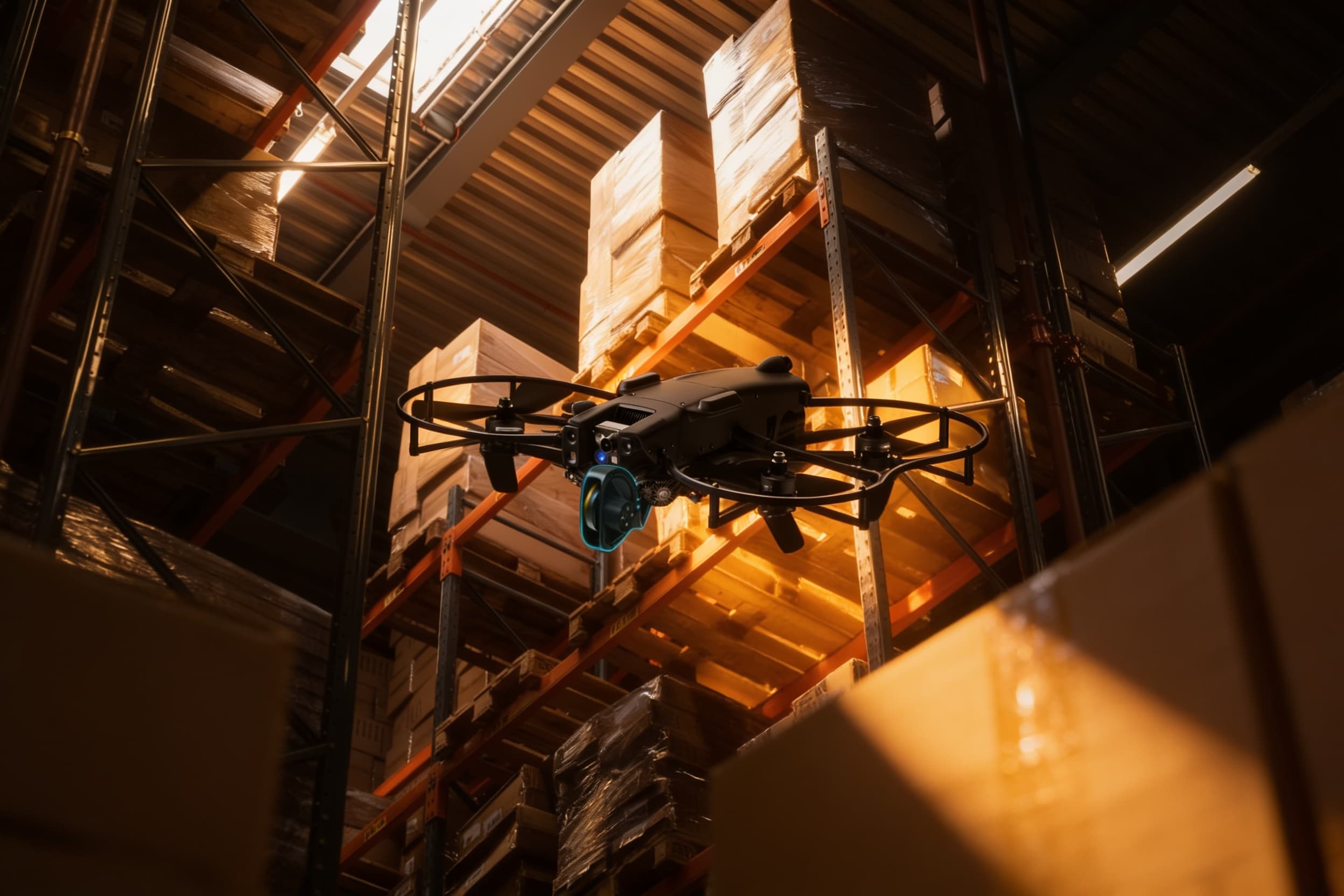
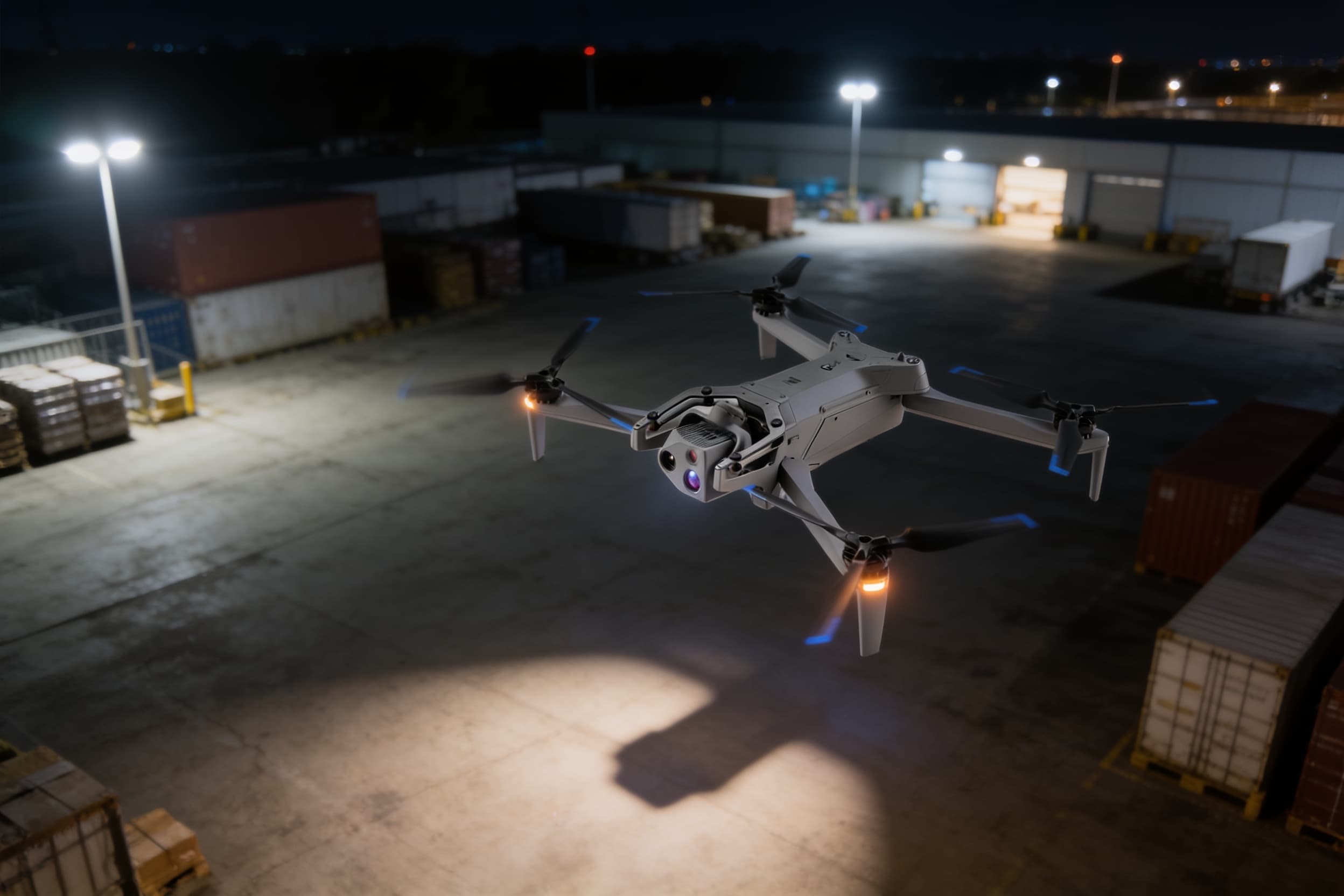
Indoor drones and tall ground robots that fly or drive the aisles capturing barcodes, RFID, and pallet locations — running lights-out overnight, feeding the warehouse management system, and flagging discrepancies the next morning. Cold-tolerant units handle freezers.

  • Autonomous indoor drones (swarm + wireless docks)
  • Tall ground-based scanning robots (high-bay reach)
  • RFID-borne drones
  • Forklift- and MHE-mounted vision modules

Representative OEMs: Gather AI, Corvus Robotics, Verity, Dexory, Vimaan

Also called: warehouse inventory drone, autonomous inventory drone, drone cycle counting, warehouse scanning robot, automated inventory audit, cold storage inventory drone, RFID inventory drone.

Pick up the heaviest jobs (humanoids)

Bipedal and mobile-manipulator robots aimed at the trailer-unload, tote-handling, and case-picking jobs that have no fixed-automation answer. Early in production, real in pilots — worth understanding, not yet a default buy.

Humanoid & general-purpose robots

Human-form (or wheeled-arm) robots intended to flex across tote handling, trailer unloading, and case picking using the same body. The category is moving fast; deployments today are early pilots, and the honest framing is "promising, not proven at scale."

  • Logistics-first bipedal humanoids
  • General-purpose humanoids
  • Wheeled mobile-manipulator arms

Representative OEMs: Agility Robotics (Digit), Apptronik (Apollo), Figure, Boston Dynamics (Atlas)

Also called: humanoid robot for warehouse, warehouse humanoid robot, bipedal robot warehouse, physical AI warehouse, embodied AI logistics.

Go deeper →

Keep the floor clean (service AMRs)

Autonomous scrubbers and sweepers for the acres of open slab a manual crew burns out on — the simplest warehouse automation to deploy (days, no software integration) and the cleanest financing/service wedge.

Autonomous floor scrubbers & sweepers

Self-driving scrubbers and sweepers that map the facility once, then clean a set area on a schedule — overnight or alongside a shift — covering the open ground that wears a cleaning team down, while staff handle edges and detail.

  • Ride-on and walk-behind autonomous scrubbers
  • Autonomous industrial sweepers
  • Compact scrubber-vacs for mixed floors

Representative OEMs: Gausium, Avidbots, Pudu, Tennant

Also called: warehouse cleaning robot, autonomous floor scrubber, industrial floor scrubber robot, autonomous industrial sweeper, 24/7 warehouse cleaning.

Go deeper →

Decide and orchestrate (the software layer)

The systems that run the floor — the brain, the conductor, the muscle, and the fleet coordinator. Picking robots without planning this layer is the single most common reason a deployment underdelivers.

WMS / WES / WCS / FMS

Warehouse management (the inventory and order "brain"), warehouse execution (the real-time sequencing "conductor"), warehouse control (the equipment-level "muscle"), and fleet management (robot traffic, tasking, charging). A robot is only as good as the software that tells it what to do next.

  • WMS — inventory, orders, labor
  • WES — real-time order sequencing and release
  • WCS — equipment-level real-time control
  • FMS / multi-fleet orchestration — coordinating one or many robot brands
  • Emerging warehouse-orchestration (WOS) above the WES

Representative OEMs: Manhattan Associates, Blue Yonder, SAP EWM, Oracle WMS, Körber, GreyOrange

Also called: warehouse management system, WMS software, warehouse execution system, WES vs WMS, warehouse control system, robot fleet management software, multi-fleet robot orchestration.

The warehouse process map: inbound to outbound

Every stage of the flow, the processes inside it (and what they are also called), and where automation fits. This is the map we use to find which jobs in a building are worth automating first.

Inbound — yard to confirmed putaway

Everything from a trailer arriving at the gate to the goods being received, checked, and recorded as available. The dock is where the newest robotics (trailer loading/unloading) and the oldest pain (lumpers, detention) collide.

Yard management & dock scheduling

Coordinating trailer arrivals, gate check-in, trailer spotting, and dock-door appointments so trucks are not waiting and doors are not idle.

Also called: YMS, gate management, trailer spotting, dock appointment scheduling, carrier appointment scheduling, trailer turn.

Yard-management software, RTLS trailer tracking, and dock-scheduling platforms; autonomous yard trucks at the leading edge.

ASN & receiving

Processing the advance shipping notice (the electronic manifest), then physically receiving and recording goods against the open purchase order, assigning a license-plate ID to each pallet or tote.

Also called: ASN, EDI 856, goods receipt, GRN, blind receiving, LPN assignment, dock-to-stock.

WMS receiving, scan capture, and inbound vision; deconsolidation handled downstream.

Trailer unloading

Getting freight out of the trailer — palletized or floor-loaded (loose cartons) — and onto the dock. Floor-loaded freight is roughly four in five inbound loads and is the slowest, most injury-prone manual job on the dock.

Also called: devanning, detrucking, trailer stripping, floor-loaded unloading, lumper, transload.

Mobile ALR platforms for palletized whole-trailer transfer; in-trailer robotic arms for floor-loaded carton-by-carton; conveyor ATLS for dedicated high-volume lanes.

Inbound QC & exceptions

Checking received goods for damage, shortage, and compliance, and processing the over/short/damaged (OS&D) exceptions and vendor-compliance chargebacks.

Also called: receiving QC, OS&D, over short & damaged, vendor compliance, routing-guide compliance, OTIF.

Vision inspection at receiving; WMS exception workflows; inventory drones for ground-truth checks.

Deconsolidation & putaway

Breaking pallets down to cases or eaches as needed, then moving received goods to their assigned storage location under WMS rules.

Also called: depalletization, case breaking, directed putaway, dock-to-stock, value-added services (VAS), kitting at receiving.

Robotic depalletizing arms; AMRs and autonomous forklifts for the putaway move; WMS directed-putaway logic.

Storage — slotting and replenishment

Where goods live between receiving and picking, and how the system decides the best location for each SKU. Good slotting cuts pick travel more than any single robot.

Slotting optimization

Assigning each SKU a storage location to minimize pick travel — fast movers in the ergonomic "golden zone," related items near each other, re-slotted as demand shifts.

Also called: slot profiling, SKU slotting, golden-zone, ABC classification, cube-per-order index, dynamic re-slotting.

WMS / WES slotting modules and slotting analytics; ASRS and goods-to-person change the slotting model entirely.

Dense storage & retrieval

Packing inventory into the smallest footprint with the right storage type for the load — cube grids and shuttles for totes/cases, deep-lane shuttles and cranes for pallets, VNA racking for high-density floor storage.

Also called: high-density racking, VNA storage, block stacking, drive-in racking, pallet shuttle, mini-load, unit-load.

ASRS (cube, shuttle, crane), rack-climbing robots, and autonomous VNA trucks.

Replenishment

Topping up forward pick faces from reserve/bulk storage so pickers never hit an empty location.

Also called: forward-reserve replenishment, pick-face replenishment, putaway automation.

AMRs and autonomous forklifts on replenishment tasks; WES triggers from real-time pick demand.

Picking — order selection

Pulling the right items for each order — the single most labor-intensive process in most warehouses, and the one with the widest range of automation models.

Goods-to-person (G2P)

The automation brings inventory — a shelf pod, a tote, or a bin — to a stationary picker or robot arm, so nobody walks the aisles. The dominant high-throughput model.

Also called: G2P, goods-to-person picking, goods-to-robot, shelf-to-person, tote-to-person, pod-to-person.

ASRS ports, shelf-to-person AMRs, rack-climbing robots, and robot-arm picking stations.

Person-to-goods (P2G) with pick-assist

The picker still walks, but a collaborative AMR follows along, carries the totes, and optimizes the route — eliminating the walk back to a pack station and cutting unproductive travel.

Also called: P2G, pick-assist, collaborative picking, follow-me picking, zone picking, batch / wave picking.

Collaborative picking AMRs; pick-to-light, voice, and AR picking guidance.

Autonomous (robotic) picking

A robot arm does the grasp — picking individual items from bins or totes into orders or put-walls, increasingly handling SKUs it has never seen before.

Also called: piece picking, each picking, random bin picking, zero-shot picking, lights-out picking.

Vision-guided and foundation-model picking arms, often with supervised autonomy for exceptions.

Outbound — sortation, consolidation, loading

Getting picked goods sorted, consolidated, packed, palletized, and onto the right trailer — and the cross-dock flow that skips storage entirely.

Sortation & consolidation

Diverting items to the right destination lane or order, then consolidating multi-line orders at a put-wall before pack-out.

Also called: sortation, crossbelt / tilt-tray / shoe sorter, put wall, put-to-light, order consolidation.

Robotic sorter induction, automated put-walls, and AMR-based sortation.

Palletizing & pack-out

Building outbound pallets — including mixed-SKU "rainbow" pallets sequenced for store-aisle unload — and packing orders for shipment.

Also called: robotic palletizer, mixed-case palletizing, smart pallet build, store-aisle sequencing.

Robotic palletizing arms and full-DC smart pallet build.

Trailer loading & cross-dock

Staging and loading outbound trailers, and the cross-dock flow that moves inbound straight to outbound with little or no storage.

Also called: outbound staging, container loading, cross-docking, flow-through, manifesting, BOL.

Mobile ALR platforms and conveyor ATLS for loading; WES for cross-dock sequencing.

Inventory, reverse & monitoring

Keeping the recorded inventory matched to reality, handling returns, and watching the health of the facility and the equipment.

Cycle counting & inventory audit

Continuously counting and locating inventory to keep the WMS accurate — replacing periodic full physical counts and ladder-and-clipboard audits with autonomous, lights-out scanning.

Also called: perpetual inventory, cycle counting, automated audit, lights-out scanning, discrepancy detection, space utilization.

Inventory drones, tall ground-scanning robots, and forklift-mounted vision modules feeding the WMS.

Returns & reverse logistics

Receiving, grading, and dispositioning returned goods back into stock, to vendor, or to disposal.

Also called: reverse logistics, RMA, RTV, returns putaway, disposition / grading.

Robotic induction and grading; piece-picking arms for returns handling.

Rack health & predictive maintenance

Watching for pallet-rack damage and compliance issues, and predicting equipment failures before they cause downtime.

Also called: rack inspection, pallet-rack damage detection, condition monitoring, predictive maintenance, digital twin.

Scanning-robot rack-health modules; digital-twin emulation for design and live optimization.

The warehouse-automation vendor landscape

The makers, grouped by what they build — described neutrally from publicly-reported information. Service Robot Co. claims no partnership, distribution, or reseller agreement with any vendor named here; we integrate and service the right mix for your floor.

Loading & unloading (the dock category)

Three approaches to the same trailer: mobile platforms that drive the load, in-trailer arms that pick it carton-by-carton, and conveyor systems embedded in the dock floor.

VendorCategoryWhat they make (publicly reported)
Slip RoboticsMobile ALR (whole-trailer)Low-platform robots that drive a whole palletized trailer load on or off in minutes — no Wi-Fi, IT, or dock changes; closed-loop and distribution variants.
NavflexMobile ALR (AMR pallet jack)AMR pallet jacks and counterbalance units that load or unload any trailer type with no infrastructure changes.
Boston Dynamics (Stretch)In-trailer armA wheeled mobile-base arm that unloads floor-loaded cartons onto a conveyor, picking one or several boxes at a time.
Pickle RobotIn-trailer armA mobile-base arm that suction-unloads floor-loaded boxes onto a conveyor.
ContoroIn-trailer armAn AI arm for trailer and container unloading, with remote-operator support for exceptions.
Joloda HydrarollConveyor ATLSMoving-floor, slip-chain, and skate conveyor truck-loading systems; requires fixed dock/trailer modifications.
Ancra SystemsConveyor ATLSChain, skate, roller, slat, and belt conveyor truck-loading systems for dedicated high-volume lanes.

Transport — AMRs, tuggers & autonomous forklifts

The machines that move totes, carts, and pallets across the floor, plus the driverless lift trucks that pick up and stack.

VendorCategoryWhat they make (publicly reported)
MiR (Mobile Industrial Robots)Transport AMRPallet-jack and tote-mover AMRs with attachable top modules and fleet software.
OTTO MotorsHeavy-payload AMRHeavy-payload transport AMRs and a fleet manager for industrial floors.
Peer RoboticsCollaborative AMRCollaborative pallet/trolley AMRs that learn a route by being walked it (teach-by-demonstration).
Vecna RoboticsHeavy-payload AMRAutonomous forklifts, tuggers, and pallet trucks with a remote-assist fleet platform.
SeegridAMR forklift / tuggerVision-guided autonomous lift trucks and tow tractors with a fleet platform.
CyngnAutonomy kitA self-driving kit (DriveMod) fitted to existing tuggers and forklifts, with a fleet manager.
KION / Linde, STILL, Jungheinrich, ToyotaOEM forklift/AGVMajor forklift makers with automated reach trucks, stackers, turret trucks, and AGVs.
BalyoAutonomy kitA LiDAR-SLAM navigation kit that converts standard forklifts into AGVs (no reflectors).

ASRS & goods-to-person

Dense-storage and goods-to-person systems — cube grids, rack climbers, shuttles, cranes, and full-DC case handling.

VendorCategoryWhat they make (publicly reported)
AutoStoreCube ASRSA grid of stacked bins with top-running robots; sold through certified integrators.
ExotecRack-climbing ASRSSkypod rack-climbing 3D AMRs with no dig-depth.
Hai RoboticsCase-handling ASRS (ACR)Autonomous case-handling robots that reuse existing racking.
Geek+Goods-to-person AMRShelf-to-person, tote-to-person, and robot-arm picking-station systems with fleet software.
SymboticFull-DC case handlingEnd-to-end native case-handling storage and retrieval with robots and arms.
SSI Schaefer, Swisslog, Dematic, KardexTraditional ASRSShuttle, crane, pallet-shuttle, and vertical-lift storage systems, plus integrator services.

Piece picking & physical-AI

Robotic arms and the AI models that let them grasp items — including the foundation-model systems generalizing across SKUs.

VendorCategoryWhat they make (publicly reported)
RightHand RoboticsPiece-picking armA model-free piece-picking arm for bins and sorter induction.
Berkshire GreyPicking & sortation armsPicking and sortation systems with an adaptive gripper.
Plus One RoboticsPicking / inductionPicking, induction, and depalletizing arms with remote supervised autonomy.
CovariantPicking foundation modelA robotics foundation model ("Brain") for generalizable picking.
SereactVLA picking softwareVision-language-action picking software with a learned world model.
DexterityPhysical-AI pickingA world-model picking/placement system and a dual-arm truck-loading robot.

Inventory drones & scanning

Drones and ground robots that count, locate, and audit inventory continuously.

VendorCategoryWhat they make (publicly reported)
Gather AIDrones + MHE visionAutonomous inventory drones and forklift-mounted vision that feed the WMS; cold-tolerant.
Corvus RoboticsInventory dronesAutonomous inventory drones (incl. a cold-chain unit) and a forklift-mounted module.
VerityInventory dronesSwarm drones with wireless docks for autonomous overnight counting; RFID variants.
DexoryGround scanning robotA tall autonomous ground robot that scans high-bay locations and builds a digital twin.
VimaanScanning hardwareForklift-lifted and drone scanning hardware for inventory and dock visibility.

Software, orchestration & integrators

The decision layer — warehouse management, execution, control, and fleet orchestration — and the integrators who tie hardware and software together.

VendorCategoryWhat they make (publicly reported)
Manhattan Associates, Blue Yonder, SAP, OracleEnterprise WMS/WESEnterprise warehouse management and execution systems with embedded or standalone WES and robotics hubs.
Körber, GreyOrangeWMS-led / orchestrationWMS-led integration and predictive multi-fleet robot orchestration.
Synaos, InOrbit, Open-RMFMulti-fleet orchestrationCross-vendor robot orchestration — low-level control, high-level tasking, and open-source middleware (VDA 5050 / ROS2).
RobotLABMulti-vertical integratorA multi-brand commercial-robotics reseller and integrator with a RaaS model.
Honeywell Intelligrated, Dematic, Toyota Automated LogisticsTier-1 integratorsFull-system integrators that design, install, and service large fixed automation.

Vendor descriptions are publicly-reported information, summarized neutrally — not endorsements, quotes, or claims of a commercial relationship. Capacities and product names are illustrative; we confirm the right fit for your facility in an assessment.

Where Service Robot Co. fits: the integrator layer for all of it

Almost every category leader above sells direct hardware. Very few own the US deployment, service, and financing layer that a mid-market or multi-vendor warehouse floor actually needs — and none of them will write a neutral guide that tells you when their own product is the wrong tool. That gap is the integrator wedge, and it is exactly what Service Robot Co. does: we are the one vendor for sales, integration, financing, deployment, and nationwide service, and we are OEM-neutral about which unit goes on your floor.

In practice that means we map your dock profiles, pick faces, and storage to the right mix — Slip-style ALR or an in-trailer arm or a conveyor ATLS for the dock, depending on whether your freight is palletized or floor-loaded; an AMR or an AGV depending on whether your routes change; the right ASRS or goods-to-person model for your storage density; and scrubbers for the slab. We weight what deployment actually requires — re-racking, guide-path install, a shutdown, software integration — as heavily as the unit price, because that hidden cost is where most warehouse automation projects overrun.

We do not claim a partnership, distribution, or reseller agreement with any OEM named on this page. What we claim is the work an operator cannot easily do alone across a half-dozen vendors and a half-dozen support queues: choose neutrally, finance it (buy or Robotics-as-a-Service), deploy it to the mobile-robot safety standards, integrate it with your warehouse software, train your team, and service it nationwide with a backup ready when a unit goes down mid-shift.

  • Dock profile → right loading/unloading category (palletized ALR vs. floor-loaded arm vs. conveyor ATLS) — the single most useful map no OEM will draw neutrally.
  • Changing routes → AMR; one fixed high-volume lane → AGV (often cheaper) — decided before any two machines are compared.
  • Storage density → the right ASRS / goods-to-person model, weighted by how much racking and shutdown it requires.
  • Financing surfaced honestly — buy vs. Robotics-as-a-Service, with the real total-cost math including deployment.
  • Deployed to ANSI/RIA R15.08, ISO 3691-4, and ANSI B56.5 safety standards, integrated with your WMS/WES, and serviced nationwide.

The ROI and labor math for warehouse automation (illustrative)

The payback on warehouse automation is rarely a simple labor-rate swap. It is driven by roles that are genuinely hard to hire and keep — forklift drivers, dock unloaders, pickers — by injury risk on the heaviest, most repetitive motions, by retention, and by hard fees the manual process leaks: carrier detention when a trailer sits too long at a dock, and retailer chargebacks when an order ships late or short. A robot that takes the repetitive pallet moves, the carton-by-carton unload, the picker walking, or the overnight cycle count gives those hours back and removes the most injury-prone work from people.

The single biggest cost most buyers miss is deployment, not the machine. The cheapest robot on a spec sheet is not cheap if it needs a re-racked warehouse, an installed guide path, a software integration project, or a shutdown to run. This is why the newer zero-infrastructure units — collaborative tuggers and AMRs that learn a route by being walked it, ASRS that reuse existing racking, and dock robots that need no Wi-Fi or dock modifications — often pay back far faster than a cheaper machine that comes with a construction project attached. A common rule of thumb is that integration and deployment add on the order of a third again to the hardware cost, and that multi-shift operations reach payback in roughly one-and-a-half to three years — both illustrative ranges, not a guarantee.

On the cleaning side the math is the simplest in the building: an autonomous scrubber on Robotics-as-a-Service (around $600–$900 per month for a mid-size unit) runs roughly four to six times cheaper than a full-time overnight cleaner (around $3,500–$4,500 per month all-in) on the open-slab portion of the work. Across every category, the honest framing is the same — automation is a reach multiplier and a safety play, not a clean headcount cut. We build the real side-by-side, including deployment and buy-vs-RaaS, for your specific facility in an assessment.

  • Payback drivers: hard-to-staff roles, retention, injury-risk reduction, detention fees, and chargeback avoidance — not labor rate alone.
  • Deployment cost (re-racking, guide-path, integration, shutdown) often exceeds the hardware cost — weight it first.
  • Integration/deployment commonly adds on the order of ~30% to hardware cost; multi-shift payback ~1.5–3 years — illustrative.
  • Mid-size scrubber on RaaS ~$600–$900/month vs. a full-time overnight cleaner ~$3,500–$4,500/month all-in — illustrative.
  • Robots-as-a-Service folds hardware + deployment + service + a backup into one monthly fee; Section 179 can accelerate the tax treatment of a purchase — confirm with your advisor.
  • These are illustrative ranges with stated assumptions, not a guaranteed result.

Safety standards and interoperability that govern a deployment

Warehouse robots carry hundreds to thousands of pounds near people, so the safety setup is part of the deployment, not a box on the robot. In the US, ANSI/RIA R15.08 governs industrial mobile robots (Part 1 covers the manufacturer; Part 2 covers the integrator — the deployment), ISO 3691-4 covers driverless industrial trucks internationally, and ANSI/ITSDF B56.5 covers driverless industrial vehicles in North America. None of these is something a buyer "has" — they describe how the whole deployment (speed and stop zones, sensor coverage, signage, training, the building itself) has to be set up so the unit is safe on a live floor. That is integration work, which is exactly why a warehouse should not self-deploy a heavy unit from a bare-OEM purchase.

On the software side, the practical question is whether your robots can talk to each other and to your warehouse system. VDA 5050 is the open communication standard between a fleet manager and multi-vendor AMRs/AGVs; Open-RMF (on ROS2) is the open-source middleware for orchestrating multiple robot brands. These matter the moment you run more than one robot vendor — which most growing warehouses eventually do — because a fleet that cannot coordinate at an intersection or hand off a task is a fleet that fights itself.

Warehouse automation: deeper questions

What is warehouse automation?
Warehouse automation is using robots, machines, and software to do the moving, storing, picking, loading, and counting work that people used to do by hand in a distribution center. It has three layers: physical robotics (mobile robots, forklifts, storage-and-retrieval systems, picking arms, dock loaders, inventory drones, floor scrubbers); the software layer (warehouse management, execution, and control systems plus robot fleet managers); and integrators who connect the two — picking the right mix, deploying it safely, financing it, and servicing it.
What are the main types of warehouse robots?
The main categories are: autonomous mobile robots (AMRs) and tuggers for floor transport; automated guided vehicles (AGVs) for fixed routes; autonomous forklifts for pallets; automated storage-and-retrieval systems (ASRS) and goods-to-person for dense storage and picking; piece-picking arms for individual items; trailer loading and unloading robots for the dock; inventory drones and scanning robots for counting; humanoids for the heaviest mixed jobs; and autonomous floor scrubbers for the slab — all coordinated by warehouse software.
What is the difference between an AMR and an AGV?
An AGV (automated guided vehicle) follows a fixed path you install — magnetic tape, wire, reflectors, or floor QR codes. It is reliable and often cheaper on one high-volume route that never changes, but it stops when the path is blocked and re-routing means re-installing the guide. An AMR (autonomous mobile robot) builds and carries its own map, navigates freely with SLAM and LiDAR, routes around people and obstacles, and adapts as the floor changes with no infrastructure to install. Use an AGV for a fixed high-volume lane; use an AMR for changing layouts, mixed routes, or when you cannot shut down to install track.
What is the difference between WMS, WES, and WCS?
The warehouse management system (WMS) is the inventory, order, and labor "brain." The warehouse execution system (WES) is the real-time "conductor" that sequences and releases work across people and machines. The warehouse control system (WCS) is the equipment-level "muscle" that drives conveyors, sorters, and machinery. A robot fleet management system (FMS) coordinates robot traffic, tasking, and charging on top of those. A robot is only as good as the software telling it what to do next, which is why planning this layer matters as much as choosing the hardware.
What is goods-to-person picking?
Goods-to-person (G2P) picking is when automation brings the inventory to a stationary picker or robot arm — a shelf pod, a tote, or a bin arrives at a pick station — instead of sending a picker walking the aisles to the inventory. It is the dominant high-throughput picking model because it removes pick travel, which is the largest unproductive chunk of manual picking. It is delivered by ASRS ports, shelf-to-person AMRs, rack-climbing robots, and robot-arm picking stations.
How do robots load and unload trailers?
There are three approaches matched to three dock profiles. Mobile automated loading robots (ALR) ARE the freight carrier — a fleet of low platforms drives a whole palletized trailer load on or off in roughly five minutes with no Wi-Fi, IT, or dock changes; best for palletized freight and closed-loop shuttle routes. In-trailer robotic arms unload floor-loaded (loose-carton) trailers one box at a time onto a conveyor. Conveyor-based truck-loading systems (ATLS) embed conveyors in the dock floor for the highest throughput, but require fixed dock and often trailer modifications, so they only pay off on a dedicated high-volume lane.
Can robots count warehouse inventory automatically?
Yes. Autonomous inventory drones and tall ground-scanning robots fly or drive the aisles capturing barcodes, RFID, and pallet locations — running lights-out overnight, feeding the warehouse management system, and flagging discrepancies the next morning. Cold-tolerant units operate in freezers. They replace manual, ladder-and-clipboard cycle counts, improving inventory accuracy and freeing staff from the audit.
How much does warehouse automation cost?
It spans a very wide range — from inexpensive autonomous scrubbers (roughly $22k–$96k to buy, or ~$600–$2,000/month on Robotics-as-a-Service) to capital-class ASRS and full-DC systems in the millions. The figure most buyers miss is deployment: integration, guide-path or racking install, software integration, and any shutdown often add on the order of a third again to the hardware cost, and can exceed it. These are illustrative market ranges, not quotes — we confirm the real total cost, including deployment and buy-vs-RaaS, for your facility in an assessment.
Do warehouse robots need guide tracks or floor changes?
Not the newer ones. AMRs navigate your existing aisles with no fixed track; collaborative tuggers learn a route by being walked it; many case-handling and rack-climbing systems reuse existing racking; and mobile dock robots need no Wi-Fi or dock modifications. AGVs and some fixed systems do need installed guide paths or re-racking. Because that deployment cost often matters more than the unit price, we weight "what does deployment actually require?" heavily when recommending a unit.
What safety standards apply to warehouse robots?
In the US, ANSI/RIA R15.08 governs industrial mobile robots (Part 1 the manufacturer, Part 2 the integrator/deployment); ISO 3691-4 covers driverless industrial trucks internationally; and ANSI/ITSDF B56.5 covers driverless industrial vehicles in North America. None is a box on the robot — they describe how the whole deployment (speed and stop zones, sensor coverage, signage, training, the building) must be set up so a unit carrying real weight is safe near people. That makes the compliant install integration work, not an OEM checkbox.
Can a warehouse run robots from more than one vendor?
Yes, and most growing warehouses eventually do. The key is orchestration: VDA 5050 is the open standard for a fleet manager to talk to multi-vendor AMRs and AGVs, and Open-RMF (on ROS2) is open-source middleware for coordinating multiple robot brands. Without a coordination layer, mixed fleets fight each other at intersections and task hand-offs. As a vendor-neutral integrator, matching and orchestrating a multi-brand floor is part of what we do.
Should we buy warehouse robots or use Robotics-as-a-Service?
It depends on utilization and what deployment requires. Robotics-as-a-Service (RaaS) folds the robot, the deployment, the service, and a backup into one monthly fee — which fits peak-season flexibility and keeps idle hardware off the books in slow months. Outright purchase fits a steady, high-utilization line once a model is proven and your team can carry the upkeep (and a purchase may qualify for accelerated tax treatment under Section 179 — confirm with your advisor). For heavy material-handling units the deployment cost often matters more than the rate; we model the real total cost both ways in an assessment.

Warehouse-automation glossary

The acronyms in one place — what each one means in plain English.

AMR (autonomous mobile robot)
A self-navigating robot that builds and carries its own map (SLAM/LiDAR), routes around people and obstacles, and needs no fixed track.
AGV (automated guided vehicle)
A fixed-path vehicle that follows tape, wire, reflectors, or floor QR codes — deterministic but infrastructure-dependent.
ASRS / AS/RS
Automated storage and retrieval system — cube, shuttle, crane, rack-climbing, vertical-lift, or pallet-shuttle storage that retrieves goods on demand.
ACR (autonomous case-handling robot)
A tall AMR with a telescopic or fork mechanism that pulls totes and cartons from standard racking, often reusing existing racking.
Goods-to-person (G2P)
Automation brings inventory to a stationary picker or arm, eliminating pick travel — the dominant high-throughput picking model.
Person-to-goods (P2G)
A collaborative AMR follows the picker, carries totes, and optimizes the route — the picker still walks, but smarter.
ALR (automated loading robot)
A mobile platform that IS the freight carrier — drives a whole palletized trailer load on or off in minutes with no dock changes.
ATLS (automated truck loading system)
Conveyor-based dock-floor systems that slide a full trailer load in or out; high throughput but infrastructure-intensive.
WMS / WES / WCS
Warehouse management (inventory/order "brain"), warehouse execution (real-time "conductor"), warehouse control (equipment-level "muscle").
FMS (fleet management system)
Coordinates a robot fleet — task assignment, traffic, charging, telemetry — for one vendor or, with VDA 5050, many.
VDA 5050
The open communication standard between a fleet manager and multi-vendor AMRs and AGVs — the basis for mixed-fleet orchestration.
SLAM
Simultaneous localization and mapping — building a map and tracking position in real time, how AMRs navigate without infrastructure.
RaaS (Robotics-as-a-Service)
A subscription that bundles the robot, deployment, maintenance, and support into one recurring fee instead of a capital purchase.
Goods receipt / putaway
Receiving inbound goods against the purchase order, then moving them to an assigned storage location under WMS rules.
Slotting
Assigning each SKU a storage location to minimize pick travel — fast movers in the ergonomic "golden zone," related items together.
Cross-docking
Moving inbound freight straight to outbound with little or no storage in between.
Cycle counting
Continuously counting and locating inventory to keep the WMS accurate, replacing periodic full physical counts.
Floor-loaded trailer
A trailer of loose cartons with no pallets — roughly four in five inbound loads, and the slowest, most injury-prone manual unload.
Detention / dwell
Detention is the fee a carrier charges when a trailer is held too long at a dock; dwell is the total time it sits — both costs automation cuts.
Physical AI / VLA
Vision-language-action models and learned world models that let picking robots generalize across items with little per-SKU training.

Topics covered on this page

The warehouse-automation topics this guide covers end to end — so you can find the category, process, or decision you came for.

Warehouse automation (broad)

warehouse automation, warehouse automation solutions, warehouse robotics, intralogistics automation, order fulfillment automation, end-to-end warehouse automation, warehouse automation cost, warehouse automation ROI.

Integrator & deployment

warehouse automation integrator, AMR systems integrator, AGV / forklift automation integrator, dock automation integrator, AMR deployment service, warehouse robot integration, warehouse automation consultant.

AMR & transport

autonomous mobile robot, AMR warehouse, AMR vs AGV, autonomous tugger, collaborative mobile robot, autonomous pallet mover, no-infrastructure AMR.

Autonomous forklift

autonomous forklift, automated forklift, self-driving forklift, robotic forklift, automated reach truck, VNA AGV, autonomous forklift cost.

ASRS & goods-to-person

automated storage and retrieval system, ASRS, goods-to-person system, cube storage ASRS, rack climbing robot, ACR robot, pallet shuttle system, vertical lift module.

Piece picking

robotic piece picking, each picking robot, AI warehouse picking robot, vision-guided robotic picking, foundation model robotics warehouse, zero-shot robotic picking, robotic depalletizing.

Loading / unloading (dock)

autonomous trailer loading robot, automated truck loading system, ATLS, robotic trailer unloading, floor-loaded trailer unloading robot, lumper replacement robot, load trailer in 5 minutes, no-infrastructure trailer loading.

Inventory drones

warehouse inventory drone, drone cycle counting, warehouse scanning robot, automated inventory audit, cold storage inventory drone, RFID inventory drone.

Warehouse software

warehouse management system, WMS software, warehouse execution system, WES vs WMS, robot fleet management software, multi-fleet robot orchestration, VDA 5050.

Verticals & financing

3PL warehouse automation, e-commerce fulfillment robot, cold chain ASRS, grocery distribution robot, RaaS robotics, warehouse robot lease, micro-fulfillment automation.

Go deeper

Start with a free site assessment.

We walk your site, learn the job, and tell you which unit fits — OEM-neutrally — before you commit a dollar. If nothing fits yet, we say so.