
Commercial cleaning robots · guide
Floor-cleaning robots, deployed and serviced.
Autonomous scrubbers and sweepers that cover the big floors a crew burns out on - compared across the main OEMs, with the labor case for each.
- All 50
- US states served
- 10 min
- 24/7 triage
- 24/7
- emergency response
Who this is for
Built for the people who own the cleaning bill.
Building service contractors
Janitorial companies cleaning many buildings under contract. The case is labor hours, with one fixed lease payment per robot.
Warehouses & large hard-floor sites
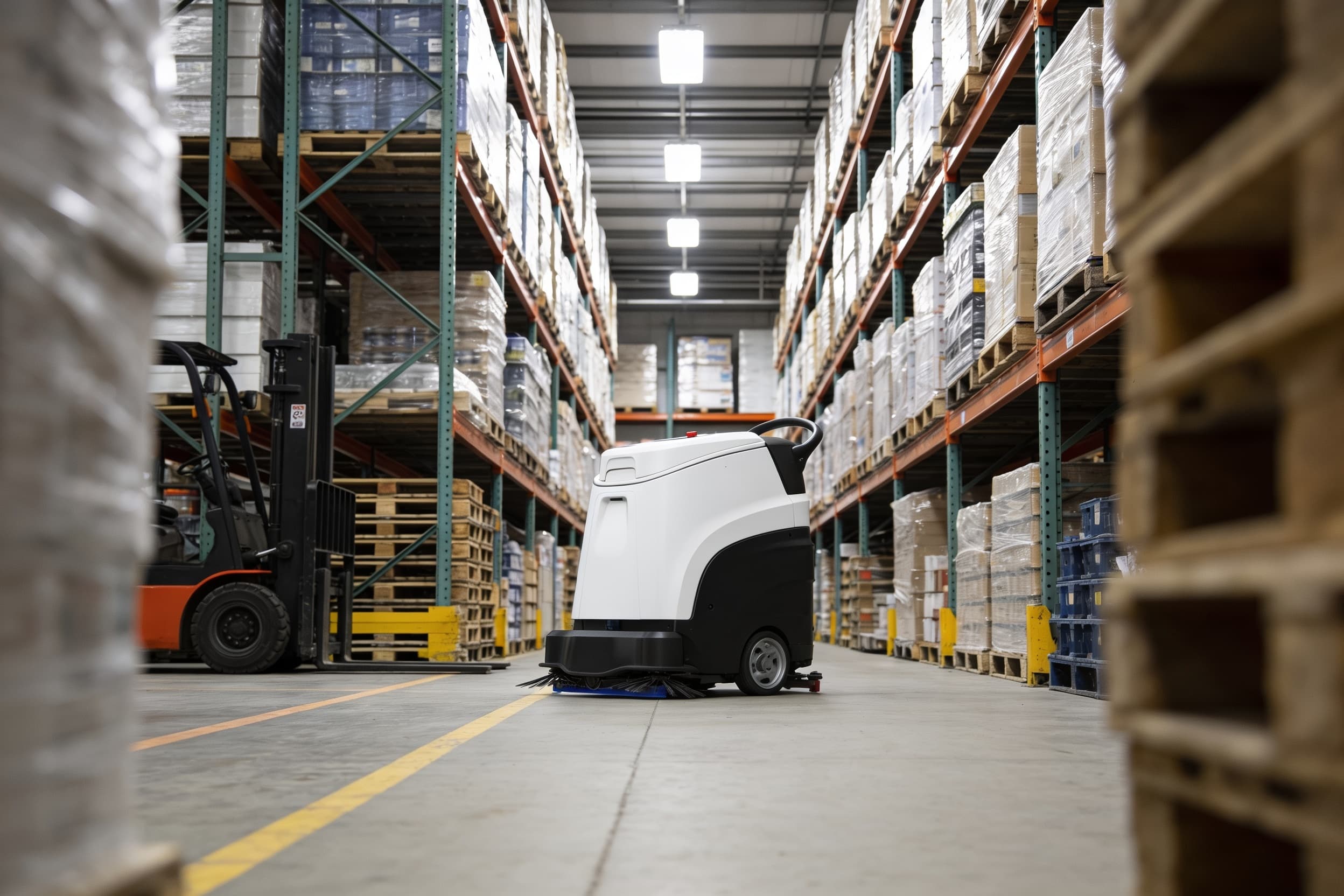
Big open slabs that wear a crew down - the floor a robot does best, overnight.
What it is
A commercial cleaning robot is an autonomous scrubber, sweeper, or vacuum that cleans large floors on its own. The labor case is the real driver: a robot covering an overnight floor takes the repetitive work off a full-time cleaner. Service Robot Co. picks the right OEM, leases it to you, deploys it, and services it nationwide.
Specs on this page are publicly reported, not guarantees. We confirm the right unit and the lease payment for your site in an assessment.
See it running on your floor.
We scope the work on a site assessment and prove the system on your operation before you commit.
Inside the operation
One overnight cleaning run, stage by stage.
The operation is a nightly loop over the same floor. Here is where the robot takes it over, and where your crew stays.
- 1
Map
The floor is learned once at setup: aisles, pinch points, thresholds.
AutomatesLiDAR and cameras build a saved plan of your real floor.
- 2
Schedule
Runs are set for overnight or alongside the crew.
AutomatesThe robot starts itself on the plan, shift after shift.
- 3
Cover
The open 70-80% of floor area gets cleaned in lanes.
AutomatesScrub, vacuum, and dry in one pass, slowing near obstacles.
- 4
Dock
Water and charge run down mid-run.
AutomatesThe unit self-docks to recharge and refill, then resumes.
- 5
Detail
Edges, restrooms, and corners still need hands.
AutomatesNothing. Your crew keeps the detail work a machine cannot do.
Field notes
$21B
The commercial cleaning-robot market by 2030, tripling on ~24% annual growth.
Grand View Research, 2024
45-55%
Labor share of a commercial cleaning contract.
Level CFO benchmark, 2026
50%+
Two in five cleaning contractors run annual staff turnover above fifty percent.
Cleaning industry survey, 2026
RoboCare™
Service nationwide.
- 24/7 support.
- 10-minute technical-specialist triage.
- Regional service engineers in every state we service.
- 3 check visits a year.
- 12-month warranty.
The operation, up close
What actually decides the outcome.
How a commercial cleaning robot actually works
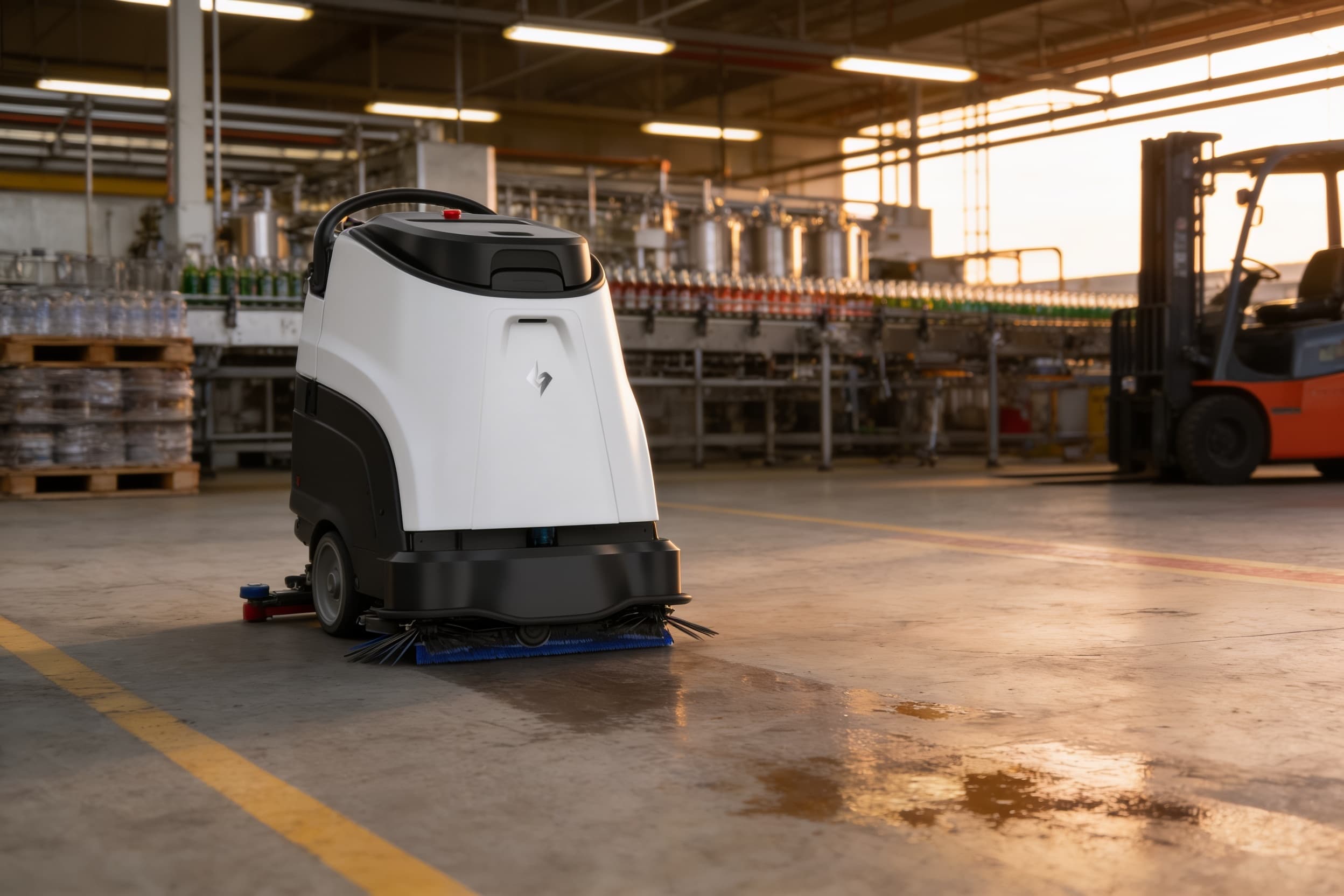
Modern cleaning robots navigate with LiDAR and cameras, mapping your floor once at setup. After that they run a saved plan: covering aisles in lanes, slowing near obstacles, lifting the brush at thresholds, and docking to recharge and refill. A scrubber lays down water and detergent, scrubs, then vacuums the solution back up in one pass, leaving the floor dry. A sweeper or vacuum handles dry debris and carpet.
The honest limit: a robot owns the open floor, not the edges. It will not climb a ladder, clean a restroom, or detail a corner. It covers the repetitive 70–80% of floor area, freeing your crew for the detail work a machine cannot do.
- Scrubbers - from large-area units to compact combo scrubbers - wet-scrub large hard floors: concrete, sealed tile, vinyl, polished stone.
- Sweepers / vacuums - dry debris and carpet in retail, offices, and transit hubs.
- Compact scrubber-vacs - tighter spaces, lobbies, mid-size retail, and mixed floors.
How a cleaning robot lease works
We lease cleaning robots through financing on a 3-year lease with one fixed payment, quoted after a free site assessment. Every robot comes with RoboCare™, and preventive maintenance and consumables come in Base Care and Full Care.
A lease keeps capital free and spreads the cost over the term. See our leasing guide for how a lease works.
The labor case
The case for a cleaning robot is almost always labor. A full-time commercial cleaner running an overnight floor carries wages, payroll taxes, turnover, and supervision. A cleaning robot that covers the same open floor does not call in sick, turn over, or skip the far aisle at 4am.
The repetitive open-floor work is the ground a robot does best. The honest framing: the robot does not replace the cleaner. It takes the 70–80% open-floor area so the same crew covers more buildings, or a smaller crew covers the same one and spends its hours on restrooms, edges, and detail. Run the numbers against your real floor - we will build the side-by-side with your lease quote.
What the OEM does not do
Five things an integrator carries that a bare OEM does not.
Getting the robot is the easy part. This is the rest of the job.
Sales, neutrally
We pick the right unit for your floor from the whole market, instead of fitting your operation to the one product a maker happens to sell.
Integration
We wire the robot into the software that runs your operation, so it knows what to do next. A robot with no hook-up is an expensive paperweight.
Financing
A lease through financing on one fixed payment, with the real total-cost math, so your finance team can plan around it.
Deployment
Mapping, setup, safety, and commissioning on a live floor. The part most direct customers underestimate, and where projects stall.
Nationwide service
RoboCare™: 24/7 support with 10-minute triage and regional service engineers in every state we service. The one thing most OEMs cannot offer a US customer.
All five, carried for you.
Tell us the floor and the job. We answer with the unit, the math, and the plan.
Get a quoteFrom our blog
Reading for the decision you are making.
- Use casesBagel Shop Floors Between Rushes: Sweeping, Scrubbing, RobotsFlour dust and counter traffic shape bagel shop floors between rushes. Learn when to sweep, when to scrub, and which spots still need a hand.
- Costs & ROIReading a $22,000 Floor Robot List Price Before a QuoteA Pudu CC1 list price near $21,995 leaves out site work, charging, training and service. Here is how to weigh it against one fixed lease payment.
- Trends & dataWhy Facilities Are Moving to Multi-Vendor Cleaning FleetsOperators are reportedly mixing cleaning robot brands under one management layer. Weighing surface fit against integration gaps and support contracts.
- Use casesDog Daycare Floor Robots: Cleaning Between Drop-OffsSchedule a floor cleaning robot around dog daycare pickup peaks, map play areas, kennel corridors and drains, and verify pet-safe disinfectants.
Two ways to start
An integrator, or direct from the OEM.
A comparison of the two routes, not a knock on any one maker. Many OEMs partner with integrators precisely to close this gap.
Robots on this operation
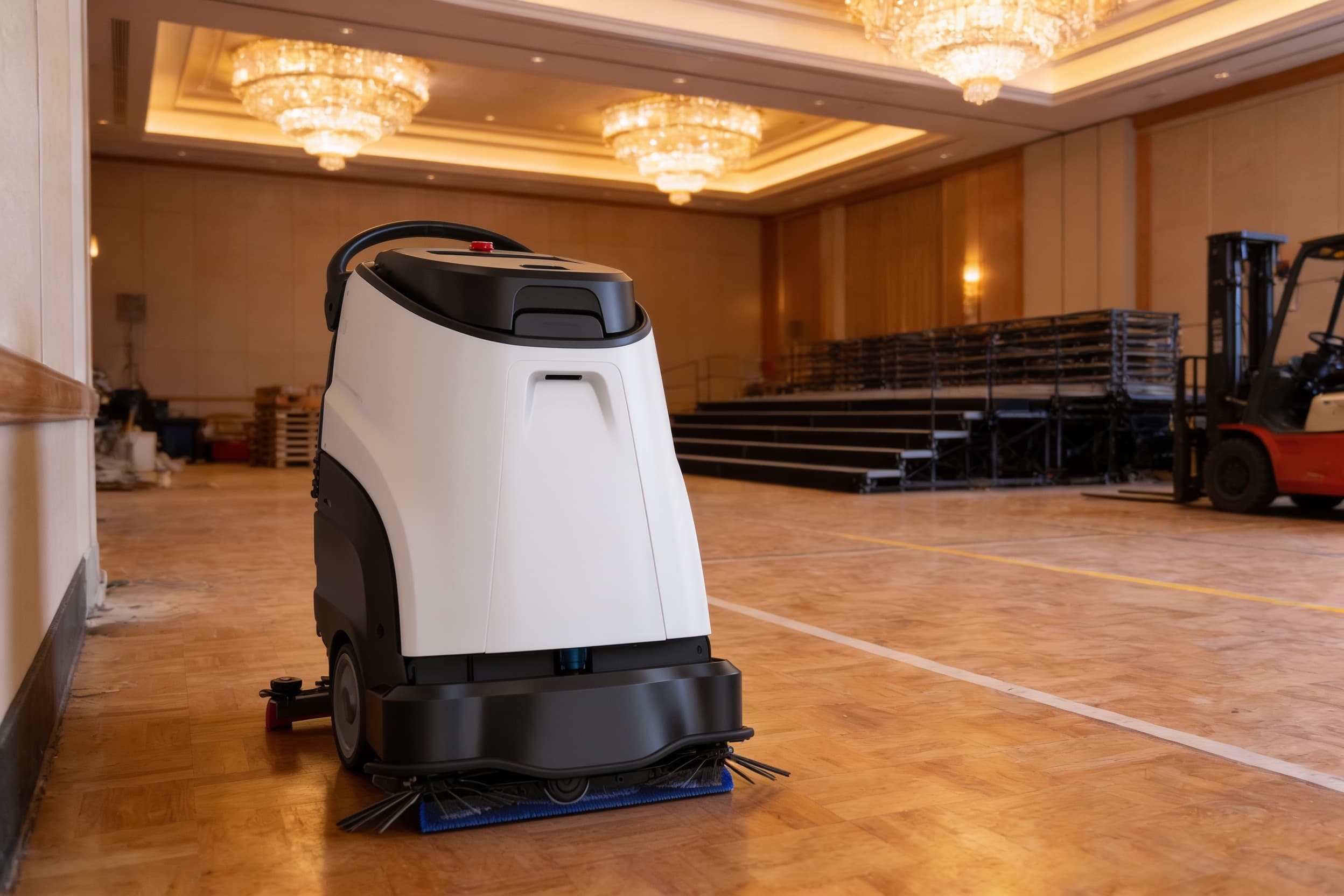
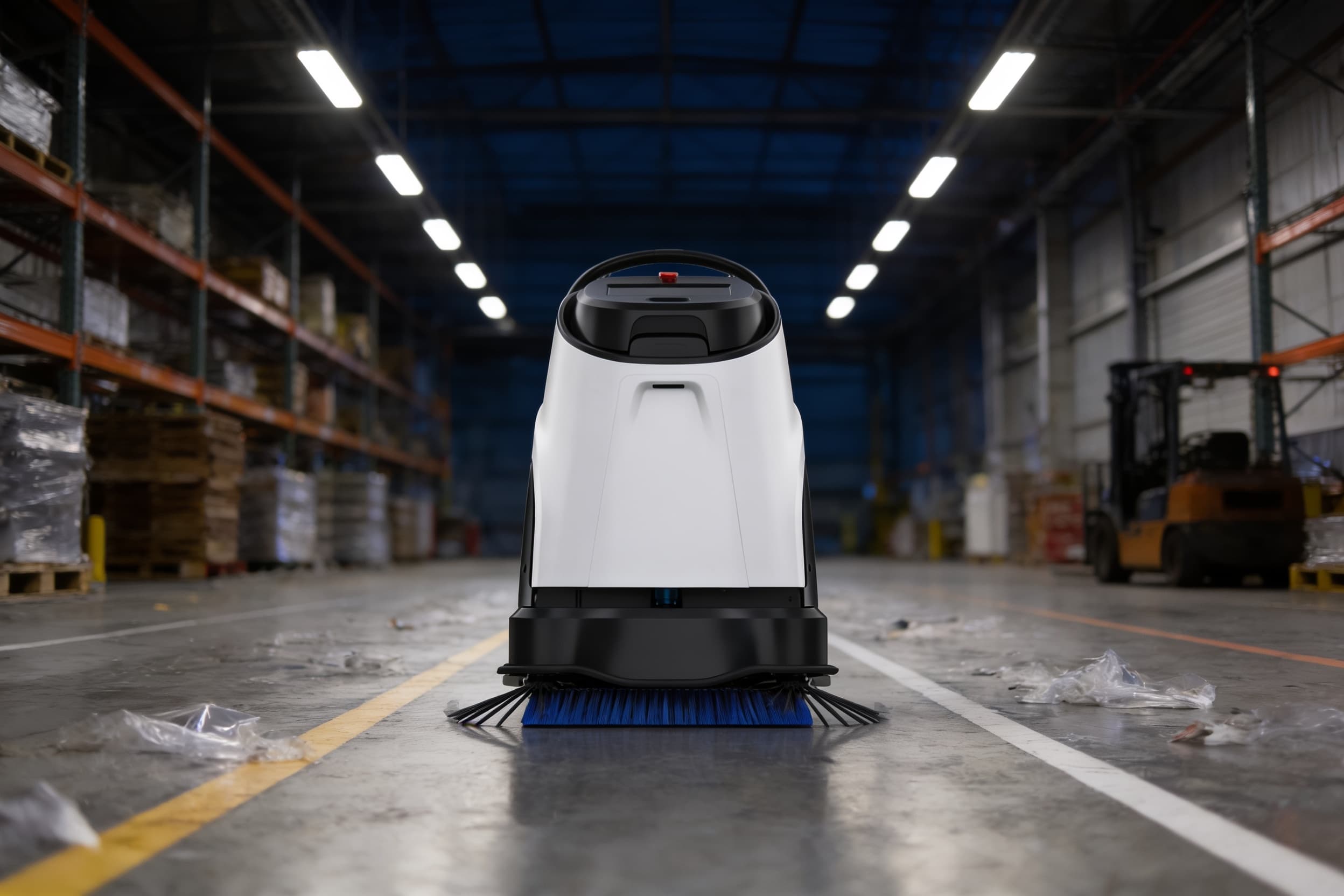
The machines doing the work.
Compare the options
Comparison
Commercial cleaning robots compared
The main options, side by side.
| Type | Coverage |
|---|---|
| Large ride-on-class scrubber | High - large open floors |
| Compact scrubber-vac | Mid - lobbies, mixed floors |
| Large autonomous scrubber | High - warehouses, airports |
| All-in-one scrub/sweep/vac/dust | Mid–high - mixed commercial |
| Compact cobotic scrubber | Mid - retail, education |
| Robotic ride-on scrubber | High - large hard floors |
| Modular scrub/sweep/vacuum | Mid - facilities, transit |
Representative units only. We confirm the right unit and the lease payment for your site in a quote after a free site assessment.
What actually matters when you compare units
The spec sheet leads with cleaning-rate. These four factors decide whether the robot earns its keep on your floor.
| Factor | Why it decides the outcome |
|---|---|
| Path / cleaning width | Wider = fewer passes to cover a floor, but harder to navigate tight aisles. Match it to your widest open runs and your tightest pinch points. |
| Runtime + dock behavior | How long it cleans before it must recharge/refill, and whether it self-docks. A unit that needs babysitting between runs eats the labor savings. |
| Coverage rate (real, not peak) | Sq-ft/hr on the brochure is a peak number. Real coverage drops with obstacles, turns, and refills - size for your actual floor, not the demo room. |
| Surface + obstacle fit | Sealed concrete, tile, vinyl, polished stone, and carpet are different jobs. Confirm the unit handles your surface and your clutter before you commit. |
We assess these on a walkthrough of your real floor before recommending a unit - not from a spec sheet.
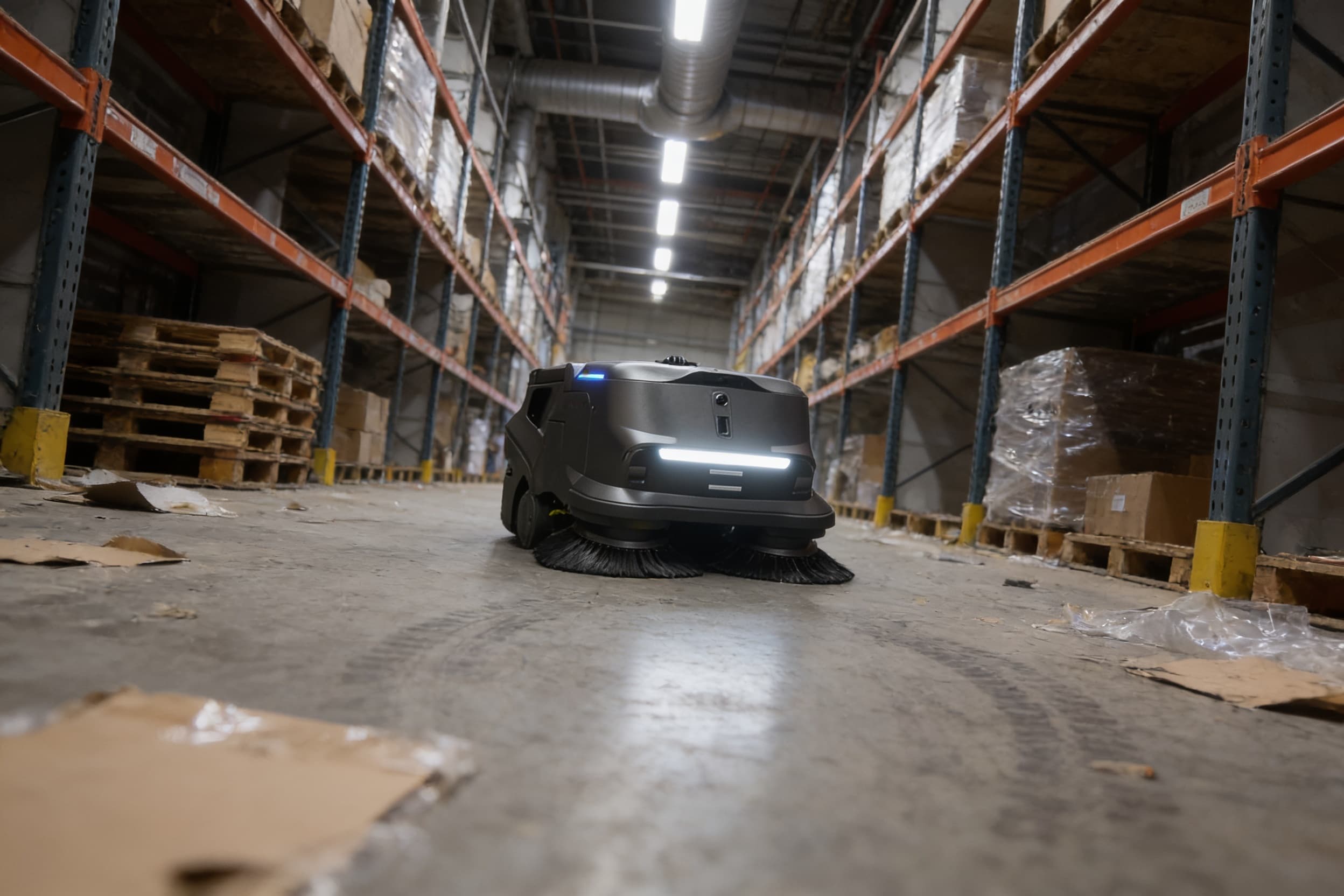
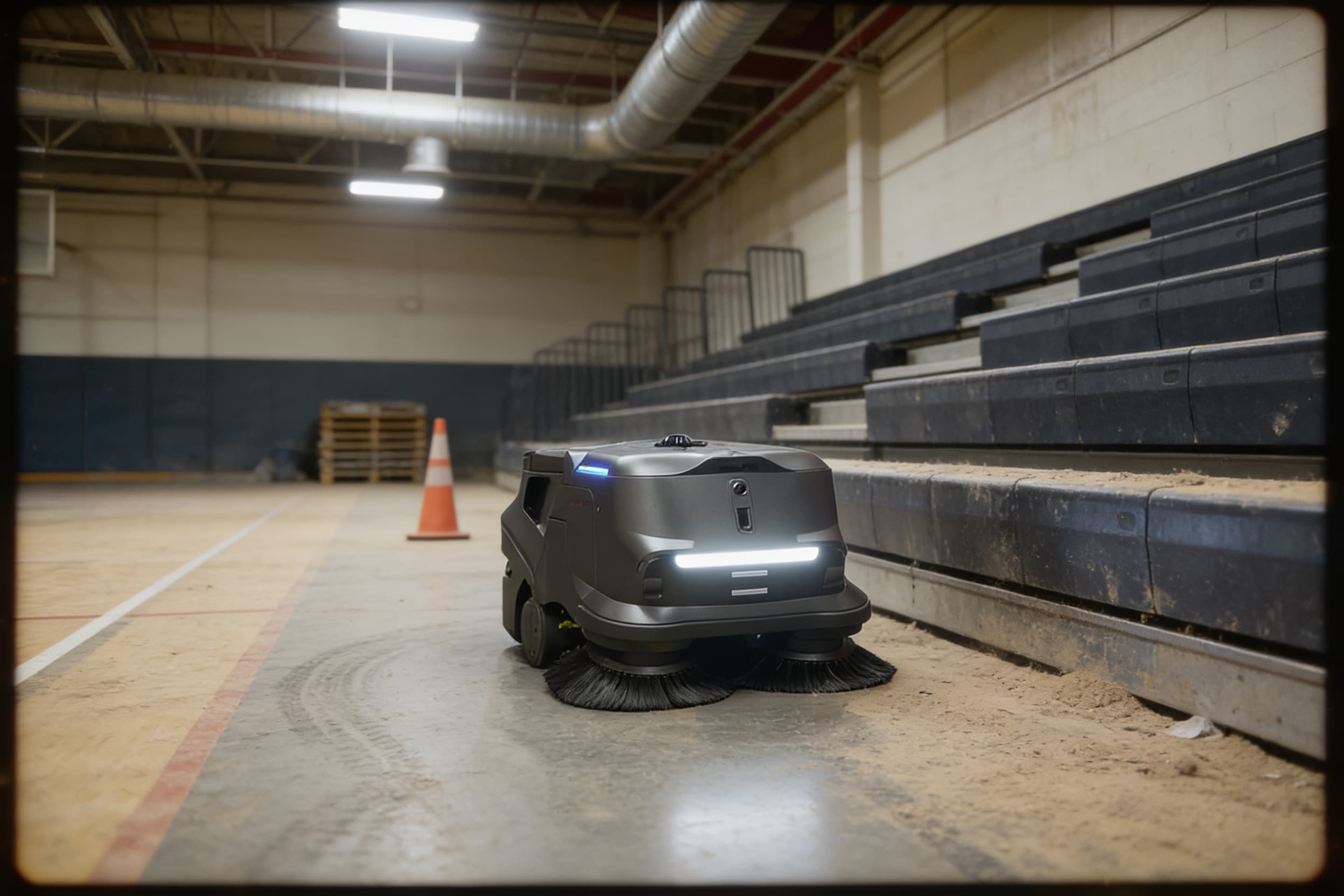
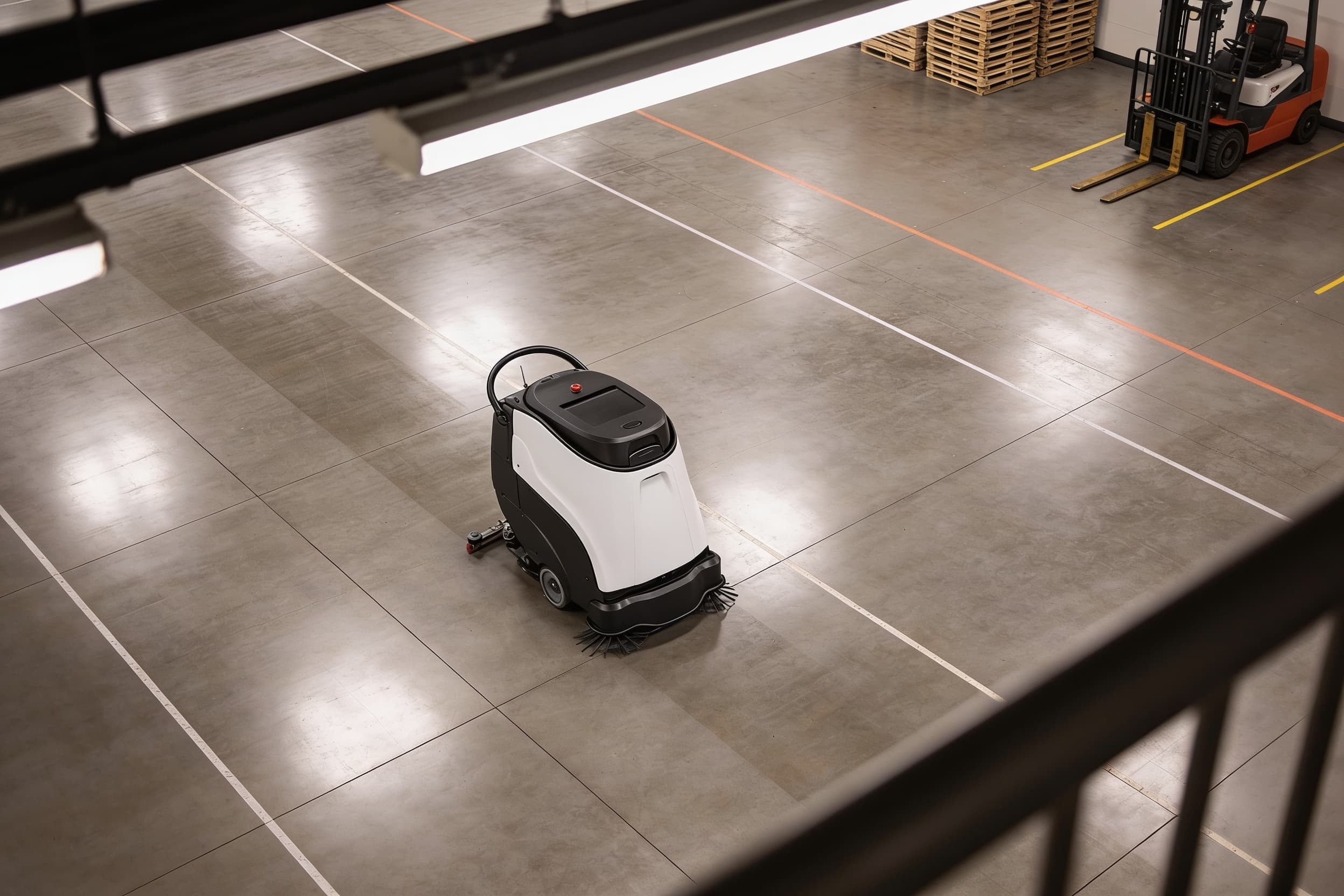
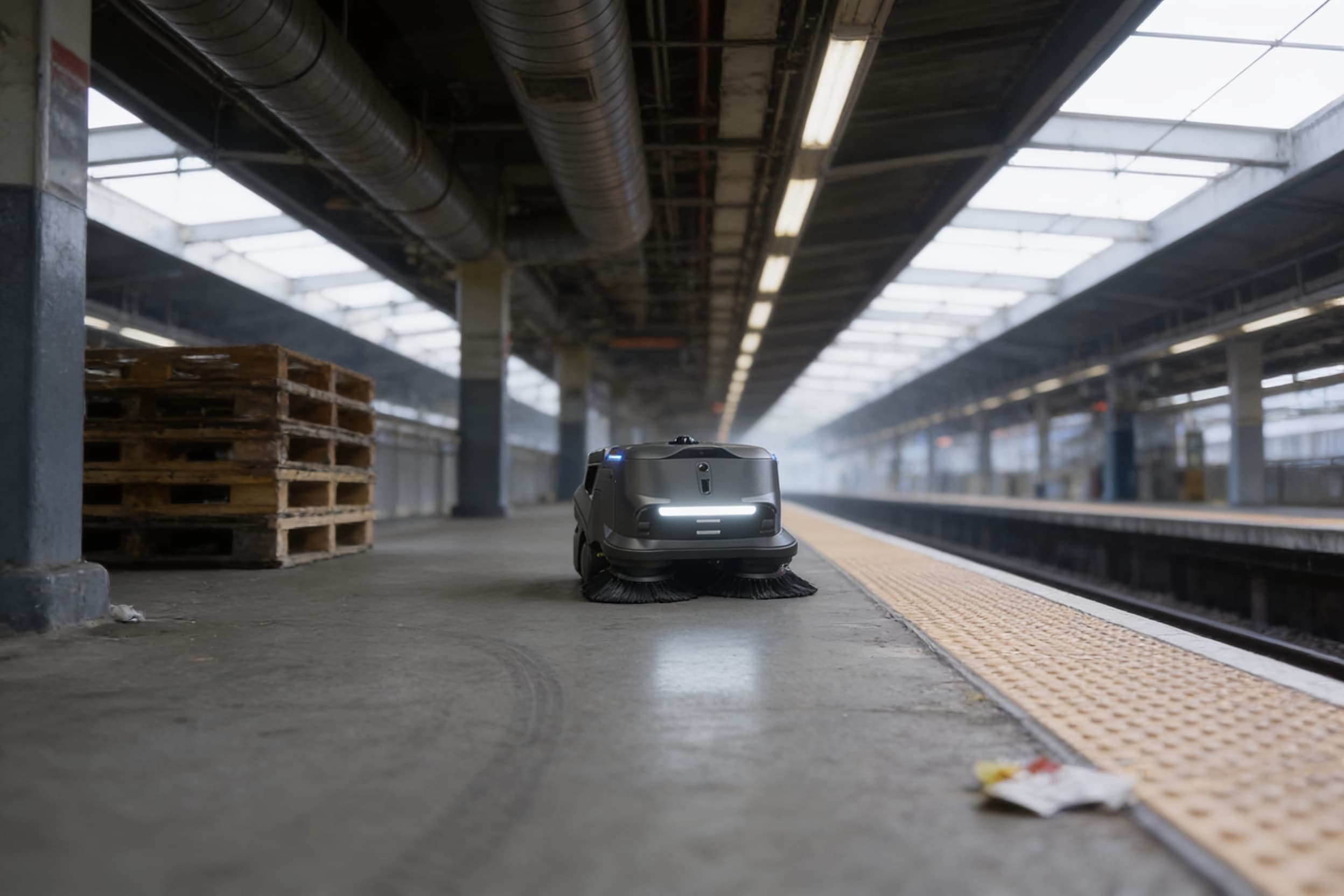
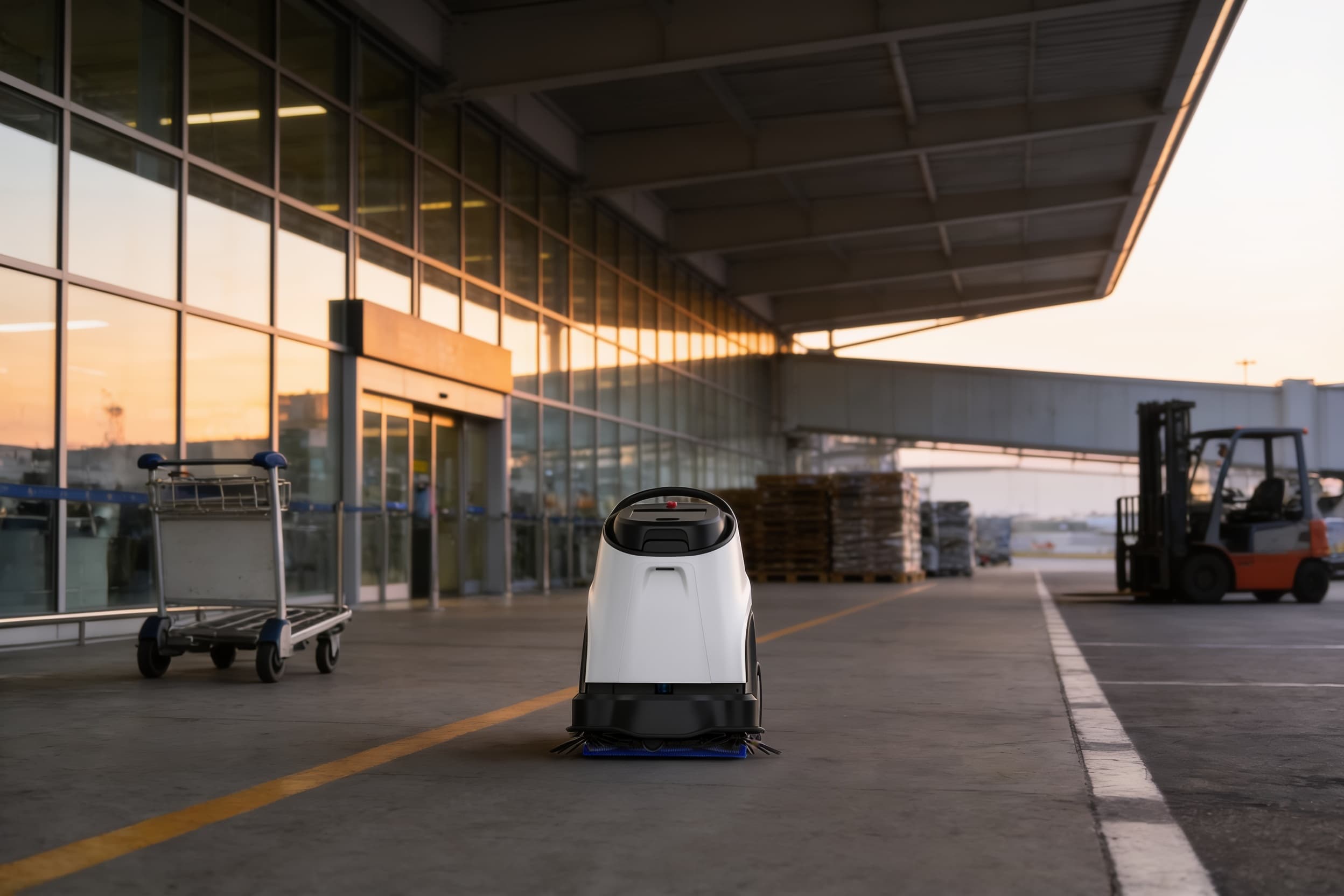
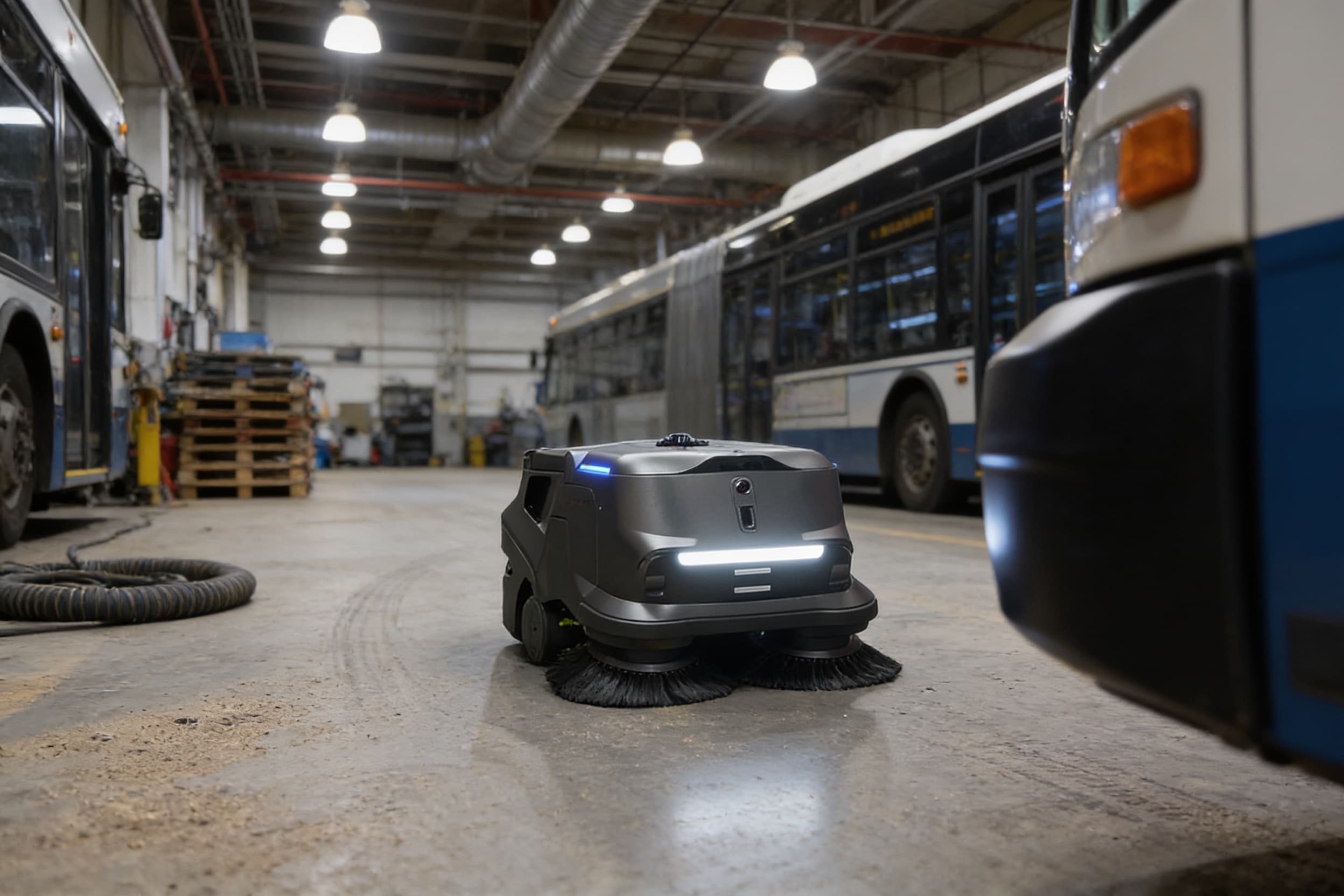
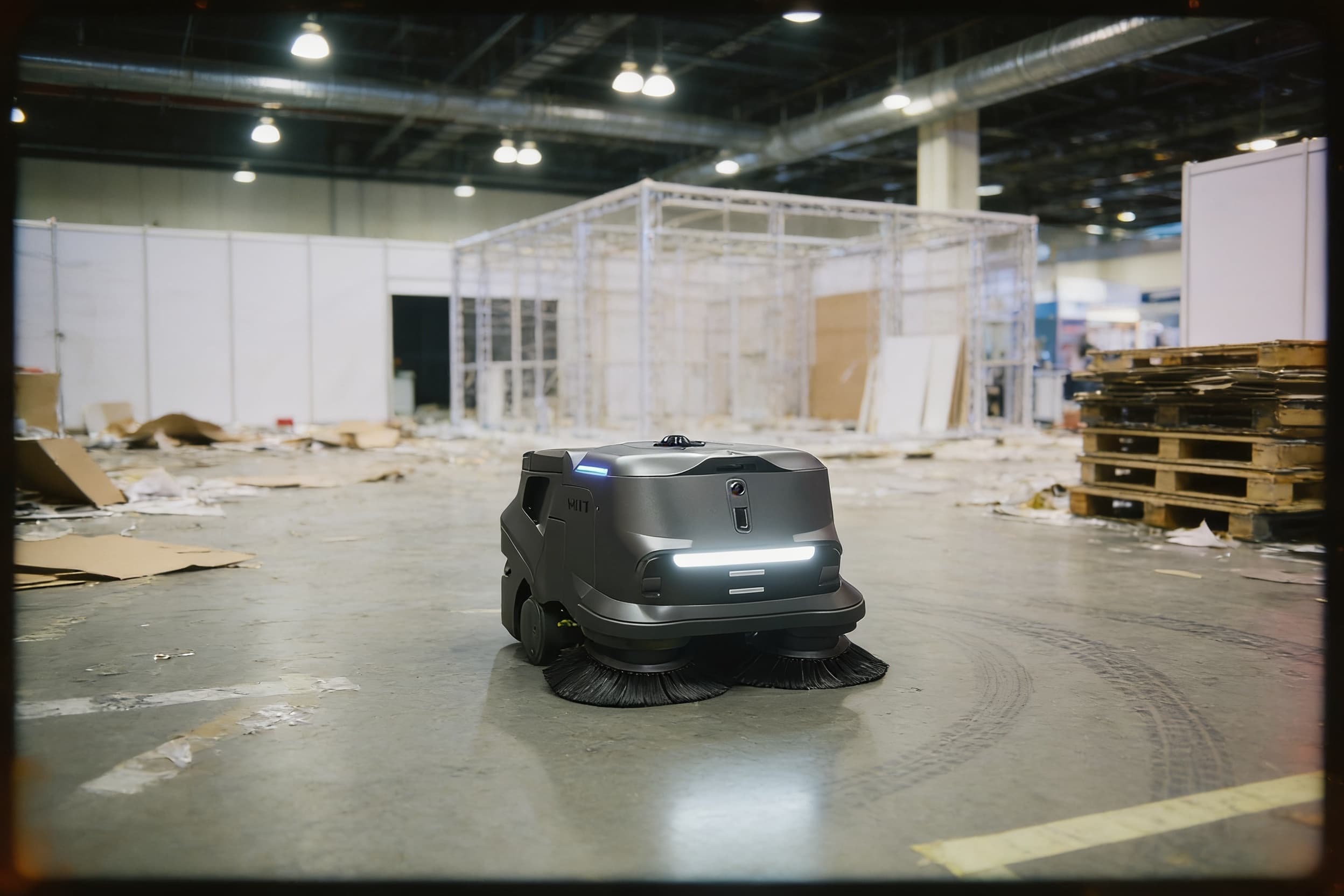
On the floor
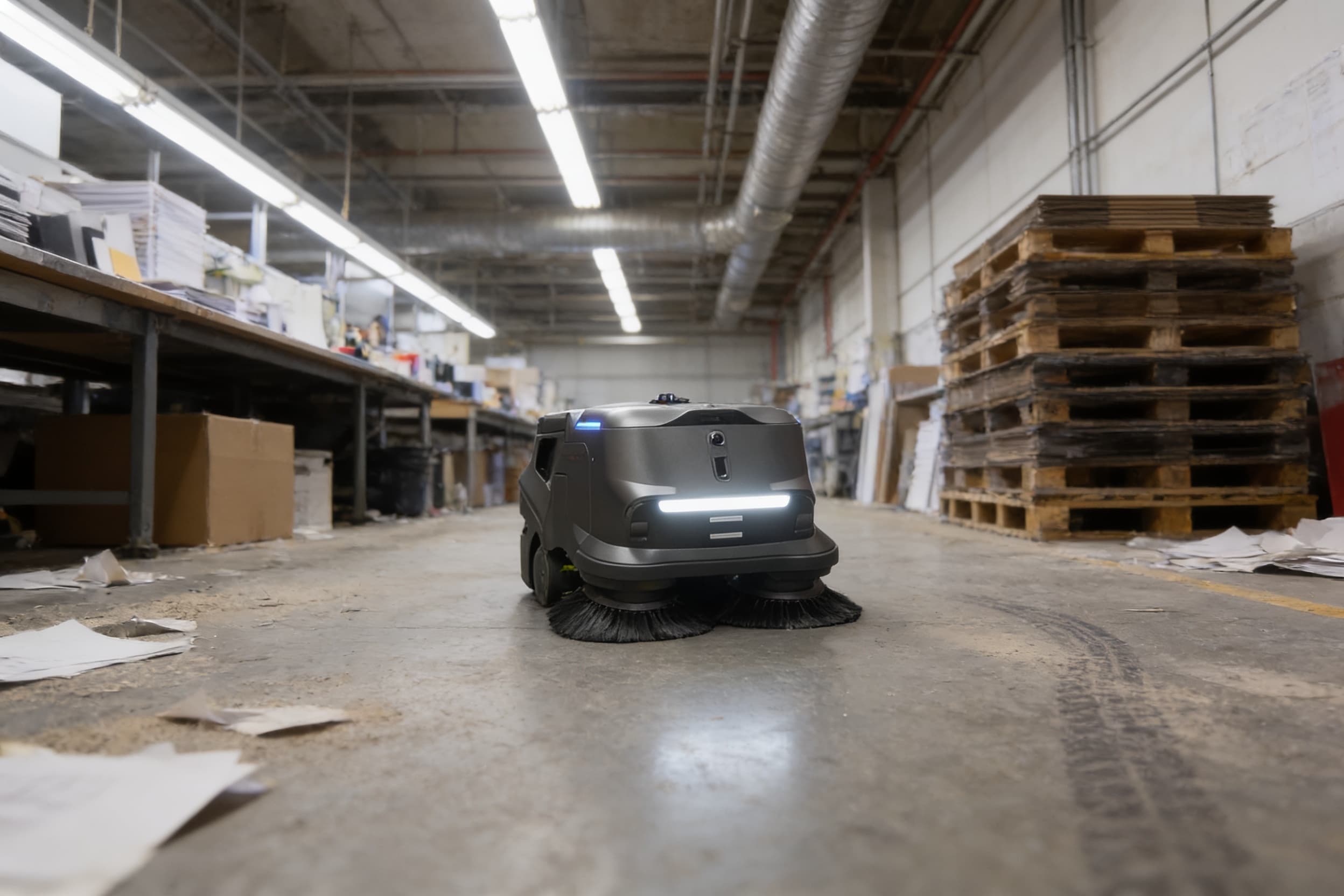
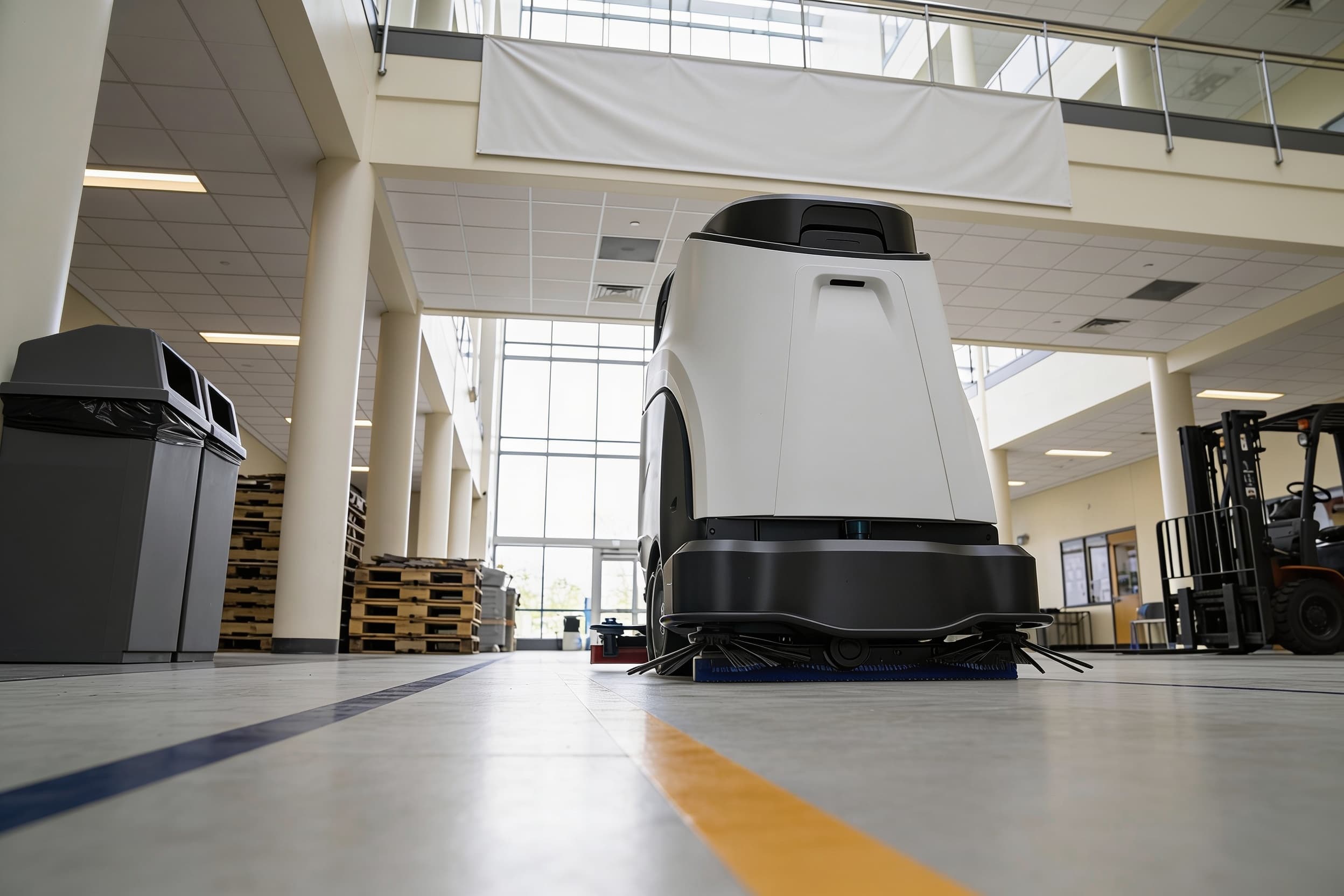
Where you'll see it working.
Decision guide
Which cleaning robot fits your floor?
Route yourself by floor type, square footage, and vertical. This is the starting point we confirm on a site walkthrough.
Large open warehouse / distribution slab (50k+ sq ft, sealed concrete)
A large autonomous scrubber - a large-area scrubber or a rival large scrubber. Width and runtime matter most here.
Airport concourse / transit hub (long runs, high traffic, never closes)
A large scrubber that runs alongside the public, plus a sweeper for debris. Obstacle handling and uptime are the deciders.
Retail / grocery sales floor (mixed surfaces, daytime hours)
A mid-size scrubber-vac - a compact combo scrubber or similar - that runs safely near shoppers on a schedule.
Lobby / office / education (tile, smaller footprint, tighter spaces)
A compact scrubber-vac (Phantas or ICE Cobi 18). Maneuverability beats raw coverage rate.
Healthcare corridors (sanitation-sensitive, mixed floors, occupied)
A scrubber matched to your surface + protocol, deployed to run alongside staff without disrupting clinical flow.
Honest fit check
Who a cleaning robot is NOT for
We would rather tell you no than sell you shelf-ware. A cleaning robot is the wrong call when:
- Your floors are small or chopped into many tiny rooms - a person is faster than a robot that spends its run turning and re-docking.
- The job is mostly detail work (restrooms, edges, stairs, spills) - robots own open floor, not corners.
- Your floor changes layout constantly (heavy daily reconfiguration) - re-mapping overhead can outweigh the savings.
- You run a single short shift with a cleaner already on staff and no plan to redeploy them - the utilization is too low to pay back.
- Nobody will own the daily empty/refill and weekly upkeep - even a serviced robot needs a local hand for the basics.
Proof
Deployments we can point to.
Common questions
Cities we serve
Deep local pages for the metros where we have the most cleaning robots demand.
Start with a free site assessment.
We walk your site, learn the job, and tell you which unit fits, OEM-neutrally, before you commit a dollar. If nothing fits yet, we say so.
Find the robot that fits your site.
Free site assessment. We tell you what actually works before you spend a dollar.