
The question, in the buyer's words
Our new-car dealership has customers waiting 40 minutes at the service desk on Saturdays while advisors juggle appointments and phones; could a humanoid robot greet customers and answer basic service questions?
Key takeaways
- A humanoid greeter can handle arrival greetings and basic questions, not repair orders, pricing or warranty work.
- J.D. Power found an immediate greeting on arrival happens only about half the time, so the gap is real.
- No verified results yet show a humanoid greeter shortening dealership service desk waits.
- The main humanoid safety standard is still a committee draft that assumes level ground.
- Fix appointments, check-in and phone routing first, then pilot one unit after a site assessment.
Can a humanoid greeter work a dealership Saturday service desk?
A humanoid greeter is a walking robot placed near an entrance to welcome people and answer scripted questions. On a Saturday at a dealership service desk, that means greeting owners as they walk in, confirming who has an appointment, pointing them to the right lane or waiting area, and answering questions about hours, check-in steps and parking. Those tasks repeat all morning, and they are exactly what pulls advisors away from appointments when the line grows.
The job falls apart where the question depends on one specific vehicle. An advisor who opens a repair order, quotes a brake job, explains recall status, or sorts out a billing question needs live access to the customer file and authority to decide. A greeter does not replace that work. It should hand those customers to a named advisor, and you should measure how often that handoff happens.
So the honest answer is a partial yes. A greeter can take the arrival moment, where a long wait often begins in the customer's mind. It will not by itself shorten the repair order queue or the phone backlog, and a greeting that leads nowhere can make a line feel longer.
- Arrival greeting
Humanoid Robot
Greets every arrival in the same tone, with no break and no drop in energy
Staff
Reads the customer, notices a stressed or elderly owner, and can walk someone to the lounge
- Basic questions
Humanoid Robot
Answers hours, check-in steps and directions from approved answers
Staff
Answers questions that depend on the vehicle, the open order or the customer history
- Repair orders and quotes
Humanoid Robot
Cannot open, change or approve a repair order
Staff
Builds the repair order, quotes the work and tracks approvals
- Upset customers
Humanoid Robot
Can flag the issue and route it to staff quickly
Staff
Can calm the situation, explain options and decide what to offer
- Shift coverage
Humanoid Robot
Runs a shift with scheduled breaks and charging, if the lease and service plan cover it
Staff
Needs breaks, scheduling and cover when someone is out, and turnover is a standing risk in advisor roles
- Traffic and weather
Humanoid Robot
Needs a level, mapped route kept clear of drive lanes, and a review before it works near vehicles
Staff
Judges gaps in traffic, moves around vehicles and pedestrians, and adjusts to rain and ice
Why do Saturday service desk waits keep growing?
Most Saturday waits come from a fixed number of advisors handling walk-ins, scheduled arrivals and ringing phones at the same time. When an advisor steps away from the counter to take a call, the line keeps moving slowly, and customers who were never greeted often wait without knowing where they stand. The fix is usually a mix of staffing, appointment spacing and phone routing, not a single tool.
Staffing is the hard part. According to a NADA-hosted presentation of OEM-reported figures, service advisor turnover charted between about 41 and 46 percent over 2018 to 2022, and reached 44 percent in the latest benchmark year. The same presentation names compensation, work and life balance, and career progression as key turnover drivers. Each departure takes away an advisor who knows the store's routines, and the replacement needs time before they can run the desk alone.
Technicians set the other limit. The Bureau of Labor Statistics reports about 805,600 automotive service technician and mechanic jobs in 2024, and projects 4 percent employment growth for 2024 to 2034, about 33,600 jobs. That pool is large but growing at a modest pace, so bay capacity may stay tight. Some Saturday waits reflect full bays, not a slow desk, and a greeter cannot change that.

How many dealerships could use a service desk greeter?
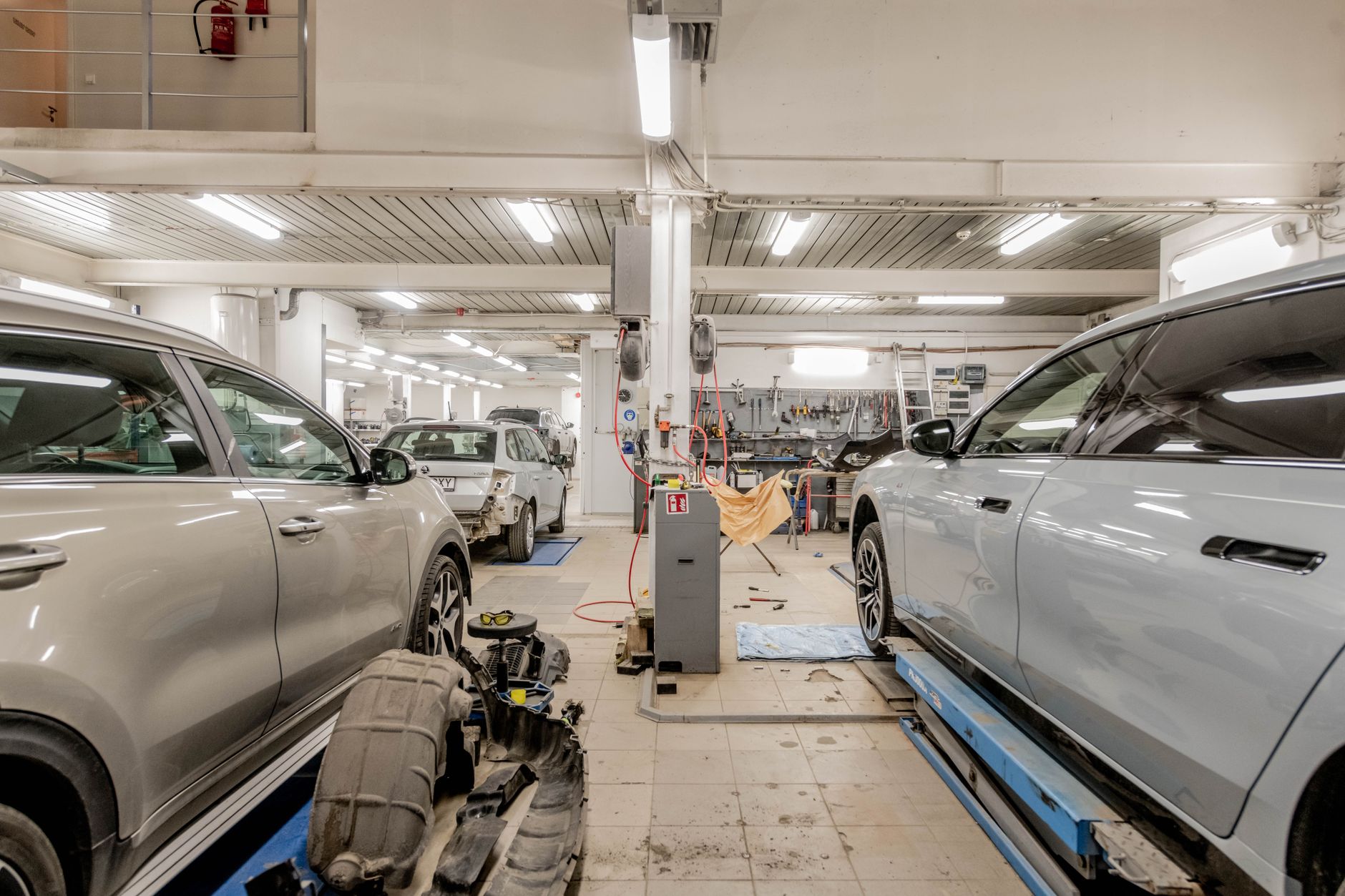
NADA's 2026 midyear report counts 16,991 franchised new-car dealerships nationwide, as reported by Autobody News. NADA Data lists 16,990 franchised light-vehicle dealers for 2025. The two counts are nearly identical, and both describe the franchised stores where a service desk greeter would most likely be tested.
Those counts show the size of the pool, not how many stores have Saturday lines of 40 minutes. Your own volume matters more: appointment mix, walk-in share, the number of service lanes, and whether the service drive opens onto a busy road. Two stores under the same franchise can need very different desk setups.
Scale also favors starting small. One greeter at one service entrance is a reasonable test, and it will tell you more than a fleet plan built on a vendor's projection.
What does the research say about greeting customers at service visits?
J.D. Power's 2025 U.S. Customer Service Index for dealer service, based on 55,210 owners and lessees according to the press release, found that appointment waits are longer in days than in 2018 to 2022. It also found that an immediate greeting on arrival is the least-performed communication behavior, done only about half the time. That gap is easy to picture at a busy desk, and it is the clearest case for a greeter.
The lesson is about process as much as hardware. A greeting does its work when the next step is clear, such as a check-in screen, a visible queue number, or a named person who will come to the customer. A greeter that welcomes people and then leaves them standing has added a sign, not service.
If you test a greeter, track what J.D. Power measures: whether the greeting happens at arrival, how long a customer waits before speaking with someone, and whether the customer leaves knowing what happens next. Those measures show the effect, and they can be counted by hand at the desk.
What are humanoid greeters doing in customer service right now?
Humanoid greeters are moving into customer-facing work, but published results are thin. A January 2026 China Daily report describes a humanoid running a retail capsule store in Ningbo that greets customers and responds to gestures and expressions. That is a launch report with no outcome data. A March 2026 pilot at a fast food restaurant in Shanghai used humanoids to greet guests and support ordering. The operator stated the robots performed no operational duties, and no metrics were published.
A January 2026 mixed-methods study placed a small humanoid in a live bedding store, according to an arXiv paper, but the results were not visible in the material we reviewed. In June 2026, a trade show presentation made a return-on-investment claim for a greeter, and that claim came from a vendor demo with no measured data. Treat it as a sales claim until someone publishes numbers.
For a dealership, that makes you an early adopter in service retail. That is not a reason to avoid the idea. It is a reason to design a pilot with a baseline, a stop rule, and a clear way to hand customers to staff.
Where does a humanoid greeter fail on a service drive?
The main humanoid safety standard is still in progress. ISO/CD 25785-1 covers industrial mobile robots whose stability depends on active balance control, including bipedal robots, and it remains an unpublished committee draft. An explainer on the draft notes that it assumes level ground, so a sloped or uneven service drive may need its own stability analysis. A UK industry proposal notes that, when it was written, no safety standard for these robots was published or in development. Read that as a sign the rules are early, not that the robots are unsafe.
A service drive is more demanding than a showroom. Vehicles move through lanes, advisors and technicians walk with keys and parts carts, customers hurry, and doors open to weather. Ramps, drains, pavement seams and rain all change how a robot reads its route. A greeter that works on a clean lobby floor can still struggle at the drive entrance.
Expect the greeter to live inside the building, on a level and mapped route away from drive lanes, with a staff member nearby during peaks. The point is not to exclude the robot. It is to decide where it can stand before anyone asks it to.
What should a service director check before a pilot?
Start with the site, not the robot. A site assessment should confirm floor grade, the surface at the entrance, walkway width, lighting at opening, and whether the route crosses drive lanes. Those answers decide whether a humanoid is the right form at all, and they set the terms of any lease quote.
Next, check the systems the greeter depends on. It can answer status questions only if it can read appointment and check-in data, so confirm that scheduling software can share information with it, and that the building network covers the entrance and the drive. Without that link, a greeter is a talking sign with no answers.
Then decide who takes over. Every question the greeter cannot answer needs a named advisor, a target time for handoff, and a way for the customer to know who is coming. Measure the handoff as carefully as the greeting.
- Floor grade and surface at the entrance and along the drive
- Lane layout so the greeter route never crosses a drive lane
- Read access to appointment and check-in records
- Network coverage at the entrance and on the drive
- Baseline counts for greeting rate, phone wait and check-in time, taken before any unit arrives
What does a Saturday look like with a greeter on the desk?
A workable Saturday starts before the doors open. The greeter runs its self-check, confirms its mapped route and its link to check-in data, and moves to its charging spot. Staff review the morning appointment list so the greeter shares up to date information.
During the morning peak, the greeter welcomes arrivals, confirms appointments, and sends walk-ins to the right queue. Each handoff is logged with a time stamp, so the service director can see where the line actually moves. Midday is when breaks happen, and a staff member covers the desk while the greeter is off the floor.
The day ends with a log review, not just a shutdown. Count greetings, questions answered, handoffs and the wait between arrival and first contact. Those numbers show whether the greeter is taking load off advisors or only adding a voice at the door.
How does leasing a greeter work with us?
We lease commercial robots through financing, so the desk does not need the capital up front. We choose the robot that fits the site across manufacturers, deploy and integrate it, train your staff, and service every unit under our service plan, backed by regional service engineers. One partner handles the whole lifecycle, which matters when a greeter must connect to scheduling software and stay running on a busy Saturday.
The lease payment comes in a quote after a free site assessment, because the route, floor, network and handoff plan set the scope. Bring the Saturday data, the lane layout and the name of the advisor who will take handoffs. Those three items shorten the assessment and make the quote more useful.
For a dealership, a sensible first step is one leased unit at one service entrance, with the baseline in place before it arrives. Coverage matters as much as the greeter itself, because a failure on a Saturday is visible to everyone in line. Ask in writing about on-site dispatch, remote triage, emergency response and spare unit coverage.
Frequently asked questions
Want a humanoid robot at your dealership service drives?
Tell us about your site. We will recommend the robot, quote the lease, and keep it serviced.
Sources
- Autobody News
- NADA Data
- NADA-hosted presentation on OEM-reported service advisor turnover
- U.S. Bureau of Labor Statistics, Occupational Outlook Handbook
- J.D. Power 2025 U.S. Customer Service Index press release
- China Daily, Ningbo humanoid retail store report
- ISO/CD 25785-1 standard listing
- i-scoop explainer on ISO 25785-1