
The question, in the buyer's words
Our 120-person aluminum extrusion plant moves hot billets from furnace to press by forklift on every shift, and drivers are pulled off press support whenever a load is late; could autonomous forklifts run billet moves without a driver near the furnaces?
Key takeaways
- Partly: driverless trucks can take fixed die and tooling runs, but we found no published case of one moving hot billets from furnace to press.
- Billet arrival and feed alignment can cause press waiting that a faster truck will not fix.
- Log two weeks of late-load and driver-off-support time before sizing anything.
- Manual drivers still need evaluation at least once every three years under OSHA's powered truck training standard.
- Start with one fixed route, measure the freed minutes, and add legs only when the data supports it.
Can autonomous forklifts run aluminum billet furnace moves?
Autonomous forklifts are driverless industrial trucks that follow a mapped route, and an aluminum billet furnace move is one of the harder jobs to hand to one. The move starts at a furnace that heats the billets, and the billets leave hot, so the path and the handoff are where the risk and the delay sit. Before comparing any truck, split the move into its hot legs and its cool legs, because the answer differs for each.
Your question has two parts. The first is whether a driverless truck can make the move at all. The second is whether it can run without a driver near the furnaces. The second part is a safety question, and it depends on the heat, the floor layout and the handoff more than on the truck model. A truck can only help with the first part once the second is settled for each leg.
Plants often ask a robot to fix a problem that starts in another step. A truck that arrives on time into a press that still waits will leave the press waiting if the feed is misaligned or the press crew is short. Treat the truck as one fix inside a larger flow, and map the whole move before deciding.
How does a billet get from the furnace to the press today?
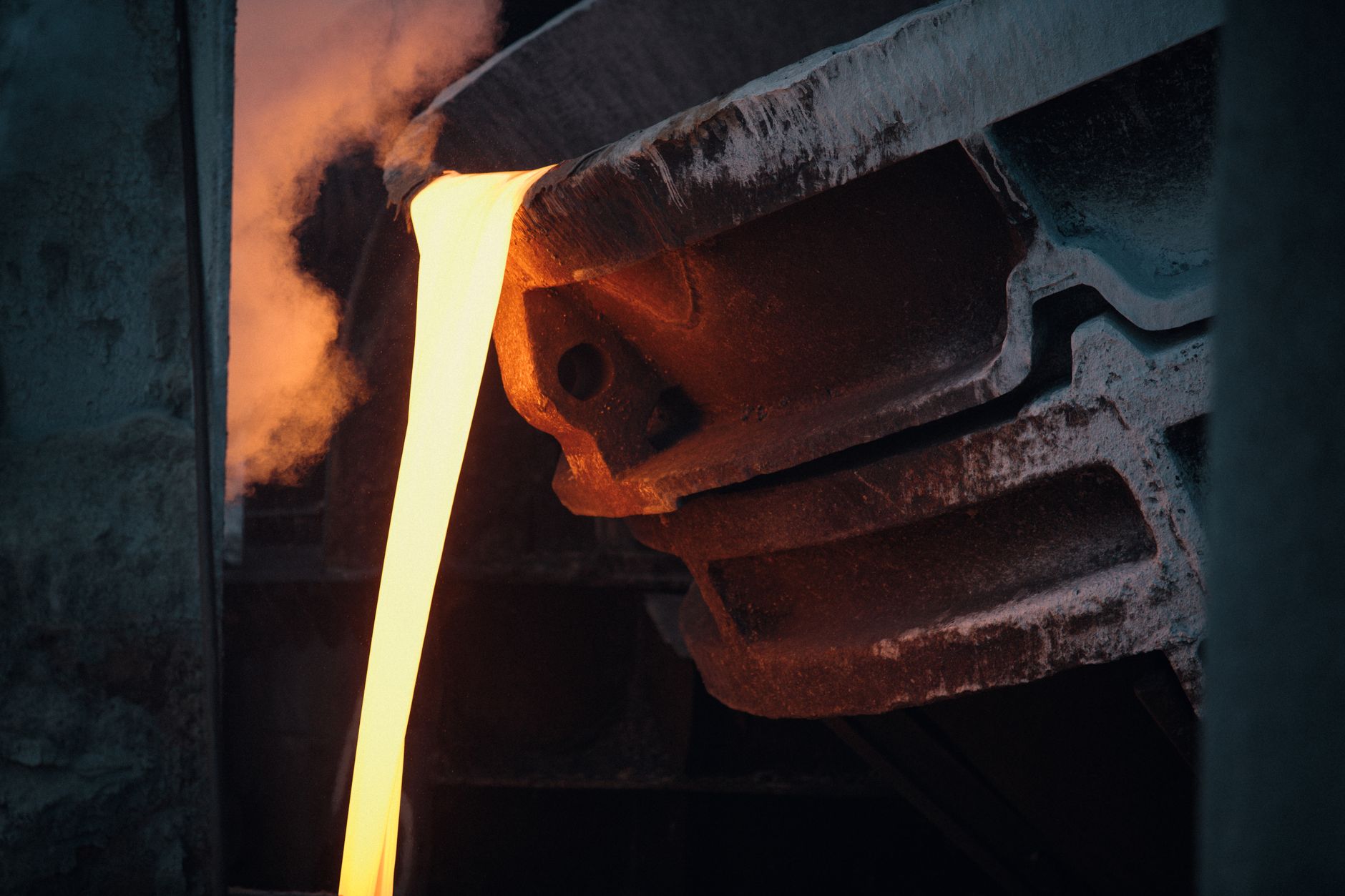
In a typical setup, the billet is heated, then moved to a press loading point on a fixed path and pushed into the container when the press is ready. The move is short, repeatable and timed to the press cycle, which is why it looks automatable on paper. The practical question is whether the handoff at each end is as repeatable as the transport in between.
When a load arrives late, the press waits, and the driver is the person pulled off press support to cover the gap. That pattern is why the handoff, not only the transport, deserves a close look. A driver who is fast on transit still cannot fix a billet that was not heated on time.
A technical guide on billet feed says hot-billet conveyors from the heater or log shear are critical to press performance, often cause excessive downtime, and need constant operator attention because billets drift out of alignment. That points to a second cause of waiting. If the feed drifts, a faster truck does not fix the press, so find out whether the wait comes from the driver, the feed or both before leasing anything. Also check whether the loading tray is staffed only when a driver is present, because a truck would expose that gap rather than close it.
- Fixed die and tooling runs
Autonomous Forklift
Runs a pre-programmed route; one vendor case study describes an AGV moving extrusion dies from the die shop to the press
Staff
Adjusts when the route or the load changes on short notice
- Hot billet handoff at the furnace
Autonomous Forklift
No published case found; needs a site check of heat exposure and alignment
Staff
Can watch billet alignment and stop a move that drifts
- Late load response
Autonomous Forklift
Follows the dispatch schedule, so drivers are not pulled off press support
Staff
Can reprioritize and cover press support during a gap
- Exceptions and jams
Autonomous Forklift
Stops and waits, which needs a responding person nearby
Staff
Clears the jam and restarts the move
- Safety rules
Autonomous Forklift
Driverless trucks fall under ISO 3691-4 and ANSI/ITSDF B56.5 design rules
Staff
Each operator must be evaluated at least once every three years under the OSHA training standard
Where could an autonomous forklift fit in billet and die flow?
The clearest case we found is tooling. One vendor case study describes an AGV that moves extrusion dies from the die shop to the press on a pre-programmed route, which matches what driverless trucks do well: fixed routes, known loads and no hot handoff at either end. Treat that as a claim to confirm at your own plant, since a vendor account is not a site test.
Other legs deserve a check, including moves of staged billets or scrap from fixed points to fixed points away from the furnace face. Each one needs confirmation, because a billet that is still hot, or a load that waits for a cooling step, changes the route and the rules. Your plant's own move map will show which legs are truly repeatable and which still need a person.
Every automated leg needs a fixed point at each end: a marked staging spot, a reliable pick point and a way to confirm the load is in place. Without those, the truck waits, and the driver gets pulled back anyway. Routes that run on a known schedule are the best candidates, because timing is where a truck's value shows up.
How many driver hours go to late billet loads?
The research did not produce a verified count of driver hours per shift for billet moves at extrusion plants, so this page will not put a number on that gap. Your own records will supply the figure that matters most. Pull two weeks of dispatch logs, time each move from the press call to the billet reaching the loading tray, and add the minutes each driver spends away from press support.
National labor data gives context, not an answer. According to the Bureau of Labor Statistics, 792,500 jobs are listed for industrial truck and tractor operators, within a broader group of material moving machine operators. The research found no turnover figure for forklift operators, so your own absence and turnover records will say more about your plant than any national count.
Late loads have causes a truck cannot fix. A late billet from the heater is a scheduling or furnace problem. A truck can cut transit time and remove the driver from the transit leg, but it cannot make a billet arrive sooner. Separate late-arrival minutes from transit minutes in your logs, because only the transit minutes move to a truck.
What safety rules apply to driverless trucks near furnaces?
Under the OSHA powered industrial truck training standard, each operator must be evaluated at least once every three years, and the employer must certify the operator's name and the training and evaluation dates. Refresher training is also triggered by an accident, a near miss or unsafe operation. These rules keep applying to the manual drivers who stay on the floor, so any change in routes or dispatch is a good moment to review evaluations.
For the driverless truck itself, ISO 3691-4:2023 covers driverless industrial trucks and systems, including trucks with automatic modes that need operator action, rider capability or a maintenance mode. The US reference ANSI/ITSDF B56.5 was approved in 2012, and a newer edition was not confirmed in the research. Ask any integrator which edition their design follows.
A draft revision of ISO 3691-4 listed a close-of-voting date of September 10, 2026. That date has now passed, so check whether a newer published edition has replaced the 2023 version before design sign off. One vendor guide says these standards are not legally mandated in most jurisdictions, and this research did not confirm that point, so check it against the standards and with your insurer.
How dangerous is forklift work for the people who stay?
OSHA's background for its 2018 powered industrial truck directive estimates that about 1.5 million US workers operate over 855,900 powered industrial trucks. The same background cites roughly 85 forklift fatalities and 34,900 serious injuries per year. The wording was partly cut off in our review, so check the exact figures in the document before quoting them. Either way, the scale explains why a plant should not depend on one person running a forklift near hot metal and crowded press aisles.
The sources disagree on the leading cause, and they cover different years. The OSHA directive, citing 2012 BLS data, names pedestrians struck by the vehicle as the top cause, while a secondary summary points to tipovers. Ask your safety lead which hazard dominates your floor, because a billet move crosses the same aisles where people walk.
Pedestrians need marked walk lanes, and crews need a clear rule for what to do when a truck stops in their path. Those rules belong in the deployment plan, not in a note taped to the truck. Tip risk on ramps and turns near the furnace also needs a route review, since a load that shifts at speed is a hazard in its own right.
Are other extrusion plants using automated handling?
Public adoption data for self-driving forklifts in extrusion is thin. The Aluminum Association's 2017 directory listed 204 extrusion plants and 538 extrusion presses in North America as of April 2017. That gives a sense of the installed base, but it is a dated count, and the research found no recent US plant count for 2025 or 2026.
The president of the Aluminum Extruders Council says the council represents 80 to 85 percent of domestic extrusion product in the US and Canada, according to an industry interview. That makes member plants a useful peer group for asking about billet handling, since they face the same press, furnace and handoff questions you do.
Ask your trade association and two or three peer plants how they handle billet moves before you rely on any adoption figure. A reference visit or a peer call often tells you more about the handoff than a national count does.
How would we approach a billet move like this?
We are an OEM-neutral commercial robot integrator for US businesses. We pick the right robots across manufacturers, then lease them through financing, deploy and integrate them, train your staff and service every unit under our service plan, backed by regional service engineers in every state we service. One partner covers that whole lifecycle, which matters here because a billet move touches the furnace, the press and the dispatch routine at the same time.
We start with a free site assessment, because the answer depends on the heat, the floor and the handoff. The payment comes in a quote after that assessment, with the lease arranged through financing. Bring the late-load log, the move map and the handoff details, and we will say which legs we would automate, which stay with people, and what has to change first.
The site assessment also maps the routes and checks the safety design against the standards in force, which is where the ISO edition question gets settled. Expect the assessment to end with a clear no for any leg that still needs a person, since that is a useful answer too.
What would a first phase look like if the answer is yes?
A phased start is the sensible test. Begin with one fixed die or tooling route that runs on a known schedule, measure the driver minutes it frees, and then decide whether a second leg earns a truck. Keep the furnace-side handoff with people until the data shows a truck can handle it safely.
Set the measures before go live. Count late-load minutes, driver minutes off press support, and any near misses on the route. Compare them with the two-week baseline from your dispatch logs, and review the operator evaluation dates for every manual driver in the same period.
Those are decisions for your team. A site assessment will set the phases with your operations and safety leads, and the quote will show what each phase covers before you commit to anything.
Frequently asked questions
Upcoming manufacturing events
- Trade showBrats & RobotsNov 10, 2026Alliant Energy Center Exhibition Hall, Madison, WI
- Trade showMATE Farm & Ranch ShowFeb 11 to 13, 2027MetraPark, Billings, MT
- ExpoPFMA Expo 2027Feb 17 to 18, 2027Washington County Fair Park, West Bend, WI
- ExpoLouisville Facilities Maintenance ExpoApr 15, 2027Mellwood Art Center, Louisville, KY
Want an autonomous forklift at your aluminum extrusion plants?
Tell us about your site. We will recommend the robot, quote the lease, and keep it serviced.
Sources
- OSHA, powered industrial trucks training requirements
- OSHA background for 2018 powered industrial truck directive
- BLS Occupational Outlook Handbook, material moving machine operators
- Aluminum Association 2017 North America directory, reported by an industry news site
- Aluminum Extruders Council president interview, industry news site
- ISO 3691-4, driverless industrial trucks
- Technical guide on billet feed for extrusion presses
- ANSI webstore listing for ITSDF B56.5 standard