
The question
Our Charleston, SC apartment grounds have live oaks whose roots heave the turf every spring, and our two groundskeepers are already stretched thin by May; could robotic mowers work around the root flares without scalping the lawn?
The short answer
Robotic mowers can work Charleston apartment lawns under live oaks, but only on the turf between the live oak roots. They can take the open grass where no roots surface, provided you map no-go zones over exposed root flares and heaved patches. They are the wrong tool for roots that stand above the grass line, for edges around trunks, and for any spot where the blade would have to cut into the flare. Keep those areas with your crew or convert them to mulch, and pilot one or two lawns before committing to a fleet.
Key takeaways
- Robotic mowers can handle open turf under Charleston live oaks, not roots that rise above the grass line.
- Keep the root flare exposed and out of the mapped mowing path, because mower wounds there invite decay.
- Charleston rainfall and summer heat keep grass growing fast, so the spring mowing window fills quickly.
- Apartment maintenance turnover runs high, so the zone map has to outlast any single groundskeeper.
- Pilot one or two lawns and count your own crew hours before deciding on a fleet.
Can robotic mowers work around Charleston live oak roots?
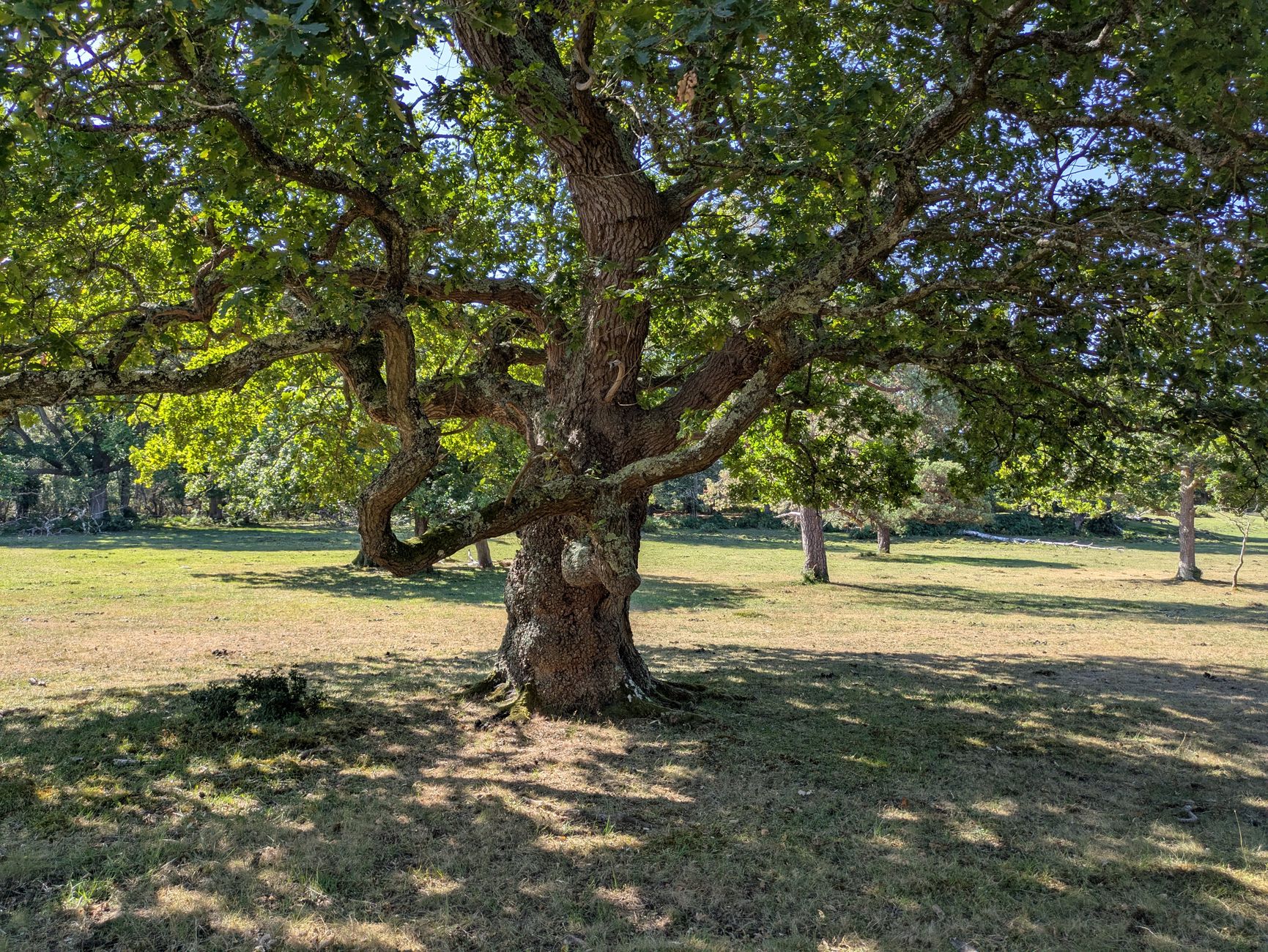
Charleston apartment grounds with live oaks have a mowing problem that an open lawn does not. The live oak roots on these properties spread well beyond the trunk, and where they lift near the surface the turf heaves, the blade cuts unevenly, and the crew ends up trimming by hand.
Robotic mowers work well on flat, unbroken turf and need to be kept off the root flare and the heaved patches. Those two areas, more than the grass itself, decide whether the mower scalps the lawn or leaves the tree alone. If heaved areas are a small share of each property, a robot can take most of the route.
This page covers how the roots cause scalping, the local climate and county rules that shape the job, what the staffing picture looks like, and where we would keep the work with your team. We did not find a verified figure for weekly mowing hours on apartment grounds, so the hours question has to be answered from your own crew logs.
Why do live oak roots scalp the turf every spring?
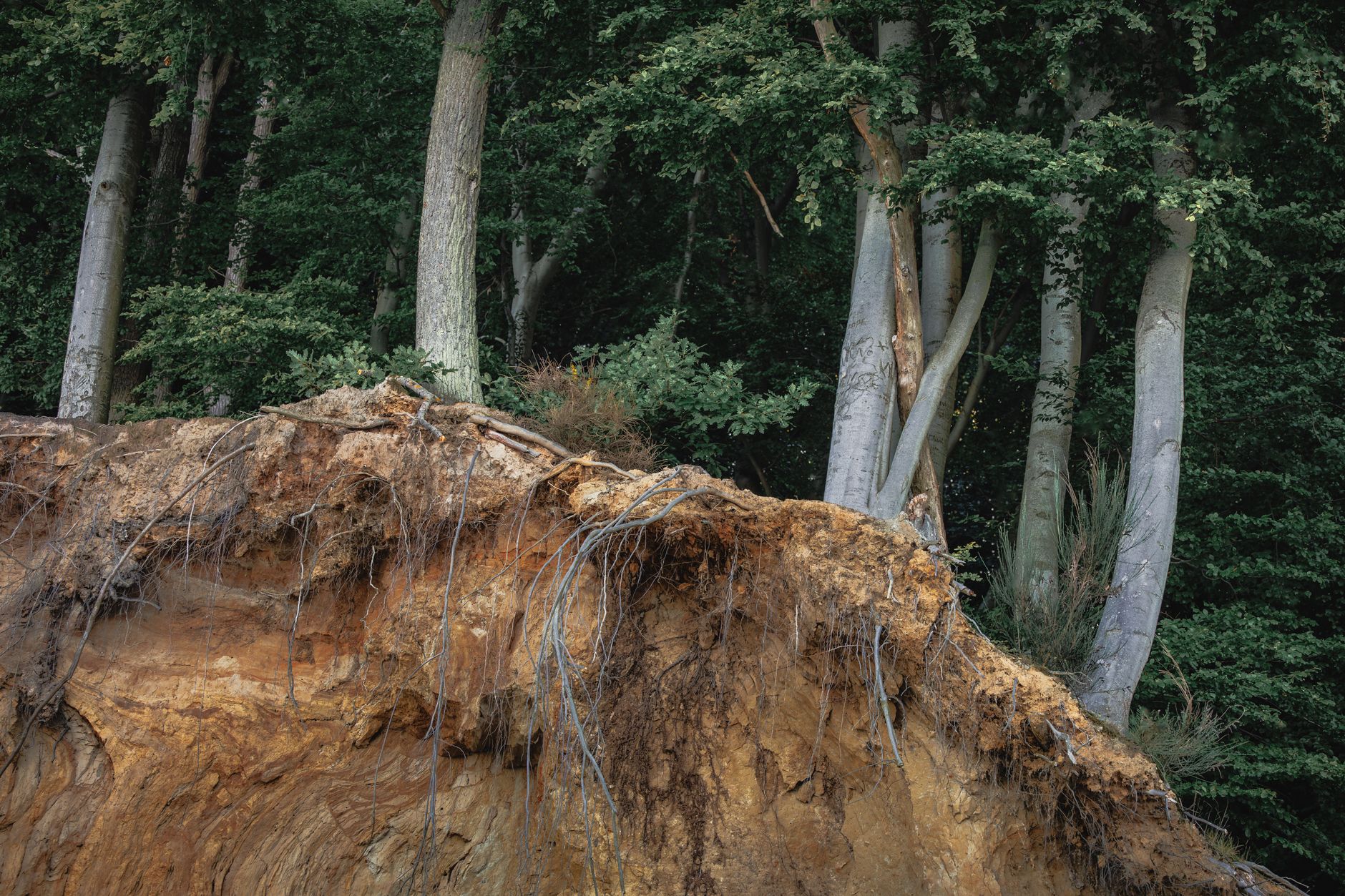
Live oak roots grow close to the surface and widen over the years, so the turf above them rises, sinks and cracks as the tree grows. Spring is when the damage shows, because grass is growing fast and the bumps are easy to see. Scalping happens when a blade strikes a root crown or a raised ridge and cuts the grass down to bare soil.
Charleston climate keeps the problem active. Annual precipitation averages about 52.48 inches, according to a summary of 1991 to 2020 NOAA data for the Charleston airport station. The annual average temperature sits near 66 degrees Fahrenheit, with July the hottest month and January the coldest, according to a climate summary citing 1970 to 2000 normals. Wet months and heat together mean fast growth and a mowing schedule that the weather often dictates.
What does a robotic mower do better than a groundskeeper?
A robot is good at the repetitive part of mowing. It runs on a schedule, follows the same pattern on the same turf, and is not pulled to another site mid-cut. On an apartment lawn with open, flat grass between trees, that consistency is the main advantage.
A person still wins where the mower cannot judge the ground. Edges along sidewalks and trunks, a root that lifts overnight, and damage checks after a storm all need eyes on the lawn. The comparison below shows where each option fits.
- Open turf between oaks
Robotic Lawn Mower
Runs on a schedule and repeats the same pattern every cycle
Staff
Adjusts quickly when the turf is wet or uneven
- Root flare and trunk edges
Robotic Lawn Mower
Stays out only inside mapped no-go zones
Staff
Sees the flare and trims by hand around the trunk
- Heaved roots above grass
Robotic Lawn Mower
Needs them mapped out, not crossed
Staff
Can cut around them, mulch them or fence them
- Steep banks
Robotic Lawn Mower
Limited by rated slope, so steep banks may need hand work
Staff
Can work a bank safely with the right equipment
- Storm damage checks
Robotic Lawn Mower
Flags changes only where it is mapped and monitored
Staff
Walks the lawn and spots new damage by eye
- Schedule
Robotic Lawn Mower
Runs outside tenant hours when scheduled
Staff
Limited by shifts, leave and turnover
Where can a robot mow under live oaks without damage?
Map the property in zones before the first cut. Mark the exposed root flare of every oak as a no-go area, add a buffer so the wheels stay clear of it, and treat each heaved patch as its own zone. The mapping decides the result, so the grounds manager should check it on site rather than accept a default map.
Slope limits matter too. One manufacturer's manual for a robotic mower lists slopes up to 25%. Treat that as a ceiling for the machine, not a daily target. Steep banks under oaks, often where roots have lifted the soil, belong with the crew.
Roots above grass height are a separate issue. A manufacturer FAQ on obstacles lists them as areas to protect, which means the map should exclude them rather than rely on sensors to find them in time.
How much root damage can a mower do to a live oak?
Wounds at the root flare are the main concern. A university extension guide notes that mowers commonly wound the root flare, and that wounds there invite decay, which can lead to dieback. The same guidance says the root flare should stay exposed and that soil should never be added over it.
The scale of the cut matters. The same guide says removing one or two small surface roots correctly is unlikely to harm a tree, while losing more than 25% of the root system can be severe. A robot that repeatedly clips the same flare is the real risk, not a single stray pass.
Extension advice for surface roots is to move mowing off the affected area, switch it to groundcover or mulch, and extend the mulch ring out to the dripline. On apartment grounds, some turf under the oaks may work better as mulch than as grass. That call belongs to the property owner and an arborist, not to the mowing schedule.
Do Charleston County rules change how you mow around oaks?
The county zoning rules are written for construction, so they do not decide what a mower can do. They do show how closely the county watches live oak root zones. Under the county zoning ordinance, encroachment of more than 25% of a Grand Tree's protected root zone requires a variance, and building within three times the trunk diameter of a Grand Live Oak also requires one, according to a county Board of Zoning Appeals agenda.
This matters if your grounds plan includes regrading, new paths, irrigation trenches or a patio near an oak. Any of those can cross the root zone, and a variance can add real delay. Check with county staff before that work starts, and do not treat a mowing plan as permission for ground work.
The county tree brochure advises putting protection fencing up before construction to protect the critical root zone. If a crew is already working near an oak, fence the flare zone and keep equipment out of it, whether or not a robot is involved.
Can your groundskeepers keep up with May on these lawns?
Staffing is the pressure behind the question. A trade publication reporting National Apartment Association data put onsite technician annual turnover at 39.2% in 2021, compared with an industry average of 32.7%. When people who know a property keep leaving, the mowing plan has to be rebuilt each season.
That figure describes onsite maintenance technicians, not groundskeepers, but the pattern is similar. When experienced staff leave, their knowledge of which oak roots are lifting leaves with them. A written zone map keeps that knowledge on the property.
We did not find a verified figure for hours spent mowing apartment grounds per week, or a verified Charleston wage or headcount figure for groundskeepers. The honest way to size a robot is to count your own crew hours on each lawn for two or three weeks in April and May, then compare those hours with the open-turf share of each property.
Which lawns should stay with your crew, not a robot?
Some lawns are a poor fit. Lawns with root heave above the grass line, steep banks under oaks, tight trunk rings, and many edges along sidewalks or parked cars should stay with the crew, at least until mapping and mulch decisions are made. A robot is the wrong tool for a lawn that needs hand trimming on every visit.
Partial fits are common. A lawn can be split into a robot zone for open turf and a crew zone for the root areas, which lets your team focus on the work that needs judgment. For Charleston apartment grounds, that split is often the honest answer, because the oaks are the reason the lawn looks the way it does.
Over time some properties may convert heaved areas to mulch. That reduces the number of spots a crew hand mows and removes the flare cutting risk, but the change needs an arborist's read on the tree first.
What should a robot pilot on Charleston oak lawns look like?
Start with one or two lawns that have a clear mix of open turf and oak roots. Map the property with the grounds manager, set no-go zones around every exposed flare, and run the mower for at least two full mowing cycles before judging. Log each near miss at a root, each edge missed and every hour the crew still spends on the lawn.
We handle the site assessment, mapping, deployment, integration, staff training and service for the robot. The robot is leased through financing, and the payment comes in a quote after a free site assessment, so the quote reflects your property and timeline. We can start with a single leased unit and add more only after the pilot shows the zones hold.
If the pilot shows the robot cannot keep off the flares, or the root areas make up most of the work, the honest result is to keep the crew on those lawns and use the robot only where the map holds. We would say that before you sign anything.
Frequently asked questions
Put a robot to work in Charleston.
We walk your site, learn the job, and recommend the unit that fits. Then we quote the lease, deploy it, and keep it serviced.
Sources
- NOAA 1991 to 2020 rainfall summary, Charleston airport station
- Climate summary citing 1970 to 2000 normals, Charleston SC
- Charleston County Board of Zoning Appeals agenda, Article 9.2
- University extension guide on mower wounds and root flares
- Robotic mower manual, slope specification
- Manufacturer FAQ on obstacles to protect
- Charleston County tree ordinance brochure
- Trade publication on apartment maintenance turnover, National Apartment Association data