
The question
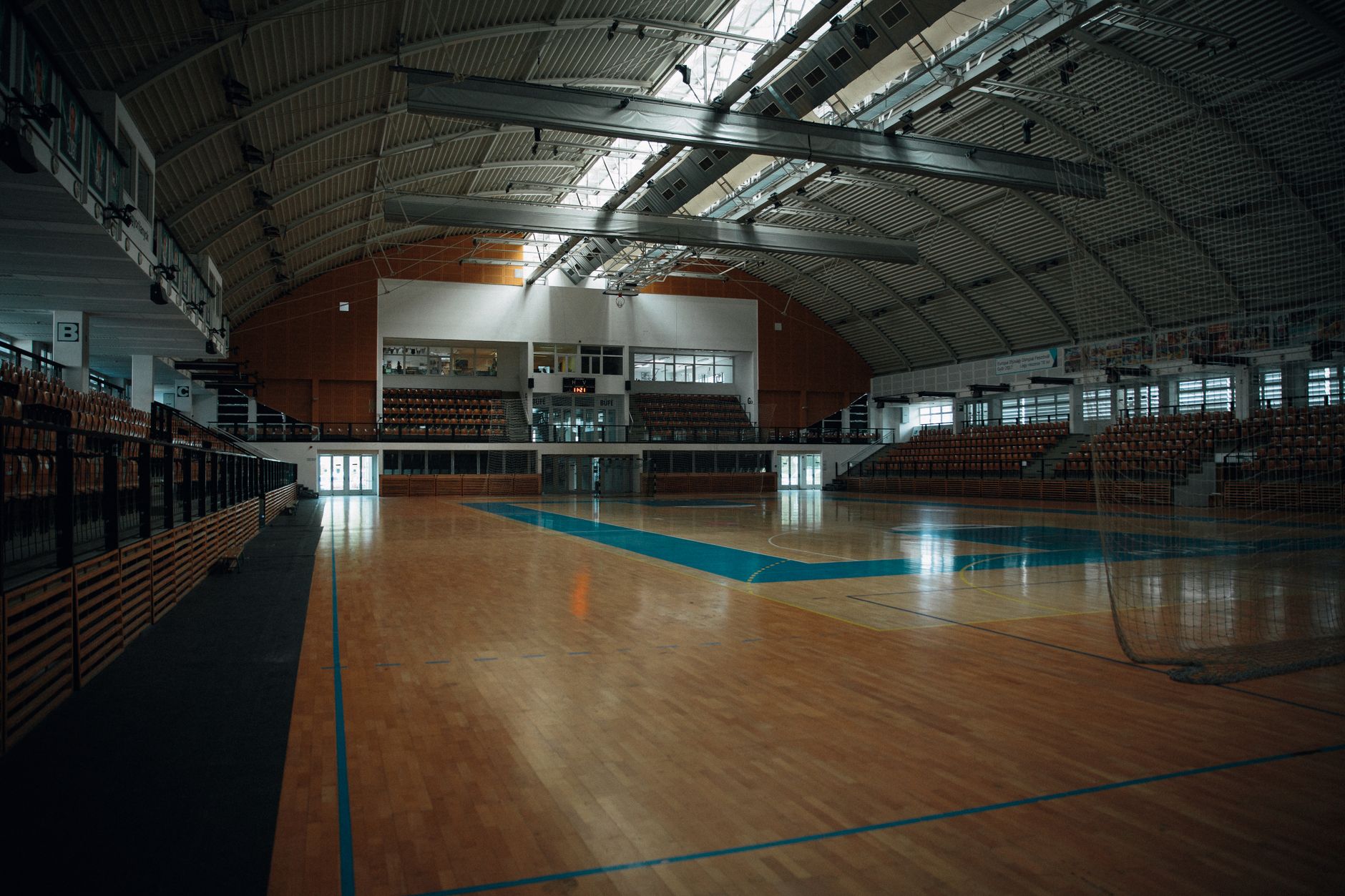
Our community college gym has a maple floor that has to be dust-mopped before every game, and our three custodians are covering four buildings; could a cleaning robot handle hardwood without scuffing the finish?
The short answer
A cleaning robot can take over the daily dry mopping on a college gym maple floor, but only with a dust mop treatment and pad the finish maker approves. The Maple Flooring Manufacturers Association warns that the wrong treatment makes maple very slippery, and that power scrubbers can chip, peel or dull the finish, so scrubbing is a poor fit until the finish maker signs off. For a campus where three custodians cover four buildings, a leased unit can run the scheduled pre-game pass while staff keep the edges, corners and damage checks. Start with a free site assessment that tests the unit against your actual finish before any lease payment is quoted.
Key takeaways
- Dust mopping is the strongest case for a robot on maple, while scrubbing needs finish approval first.
- The wrong dust mop treatment can make maple very slippery, so the product has to match the finish.
- Power scrubbers can chip, peel or dull maple, and one cleaning industry publication advises waiting for the first annual recoat on a newly installed floor.
- Three custodians across four buildings is a gap a leased robot can narrow but not close alone.
- A fixed lease payment is quoted only after a free site assessment on your floor and game schedule.
Can a cleaning robot handle a college gym maple floor before games?
Yes, for the part of the job that repeats: the dust mop pass before every game. A cleaning robot can run that pass on a schedule without a custodian standing by, and it is the lowest-risk maple task to hand to a machine, provided the treatment is right. The harder questions concern the finish, the edges and the staff hours, and those decide whether a robot changes your game nights.
Maple is a finish-sensitive surface. The same machine can be a safe tool on one floor and a source of slips or scuffs on another, depending on the product, the pad and how often it runs. That is why the answer for your gym starts with the finish paperwork rather than with the robot's specifications.
A realistic plan does not replace the custodian. It moves the repetitive pass to a fixed schedule, so the person is free for the work that needs judgment. On a campus with four buildings, that split is the central question of the value case.
What does a maple gym floor need between games?
The Maple Flooring Manufacturers Association advises daily dry mopping with a properly treated dust mop, and up to three times a day for floors with heavy use. Its guidance says dust mop treatments must match the finish. It warns against silicone, wax or acrylic-based treatments, and says overuse makes the floor very slippery. A robot that dust mops is only as safe as the treatment and pad it carries.
Microfiber heads deserve a check. One source notes that they can trap debris and scratch the finish, so the pad material on any machine should be confirmed with the finish manufacturer. The association also says the right products vary by finish, so a generic treatment from a supplier should not be assumed correct for your floor.
Practical point: a scheduled dust mop run works best when the court is empty. Confirm the room is cleared, that bleacher and bench edges are mapped, and that no equipment is left on the floor. Plan a route the unit repeats exactly, since a fixed path is easier to check for missed areas. Staff should also know how to stop the unit if a wet patch or a dropped item appears mid run.
How much custodial time does pre-game floor care take?
The sources I found do not give a verified time per task for maple gym care, so this page does not put hours on the work. The table below lists which tasks change with a robot and who performs each one. Time your own crew on each task across a normal game week before comparing, because minutes measured in your buildings will be more reliable than any published average.
Batching the work matters. If the pre-game pass is scheduled early in the afternoon, the robot can cover open floor while custodians handle the other buildings. Sequence matters as much as total time, because a late pass is the one that gets skipped when a custodian is pulled elsewhere.
A fixed schedule protects the pre-game pass when a crew is short. Edge work and spill response stay with people who can see the floor, and the schedule tells the team which tasks are already covered before they head to the next building.
What can a power scrubber do to a maple finish?
The association's position statement on power scrubbers lists possible adverse effects that include chipping and peeling of the finish, a dull finish appearance, and slip hazards. The machine is not the only variable. The operator, the pad, the water volume and the frequency all change the result, so the statement is a reason to test before scrubbing, not a verdict on every machine.
A cleaning industry publication advises against autoscrubbing a newly installed gym floor before its first annual recoat. For a campus, that means a new floor may be off limits for scrubbing for a period, even if a robot would otherwise suit the space. The scrubbing decision belongs with the finish manufacturer and the floor contractor, not only with the facilities team.
If you are weighing a scrubber against a dust mop robot, the decision comes down to the finish. Dust mopping leaves the finish alone when the treatment is right. Scrubbing puts water and pad pressure on the surface, and that is where the listed effects come from. Keep the scrubbing decision separate from the dust mopping decision.
How thin is custodial staffing across a campus?
The Bureau of Labor Statistics counts about 2,447,700 janitors and building cleaners employed in 2024. It projects about 351,300 openings each year on average over the decade, mostly from workers leaving the occupation, and projects a change of 47,800 jobs from 2024 to 2034, or 2 percent, which it labels slower than average. The pool of cleaners is not growing fast, so replacement is the main source of hiring.
For a facilities director, the crew you have is the crew you keep, and vacancies take time to fill. A robot cannot fill a vacancy, but a fixed pre-game schedule means one absence does not automatically drop the dust mop pass. Coverage gaps usually appear when one custodian is out and the next person is already covering another building.
Staffing is not only about headcount. Budget planning should count the hours custodians spend walking between buildings, which is time a single-site robot does not remove. Track those hours for two or three weeks before the board meeting so the case rests on your campus rather than on a national average.
- Repeat pre-game pass
Cleaning Robot
Runs on the same schedule each game
Staff
Depends on who is free across four buildings
- Edges, corners and bleachers
Cleaning Robot
Limited to open floor
Staff
Handles edges and corners well
- Judgment about finish condition
Cleaning Robot
Follows set routes and may miss wet spots or damage
Staff
Spots scuffs, wet spots and damage by eye
- Coverage across buildings
Cleaning Robot
Works in one gym while staff move elsewhere
Staff
Must travel between buildings
- Absence on game night
Cleaning Robot
Service plan covers repair dispatch
Staff
A sick day leaves a gap in the schedule
- Time people spend on the open floor
Cleaning Robot
Reduces people's time on the open floor during passes
Staff
Carries the recordable injury risk of the work
How many campuses face this problem?
The American Association of Community Colleges, analyzing NCES data for fall 2024, counts 6,438,743 students in public community colleges, compared with 6,259,838 in public four-year colleges. Community college enrollment is therefore the larger of the two public groups. Heavy gym use is the case the association's advice on up to three passes a day was written for.
A direct count of degree-granting community colleges was not in the results I found. The exact figure is available from the IPEDS Use the Data tool, and it is worth pulling if you are sizing a multi-campus program, because the number of maple gym floors, not the number of students, sets the number of units.
Scope matters more than headline counts. A director with one gym and a single maple floor has a separate case from a system with a gym in every building. Start by counting maple floors that get daily passes, then decide how many units a pilot needs.

What are the injury rates for this kind of work?
Business Insurance, reporting on BLS data, says the all-private-industry total recordable case rate fell to 2.3 per 100 full-time equivalent workers in 2024, down from 2.4 in 2023. Janitorial work is a specific group, and I did not find a verified BLS janitorial rate for 2024 in these results, so do not read the all-industry figure as a janitorial rate.
A robot takes people off some passes, which lowers their time on the open floor during scheduled passes. It does not remove the need for staff to handle slip hazards, spills and damage. The association's slip warning applies to over-treated floors, so the robot's treatment settings are a safety setting too.
Ask your insurer and your safety office how they classify robot-assisted cleaning in your records. The recordable rate matters for your own safety program, and a robot does not change the training that prevents slips.
How does leasing a robot work with us?
We are a full-service commercial robot integrator for US businesses. We are OEM-neutral, so we pick the robot that fits the floor rather than whatever one manufacturer offers. We lease the robot through financing, deploy and integrate it, train your staff, and service every unit under our service plan, backed by regional service engineers in every state we service. One partner covers the whole lifecycle.
The payment is a fixed robot lease payment, quoted only after a free site assessment. That assessment is where the finish question gets answered: we review the pad and treatment with you and your finish manufacturer, map the open area and edges, and set the pre-game schedule. You see the quote and the service terms in writing before you commit to a lease.
Service matters on game nights. Our service plan includes on-site dispatch, remote triage and emergency response nationwide, so a unit that stops can often be diagnosed remotely before a technician travels. Ask how spare unit coverage would work if your only robot is down before a home game.
Are other facilities adopting floor cleaning robots?
Adoption is early but moving. A 2026 industry press release, citing the 2026 BSC Market Study, says about 32 percent of building service contractors plan to adopt robotic floor equipment within 12 months, roughly double the 2025 figure. The release does not measure actual usage, so read it as intent, not as a count of installed machines.
An earlier AACEM and ISSA autonomous cleaning survey described the field as in an early stage. About one-third of non-adopters in that survey were somewhat likely to adopt within a year. The member survey report is available on request, which is a reason to pilot on one gym before committing across all four buildings.
Peer adoption is one signal. Another is whether vendors can show work on maple or wood gym floors and whether they address finish approval, not only the robot's navigation. Ask for those examples before the site assessment.
What should you check before deciding?
Three checks decide most of this. Start with the finish: confirm the treatment, pad and scrubbing rules with the finish manufacturer in writing. Then check the floor's age, because one cleaning industry publication advises against autoscrubbing a newly installed gym floor before its first annual recoat, and the association says most gymnasium floors should be recoated annually. Check warranty terms too, since warranties can depend on product and contractor use.
Decide what the robot will not do. Edge work, spills, damage reports and the first pass after a late event still need a person. If those responsibilities are clear, the robot becomes a schedule tool rather than a replacement for the crew.
Set a pilot scope before the quote. One gym, a defined pre-game pass, a logged finish check each week, and a review after a set number of game nights gives your board data it can read. That is more useful than a general performance claim.
Frequently asked questions
Want a cleaning robot at your college gymnasiums?
Tell us about your site. We will recommend the robot, quote the lease, and keep it serviced.
Sources
- Maple Flooring Manufacturers Association, Maintenance Recommendations for the Lifecycle of Maple Floors
- Maple Flooring Manufacturers Association, Power Scrubbers Position Statement (updated 3/25/22)
- Bureau of Labor Statistics, Occupational Outlook Handbook: Janitors and Building Cleaners
- Business Insurance, work injuries down in 2024 (BLS data)
- CC Daily, American Association of Community Colleges snapshot of fall 2024 enrollments
- 2026 industry press release citing the 2026 BSC Market Study
- CleanLink, daily maintenance for gym floors
- ISSA and AACEM autonomous cleaning survey report