Key takeaways
- A robot fairway pass is judged on five checks: height, stripes, edges, clippings and missed patches.
- Check the same marked spots on the same day each week so a trend shows up instead of one lucky morning.
- Your own height target beats any catalog number, since the USGA ties the right height to grass, shade, traffic and equipment.
- Repeated misses in one place usually point to the boundary map before they point to the machine.
- Greens and tees still get walked and checked by hand, every week.
What does a good robot fairway pass look like?
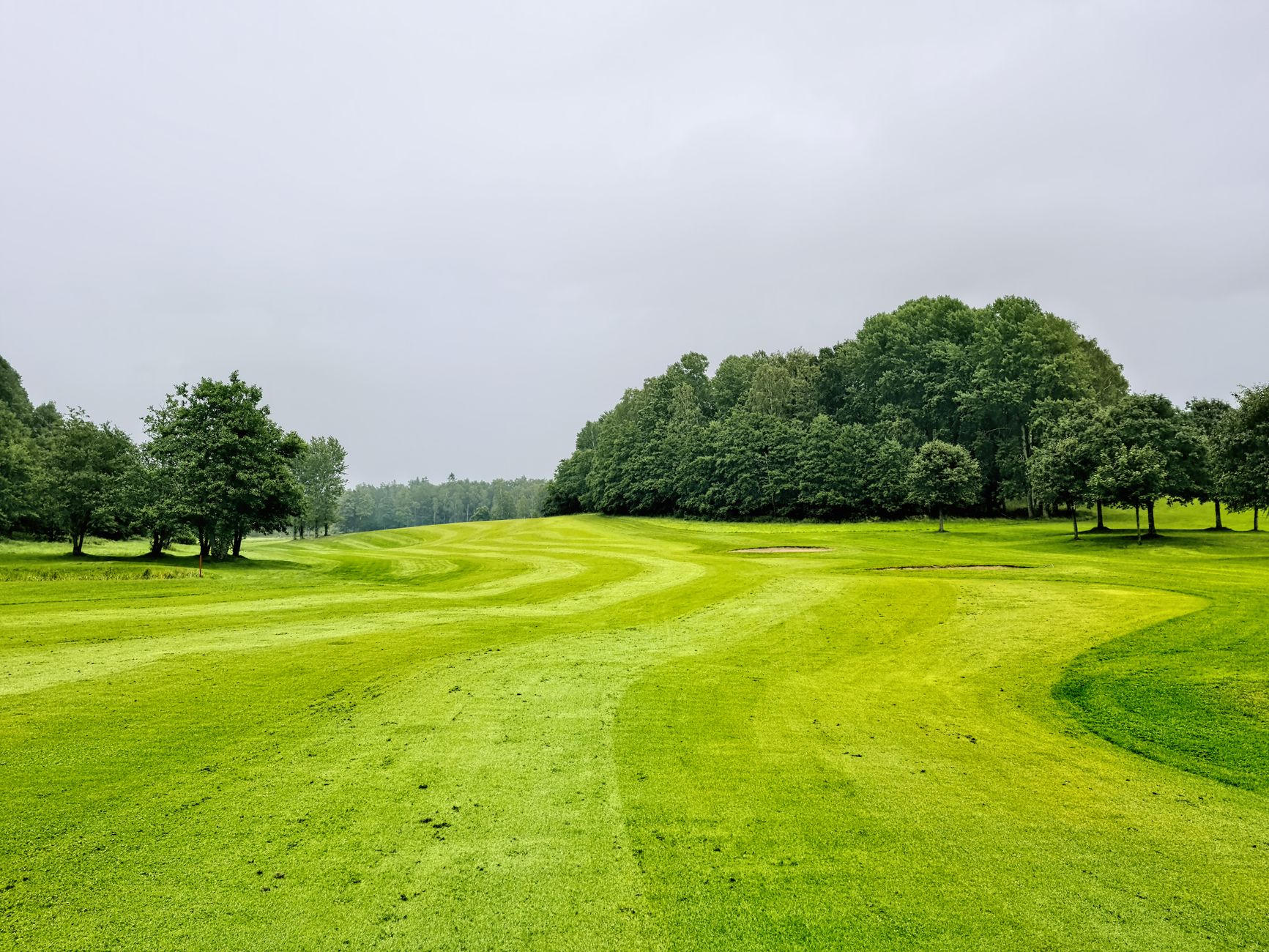
A good robot fairway pass leaves the turf at your target height, shows stripes that stay readable from the cart path, finishes clean along bunker lips and rough lines, drops few clippings on walks and carries no missed patches. That is the short answer. The rest of this checklist turns each of those five points into something you can measure in a few minutes on a fixed route.
The check only means something if it repeats. Walk the same marked spots on the same day each week, record what you see, and compare week to week. One clean morning tells you almost nothing. Four weeks of logs tell you whether the machine, its map, the mowing schedule or the traffic pattern is drifting.
Greens and tees are still inspected by hand every time. The robot pass feeds your cut quality picture for the fairways. It does not replace the crew walking the putting surfaces with a gauge and a practiced eye.
What height should a robot fairway pass hit?
Start with your own target, not a number from a catalog. The USGA's 2019 article Finding the Right Fairway Height, by Dave Oatis, says the right height depends on grass species, thatch, shade, cart traffic, growth regulators and the equipment in use. It does not hand superintendents one fixed fairway height.
Vendor specs describe the machine, not your course. Toro's product page for its GeoLink Autonomous Fairway Mower Series lists a height of cut range of 0.25 to 0.75 inches, as checked in 2026. That is the range the cutting unit can be set to. It does not tell you where your fairways should sit in a given week.
Measure at the same marked spots each week with the same gauge and the same technique. Take several readings per spot, log the average, and flag any reading that sits well off target. A setting that drifts across a month shows up in the logs long before anyone sees it from the cart.
How should stripes and edges be judged?
Stripes come from how the cut bends the grass blades and how light catches them, so judge them from more than one angle. Look from the cart path, then from the tee, since a stripe that looks crisp up close can wash out at distance. Record each spot as visible, faint or absent.
Edges are where a robot pass most often gets questioned. Check where the fairway meets the bunker lip, the rough line and the cart path. A ragged edge, or a fairway that spills over a bunker lip, is worth tracing back to the boundary before anyone blames the cutting unit.
Vendors make broad quality claims here. Husqvarna's golf industry page, as checked in 2026, says its robotic mower cutting quality is on par with reel mowers, a marketing claim with no independent test cited. FireFly Automatix's rollout at Concert Golf Partners reported feedback centered on consistent cut quality and quiet operation, which is promotional. Neither replaces your own logs.

Where do clippings and missed patches collect?
Clippings collect on walks, cart paths and the edges of drives. They are easiest to count right after a pass, before foot traffic moves them. Count them inside a strip of fixed width at each marked spot, so the number means the same thing every week.
Missed patches tend to cluster at turns, on slopes, around sprinkler heads and along map seams where one zone meets the next. Log each patch with its location, rough size and whether it sits at one of those known pinch points.
A patch that repeats in the same place is a map or routing question first. The Golf Business Monitor review of Husqvarna's First Cut feature, published in April 2026, says output quality depends heavily on how well existing EPOS boundary maps are maintained. Fix the boundary, then judge the mower.
What should each marked spot record?
Keep one row per spot per week. A row that answers the same six questions makes the log useful to a crew member who did not walk the course the week before.
- Date, time of pass, and the zone or map name the robot ran
- Height readings at the spot, the target, and the average of several readings
- Stripe status from the cart path and from the tee: visible, faint or absent
- Edge status at the bunker lip, rough line and cart path, with any ragged location noted
- Clipping count inside the fixed width strip on the adjacent walk or cart path
- Missed patches: location, rough size, and whether the patch sits at a known pinch point
Why check the same spots on the same day every week?
Comparisons only work when conditions stay as close to constant as you can make them. Dew, irrigation timing, mowing day and recent rainfall all change how a pass looks, so a check on a different weekday can read worse for reasons that have nothing to do with the robot.
Pick one weekday and one time window, such as the same Tuesday before the first tee time, and keep it through the season. Walk the same route in the same direction each time, so you see the course the way it was mowed rather than the way it was reshuffled.
A run of matching weekly records gives you a trend you can act on. A single walkthrough cannot.
How does the weekly check sit beside hand work?
The crew still checks greens and tees by hand, in every week and in every season. The fairway log covers the ground the robot mows, and it sits next to the greens walk, the tee inspection and the bunker review. It does not stand in for any of them.
Service Robot Co. is a full service commercial robot integrator that stays OEM neutral. We pick the right robots across manufacturers, then lease, deploy, integrate, train and service every unit through a nationwide US engineer network, so one partner handles the whole lifecycle. Our lease runs three years with one fixed quote after a site assessment, which lets a course compare robot lease options before any crew hours move.
What should you check when a spot fails?
Work through the causes in order. Start with the map, since a boundary that is off by a few feet reproduces the same edge fault on every pass. Next check the zone settings and the recorded height target, then recent service on the cutting unit and the drive system, then traffic, irrigation timing and weather.
Only after those checks should you judge the machine itself. If the same spot keeps failing after the map and settings are confirmed, log it, raise it with the vendor support line, and keep the crew working that spot by hand until it is resolved.
Our search found no independent side by side trial of autonomous fairway mowers against conventional units. The logs you keep on your own course are the strongest evidence you will have.
Frequently asked questions
Want a robot working for you?
Tell us the job and the site. We will recommend the robot, quote the lease, and keep it serviced.