
Key takeaways
- AMRs fit repeatable bakery rack loops with stable routes and standardized handoff points.
- Hot racks require thermal testing, secure capture, and protected cooling dwell time.
- Rack identity, allergen status, and sanitation rules must travel with every load.
- Loaded sales-floor moves belong mainly in early-morning operating windows.
- A pilot must test damaged casters, blocked aisles, spills, crowds, and failed handoffs.
Can an AMR run the bakery rack loop?
Yes. An autonomous mobile robot can move compatible bakery racks among production, cooling, staging, packaging, and sales areas when the route, rack interface, heat exposure, and traffic rules are engineered as one operating system. The best first assignment is a frequent, predictable move that consumes staff walking time without requiring judgment about product readiness.
The robot should transport the rack, not decide when bread has cooled, release food for sale, or override an allergen hold. Bakery staff retain those process decisions. A digital or physical release signal tells the AMR that the rack is identified, stable, cool enough for the approved equipment, and ready for its next destination.
This division of labor makes repetitive transport automation useful without weakening food controls. It also lets bakers remain near ovens, proofers, finishing benches, and customers instead of repeatedly pushing tall racks through the store.
Where does automation fit in the daily flow?
A useful route begins with a process map, not a robot catalog. Record every rack origin, destination, queue, doorway, floor transition, sanitation boundary, and point where employees currently wait or search. Track empty and loaded movements separately because their stability, urgency, and exposure risks differ.
The production-to-cooling leg is usually tightly controlled but thermally demanding. Cooling-to-staging adds dwell-time and release logic. Staging-to-sales crosses the most unpredictable territory. Empty-rack returns are often the easiest place to begin because they carry no exposed product and can run during broader operating periods.
- Production release: an employee confirms the rack is complete, identified, and safe to move.
- Cooling arrival: the AMR places the rack in a marked bay without blocking airflow or emergency access.
- Staging release: product status, destination, and allergen controls are checked before dispatch.
- Sales handoff: staff receive the rack at a protected bakery-side point rather than leaving it unattended in a customer aisle.
- Empty return: used racks follow the assigned clean, soiled, or allergen-control path instead of automatically returning to production.
How should the robot capture a bakery rack?
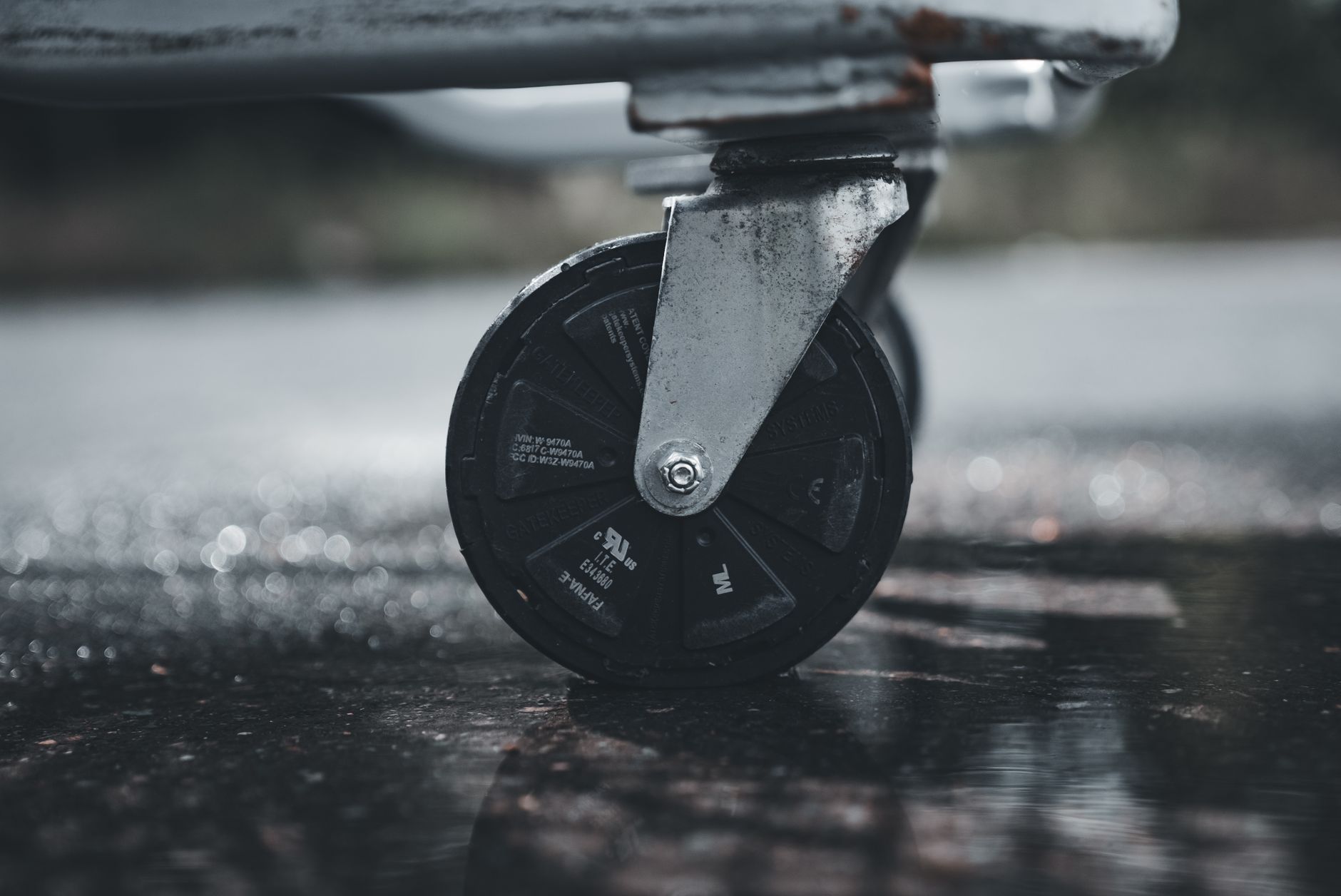
Rack capture is the mechanical heart of the project. A cart pulling robot may use a controlled hitch, while an under-rack AMR can lift or engage a standardized base. The right method depends on rack geometry, caster condition, center of gravity, turning clearance, and the need for employees to move racks manually during an exception.
Do not qualify only a pristine sample. Grocery bakeries accumulate bent frames, replacement casters, sticky swivels, loose brakes, flour deposits, and racks from several purchasing eras. Inspect the fleet, define acceptable tolerances, and remove or repair racks that cannot mate repeatably. A simple rack gauge can prevent bad equipment from entering an automated queue.
The interface should confirm successful engagement before motion and detect an incomplete release at the destination. Loaded trials must include the highest approved shelf position and the least favorable permitted load pattern. Hard turns, thresholds, slopes, and abrupt stops reveal instability that a straight demonstration can hide.
What changes when racks leave the oven hot?
A robot should never collect a rack directly from an oven merely because its payload rating is sufficient. Radiant heat and conducted heat can affect bumpers, sensors, wiring, labels, batteries, and coupling materials. Measure the rack at the actual contact points after the hottest, longest production cycle, then test against the equipment maker's documented limits.
Heat also changes the human risk. OSHA records a grocery bakery incident in which a worker was hospitalized with second-degree burns after a rack of freshly baked cookies tipped. Secure coupling, stable loading, controlled acceleration, and staff training are therefore safeguards against both dropped product and serious injury.
Create a hot-rack state with a designated route and cooling bay. The AMR must preserve spacing needed for airflow, avoid combustible storage, and reject an occupied or obstructed bay. Cooling completion should come from the bakery's approved process, not from elapsed travel time or a robot's assumption.
How do food safety and allergen controls shape routes?
Treat the AMR, its coupler, and the lower rack frame as mobile nonfood-contact equipment inside the sanitation plan. Wheels cross thresholds and couplers touch rack bases, so cleaning responsibility, approved chemicals, inspection frequency, and dirty-equipment quarantine need named owners. FDA has cited a bakery for improperly cleaning rolling racks and crates with a chemical not labeled for that use.
Exposed ready-to-eat goods need protection from overhead contamination, splash, dust, and customer contact. Covers or enclosed rack panels can help, but they must not compromise required cooling. Route design should keep uncovered products away from warewashing spray, waste handling, raw preparation, chemical storage, and congested receiving work.
Allergen control belongs in dispatch logic as well as labels. FDA recognizes nine major food allergens, including wheat, milk, egg, peanuts, tree nuts, soybeans, fish, crustacean shellfish, and sesame. Sesame became the ninth on January 1, 2023. Bakeries may assign racks, covers, bays, or movement sequences by allergen status when their hazard analysis calls for it.
Temperature-controlled bakery foods need separate controls. The FDA Food Code says cooked time and temperature control for safety food must cool from 135 degrees Fahrenheit to 70 degrees within two hours, then reach 41 degrees or below within six hours total. An AMR move must not interrupt that validated cooling process. Because the Food Code is a model adopted through jurisdictions, the store should also check its state and local rules.
How can AMRs operate around customers?
The safest sales-floor strategy is temporal separation. Schedule loaded rack transfers during the early-morning production window before doors open, or before customer volume builds. Once the store is active, favor empty-rack returns and short bakery-side movements, with lower speeds and routes that avoid checkout queues, promotional displays, and blind endcaps.
Preserve customer right of way rather than expecting shoppers to negotiate with a loaded rack. US Access Board guidance says an accessible route generally needs 36 inches of continuous clear width. A reduction to 32 inches is allowed only at short restrictions no longer than 24 inches. Robot waiting positions, cooling queues, and rack handoffs must not consume that required space.
Open-store behavior should be deliberately conservative. The AMR should yield early, stop when children or carts enter its path, and retreat or request assistance instead of forming a crowd. Temporary displays and seasonal pallets belong in daily route checks because a map that worked before opening may be obsolete by lunchtime.
What should a grocery bakery pilot prove?
A robot pilot program should run the real rack loop across actual production cycles. Start with empty racks, advance to stable ambient loads, and introduce hot or exposed-product work only after earlier acceptance gates pass. Bakery, food-safety, facilities, accessibility, and store-operations leaders should sign the test plan together.
Measure labor walking time, completed moves, manual interventions, blocked-route duration, coupling failures, rack damage, and late deliveries. Also watch what the transport metric misses: cooling airflow, handwashing access, emergency egress, cleaning effort, employee workarounds, and customer hesitation.
The pilot is not complete after a polished demonstration. It must expose poor casters, flour or grease on the floor, a misplaced display, an occupied cooling bay, a lost network connection, and a failed handoff. Recovery should be simple enough for trained bakery staff to execute without touching hot surfaces or entering the robot's pinch points.
- Reject motion when rack identity, destination, or release status is missing.
- Verify that braking and turning remain stable with the least favorable approved load.
- Confirm that every destination can detect an occupied, blocked, or incorrectly assigned bay.
- Test clean shutdown and manual recovery without contaminating food or trapping a rack.
- Repeat the route during the early-morning rush and during representative customer traffic.
How should operators buy and support the system?
The selection should follow site evidence. Rack geometry may favor a tug, an under-rack carrier, or another capture method, and several stores in the same chain may need different equipment. Service Robot Co. acts as an OEM-neutral, vendor neutral robot integrator, matching the robot that fits your floor rather than forcing every bakery into one catalog.
Its scope covers site assessment mapping, robot deployment and integration, financing, training, go-live support, remote triage, and field service through a nationwide US engineer network. That gives operators one partner and one number across the lifecycle, including mixed fleets and multi-site programs.
Commercial structures can include autonomous mobile robot leasing, AMR leasing, monthly payment programs, and purchase financing. Programs may offer no upfront capital or RoboCare™ service, depending on the approved agreement. Compare them using the same acceptance criteria, service response, spare-unit plan, and total operating obligations, not the monthly figure alone.