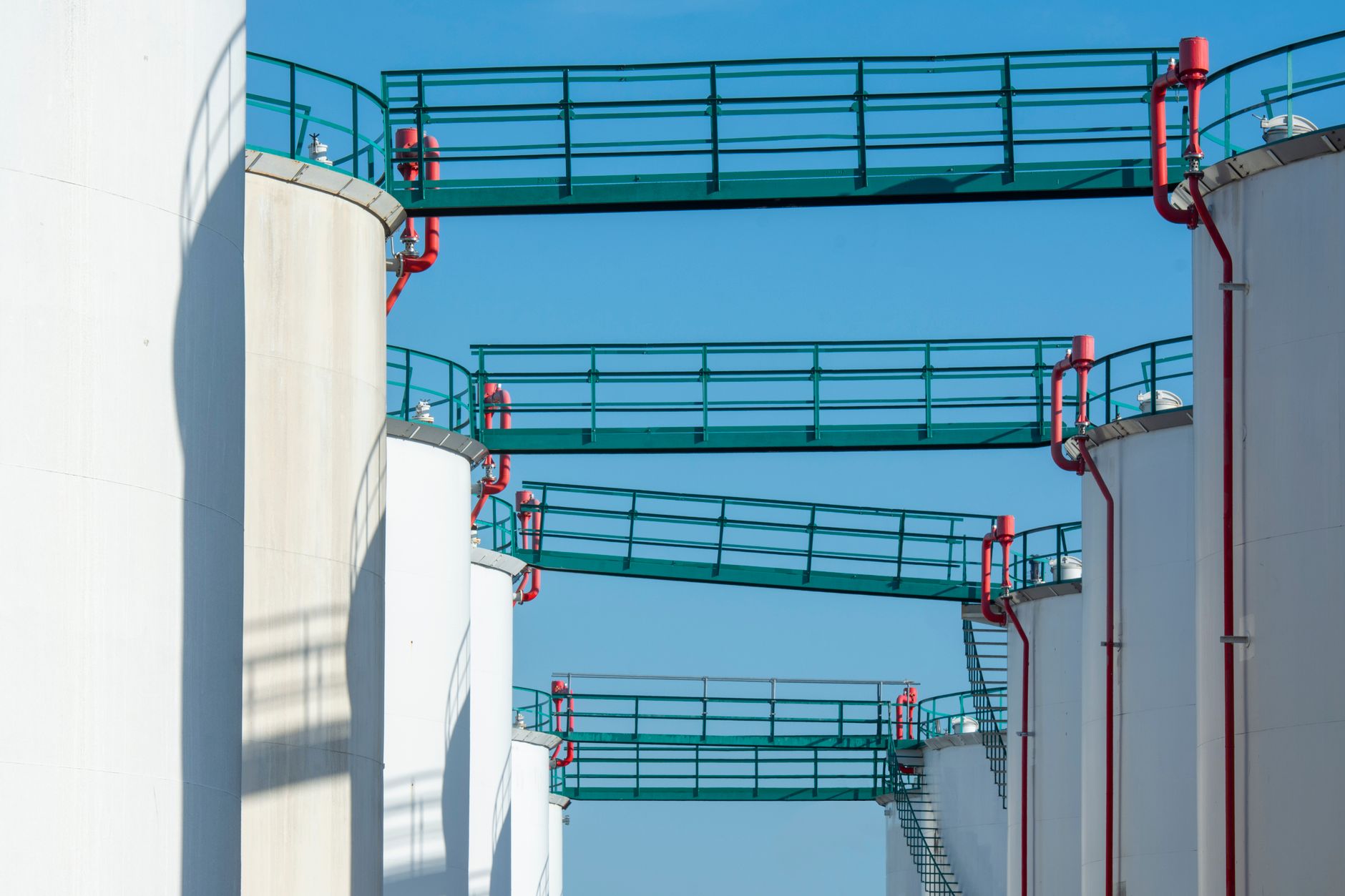
Key takeaways
- An AMR sample route is viable only after every segment has been checked against the plant’s hazardous-area drawings and chemical risk assessment.
- A standard warehouse AMR should never enter a classified location merely because its sample carrier is sealed.
- Secondary containment, compatible absorbents, positive retention, and segregated payload bays keep a broken vial from becoming a mobile release.
- Chain of custody requires verified handoffs, timestamps, seal records, and exception handling, not just a barcode on the robot.
- Emergency-stop testing must include the loaded carrier, outdoor surfaces, plant alarms, blocked routes, and spill recovery.
Can an AMR safely carry process samples to the lab?
Yes, an autonomous mobile robot can move sealed process samples from collection stations to an on-site laboratory, but only when the entire courier route is engineered as a controlled material-handling process. The project must account for hazardous-area classification, chemical compatibility, secondary containment, custody records, outdoor exposure, traffic, and emergency response.
The safest pattern keeps the AMR in ordinary locations wherever possible. Operators place sealed, labeled samples into a locked or access-controlled carrier at collection points outside classified boundaries. The robot then follows an approved route to a laboratory receiving station, where an authorized person or automated locker confirms receipt.
If the route must enter a potentially explosive atmosphere, a general-purpose AMR is not acceptable by default. The complete vehicle, battery, motors, sensors, payload electronics, communications hardware, and accessories must be approved or otherwise demonstrated safe for that precise classification and chemical group. In many plants, a boundary handoff is safer and more practical than taking an electrically powered robot into the classified envelope.
Which routes are suitable for autonomous sample transport?
Start with the sample, not the robot. Document its composition, temperature, pressure, quantity, container, preservation requirement, analysis deadline, and credible failure modes. OSHA’s Safety Data Sheet framework places accidental-release measures in Section 6, handling and incompatibility information in Section 7, and reactivity, static, shock, and vibration concerns in Section 10.
Next, divide the proposed route into segments. Record classified areas, vehicle crossings, hose stations, drains, ramps, door thresholds, outdoor stretches, muster routes, eyewash access, pedestrian density, and places where vapor or dust could accumulate. A route that looks short on a drawing may cross several distinct hazard envelopes.
Good first deployments involve small sealed samples, predictable collection points, moderate urgency, and routes that remain outside active process transfer areas. Poor candidates include hot samples needing active venting, unstable materials, incompatible chemicals sharing one bay, or work that requires the robot to enter an area during a release investigation.
Route qualification should also define service levels. A routine sample may tolerate a queued trip, while a time-sensitive control sample needs dispatch priority and a human fallback. Repetitive transport automation works only when a missed pickup, delayed delivery, damaged seal, or unavailable laboratory receiver produces a clear exception rather than a silent failure.
How does hazardous-area classification change the design?
OSHA 29 CFR 1910.307 requires hazardous locations to be documented and considered individually by room, section, or area. Equipment in those locations must be intrinsically safe, approved for the location, or demonstrated safe for the hazards present. Approval must match the class, group, and operating-temperature marking, not merely a broad claim of industrial suitability.
For Class I locations, Division 1 generally addresses ignitable gas or vapor concentrations present during normal operations or frequent maintenance and leakage. Division 2 generally addresses material normally confined in closed systems that could escape under abnormal conditions. Zone classifications divide the probability and duration differently. The plant’s approved drawings and electrical authority determine the boundary.
Temperature matters as well. OSHA bases hazardous-location equipment temperature markings on a 40 degree C ambient unless equipment intended for higher ambient temperatures carries the additional markings. Sun-heated pavement, radiant process heat, and a loaded enclosure can therefore affect suitability even when the navigation system still functions.
The current published ISO 3691-4 edition is the 2023 safety standard for driverless industrial trucks, including AMRs. Its scope explicitly excludes additional hazards arising in potentially explosive environments and from dangerous loads such as acids and bases. Compliance with the general AMR standard is therefore a starting point, not proof that a machine is suitable for a chemical sample mission.
A defensible site assessment mapping process overlays the robot route on the plant’s classification documents. If one collection point lies inside a restricted envelope, consider a pass-through cabinet or staffed handoff beyond the boundary. That single route adjustment can remove an extensive ignition-control problem without weakening sample traceability.
What should the sample carrier contain?

The primary vial is only the first barrier. Use a chemically compatible secondary receptacle that remains closed during acceleration, braking, threshold impacts, and an emergency stop. Positive retention should prevent containers from colliding, tipping, or becoming projectiles inside the payload bay.
Containment capacity should cover the full credible contents of the loaded compartment, including the possibility of more than one failed vial. Select sorbents, seals, liners, and tray materials from the sample-specific SDS and compatibility review. Acids, bases, oxidizers, solvents, and water-reactive substances should not share containment merely because their vials fit in the same drawer.
EPA field-sampling guidance provides a useful custody and packaging model: inspect containers for damage, use seals where required, employ noncombustible absorbent packing, and protect sample documents in a waterproof bag. A plant can adapt those controls for internal movement even when the trip never becomes a regulated shipment.
Useful carrier features include a latched removable insert, tamper-evident access, individual vial nests, a liquid sensor beneath the tray, and an exterior status indicator that does not reveal sensitive process data. The carrier should be removable by trained responders without reaching over a leaking container or crawling beneath a stopped robot.
Do not treat the AMR as spill-response equipment unless that function has been deliberately engineered and approved. On detecting liquid, an abnormal tilt, unauthorized opening, or a severe impact, the machine should stop in a predefined safe state, report its location and payload record, and keep untrained personnel away.
How is chain of custody preserved?
Chain of custody is an event history tied to the physical sample. EPA guidance calls for maintaining a custody form throughout possession and analysis, checking that containers arrive undamaged and properly sealed, and documenting transfers. An AMR can strengthen this record, but movement telemetry alone does not prove custody.
At collection, capture the sample identifier, collection point, batch or process reference, collector, collection time, requested analysis, preservation condition, container count, seal identifier, and destination. The loading event should bind those fields to a specific locked carrier compartment and robot mission.
At the laboratory, the receiver verifies identity, seal condition, container count, visible damage, temperature where relevant, and receipt time. Both ends need a defined method for resolving duplicate scans, unreadable labels, open compartments, absent receivers, and samples delivered outside their holding time.
The custody system should preserve human accountability. Access credentials, timestamps, and electronic signatures need synchronized clocks and audit retention. Manual override events must be recorded with the person, reason, location, and disposition of every affected sample.
Design an offline procedure too. If the laboratory system, wireless network, or robot fleet management layer is unavailable, the sample should remain secured or follow a documented paper handoff. No operator should have to choose between breaking custody and delaying an urgent analysis without an approved escalation path.
What changes when the route goes outdoors?
Outdoor transitions introduce water, glare, shadows, windblown debris, thermal swings, uneven pavement, and loss of traction. Evaluate the robot and carrier separately for ingress resistance and operating temperature. A weather-rated chassis does not automatically protect labels, seals, absorbents, or temperature-sensitive samples.
Survey door saddles, expansion joints, curb cuts, drainage channels, slopes, puddling, canopy coverage, and the gap between indoor and outdoor localization. Test in low sun, darkness, rain, and after maintenance crews relocate barricades. Set weather rules that suspend autonomous service before traction, visibility, wind, or sample-temperature limits are exceeded.
Door controls should fail predictably. The AMR must not wait with a hazardous sample in a fire-door swing, on a vehicle lane, or across an exit route. If a door fails to open, the robot should retreat to a designated holding point when safe, then notify operations instead of repeatedly approaching the obstruction.
Road ownership also matters. PHMSA states that hazardous-material movement by motor vehicle within a contiguous plant boundary is generally outside the federal Hazardous Materials Regulations, but a segment using or crossing a public-access road can become subject to them unless access is restricted by specified controls. Confirm the route with the plant’s transportation and EHS specialists before commissioning.
How should emergency stops and plant alarms work?
Provide a conspicuous physical emergency-stop control that an approaching worker can reach without stepping into the robot’s path or near the payload opening. Supervisory stop commands can add coverage, but they should not be the only response because wireless communications can fail.
Stopping behavior must be tested at maximum approved payload, speed, slope, and low-traction condition. Measure the complete stop envelope, including load movement inside the carrier. A robot that halts without collision can still break a vial if the insert, latch, or deceleration profile is poorly matched.
A stop should inhibit travel while preserving containment and communicating the machine’s state. Recovery must require an authorized inspection and deliberate reset. Restarting after someone merely releases the emergency-stop button can send an unexamined sample back into motion.
Integrate plant events by risk, not convenience. A gas alarm, evacuation signal, fire-door closure, loss of ventilation, or declared process release may require the robot to stop, clear a route, or travel to a safe refuge. OSHA 29 CFR 1910.38 requires applicable emergency action plans to address reporting, evacuation, critical operations, accounting for personnel, and trained assistance. Robot behavior belongs in those drills.
The spill procedure should distinguish an incidental release from an emergency. Operators need clear instructions covering isolation distance, alarms, responder authority, personal protective equipment, cleanup materials, custody disposition, and robot decontamination. The robot must never bypass a barricade or continue through an active emergency zone to finish a delivery.
What should an acceptance test prove?
A commercial robot demo can confirm basic navigation, but a chemical sample route needs a documented pilot. Build test cases from real containers, representative liquid mass, route hazards, operating shifts, and failure scenarios. Use safe surrogates during drop, leak, and collision testing unless the plant approves another method.
Acceptance should cover normal pickups, wrong-container rejection, locked-compartment verification, custody timestamps, urgent dispatch, blocked aisles, failed doors, network loss, low battery, bad weather, localization recovery, physical and remote stops, liquid detection, plant alarms, and manual recovery. Repeat braking trials at the least favorable approved surface condition.
Run spill and custody drills with laboratory staff, operators, EHS, security, maintenance, and emergency responders. Record who receives each alert and how long acknowledgment takes. A phased deployment with no shutdown can begin on one ordinary-location route, then expand only after the evidence supports the next hazard level.
Service Robot Co. can manage this work as an OEM-neutral, vendor-neutral robot integrator for U.S. businesses. The team selects the robot that fits the route, then handles robot deployment and integration, financing, training, and service through a nationwide engineer network. That creates one partner and one number across the equipment lifecycle.
Procurement options can include an AMR lease, autonomous mobile robot leasing, material handling robot purchase or lease when appropriate. The commercial structure should follow the approved mission and support plan. RoboCare™ service, remote triage, on-site dispatch, and an emergency replacement process are more consequential than an attractive demonstration that ignores the payload hazard.
- Verify every route segment against current hazardous-area drawings and sample-specific SDS information.
- Test the fully loaded carrier for retention, leakage, incompatible materials, braking, vibration, and tip resistance.
- Reconcile every pickup, custody transfer, failed scan, manual override, and laboratory receipt.
- Prove safe behavior during network loss, blocked routes, plant alarms, bad weather, and emergency stops.
- Approve go-live jointly through operations, laboratory quality, EHS, electrical safety, IT, maintenance, and emergency response.
Frequently asked questions
Want a robot working for you?
Tell us the job and the site. We will recommend the robot, quote the lease, and keep it serviced.
Sources
- OSHA hazardous classified locations, 29 CFR 1910.307
- ISO 3691-4:2023 driverless industrial truck safety
- OSHA Hazard Communication Standard, 29 CFR 1910.1200
- OSHA required Safety Data Sheet contents
- EPA guidance for receiving samples
- EPA Contract Laboratory Program field sampler guidance
- PHMSA hazardous materials applicability FAQ
- OSHA emergency action plans, 29 CFR 1910.38