Key takeaways
- Drum moves fail on missing batch IDs long before they fail on navigation.
- Spill containment and washable surfaces belong in the route design, not in afterthought mats.
- Line-side delivery windows must follow batch sequence, not whichever drum is closest.
Why automate drum and pail moves in cosmetics manufacturing?
Cosmetics and personal care plants live on weighed ingredients, sealed drums, and batch records that must match what the compounding line expects. When operators hand-truck pails between warehouse and filler, you lose minutes and you raise the risk of the wrong lot at the wrong vessel.
Autonomous mobile robots fit when paths are indoor, mapped, and tied to batch release. The robot becomes a controlled transport step in your traceability story instead of an informal hallway shortcut.
According to BLS Current Employment Statistics, U.S. toilet preparation manufacturing employed about 54,200 workers on payrolls in early 2026 figures for NAICS 32562. That scale of production still depends on repeatable drum handling even as formulas get more specialized.
What does a warehouse-to-line drum loop include?
Define four checkpoints: released storage, weigh or staging, line-side presentation, and empty return or wash. Each handoff gets a scan that ties container ID to batch number in your MES or inventory system.
Robots should not enter compounding areas until quality releases the lot. Fleet software holds trips until the batch status flips, which prevents eager operators from pulling early.
Return paths for empties stay segregated from clean ingredient lanes. Color codes and one-way routing beat policy posters on a busy shift change.
- Lot label readable at pickup and drop
- Spill tray under every robot deck
- Timed windows aligned to batch sequence
- Hold zone for drums awaiting QC release

How do traceability and batch sequencing interact?
Batch sequencing is the schedule compounding follows. AMR tasks should inherit that sequence so drum three never arrives before drum two is verified empty from the prior run.
If you use weigh-and-dispense sub-batches, split robot trips to match partial pulls rather than moving full drums that sit idle at the line.
Audit trails should show who released the move, which robot executed it, and timestamps at each scan point. Regulators and customers ask for that chain even when the material looks like simple lotion base.
What spill containment and hygiene rules apply?
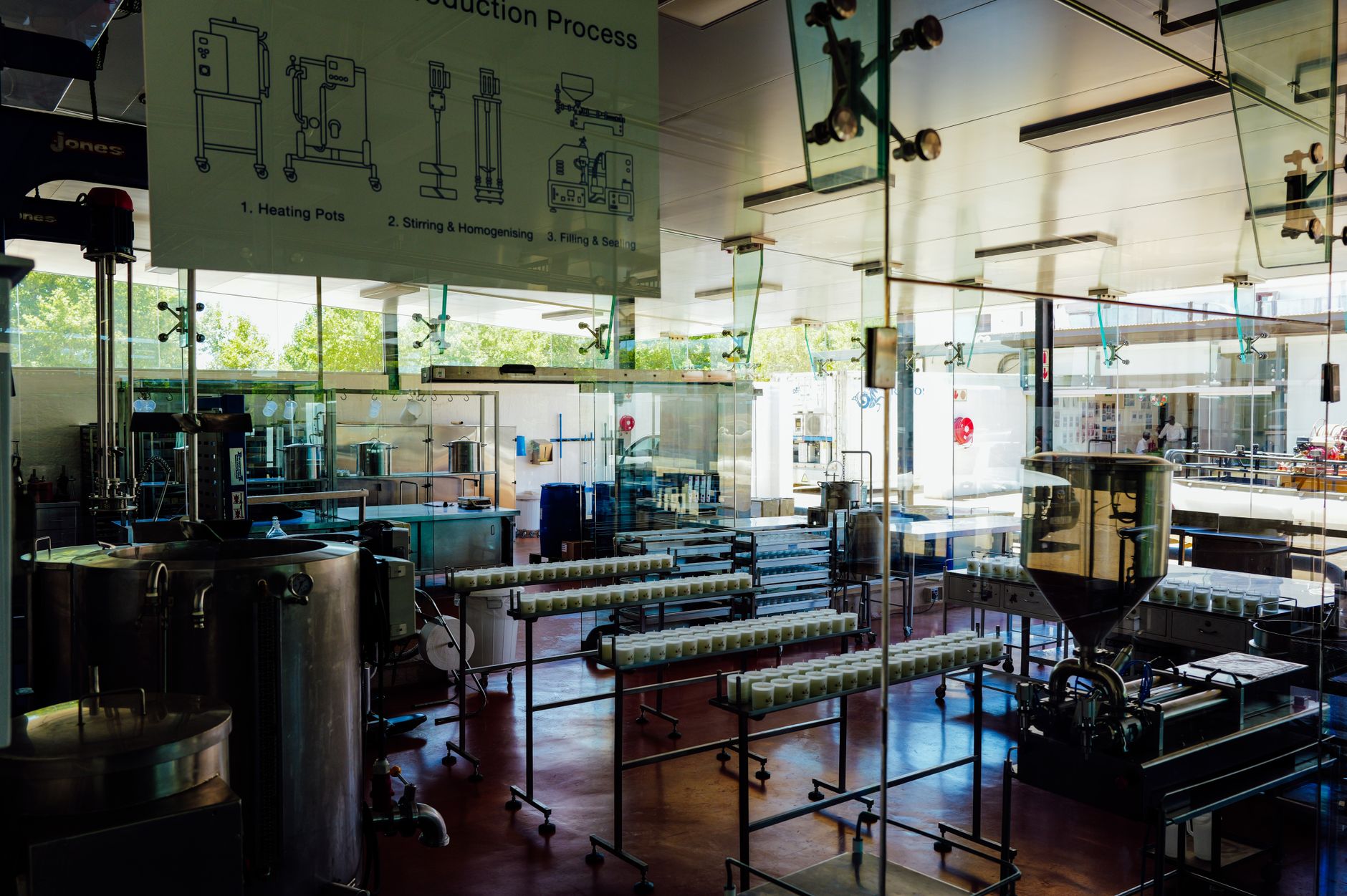
Oils, glycols, and fragrance concentrates leak at fittings. Specify decks with lips or trays and require wipe-down of wheels before robots cross from warehouse epoxy into coated production floors.
Hygienic surfaces on robots mean smooth, cleanable shells and sealed electronics enclosures rated for your washdown tier, not marketing gloss.
Keep absorbents and neutralizers at robot docks. A small drip during a turn should trigger a maintenance hold, not a blind continue through a white corridor.
Schedule robot dock sanitation on the same calendar as line changeovers so trays and wheels do not cross-contaminate between fragrance and non-fragrance campaigns.
How do hazardous classifications change the design?
Some raw materials carry flammable or irritant classifications that restrict traffic near ignition sources or open vessels. Map no-go zones in software and on the floor before the first live drum move.
Ventilation matters when robots pause near compounding with volatile solvents. Staging points should respect airflow patterns your EHS team already documents.
When a drum requires grounding or bonding for transfer, robots stop at a human-assisted station rather than mimicking a full manual transfer unattended.
Which AMR hardware fits drums and pails?
Tug-style units pull standardized drum carts when hitch height and drum cradles are uniform across suppliers.
Lift platforms suit pails and totes when line height is fixed and you can validate stability on slight floor slopes near drains.
Heavy drums need verified payload on the actual floor, including expansion joints common in older cosmetic plants converted from other uses.
Where does a neutral integrator shorten the pilot?
Service Robot Co. maps the loop with quality and production: select AMRs across OEM-neutral options, integrate scans with batch data where it already lives, specify spill control, train operators on holds and exceptions, and keep units running through a nationwide field service network.
Pilot one formula family for four to six weeks. Measure line wait time for released drums, scan exception rate, and floor incidents before you add adjacent filling lines.
Compare near-miss reports at blind corners before and after go-live when drum carts share aisles with manual jacks.
What should plant leaders measure in the first 90 days?
Track minutes drums wait at the line after QC release. Waiting material means sequencing or robot capacity is misaligned.
Count scan mismatches per week. Repeat errors usually mean label placement or warehouse slotting, not robot brains.
Log spill events by stop ID. Patterns point to cart seals or drum rings, not random bad luck.