Key takeaways
- AMRs are best suited to repeatable transport between return drops, sorting rooms, elevators, and floor staging points.
- A library deployment must be tuned for local acoustics, patron behavior, accessible routes, and elevator geometry.
- Stable bins, secured carts, low centers of gravity, and tested thresholds protect both collections and people.
- AMRs remove strenuous cart travel, but staff still control sorting, handling, and accurate reshelving.
Where do AMRs fit in library material flow?
Autonomous mobile robots can move returned-book bins and loaded reshelving carts between interior drops, sorting rooms, staff work areas, elevators, and floor staging points. They are most useful on frequent, predictable routes where employees now spend substantial time pushing material instead of sorting, shelving, assisting patrons, or caring for collections.
The robot does not need to reshelve individual books to create value. A cart pulling robot can collect a prepared load, travel to the correct floor or department, and hand the work back to staff near its destination. This division of labor keeps judgment-heavy collection work with people while assigning repetitive transport automation to the AMR.
The strongest candidates are libraries with long corridors, several public floors, high return volume, centralized sorting, or repeated transfers between service desks and back rooms. Compact branches with short routes may gain less. A route study should establish trip frequency, actual loaded weight, dwell time, congestion, and the amount of staff travel that automation could remove.
- Return drop to sorting room, including scheduled sweeps before bins overflow
- Sorting room to floor-level reshelving zones
- Completed holds from processing to pickup staging
- Interdepartment transfers for repair, cataloging, archives, or outreach
- Empty-cart and empty-bin returns that close the transport loop
What does quiet operation mean inside a library?
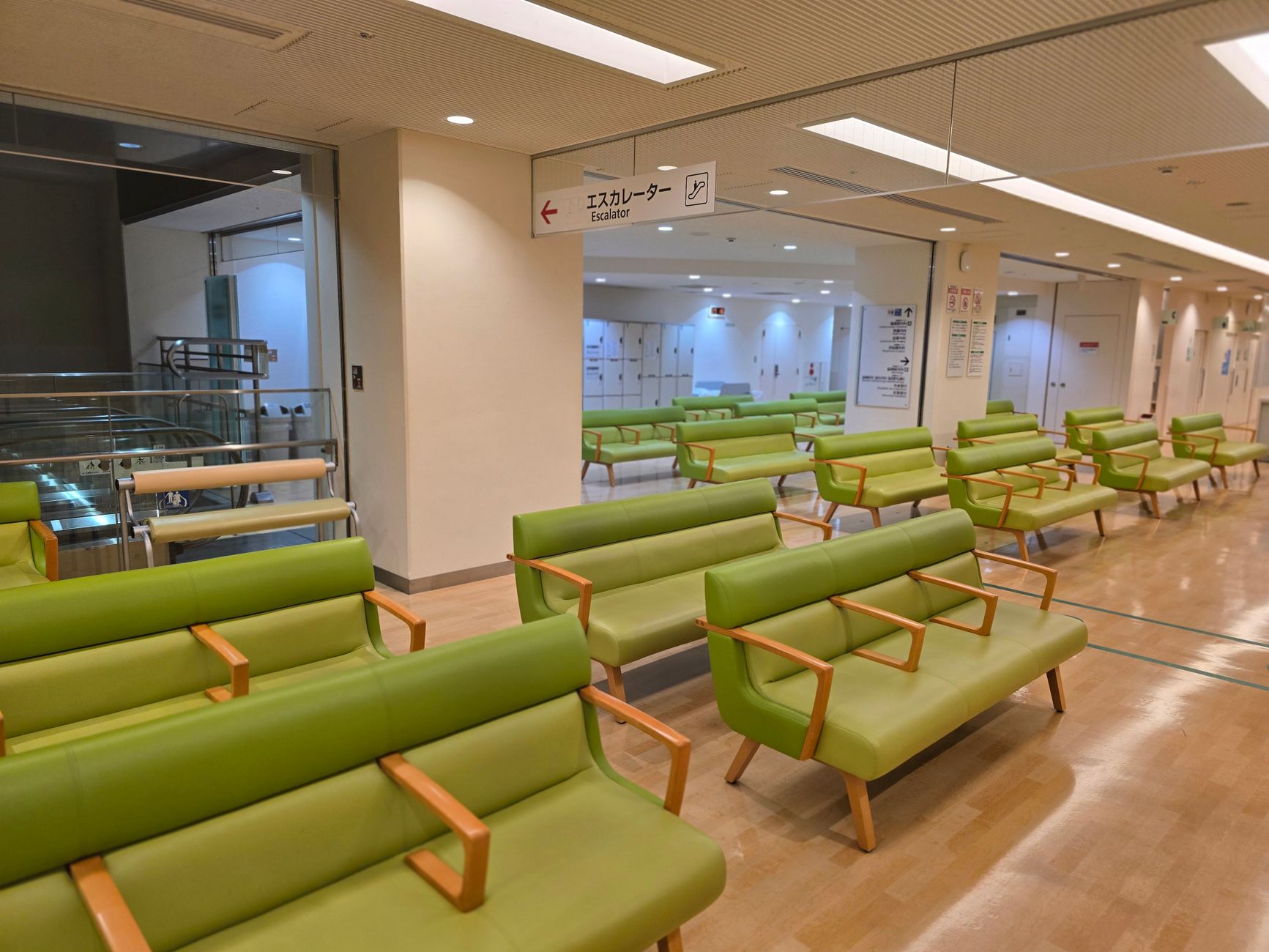
Quiet is not merely a motor specification. Tire tread, wheel hardness, caster chatter, cooling fans, loose books, warning tones, floor joints, and elevator thresholds all shape what patrons hear. A robot that seems subdued on carpet can become conspicuous on tile or across a metal sill.
NIOSH identifies 85 dBA over an eight-hour shift as its recommended occupational exposure limit, but that is a hearing-risk threshold, not a suitable library comfort target. Library acceptance should instead compare the robot with measured ambient sound in reading rooms, stacks, children's areas, and corridors during representative operating periods.
NIOSH recommends sound-level mapping under typical operating conditions. Its validated sound level meter app is reported as accurate within plus or minus 2 dBA on supported devices. During a commercial robot demo, measure drive noise, braking, turning, docking, alerts, and the rattle of a real book load from consistent positions.
Routes can then favor service corridors, softer transitions, reduced speeds, and quieter time windows. Audible warnings still must remain perceptible where required, so muting every alert is not a responsible answer. Tune tone, duration, volume, lighting, and speed as one patron-aware behavior package.
- Record normal ambient sound before introducing the robot
- Test empty and fully loaded configurations on every floor finish
- Listen for impulsive sounds at thresholds, dock contacts, and cart couplings
- Include staff at service desks and patrons with sensory sensitivities in acceptance testing

How should an AMR behave around patrons?
A public library contains behavior that a warehouse route does not: children changing direction suddenly, mobility devices, white canes, headphones, study groups spilling into corridors, and patrons stepping backward from shelves. The AMR should travel conservatively, yield early, stop predictably, and avoid squeezing past people simply because its sensors detect enough geometric clearance.
The U.S. Access Board states that accessible walking surfaces generally require 36 inches of clear width. Routes narrower than 60 inches require passing spaces at intervals no greater than 200 feet. These figures are building-access requirements, not AMR performance targets, but they should inform mapping so a robot never waits, docks, or stages a cart where it becomes a standing obstruction.
Blind stack ends, elevator lobbies, stair approaches, checkout queues, and children's rooms deserve slower zones or no-go zones. Maps should also protect fire equipment, door maneuvering space, and accessible fixtures. Staff need a simple way to pause a mission when a program, school visit, or temporary display changes the traffic pattern.
ISO 3691-4:2023 specifies safety requirements and verification methods for driverless industrial trucks and expressly includes autonomous mobile robots within its examples. Applicability depends on the selected equipment and use, so the integrator should document the relevant standard, site risk assessment, stopping tests, warning behavior, and local authority requirements.
- Verify detection with adults, children, wheelchairs, walkers, canes, and low-profile objects
- Test approaches from stack-end blind spots rather than only open corridors
- Keep docks and queue points outside accessible and emergency circulation paths
- Create a staff escalation procedure for blocked routes, spills, and fallen materials
Can a library AMR use existing elevators?
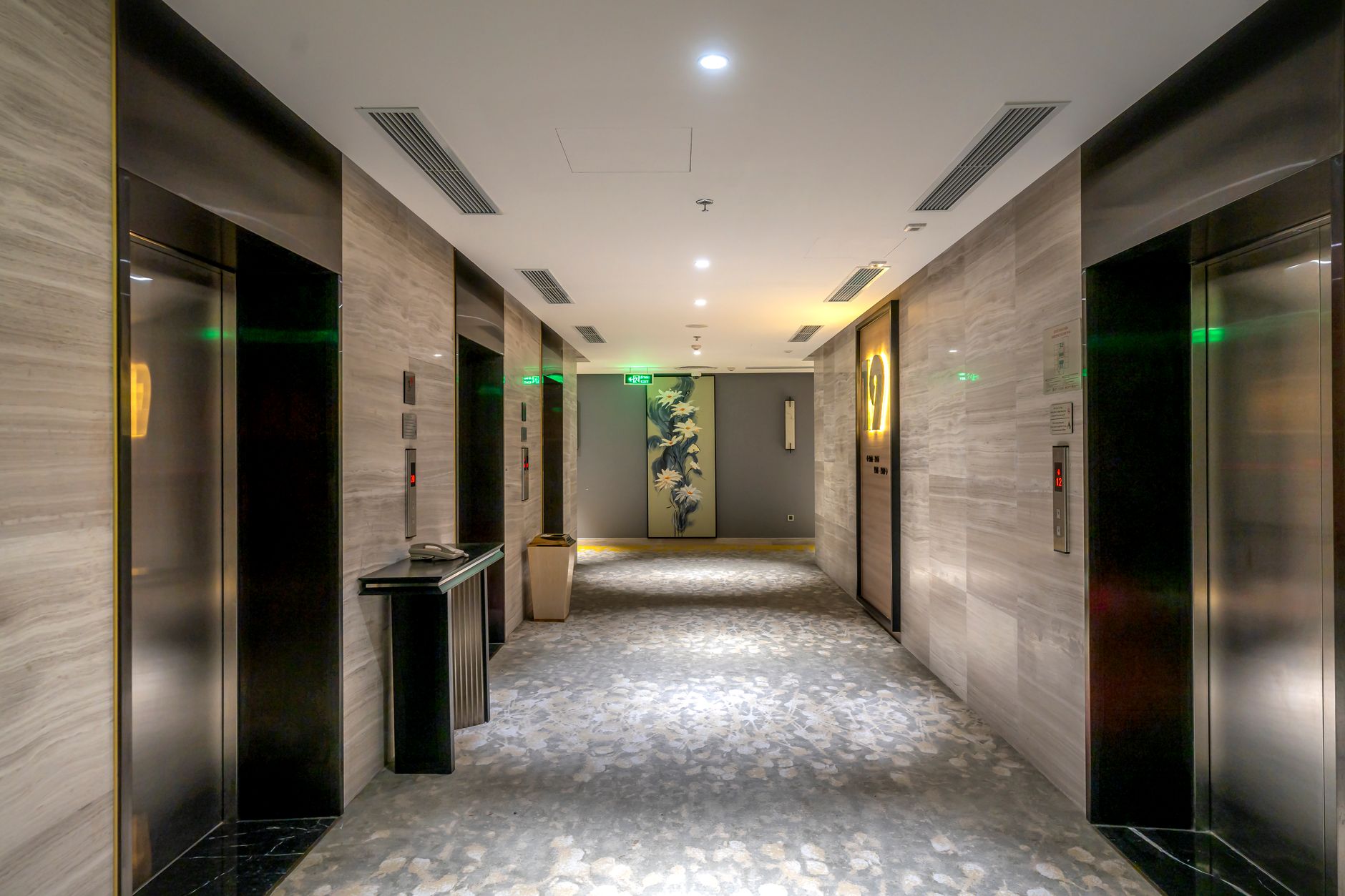
A delivery robot for elevators needs more than enough floor space inside the car. It must call the elevator, identify the arriving car, enter without clipping the sill, select a destination, confirm arrival, exit, and recover safely when doors reopen, the car is crowded, or a mission is interrupted.
The U.S. Access Board's ADA standards list elevator door clear widths of 36 or 42 inches for several common car configurations, and doors responding to a car call must remain fully open for at least three seconds. Those are minimum accessibility provisions. Older, historic, or unusually configured buildings still require field measurements of the actual opening, cab geometry, leveling accuracy, sill gap, handrails, and turning room.
A multi floor delivery robot also needs an approved interface with the elevator controls. The project team should involve the elevator contractor, building engineer, fire-safety stakeholders, information technology staff, and the authority having jurisdiction. Fire service, power loss, network loss, maintenance mode, and passenger priority must have defined responses.
Test with real patrons present, not just an empty cab after closing. The robot should decline a crowded car, avoid blocking wheelchair access, and wait in a marked lobby position that preserves circulation. A failed elevator call should produce a clear alert and a recoverable mission, not an endless queue.
- Measure every car and landing independently in multi-elevator banks
- Test maximum loaded dimensions, including protruding handles and coupling hardware
- Validate entry and exit across the worst sill and floor-level mismatch
- Confirm behavior during door reopening, service mode, fire recall, and connectivity loss
How do bins and carts stay stable in motion?
Payload rating alone does not establish a safe book-moving system. Books are dense, and an unevenly loaded cart can shift its center of gravity as it turns, crosses a threshold, or stops. Tall carts can also hide nearby patrons and amplify sway.
Start with the actual container. Return bins should have positive retention, smooth interiors, and loading heights that do not invite overfilling. Reshelving carts need sound wheels, secure shelves, contained ends, and a coupling that cannot release during normal travel. Loose bookends, straps, labels, and hanging bags must remain inside the moving envelope.
For tug robot leasing or a material handling robot lease, test the complete train rather than the base alone. Confirm starting, braking, turning radius, reverse behavior, ramp holding, doorway clearance, and wheel tracking with the heaviest realistic distribution. Include glossy art books, media cases, children's materials, and partially filled carts because these loads behave differently.
Collection care matters as much as mechanical safety. The Library of Congress describes careful handling as one of the most effective and economical preservation measures. Rare, fragile, oversized, wet, or quarantined material may need dedicated containers and supervised handling instead of the ordinary automated route.
- Set a marked fill line or approved loading pattern for each bin and cart
- Keep dense material low and distribute weight across the cart
- Use lips, dividers, doors, or restraints that do not abrade bindings
- Inspect wheels, latches, shelves, and couplings before release to the robot

What ergonomic work does the robot actually remove?
The ergonomic gain comes from eliminating repeated horizontal cart travel and difficult starts, stops, turns, and elevator transitions. It does not eliminate bending to a return bin, sorting, or reaching during shelving. Those remaining tasks still need suitable work heights, close placement, sound carts, and job rotation.
NIOSH identifies force, repetition, awkward posture, twisting, carrying, and excessive force while pushing a cart as musculoskeletal risk factors. Its ergonomics guidance cites 2019 Bureau of Labor Statistics data showing that work-related musculoskeletal disorders accounted for 29 percent, or 325,270, of cases involving days away from work. Median time away was 14 days for those disorders, compared with nine days for other injuries.
Library-specific guidance from the University System of Georgia says staff should generally push book carts, use handles, avoid obstructed vision, and pull when exiting elevators or passing through swinging doors. OSHA likewise recommends large, low-resistance wheels for mixed flooring and elevator gaps, along with cart maintenance and pushing instead of pulling when possible.
An AMR changes the exposure by powering the long move. Staff can load at a controlled station, dispatch the cart, and receive it near the shelving zone. Measure success through manual cart distance removed, difficult threshold crossings avoided, staff-reported exertion, exceptions requiring intervention, and time returned to patron-facing work.
- Keep sorting and transfer heights near the worker's neutral handling zone
- Use smaller batches when a large load creates awkward lifting at the destination
- Track manual rescues because frequent rescues can return the same strain in a less predictable form
- Ask pages, circulation staff, facilities staff, and accessibility coordinators to review the workflow
What should a library pilot prove?
A robot pilot program should test one closed transport loop with enough variation to expose real constraints. Map the return point, workroom, elevator, destination floor, staging location, and empty-container return. Then run actual operating loads during quiet periods, busy periods, programs, and closing routines.
Acceptance criteria should cover mission completion, safe stops, nuisance pauses, noise, payload movement, docking accuracy, elevator recovery, blocked-route handling, and staff response time. Record why every intervention occurred. A high completion rate can still conceal poor fit if employees constantly clear chairs, open doors, steady books, or retrieve a stranded cart.
A commercial robot demo is useful for initial screening, but a try before you buy exercise should include the library's carts, thresholds, radio conditions, elevator controls, and patron traffic. Site assessment mapping should also identify temporary displays, seasonal furniture, book-sale tables, and programming layouts that alter navigation.
Treat staff feedback as operating data. Circulation teams understand peak returns, pages know the difficult stack turns, and facilities personnel know which elevator or doorway behaves differently. Their observations should shape routes, dispatch rules, cart design, and training before wider deployment.
How should libraries procure and support the system?
The right robot depends on route width, elevator geometry, payload, cart interface, acoustics, traffic, and building systems. Service Robot Co. acts as a vendor neutral robot integrator for U.S. businesses, selecting suitable equipment across manufacturers without tying the library to a single catalog.
Service Robot Co. can handle robot deployment and integration, financing, mapping, elevator coordination, staff training, go-live support, and continuing service through a nationwide U.S. engineer network. That gives the library one vendor for the full lifecycle and one accountable contact when a problem spans the robot, cart, software, network, or building interface.
Procurement can compare purchase, autonomous mobile robot leasing, AMR leasing structures against the expected service life and operating plan. Monthly payment programs or no upfront capital may help budget timing, but the contract should define RoboCare™ service, remote triage, on-site dispatch, software support, replacement procedures, and ownership of integration work.
Ask prospective partners to document the full operating design, not just the mobile base. A credible proposal explains payload retention, patron behavior, accessible-route protection, elevator recovery, cybersecurity responsibilities, training, preventive maintenance, and the evidence required for final acceptance.
Frequently asked questions
Want a robot working for you?
Tell us the job and the site. We will recommend the robot, quote the lease, and keep it serviced.