

Key takeaways
- Specify the AMR against the actual dew point, payload state, cleanliness limits, and fire zone, not a generic factory environment.
- Every exposed wheel, belt, lubricant, cable, label, fastener, and enclosure surface needs a compatibility and contamination review.
- Static control requires a verified conductive path through the robot, cart, payload interface, wheels, and floor.
- Plan airlock behavior, abnormal recovery, and clean service procedures before the pilot begins.
What does an AMR need to work inside a battery dry room?
An autonomous mobile robot entering a battery dry room must do more than navigate accurately. It has to operate at the room's specified dew point without shedding unacceptable particles, importing moisture, accumulating hazardous static charge, or undermining the site's fire strategy. Its payload fixture, wheels, lubricants, wiring, battery, charger, and service process all belong inside that qualification boundary.
The correct specification begins with the battery process, not the robot catalog. Record the materials being moved, their state of charge, exposed powder or electrolyte, cleanliness limits, minimum dew point, floor resistance, airlock sequence, traffic pattern, and emergency response plan. Then qualify the complete AMR application under normal operation and credible faults.
Dry-room requirements vary sharply. A U.S. Department of Energy report described an Argonne research dry room specified at no more than 100 ppm by volume of moisture, equivalent to a minus 42°C dew point. Another Department of Energy project used air at minus 50°C to minus 55°C dew point. Those are useful reference points, not universal purchasing specifications.
Start with a controlled-environment design basis
A dry room can also be a cleanroom, but the terms are not interchangeable. Dew point governs moisture. Particle classification, chemical contamination, pressure, temperature, and electrostatic behavior are separate attributes with separate acceptance methods.
ISO 14644-1 classifies airborne cleanliness using particle thresholds from 0.1 µm through 5 µm. ISO 14644-3 recognizes testing in as-built, at-rest, and operational states. That distinction matters because an AMR may look acceptable while parked and produce a very different particle signature while steering, braking, lifting, and crossing thresholds.
Create a design basis that the integrator, facilities team, environmental health and safety staff, quality group, and fire protection engineer all approve. At minimum, it should define:
- Minimum permitted dew point and the allowable recovery time after an airlock cycle
- Airborne and surface particle criteria, chemical contamination limits, and sampling locations
- Payload condition at every route segment, including exposed electrode material, sealed cells, damaged material, and waste
- Required floor and wheel electrical characteristics, grounding points, and verification intervals
- Permitted materials, cleaning agents, lubricants, fasteners, labels, and packaging
- Fire detection, suppression, isolation, egress, charging, and emergency recovery rules
Which robot materials belong in very dry air?
Treat the AMR as process equipment with hundreds of potential contamination sources. Exposed elastomers, foams, adhesives, cable jackets, painted surfaces, greases, thread lockers, and printed labels can shed, outgas, crack, or lose adhesion. Hygroscopic materials may also change dimension or mechanical behavior after prolonged exposure to very dry air.
Ask for material declarations and minimum-humidity operating data, then test representative specimens at the site's actual temperature and dew point. Pay particular attention to wheel tread, lift belts, bumpers, flexible cable carriers, sensor windows, seals, and lubricated joints. A material that survives the environment can still fail qualification if it transfers residue to the floor or payload.
Favor smooth, accessible, noncorroding surfaces with sealed crevices and captive hardware. Avoid exposed fibrous insulation and uncontrolled cardboard packaging. Payload fixtures should prevent abrasion of coated electrodes, keep containers closed, contain small spills, and present no sharp edges that could damage pouches or separators.
How should static electricity be controlled?
Low humidity slows natural charge dissipation, while wheel rotation, belt motion, film handling, and contact separation continually generate charge. An AMR can therefore become a moving isolated conductor unless the entire discharge path is deliberately engineered.
Map that path from the payload and cart through conductive contact points, the AMR chassis, qualified wheels, and the facility floor to ground. Bond removable fixtures where required. Do not assume an antistatic wheel remains effective after wear, contamination, cleaning, or a change in floor coating. Measure resistance and charge generation on the assembled system while it moves, turns, docks, and transfers loads.
IEC 61340-5-1 provides an ESD control framework for handling electronic items with withstand voltages of at least 100 V human body model, 200 V charged device model, and 35 V for isolated conductors. The standard explicitly does not cover flammable liquids, gases, or powders, so compliance with an electronics ESD program does not establish explosion safety. Battery plants need a coordinated assessment covering product protection, personnel grounding, combustible materials, and classified electrical areas.
Contamination control must cover motion and maintenance
Particle control is not just an enclosure question. Tires scrub during tight turns. Brakes and lift mechanisms wear. Cooling fans redistribute dust. Cart couplings strike and rub. The route itself can carry residue from a less controlled zone into a cleaner one.
Qualify the robot dynamically with its production payload and realistic duty cycle. Use airborne particle measurements near wheels, vents, lift mechanisms, and transfer points, plus surface sampling on the robot, cart, floor, and representative product-facing locations. ISO 14644-17 notes that human and mechanical activity drives redistribution of particles larger than 5 µm, which ordinary classification sampling may not adequately represent.
Cleaning must have a documented method, frequency, approved chemistry, and inspection standard. ISO 14644-13:2026 addresses selection of cleaning methods according to particle and chemical cleanliness, surface characteristics, and material compatibility. Build those principles into daily wipe-downs, scheduled deep cleaning, spill response, and post-repair release.
Fire strategy follows the payload and process zone

There is no single battery-room fire profile. Dry electrode powder, solvent-bearing material, electrolyte-filled cells, formed cells, damaged product, and the AMR's own traction battery present different hazards. The route risk assessment must identify what the robot carries at each step and what happens after a drop, collision, puncture, stalled airlock, sensor fault, or onboard battery alarm.
OSHA's 2025 lithium-ion battery fact sheet states that cells combine flammable electrolyte with stored energy and can enter thermal runaway after defects, mechanical damage, temperature exposure, or improper charging. It also identifies warning signs such as rising temperature, vented gas, vapor, smoke, or fire. The AMR program should connect those signals to controlled stopping, alarms, evacuation, ventilation response, and trained emergency action.
Powder hazards need their own analysis. OSHA warns that finely divided combustible material can become explosible when suspended in air and that transfer friction can generate static charge. If the process hazard analysis designates a hazardous classified location, a standard industrial AMR is not acceptable merely because it is cleanroom compatible.
Keep charging outside the dry room when the route permits. If charging must occur inside, the charger, robot battery, clearances, detection, ventilation, suppression, and emergency isolation must be reviewed as part of the room's approved fire protection design. Final decisions belong with the authority having jurisdiction, insurer, fire protection engineer, and site safety team.
How should an AMR pass through an airlock?
An AMR airlock is a moisture-control machine, not simply two automated doors. Door interlocks, pressure direction, purge airflow, dew-point sensors, occupancy detection, and robot traffic logic must act as one sequence. The vehicle should not receive permission to enter the production room until the lock has reached its release conditions.
Measure the moisture load introduced by the robot, cart, payload packaging, and trapped air. Design parking positions so sensors remain clear and doors can close without pinching a cart. Include timeouts for failed purge, obstructed doors, communication loss, and an AMR that stops midway through the cycle.
Airlock throughput often becomes the real fleet constraint. Model arrival peaks, purge duration, empty returns, priority loads, and recovery cycles before selecting fleet size. Route orchestration can batch compatible moves and hold robots outside the lock, protecting both production flow and the dry-room envelope.

Service procedures are part of the qualification
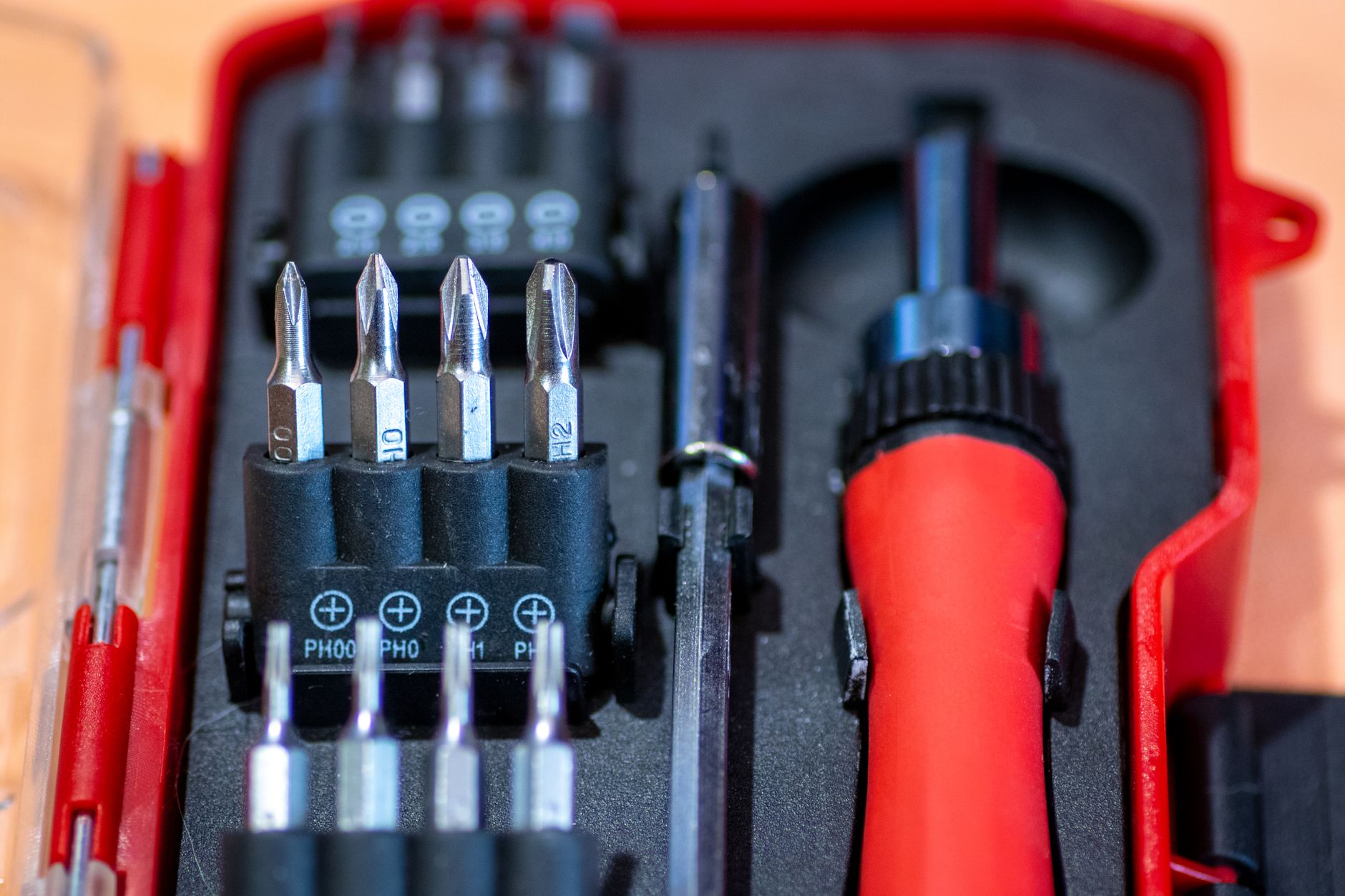
Routine field service can introduce more contamination than normal robot travel. A technician may bring humid air, ordinary tools, replacement packaging, oils, fibers, and unqualified spare parts into the room. The service plan therefore needs the same rigor as material entry.
Move repairs to a designated service bay outside the controlled space whenever practical. Inside work should use approved gowning, clean toolkits, bag-in and wipe-down procedures, controlled parts, lockout steps, foreign-material accountability, and post-work inspection. Any opened enclosure may require cleaning, electrical checks, and particle or surface verification before release.
Write abnormal recovery before go-live. The procedure should address manual brake release, safe towing points, removal of a loaded cart, an unresponsive robot in an airlock, suspected electrolyte contamination, a hot onboard battery, and loss of facility power. Personnel must know when to stop, isolate, evacuate, and call the emergency team rather than attempting recovery.
Selecting and supporting the complete AMR application
A controlled-environment project should be purchased as a qualified application, not as an isolated vehicle. Site acceptance testing should cover loaded routes, stopping and obstacle detection, payload retention, ESD measurements, airlock handshakes, dew-point recovery, particle behavior, alarms, fire interfaces, cleaning, and fault recovery.
Service Robot Co. acts as an OEM-neutral, vendor neutral robot integrator for U.S. businesses. That allows the project team to compare platforms against the dry-room design basis, then handle robot deployment and integration, site assessment mapping, training, go-live support, financing, and service through a nationwide engineer network.
Commercial structures can include purchase, robot leasing for business, monthly payment programs, or an autonomous mobile robot lease arrangement when appropriate. Contract language should state who owns contamination requalification, approved spare parts, remote triage, on-site dispatch, software change control, maintenance records, and emergency recovery. One partner and one service number are especially valuable when facilities, safety systems, payload fixtures, and mobile equipment must remain under a common lifecycle process.
Frequently asked questions
Sources
- U.S. Department of Energy dry-room specification
- U.S. Department of Energy electrode drying study
- OSHA lithium-ion battery safety fact sheet
- OSHA combustible dust guidance
- ISO 14644-1 cleanroom classification
- ISO 14644-13 surface cleaning guidance
- ISO 14644-17 particle deposition guidance
- IEC 61340-5-1 electrostatic control requirements