
Key takeaways
- AMRs fit chilled meal-kit work best when they handle repetitive replenishment and completed-order pulls, not every move in the room.
- Cold rooms demand extra attention to condensation, traction, drainage, and cleanable robot surfaces.
- Tote IDs need lot, allergen, zone, and time data that the fleet can read automatically.
- Wave-driven dispatch matters more than top speed when recipes, shortages, and cutoff times keep moving.
What jobs should AMRs own inside a chilled meal-kit room?
Yes, AMRs can work well in chilled meal-kit fulfillment, especially for two recurring jobs: feeding ingredient totes to active pick or assembly cells and pulling completed orders out to lidding, checkweigh, marshalling, or outbound staging. In a room where time and temperature matter, that swap removes the longest walks without taking people off quality checks, substitutions, or exception handling. According to FDA Food Code 2022, time and temperature control for safety food should be held at 41 F or less. CDC estimates that 48 million people in the US get sick from foodborne illness each year, so that margin matters.
The fit is strongest when the work is repetitive, route-based, and tightly tied to wave output. A human still handles damaged produce, recipe exceptions, and last-second kit edits. The AMR handles the dull traffic: replenish cucumbers, herbs, proteins, and sauce kits from reserve chill, then carry finished customer orders away before tables clog.
The catch is that a chilled room is not a dry e-commerce floor with nicer lighting. Condensation forms at doorways, drains interrupt travel, sanitation cycles reset the map, and totes need clean, machine-readable identity. If those details are designed in from the start, AMRs can keep chilled assembly moving with less congestion and better lot discipline.
Why does the cold room change the machine spec?
Cold rooms rewrite the hardware checklist. OSHA notes that refrigerated warehousing usually runs below 50 F and can be subzero, and that is enough to change battery behavior, wheel traction, touchscreen response, seal life, and sensor clarity. A robot that behaves well on a temperate factory floor may become hesitant or blind when lenses fog and floor moisture follows every open doorway.
That is why chilled fulfillment fleets usually need protected connectors, corrosion-resistant finishes, shrouded cable runs, and housings that do not trap water. Charging and high-heat compute often belong in a temperate vestibule instead of deep in the cold room. The goal is not exotic hardware. It is a machine that starts every shift dry, readable, and predictable.
How do you keep condensation and floor drains from running the job?

Most chilled-room projects stumble on water, not navigation. Warm-to-cold transitions create condensation on masts, covers, and tote surfaces, and floor drains interrupt the very lanes operators want to use. OSHA requires workroom floors to be kept clean and, to the extent feasible, dry, and says drainage must be maintained when wet processes are used. In practice, that means the AMR route plan has to be part traffic engineering and part sanitation engineering.
FDA Food Code 2022 also makes floor-drain design hard to ignore. It explicitly addresses floor drains in refrigerated spaces, and it requires floors, walls, and ceilings to be smooth and easily cleanable. For AMRs, the operating rule is simple: keep routine travel out of drain clusters, keep speed down on known wet segments, and treat standing water as a live fault, not a cosmetic nuisance.
- Use a short vestibule or curtain-air handoff zone so robots do not jump straight from warm air to the coldest aisle.
- Design parking spots with drip clearance and slight slope awareness so meltwater does not pool under idle units.
- Map drain grates, hose stations, and washdown lanes as restricted or low-speed segments.
- Add traction and wheel-slip alerts so the fleet can flag a floor condition before a person finds it the hard way.
What sanitation details decide if the fleet lasts?
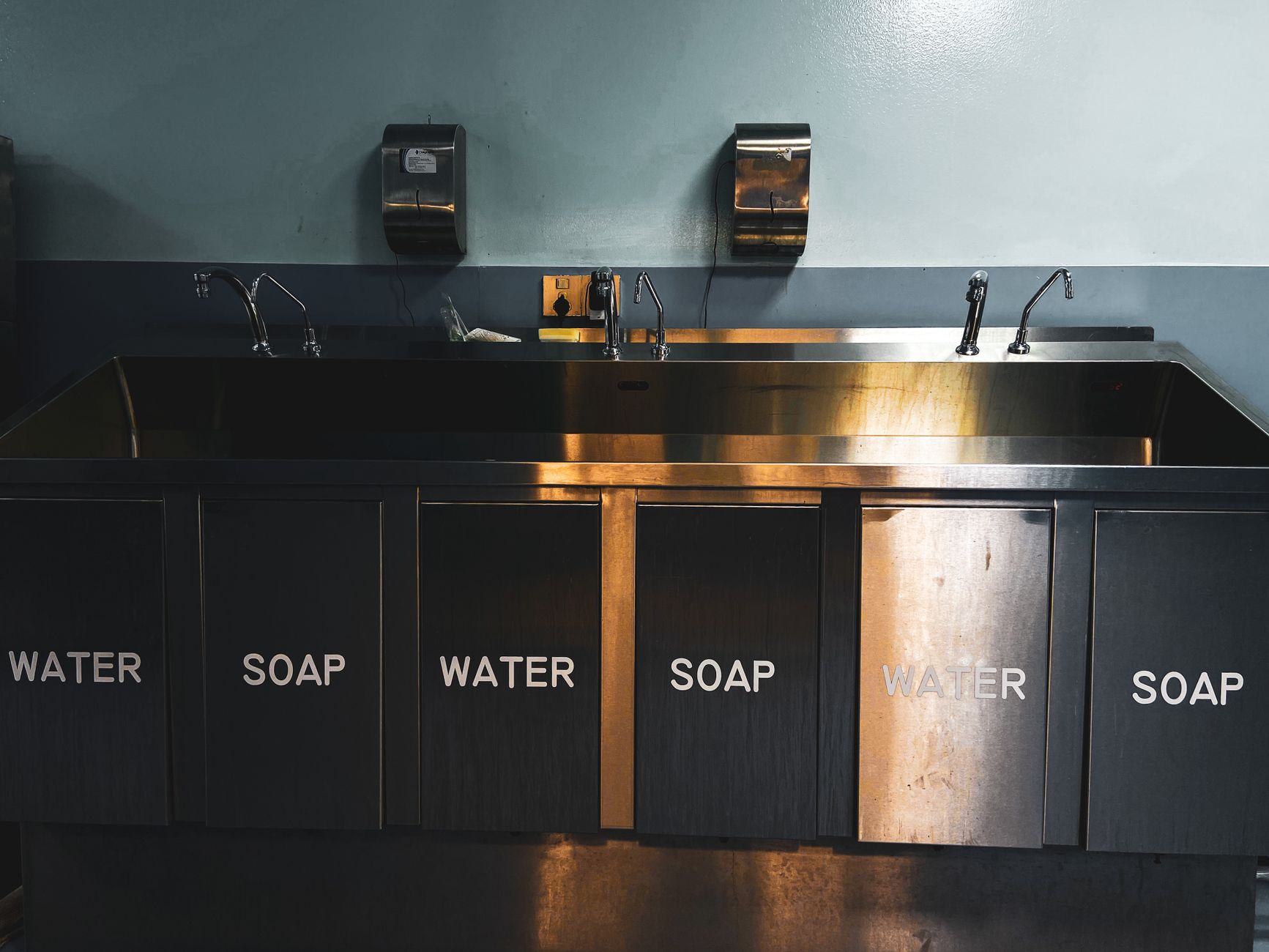
Sanitation is not just about what touches food. It is also about every surface that can collect moisture, residue, or cleaning chemical. FDA Food Code 2022 requires food areas to use smooth, easily cleanable surfaces, and it says floor and wall junctures in many facilities should be coved and closed to no larger than 1 mm. That same hygienic logic should carry into the robot body: no deep pockets on the top deck, no exposed foam, no grime-catching fastener patterns in splash zones.
FDA's 2026 retail allergen-cleaning update is useful here because it tested what actually comes off a surface. The agency reported that a full wash-rinse-sanitize-air dry method was effective at allergen removal and minimizing transfer, and that textured plastic was harder to clean than stainless steel or wood. For chilled AMRs, that pushes the design toward flat covers, removable nonfood-contact panels, and cleaning SOPs written around the real soils of proteins, oils, herb fragments, and condensate.
What happens when product crosses from cold hold to ambient pack-out?
The doorway between 41 F prep and warmer pack-out is where good travel logic pays for itself. USDA says refrigerators should maintain 40 F or below and freezers 0 F or below. That does not mean every tote must live its whole life inside one zone, but it does mean every handoff should be deliberate, timestamped, and fast enough that product does not loiter in the wrong air.
FDA Food Code 2022 allows certain refrigerated food to be held without temperature control for up to 6 hours only if it starts at 41 F or less, never exceeds 70 F, and is monitored and marked. Most meal-kit operators will choose far tighter internal limits than the outer regulatory ceiling. AMRs help when the fleet software treats every move as a dwell-budget problem, with pickup time, drop time, queue time, and exception alerts visible to the lead.
How should totes carry traceability and allergen logic?
In chilled meal-kit work, tote identification is the control surface for everything else. The robot needs to know more than destination. It needs recipe, lot, zone, and allergen status before it accepts the mission. FDA defines the major food allergens as nine categories, including milk, egg, wheat, soy, peanuts, tree nuts, fish, crustacean shellfish, and sesame. That alone is a strong case for machine-readable tote logic instead of color tape and tribal memory.
FDA's traceability guidance adds a second layer. The agency says a traceability lot code uniquely identifies a lot, links to other required records, and should stay the same through the supply chain unless the food is transformed. It also notes that the information can move by barcode, QR code, or related digital records. For AMRs, that means the tote label should be the passport the fleet reads at pickup, at drop, and again when completed orders leave the chilled room.
- Unique tote or order ID
- Traceability lot code or linked lot reference
- Allergen class and permitted zone
- Temperature band and last verified timestamp
- Wave, cutoff time, and destination cell or outbound lane
How do AMRs keep up with fast-changing production waves?
Meal-kit production waves do not stay still long enough for a pretty fixed route map to save you. Menu mix changes by day, ingredient shorts appear mid-shift, and one late protein tote can starve several assembly cells at once. The better pattern is a priority engine that ranks missions by cell starvation risk, remaining dwell budget, completed-order pileup, and distance to clear.
That also changes how finished orders should move. Do not wait for a giant batch if cold tables are already tight. Pull completed kits in smaller, frequent bursts to keep assembly surfaces open and to prevent one blocked marshalling lane from backing up the room. A good AMR program in chilled food logistics is less about top speed and more about dispatch discipline, live exception handling, and clean fallbacks when sanitation pauses part of the floor.
Where does an integrator earn its keep?
This is where a vendor neutral robot integrator earns its keep. Service Robot Co. can assess chilled-room traffic, drainage, door behavior, tote flows, and pack-out timing before a single unit is chosen. Because the company is OEM-neutral, it can match the robot to the floor, payload, sanitation pattern, and software stack instead of forcing the room to adapt to one catalog.
For US operators that want one partner from pilot to steady state, Service Robot Co. handles the full lifecycle: commercial robot demo, site assessment mapping, robot deployment and integration, go live support, training, and nationwide service. That can take the form of a pilot, a warehouse robot lease or material handling robot leasing program, or a broader AMR fleet deployment across reserve chill and pack-out. Some sites prefer purchase or lease, autonomous mobile robot leasing, or robot leasing for business through monthly payment programs and no upfront capital. The important point is operational, not financial. You get one vendor for the whole lifecycle, one partner one number, and a fleet built around chilled food work instead of generic warehouse assumptions.