
Key takeaways
- Choose the AMR around the complete load envelope, transfer method, center of gravity, and route, not payload weight alone.
- Custom carriers are part of the handling system and must restrain panels without damaging machined edges or fresh finishes.
- Wood dust, spray areas, blind corners, and temporary aisle obstructions belong in the risk assessment and acceptance test.
- Variable furniture takt favors demand-driven dispatch, controlled buffers, and priority rules over a rigid pickup schedule.
- A pilot should run the largest products, dirtiest routes, busiest shift, and realistic failure-recovery drills.
Where do AMRs fit in furniture production?
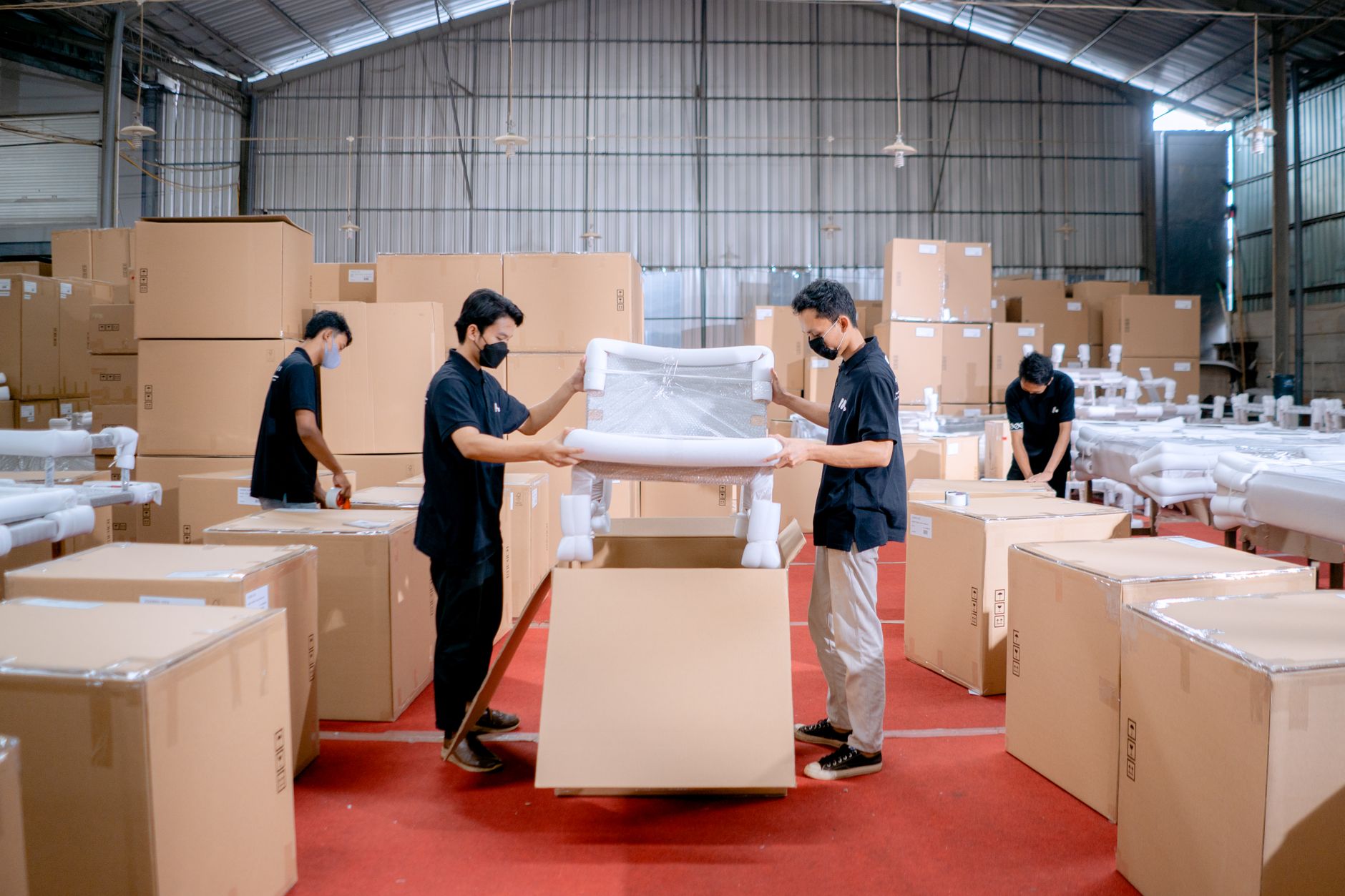
Autonomous mobile robots fit furniture plants best as repeatable work-in-process transport between defined handoff points. They can carry cut panels from machining to edge treatment, move prepared components toward sanding or finishing buffers, and deliver subassemblies to final assembly without requiring an employee to make every cart run.
The strongest applications have frequent moves, measurable waiting or walking, and loads that can be presented consistently. AMRs do not fix an unstable production process by themselves. They work when the plant defines what is moving, how it is retained, where custody changes, and what the robot should do when the next station is full.
Furniture makes the engineering unusually physical. A modest-weight panel can have a large swept envelope. Dust can obscure sensors and reduce traction. Fresh finishes need contact-free support, while mixed products make takt a moving target. The AMR, carrier, route, controls, and operating rules therefore have to be designed as one material-flow system.
Start with the move, not the robot
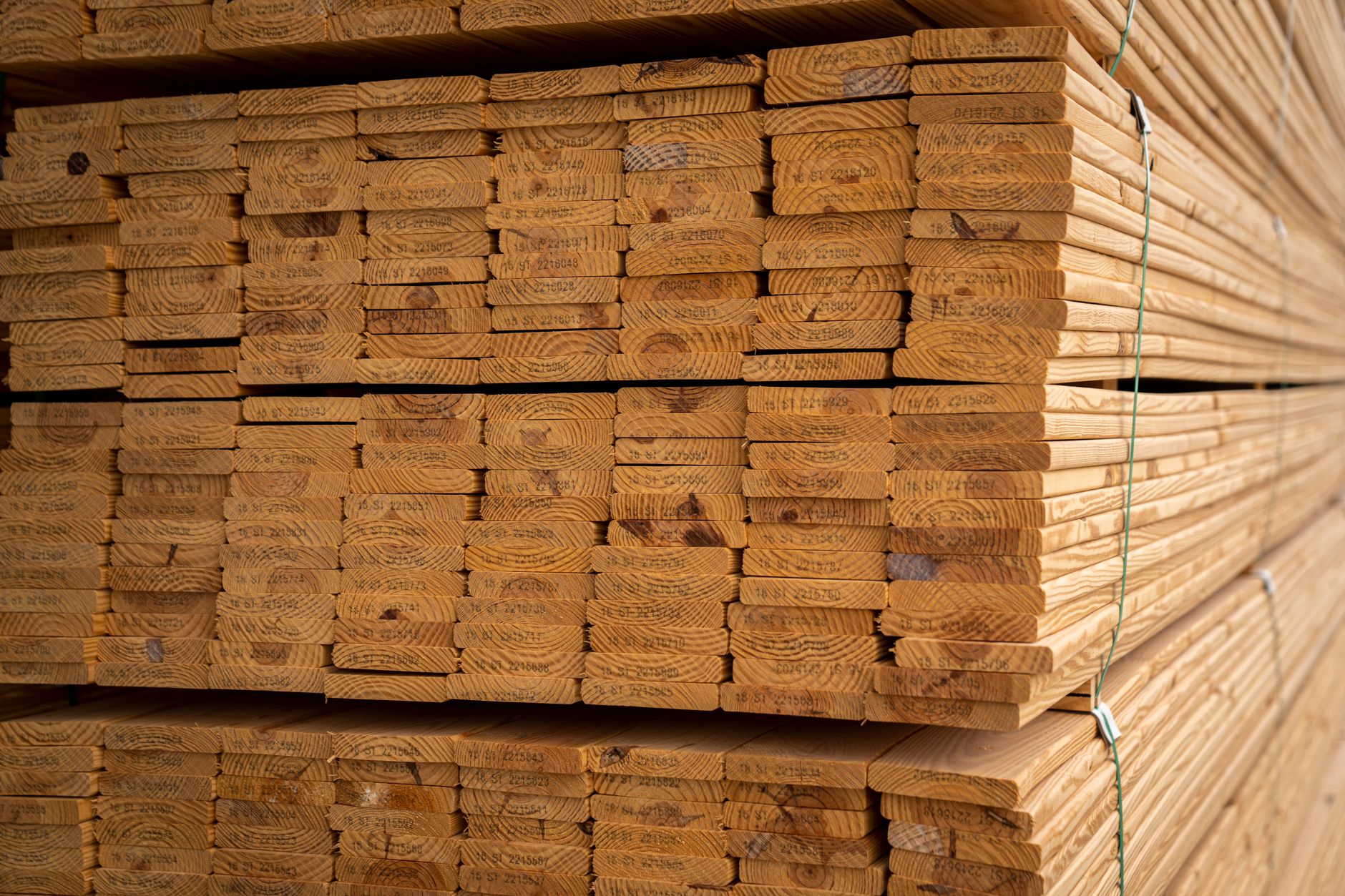
Map each candidate loop from release signal to empty-carrier return. Record the part family, maximum dimensions, mass, center of gravity, orientation, transfer height, required protection, and allowed queue time. Observe several shifts. The average move often hides changeovers, rework, forklift interruptions, and batches released together after a machining cycle.
The first automation target is usually a bounded loop with clear ownership, such as nested panels to edge processing or cabinet carcasses from assembly to a finishing buffer. This keeps the robot pilot program measurable and avoids tying initial performance to every department at once.
- Count loaded and empty trips separately, including carrier retrieval and rejected-part moves.
- Measure travel and waiting time at peak congestion, not only during a quiet walkthrough.
- Document every load extreme, including the tallest stack, longest panel, most fragile edge, and highest center of gravity.
- Define who releases a load, who confirms receipt, and who clears an abnormal stop.
- Track queue age and downstream capacity so faster transport does not merely create more work-in-process.
How should oversized panels and subassemblies be carried?
Payload capacity is only the opening constraint. A tall stack of case-goods panels can shift its center of gravity during braking, while a long tabletop creates substantial overhang and a wide turning envelope. Rate the AMR against the carrier and maximum production load together. Attachment weight, load center, floor slope, acceleration, stopping behavior, and transfer forces all matter.
Custom carrier design should support the product at structurally safe points and prevent sliding, tipping, racking, or edge impact. Useful features can include adjustable dividers, padded contact faces, positive retainers, panel combs, locating pins, replaceable wear strips, and mechanical stops. Freshly coated parts may need non-marking surfaces and spacing that prevents face-to-face contact.
Design the carrier for operations as well as transport. Operators need safe loading access, visible orientation cues, and a quick way to identify the correct part family. Add repeatable docking geometry, sensor targets, inspection points, and accessible restraint releases. Prototype the carrier with the worst product before ordering a fleet of identical hardware.
How much route clearance is enough?
There is no universal OSHA aisle-width number for an AMR application. OSHA regulation 1910.176 requires sufficient safe clearance in aisles, doorways, docks, turns, and other passages used by mechanical handling equipment. It also requires aisles to remain clear and in good repair, with permanent aisles appropriately marked.
Determine clearance from the combined robot-and-load swept path. Test ninety-degree turns, opposing traffic, door approaches, workstation noses, columns, fire equipment, and places where employees step out from behind panel stacks. A long load may swing beyond the chassis even when the robot follows its mapped centerline perfectly.
Furniture routes change during the day. Chip carts, air hoses, mobile racks, staged lumber, and rework pallets can consume planned clearance. Establish marked staging limits, no-parking zones at turns, and an escalation rule for blocked paths. Floor condition belongs in the same review because OSHA 1910.22 requires walking-working surfaces to be kept orderly, inspected, and capable of supporting their maximum intended load.
What changes in dusty machining and finishing areas?
Wood dust is not a cosmetic nuisance. OSHA associates exposure with respiratory and skin effects and applies an eight-hour limit of 15 mg/m3 for total particulates not otherwise regulated and 5 mg/m3 for the respirable fraction. NIOSH recommends a 1 mg/m3 time-weighted limit for wood dust and identifies it as a potential occupational carcinogen.
Dust collection at the machine remains the primary control. For AMRs, the deployment plan should also address sensor-window cleaning, wheel inspection, charging-contact contamination, heat rejection, and loss of traction on accumulations. Maintenance intervals should be established from monitored pilot conditions rather than copied from a clean warehouse application. Compressed-air blowdown around the robot is a poor default because OSHA warns that it can create an explosive dust cloud.
Finishing deserves a separate zone review. OSHA requires mechanical ventilation during spray operations and for sufficient time afterward, and generally prohibits open flames or spark-producing equipment within 20 feet of a spraying area unless separated by a partition. ISO 3691-4:2023 excludes potentially explosive environments from its normal scope. Do not assume an ordinary AMR may enter a classified dust or vapor area. A safer layout often places the handoff buffer outside that boundary and interlocks dispatch with booth status.
How should the fleet handle variable takt?
Takt expresses demand as available production time divided by required output. It is not a promise that every furniture unit will consume identical processing time. Product mix, panel count, finish changes, cure time, rework, and custom hardware can all distort the interval between ready loads.
A rigid timed route can arrive early at a blocked station and late after a batch release. Demand-driven dispatch is usually better. A machine, operator, sensor, or production system requests a move when a complete load is ready and a destination position is available. The fleet manager then assigns work using destination capacity, load class, queue age, and production priority.
Buffers still matter. Give machining enough empty carriers to avoid starving the cell, but cap downstream queues so transport cannot bury sanding or assembly. Calculate fleet need from observed round-trip time, required dispatch interval, charging, expected availability, and recovery margin. Recalculate by shift and product family instead of relying on one plantwide average.
What controls make each handoff dependable?
Every station needs a small, explicit state model: ready to load, loaded and verified, pickup authorized, destination available, delivered, and carrier released. Sensors or operator confirmations should prevent the robot from departing with an unsecured load or docking where another cart already occupies the position.
Decide how machines, call buttons, barcode scans, and production software will create missions. Also define degraded modes. If a network link drops, a station stays blocked, or a load identity is missing, the AMR should move to an agreed safe state and notify the right role. Employees need a recovery procedure that does not invite pushing, bypassing restraints, or stepping into pinch points.
Acceptance testing must cover the complete application, including the custom top module and carrier. ISO 3691-4:2023 says operating-zone conditions significantly affect safe operation. Verify detection and stopping with the largest load, from all intended travel directions, at real intersections and floor transitions. Repeat tests after route, carrier, speed, or workstation changes.
How should a furniture plant pilot and scale the system?
Begin with a free site assessment and a measured baseline: trips per shift, labor minutes per trip, queue time, product damage, missed calls, and line interruptions. Run the pilot through the busiest shift, largest approved load, realistic dust exposure, blocked-route events, charging cycles, and manual recovery. Success criteria should include safe handoffs and production continuity, not trip count alone.
Service Robot Co. acts as a vendor-neutral robot integrator for U.S. businesses. That matters in furniture production because the right mobile base, top module, carrier, and fleet controls may come from different product families. The company can select the equipment, perform robot deployment and integration, train plant teams, and service units through a nationwide U.S. engineer network.
Procurement can then match the plant's risk and capital plan through purchase or lease, including monthly payment programs where appropriate. A manufacturing plant robot lease structure can support a phased deployment without committing every route at once. One lifecycle vendor also gives operations one number for remote triage, on-site dispatch, maintenance planning, and later fleet expansion.