
Key takeaways
- Begin with a repetitive cart loop whose pickup and drop-off points are controlled.
- Qualify carts, hitches, loads, sensors, and wheels under actual fiber conditions.
- Dispatch moves from production events so automation does not merely relocate WIP congestion.
- Measure machine waiting, failed couplings, interventions, and WIP dwell, not robot speed alone.
Where do AMRs fit in the yarn flow?
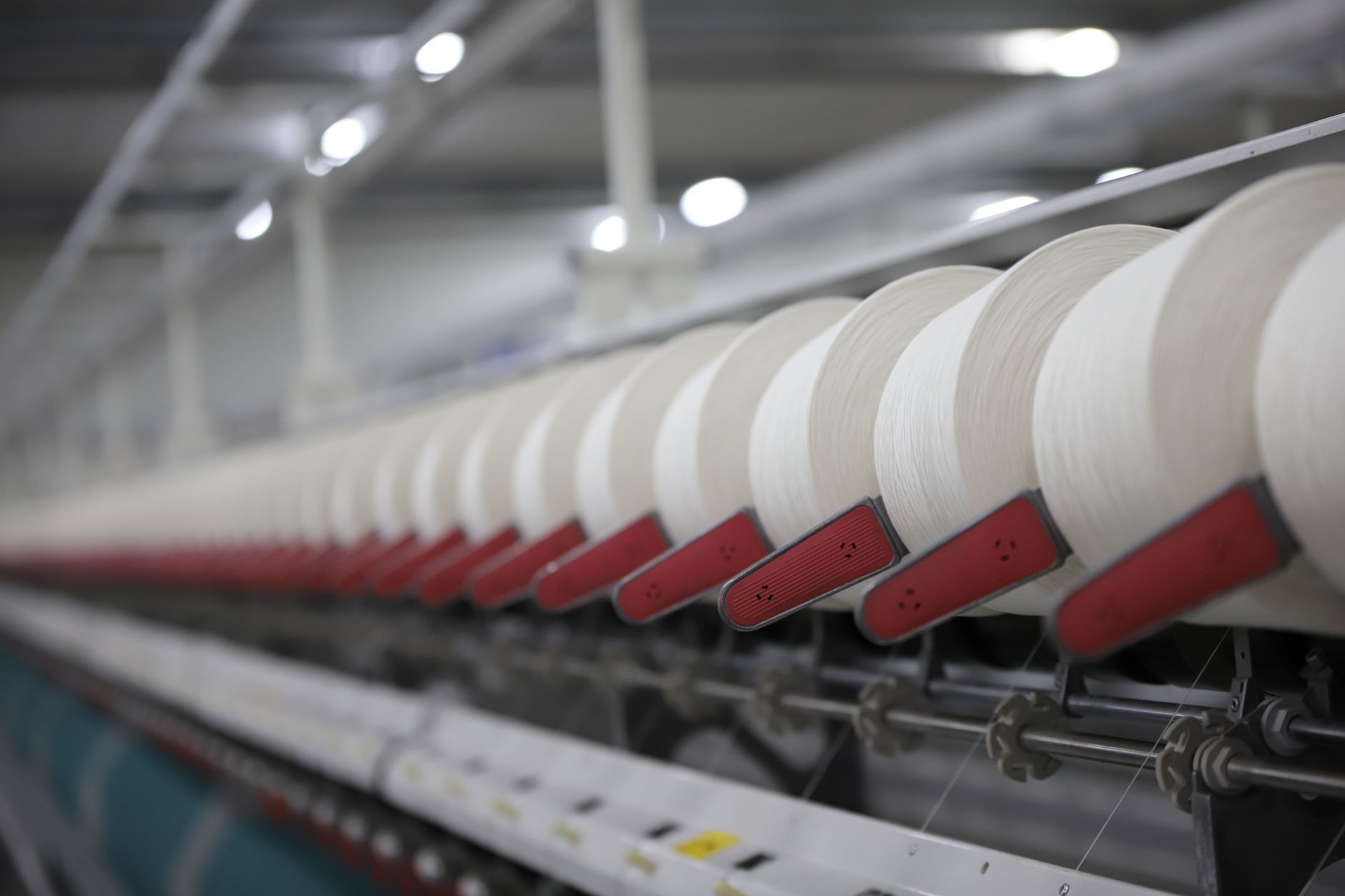
Autonomous mobile robots fit textile mills when yarn, bobbin, and work-in-process carts travel repeatedly between known stations. The strongest first application has a clear release signal, a repeatable cart interface, a receiving location with available space, and enough transport demand to keep the equipment usefully occupied.
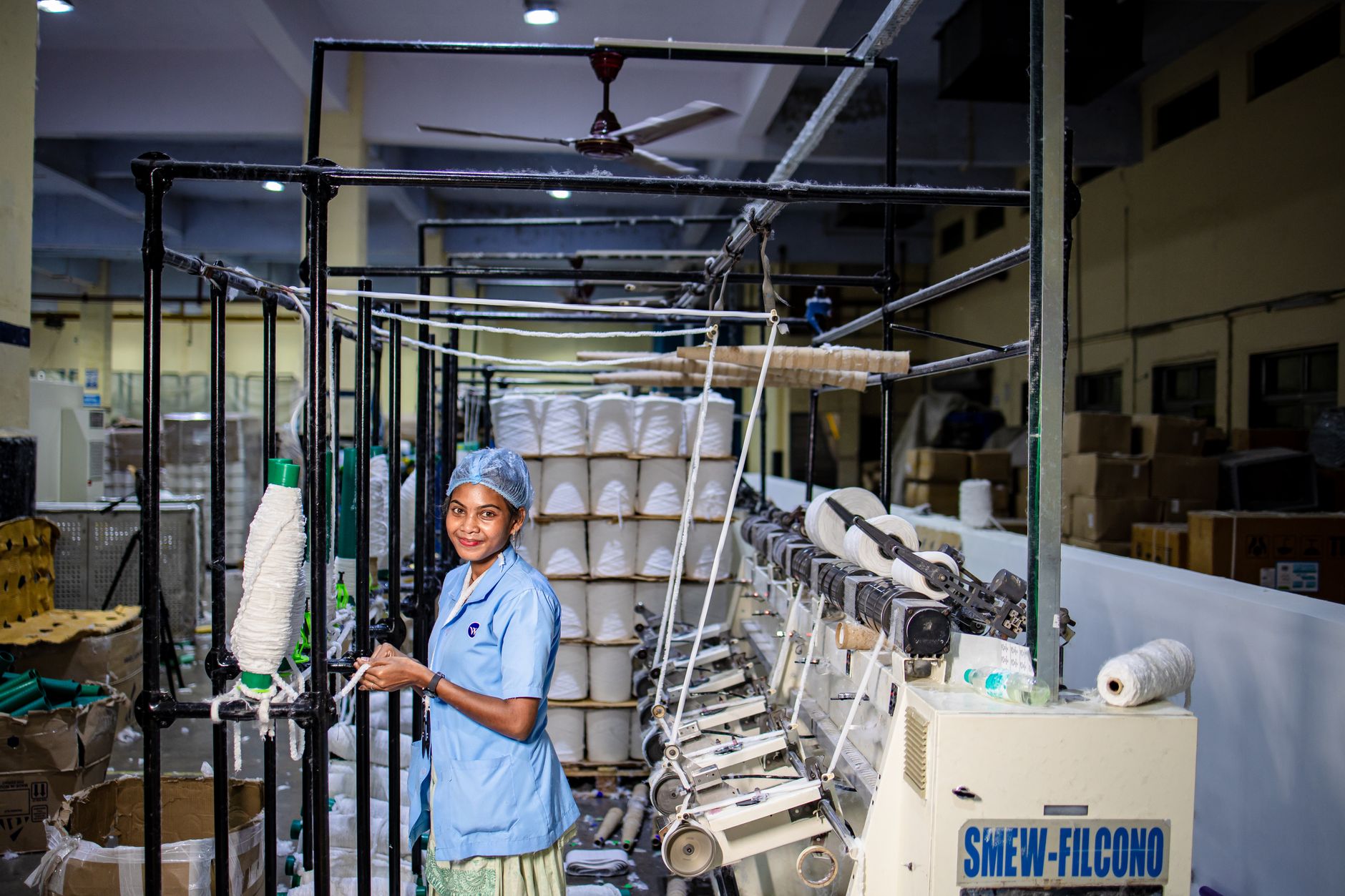
An AMR should remove long walks and routine cart handling without disturbing winding, weaving, or inspection. People can still load bobbins, verify lots, repair breaks, and judge fabric quality. The robot handles the predictable movement between those skilled tasks.
A Department of Energy textile case study documented a 10-step cotton process spanning opening, carding, combing, roving, spinning, winding, warping, slashing, weaving, and inspection. That sequence shows why textile mill logistics must be designed as a connected WIP flow. Automating one trip while ignoring downstream readiness can simply deliver congestion faster.
Which carts and loads should be automated first?
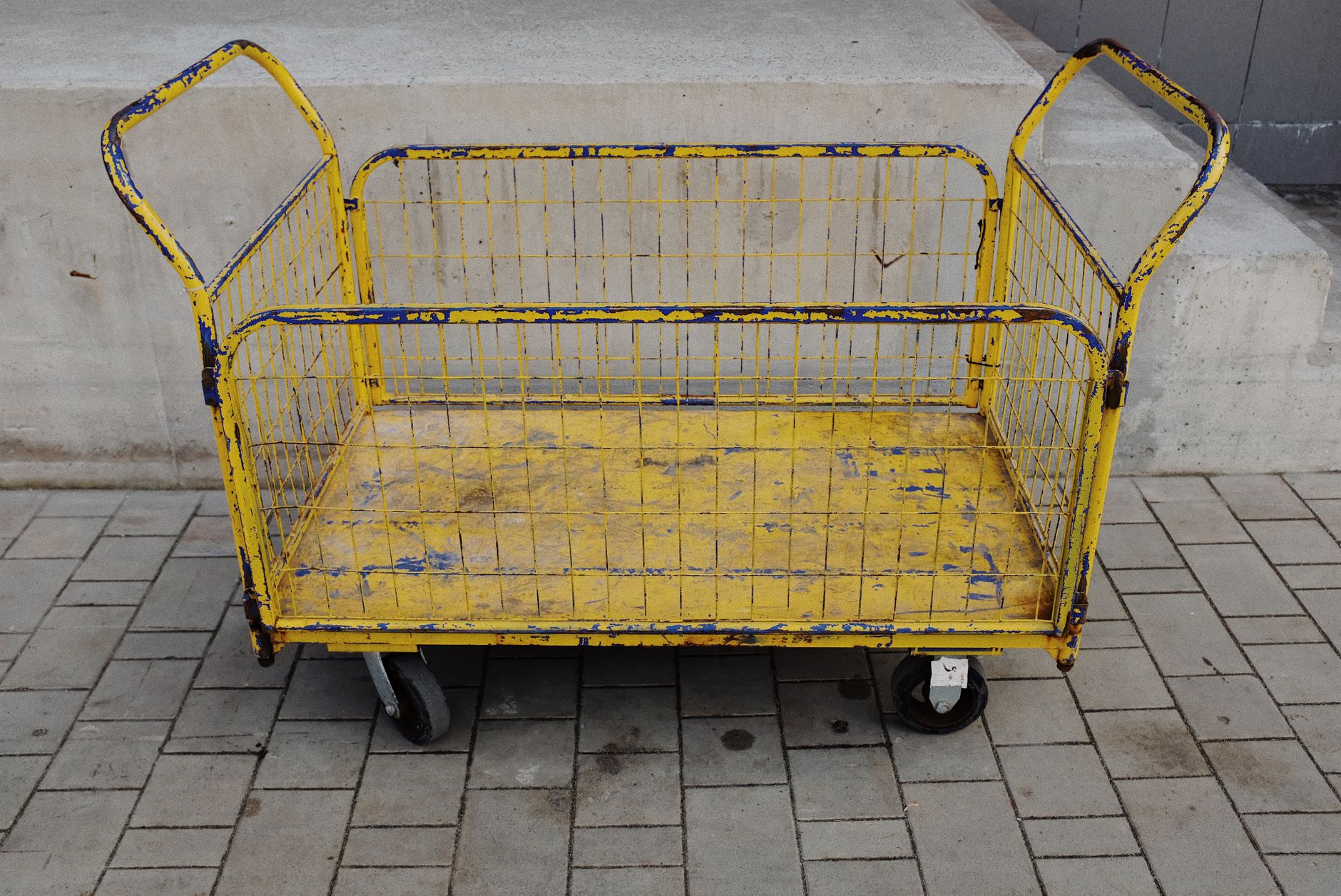
Start by inventorying every yarn trolley, bobbin rack, beam cart, and inspection cart on the proposed route. Record overall dimensions, loaded weight, center of gravity, caster type, hitch geometry, overhang, stopping behavior, and the location used for automatic pickup. A cart that looks identical from across an aisle may couple differently after years of repairs.
Wheel condition deserves special attention. OSHA notes that thread and textile scraps can clog cart wheels and recommends wheel maintenance and good housekeeping. A dragging caster increases towing force, distorts stopping behavior, and can turn an otherwise valid tug robot lease or cart pulling robot application into an intervention-prone deployment.
- Assign each approved cart family an ID, load envelope, coupling datum, and maximum condition limits.
- Use a physical gauge to reject bent hitches, loose handles, damaged wheels, and excessive overhang before dispatch.
- Mark fixed pickup and drop-off poses so operators do not leave carts at arbitrary angles.
- Keep yarn tails, straps, labels, and loose packaging inside the validated load boundary.
How should AMRs be prepared for fibers and dust?
Textile fiber is not a minor housekeeping detail. OSHA defines cotton dust as a mixture that can include fiber, plant matter, bacteria, fungi, soil, and other contaminants. Its standard sets eight-hour limits of 200 µg/m³ for yarn manufacturing and 750 µg/m³ for slashing and weaving. Those are worker-exposure limits, not sensor ratings, but they confirm that airborne material is an ordinary process condition.
During a robot pilot program, inspect scanner windows, cameras, cooling passages, drive wheels, caster areas, charging contacts, and coupling sensors after representative shifts. Log contamination warnings and false stops. Route equipment away from direct fiber discharge where possible, add accessible protective covers where approved, and set cleaning intervals from observed buildup rather than a generic calendar.
Cleaning methods must also fit the mill. OSHA prohibits cleaning floors or clothing with compressed air and requires vacuum sweeping or another method that minimizes dust dispersal. Certain textile dusts can also present a combustible-dust hazard, so charging locations and electrical equipment belong inside the facility's dust-hazard review. The published ISO 3691-4:2023 standard does not cover operation in potentially explosive environments.
Environmental qualification should reflect the process, not an air-conditioned demonstration area. The Department of Energy case study reported one cotton plant operating at 85°F to 95°F and 50 to 60 percent relative humidity to support production. Actual temperature, humidity, vibration, lint, and floor conditions should therefore be captured during site assessment mapping.
What changes when routes run down long aisles?
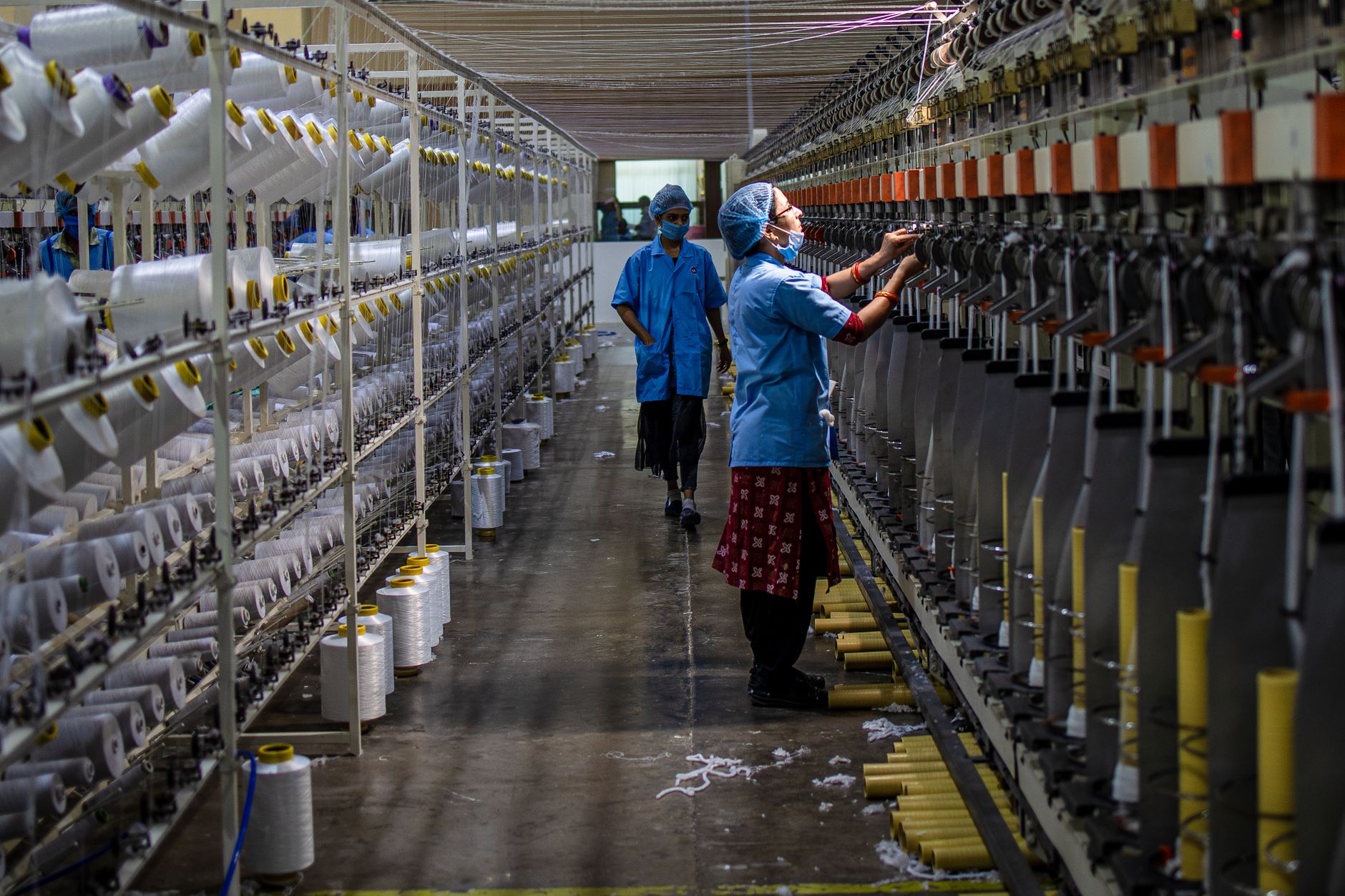
Long aisles reward repetitive transport automation, but distance magnifies small delays. A blocked pickup, slow coupling, occupied drop zone, or manually parked cart can hold the only practical travel lane. Map passing opportunities, blind loom exits, pedestrian crossings, fire equipment, and locations where WIP commonly spills beyond its assigned footprint.
Fleet sizing should use measured cycle time: dispatch delay, empty travel, coupling, loaded travel, drop-off, exceptions, and charging. Top travel speed alone says little. A slower cart pulling robot with reliable coupling and low intervention demand may move more yarn per shift than a faster unit that repeatedly waits for access.
Use traffic rules that prevent opposing vehicles from meeting in constrained segments. Zone control, one-way circulation, reserved intersections, and upstream holding points can protect flow. Charging should be placed near natural idle periods so a low-charge robot does not cross the longest aisle merely to reach its dock.
How should fleet dispatch follow production scheduling?
The robot fleet manager should receive production context, not just destination coordinates. Useful fields include material lot, source machine, destination, cart type, readiness time, due time, priority, quality status, and downstream capacity. Every pickup and delivery response should preserve that identity for traceability.
The International Society of Automation says ISA-95 organizes manufacturing information across five levels. Manufacturing execution and operations management sit at Level 3, while business planning and logistics sit at Level 4. Its models cover materials, equipment, schedules, performance, and operations events, giving mills a sound vocabulary for connecting robot fleet management with MES or ERP systems.
Dispatch triggers can include a full-cart signal from winding, a loom replenishment request, an inspection release, or removal from quality hold. The fleet system then selects an eligible robot and reports accepted, collected, delivered, failed, or canceled status. If inspection has no open position, the job should wait at an approved buffer instead of sending another cart into a blocked area.
Define fallback behavior before go-live support begins. If the scheduling interface fails, the mill needs an approved local queue, manual request method, priority rule, and reconciliation process. Staff should never have to guess which yarn lot a disconnected cart contains.
What should safety validation cover?
The International Organization for Standardization says operating-zone conditions significantly affect safe driverless-truck operation. A compliant base vehicle is only one component. The complete application includes the cart, load, route, controls, people, charging equipment, operating rules, and maintenance practices.
Validation should reproduce actual textile conditions: trailing yarn, lint on sensors, a warped caster, an offset cart, low light, reflective surfaces, blind crossings, workers stepping from loom rows, communication loss, emergency stops, and a blocked destination. Test the loaded stopping case at each meaningful floor and traffic condition.
Train operators to stage carts, inspect hitches, keep load boundaries tidy, request moves, respond to alarms, and recover equipment only through approved procedures. Maintenance staff need separate instruction for isolation, sensor cleaning, coupling checks, software changes, and post-maintenance functional tests.
- Request-to-pickup and pickup-to-delivery time by route.
- Machine waiting time caused by missing yarn or blocked cart removal.
- Failed couplings, manual interventions, and contamination stops per shift.
- Empty travel, charging travel, and queue time at shared aisle segments.
- WIP dwell, misroutes, load damage, and traceability exceptions.
How should a textile mill buy and support the system?
Run a representative pilot before an amr fleet deployment. Include the oldest acceptable cart, the heaviest validated load, peak aisle traffic, routine sanitation, shift changes, and real scheduling messages. Compare scheduled dispatch with event-driven dispatch, then use the operating data to decide fleet size and rollout sequence.
Service Robot Co. is an OEM-neutral, full-service commercial robot integrator for U.S. businesses. As a vendor neutral robot integrator, it can compare equipment across manufacturers and match the mobile platform, coupling method, sensing package, and fleet controls to the mill rather than forcing every route onto one product family.
The same partner can arrange commercial robot leasing, autonomous mobile robot leasing, AMR leasing, robot leasing for business, monthly payment programs, or a purchase structure. That gives mills room to compare robot leasing vs buying and try before you buy without treating financing as a substitute for technical qualification.
Service Robot Co. also handles robot deployment and integration, training, go-live support, and continuing service through a nationwide U.S. engineer network. A robot maintenance service plan can combine remote triage, on-site dispatch, RoboCare™ service in the selected program, and emergency response nationwide. One vendor remains accountable across financing, deployment, integration, training, and service.