
Key takeaways
- Schedule autonomous cleaning by passenger-flow phase, not by a fixed nightly route.
- Treat rainwater, marine salt, and winter deicer as distinct floor-care conditions.
- Keep robots clear of boarding queues, accessible routes, screening boundaries, and unattended luggage.
- Pilot the actual timetable, floor chemistry, seating layout, and security rules before committing to a fleet.
Can autonomous floor care work between ferry sailings?
Yes. An autonomous floor scrubber can clean a ferry terminal waiting hall during the quieter intervals between disembarkation, ticketing, staging, and boarding. The key is to divide the hall into short route segments that can be completed and released before the next passenger wave, rather than sending the machine on one uninterrupted building-wide run.
A practical program gives priority to wet entrances, ticketing approaches, seating perimeters, and the paths connecting doors to boarding gates. The robot handles repeatable open-floor work, while attendants remove luggage hazards, reset chairs, spot-clean spills, and take over any area where passenger density rises unexpectedly.
This is not overnight cleaning with no operator in the usual sense. Ferry operations are shaped by vessel arrivals, weather, security controls, bicycles, strollers, rolling bags, and last-minute schedule changes. The strongest deployment links each cleaning mission to the sailing plan and gives terminal staff a fast way to pause, redirect, or cancel it.
Why does ferry cadence change the route plan?
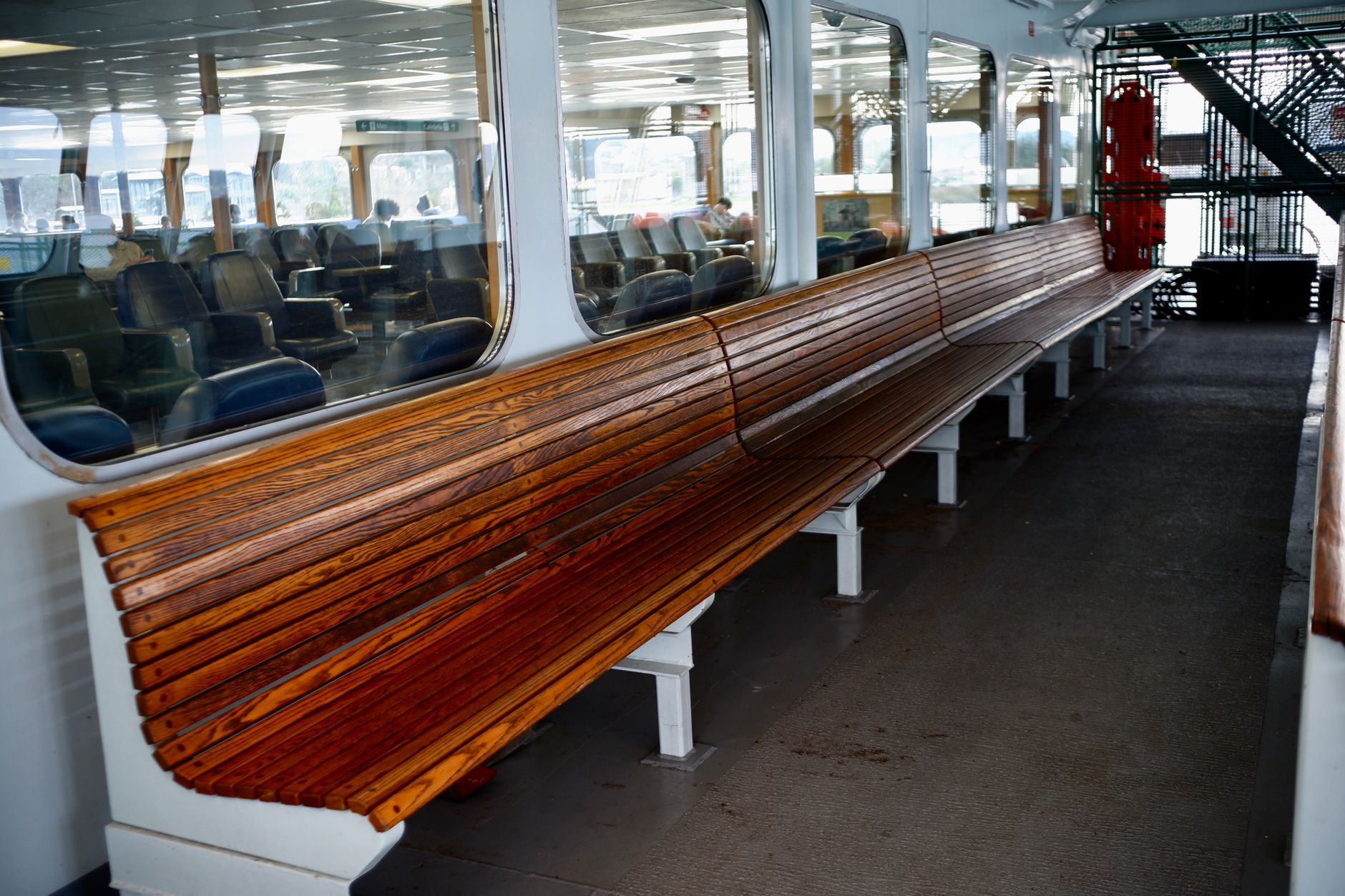
A ferry terminal does not fill gradually like a conventional lobby. Demand arrives in pulses. One group steps off a vessel as another gathers near ticketing or boarding, and the apparent lull between them may be shorter than the published timetable suggests.
Washington State Ferries, for example, recommends that bicycle passengers arrive 20 minutes before departure to receive priority loading. That guidance illustrates an important planning point: the boarding surge begins well before the vessel leaves. Cleaning windows must therefore be based on observed passenger flow around each sailing, not departure time alone.
Build the operating day as a series of states: post-arrival recovery, low-occupancy cleaning, pre-boarding withdrawal, active boarding, and exception response. A route can start only when its zone is available, and it should end with enough site-measured margin for the floor to be dry, warning devices to be collected, and the robot to reach its approved standby point.
Live vessel status should override the base schedule where the operator provides it. Delays, weather holds, substituted boats, and special events can erase a planned cleaning gap. The terminal supervisor, not the timetable, remains the final authority.
How should robots handle rainwater and salt?
Rainwater calls for rapid extraction and a controlled, dry finish. Salt introduces a second problem: dissolved residue can spread beyond the entrance, dry into a pale film, abrade finishes, and expose metal components to a corrosive environment. The U.S. Environmental Protection Agency describes salt as highly corrosive and calls for regular maintenance of equipment exposed to it.
Use entrance matting as the first capture stage and robotic scrubbing as the second. A federal General Services Administration cleaning specification provides a useful benchmark by requiring entrance runners at least 10 feet long in the primary direction of travel. It also prefers larger runners over overlapping small mats because overlaps can become trip hazards. Terminal requirements still need to reflect the building, weather, and applicable codes.
The robot program should distinguish ordinary soil, fresh rainwater, and saline residue. Operators can assign a recovery-focused pass near doors during storms, followed by a chemistry-approved scrub after the surge. Brush pressure, water flow, detergent, squeegee condition, and floor-finish compatibility all need validation on the terminal's actual tile, terrazzo, concrete, or resilient flooring.
Salt control also changes maintenance. Rinse and inspect the recovery path, wheels, brush deck, squeegee assembly, sensors, and charging contacts at the frequency established during the pilot. Do not let concentrated residue dry inside tanks or around metal fasteners.
- Map rain zones separately from routine cleaning zones so wet entrances can receive priority.
- Use chemistry approved for both the flooring and the machine, with concentration controlled by written procedure.
- Add a dry-floor inspection before reopening a recently scrubbed route to passenger traffic.
- Record repeated water entry points so mats, drainage, door seals, and staffing can be corrected upstream.
What about luggage, strollers, and movable seating?
Rolling bags are both moving obstacles and stationary blind spots. A robot may navigate around a suitcase, but it should never interpret unattended baggage, move it, or clean closely enough to disturb it. Staff should pause the route and follow the terminal's security procedure.
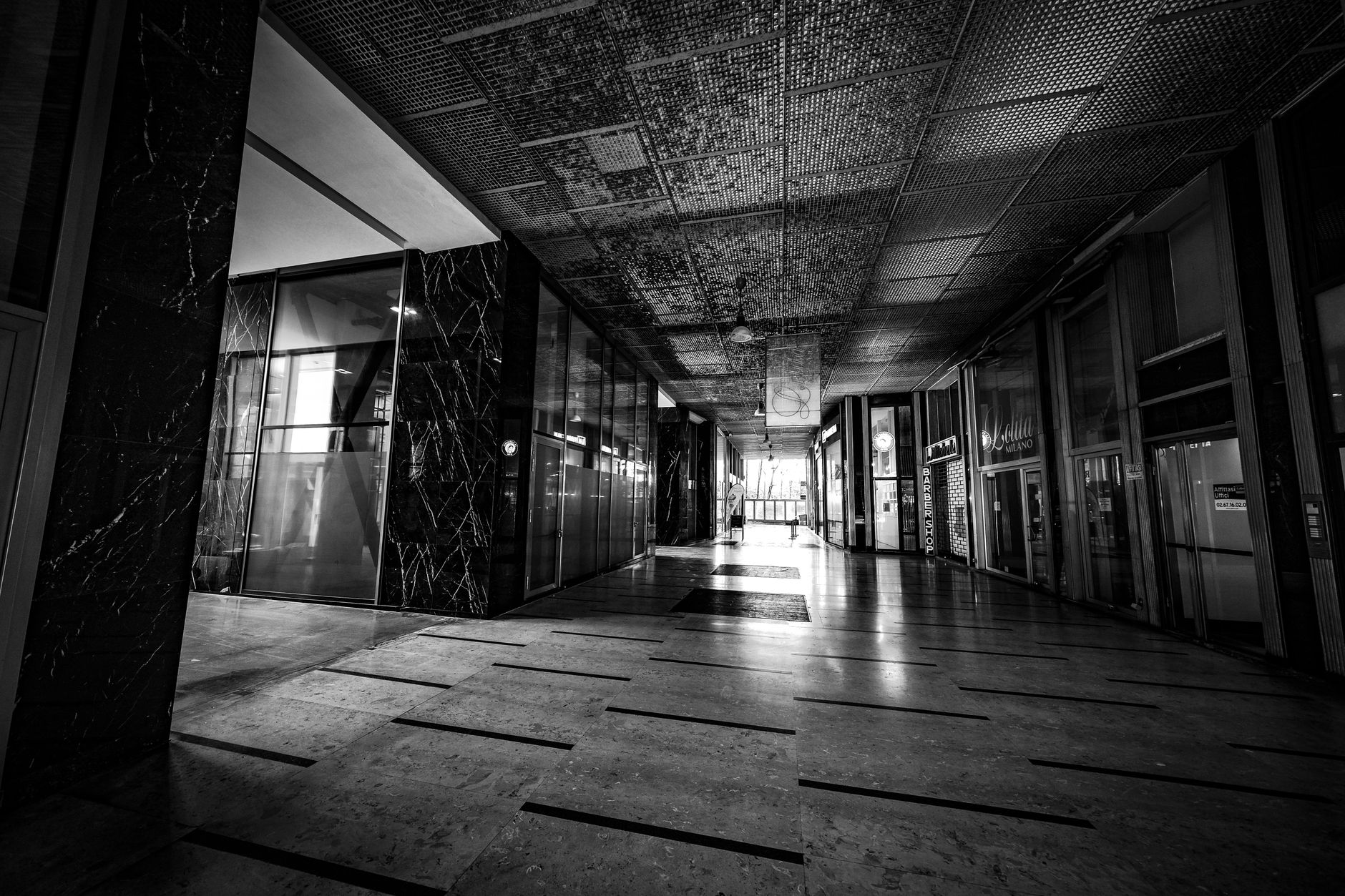
Movable chairs create a different problem. If seating drifts each day, a map built around yesterday's layout quickly develops narrow passages and missed islands of floor. Establish approved seating footprints, mark chair-storage positions, and create separate missions for open central lanes and seating bays.
Accessibility sets the lower boundary, not the operating target. The U.S. Access Board requires a continuous accessible-route width of at least 36 inches, with a reduction to 32 inches allowed only for short segments under specified conditions. Robots, docks, warning signs, and displaced chairs must not consume that required clearance. Crowded terminals will often need substantially more room than the minimum.
- Pause for unattended bags and route the observation to authorized terminal personnel.
- Treat temporary queue stanchions, vending carts, and seasonal displays as controlled map changes.
- Clean chair bays in rotation so passengers retain usable seating elsewhere.
- Keep docking and standby locations outside accessible paths, gate approaches, and emergency egress routes.
A schedule built around vessel movements
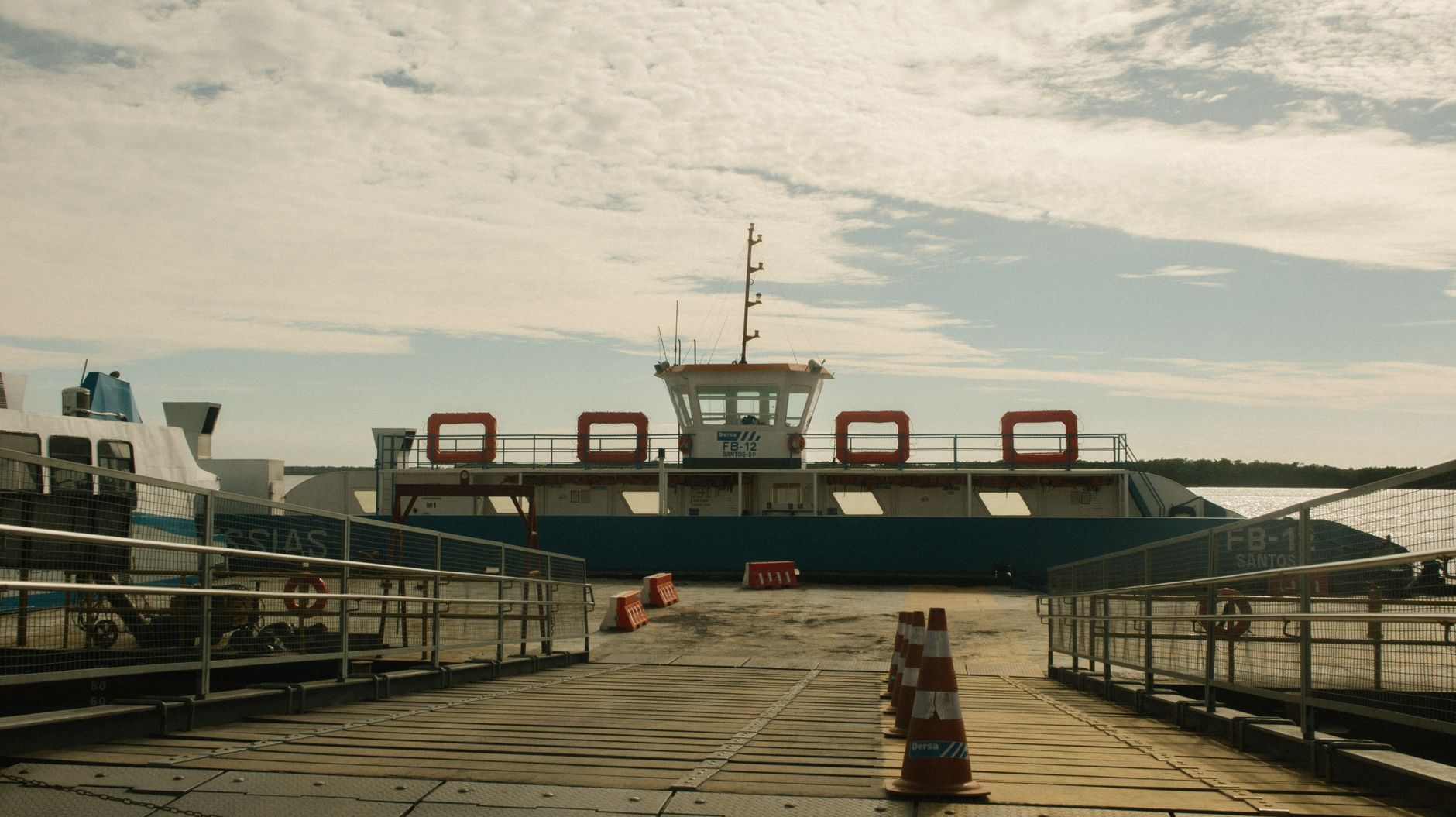
Start with the day's sailing schedule, then overlay actual occupancy observations. Each cleaning zone should have a measured run duration, a withdrawal path, a drying check, and a designated safe haven. Large facility coverage comes from many dependable short missions, not one ambitious route that repeatedly collides with boarding activity.
Route priority should change with conditions. On a dry morning, the central waiting hall may lead. During a storm, entrances and ticketing approaches move to the front. After a heavily loaded arrival, debris pickup and human inspection should precede wet scrubbing so straps, paper, and small objects do not reach the brush deck.
Terminal teams also need exception rules. A delayed arrival can postpone one zone while allowing another to run. An early boarding call should send the robot to standby. A security event should stop affected missions without requiring staff to edit the permanent map.
- Base plan: missions assigned to normal arrival and departure patterns.
- Live adjustment: dispatch changed by vessel status, passenger density, and weather.
- Hard block: no-go periods around active boarding, disembarkation, screening, and emergency response.
- Recovery plan: unfinished zones return to the queue for the next verified gap.
How do security restrictions affect deployment?
Security boundaries belong in the robot map from the first site assessment. Under 33 CFR 105.285, passenger and ferry facilities must segregate unchecked people and personal effects from checked ones, and must deny passenger access to secure and restricted areas unless an authorized escort is present. Cleaning routes cannot blur those boundaries.
The same federal rules require increased monitoring of public access areas at higher MARSEC levels. Restricted areas may also have defined access times, authorized personnel, controlled entry points, and temporary boundaries. A route that is acceptable during ordinary operations may therefore become unavailable when the security posture changes.
Coordinate maps, docks, remote support procedures, and access credentials with the Facility Security Officer. Public waiting halls, screened holding areas, staff corridors, and secure boarding approaches should be separate missions. Any work behind a controlled boundary must follow the approved Facility Security Plan and local authorization process.
What should a terminal pilot prove?
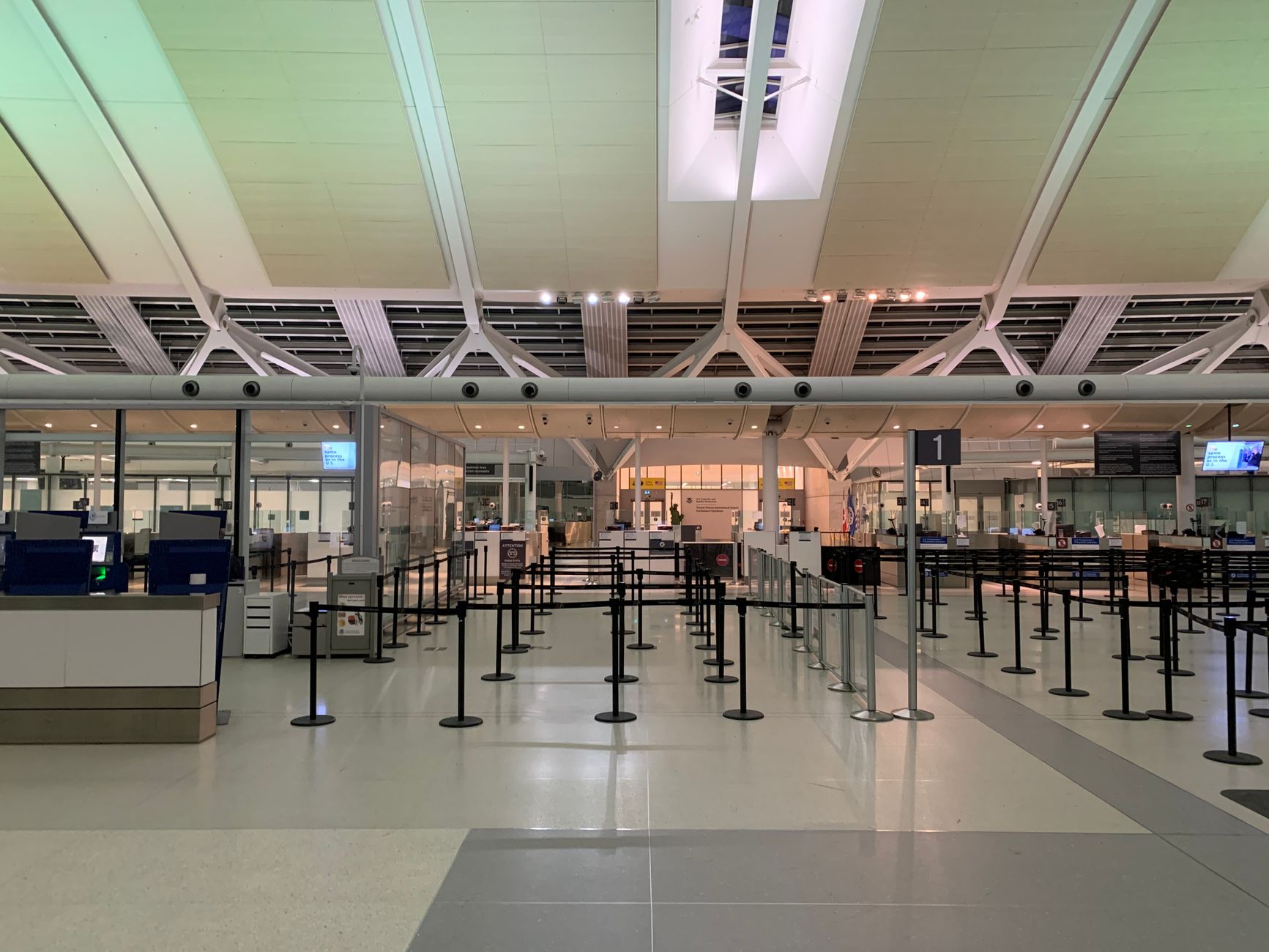
A commercial robot demo should recreate the difficult day, not the polished walkthrough. Run it through tracked rain, dried salt, reflective patches, dark mats, chair clusters, glass walls, rolling luggage, queue equipment, and the real transition from an empty hall to a boarding surge.
Measure completed floor area, intervention causes, water recovery, visible residue, edge misses, drying performance, noise, route withdrawal time, and daily maintenance effort. Review every stop by cause. A safe stop for a stroller is desirable behavior, while repeated stops beside a harmless architectural feature indicate a mapping or equipment-fit problem.
Service Robot Co. performs the site assessment mapping, selects equipment across manufacturers, and manages robot deployment and integration. That OEM-neutral approach matters in terminals because a compact unit may fit seating bays while a larger industrial floor scrubbing robot covers the open concourse more efficiently.
Procurement can then match operating risk and budget. Options may include commercial cleaning robot leasing, a floor scrubber monthly lease, monthly payment programs, or purchase or lease. Service Robot Co. can package training, go-live support, remote triage, on-site dispatch, and a robot maintenance service plan through its nationwide U.S. engineer network.
- Test the heaviest realistic contamination and the narrowest approved route.
- Observe at least one complete arrival, boarding, and disruption cycle.
- Verify that local staff can pause, recover, clean, charge, and restart the unit.
- Obtain sign-off from facilities, janitorial leadership, operations, accessibility, IT, and security.
One operating partner for the full lifecycle
Ferry terminals need more than a machine purchase. Schedules change, seating migrates, floor finishes age, security zones move, and seasonal salt alters maintenance. The program needs named owners for dispatch, inspection, consumables, incident reporting, map changes, and service escalation.
Service Robot Co. acts as one vendor for the whole lifecycle: equipment selection, financing, deployment, integration, training, and field service. A vendor-neutral robot integrator can also keep the terminal from forcing every floor zone into one machine's operating envelope.
The desired result is disciplined floor care between passenger waves. Robots perform the repetitive square footage, attendants handle judgment-heavy exceptions, and terminal operations retain control whenever a vessel movement, wet-floor hazard, accessibility need, or security restriction takes precedence.