Key takeaways
- The right inspection robot for a recycling MRF is the one that reaches dirty, tight, high-risk areas without adding downtime or forcing people into exposure-heavy tasks.
- In MRFs, ingress protection, traction, lighting, camera placement, comms resilience, and decontamination speed matter more than glossy autonomy claims.
- Conveyor-side work still lives inside OSHA lockout, tagout, guarding, and fall-protection rules, so buyer questions must cover operating procedure, not just hardware specs.
- Battery fire detection, bale pile visibility, and post-jam inspection are high-value early use cases because they pair clear safety exposure with frequent repeat work.
- A vendor neutral robot integrator can matter as much as the robot itself when you need financing, deployment, training, and field service across multiple U.S. sites.
What should a recycling MRF actually buy?
A recycling MRF should buy an inspection robot only if it can do three things reliably inside that plant's real conditions. It must get into narrow catwalk and conveyor-adjacent spaces, survive dust and moisture without constant babysitting, and pull staff away from the ugliest inspection tasks around jams, bale stacks, and suspect contamination. If it misses any of those, the machine becomes a demo piece instead of an operating tool.
The buying priority is not abstract autonomy. It is exposure reduction plus usable evidence. You want clear video, thermal context where heat matters, dependable mobility on grated walkways or uneven housekeeping conditions, and a workflow that lets maintenance or operations review findings fast enough to act before the next shift compounds the problem.
That is especially true in U.S. recycling plants, where the operating backdrop is unforgiving. EPA says the country generated 292.4 million tons of municipal solid waste in 2018, with almost 94 million tons recycled and composted, equal to a 32.1 percent rate. MRFs sit inside that throughput, and their inspection needs are shaped by throughput pressure, contamination, fire risk, and difficult access rather than by neat factory-floor assumptions.
Where do inspection robots earn their keep first?
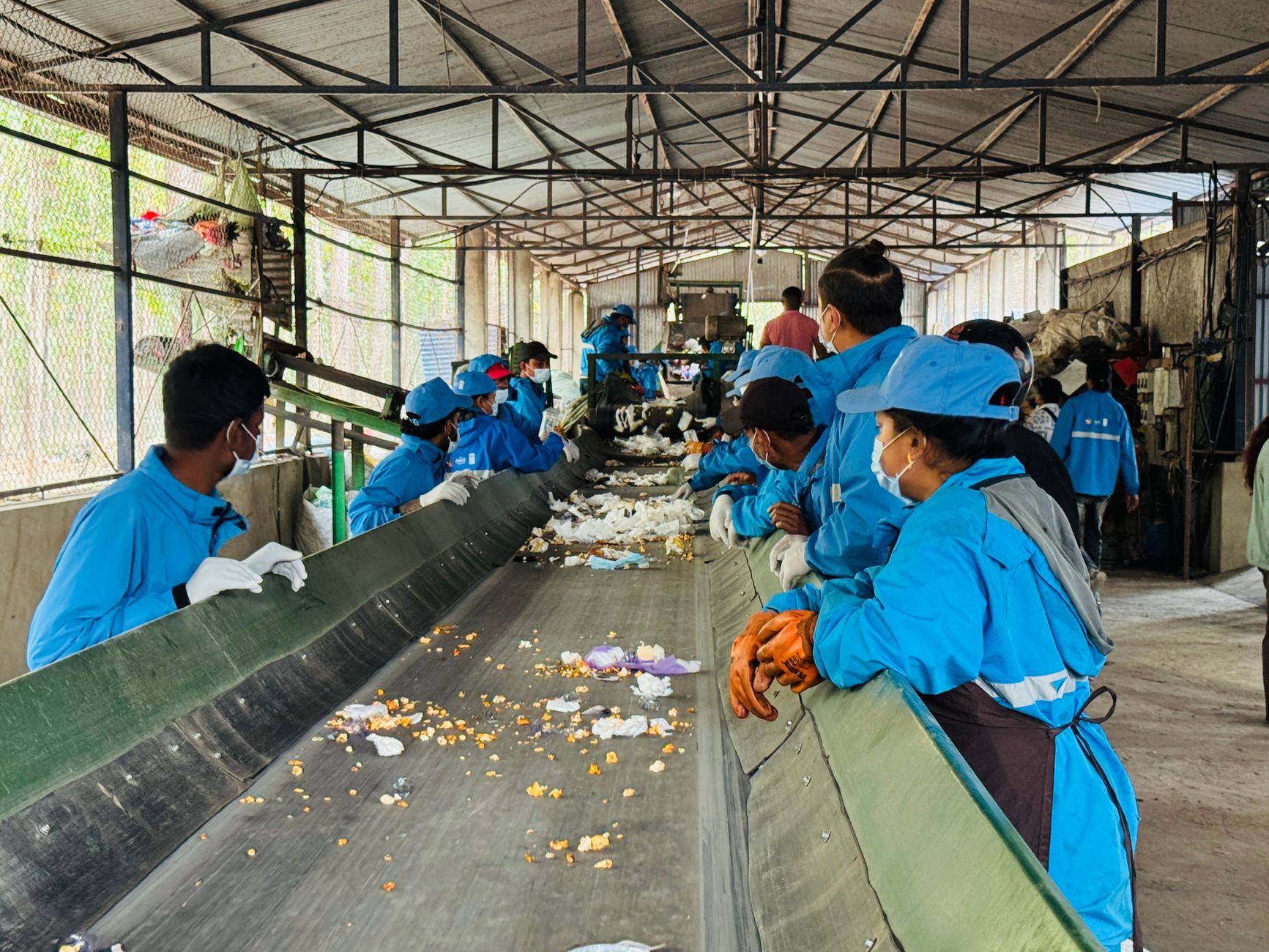
The best early deployments are repetitive checks that people currently do with flashlights, radios, and a tolerance for unnecessary risk. Around conveyor lines, that usually means pre-maintenance visual checks, belt tracking observations, jam confirmation after lockout, chute inspections, and looking into areas where debris accumulates faster than crews can comfortably access them.
Bale storage is the second obvious zone. A robot that can inspect aisles, see stack condition from better angles, and flag suspicious heat signatures gives supervisors a safer way to monitor one of the more consequential fire and access risks in the building. EPA warns that municipal recycling facilities are not designed to receive lithium-ion batteries, and its fire analysis found more than 240 battery-caused fires at 64 waste facilities between 2013 and 2020.
Contamination checks can also justify the program when the robot helps operators document inbound problem loads, inspect residue around sorting points, or review missed material after the line slows down. That makes the machine less of a gadget and more of an operations sensor on wheels or tracks.
Which technical specs matter in a dirty, wet, cramped MRF?
Start with environmental tolerance. Dust is not cosmetic in a recycling plant. Fine fiber, film scraps, grit, and moisture work into seals, optics, drive systems, and charging interfaces. OSHA's combustible-dust guidance stresses routine housekeeping and dust control because settled dust can become a serious fire and explosion hazard. For buyers, that means asking not just for an IP rating, but how often lenses foul, how cooling paths are protected, and how long field cleaning takes between rounds.
Mobility comes next. A machine that looks stable on polished concrete may struggle on grated catwalks, expansion joints, soggy residue, or debris-strewn transfer areas. Ask for maximum gap crossing, slope handling, turning clearance, and recovery behavior if the robot loses traction near rails, curbs, or cable protection.
Then get specific about sensing. Visible-light cameras need enough low-light performance to read belt condition and residue buildup without flooding the scene with glare. Thermal imaging matters where you are checking bearings, motors, electrical cabinets, smoldering material, or bale temperatures. Good onboard lighting, stable video, and simple evidence export usually matter more than exotic AI labels.
Finally, check the serviceability details. In MRFs, the robot should be easy to wipe down, easy to inspect for wrap-ups, and quick to return to duty after contact with wet fines or blown paper. If cleanup takes half an hour after every run, utilization will collapse.
- Ingress and sealing for dust and splash exposure
- Traction on grating, painted steel, concrete, and debris
- Camera placement that still works close to guards and rails
- Thermal sensing for hot bearings, motors, electrical points, and bale monitoring
- Lighting that avoids glare from reflective metal and plastic film
- Fast battery swap or charging workflow that fits shift patterns
- Simple decon and preventive maintenance routine
- Reliable wireless handoff in steel-heavy interiors
How should safety and compliance shape the buying decision?
Inspection robots do not erase safety procedure. They change who enters the hazard zone, when, and for how long. OSHA requires conveyors to be locked out and tagged out during maintenance, repair, and servicing unless power is necessary for testing, and it also requires emergency stop access and guarding around conveyor operation. A buyer should treat the robot as part of the work method, not as a shortcut around lockout or guarding practice.
That matters most in post-jam verification and maintenance scouting. If the robot is sent ahead to inspect before a person climbs in, that is valuable. If crews start assuming the robot makes a live conveyor area acceptable by default, the program is drifting into a liability.
Access hazards also count. OSHA's walking-working surface rules cover runways, ladders, stairways, and fall protection. In plain terms, if your inspection route includes narrow elevated paths, openings, or awkward transitions, the machine's size, tether behavior, operator stance, and retrieval plan all belong in the evaluation.
What questions separate a serious inspection robot from a weak fit?
Ask for proof from conditions that look like your plant, not a warehouse showroom. Dust loading, moisture, plastic film, poor light, metal clutter, and cramped maintenance geometry are the actual exam. A good vendor should show the robot completing the route, not just driving in open space.
Ask what happens on a bad day. How is the robot recovered if it stops under a conveyor? How are logs, images, and thermal captures exported? What can a local technician replace without shipping the unit away? How many minutes of operator training are needed before a lead hand can run a basic inspection round confidently?
And ask what the robot cannot do. Honest boundaries are useful. Some platforms are strong for routine rounds but weak in truly confined spaces. Others handle stairs or grating better but carry less sensor payload. Buying discipline comes from fitting the job, not forcing one platform into every corner of the MRF.
- Show me a full inspection route in dust, not a clean demo bay
- How do you prevent camera fouling and traction loss during a normal shift?
- Can the unit inspect conveyor-adjacent areas without snagging on rails, cables, or guards?
- What is the retrieval procedure if the robot fails in an inaccessible spot?
- How is thermal data stored, reviewed, and tied to a maintenance work order?
- What preventive maintenance does our team own weekly and monthly?
- What uptime support is available across our U.S. sites?
- Can we start with inspection robot rental, lease rental or sale, depending on site readiness?
When does financing and lifecycle support matter more than the first demo?
Inspection robots are usually bought for reliability, not novelty. That pushes lifecycle support to the front of the decision. A cheaper unit with thin field coverage can become expensive fast if a failed camera module or drive assembly strands the machine for weeks while your team goes back to manual rounds.
This is where the buying model matters. Some operators want inspection robot rental for a pilot, others want robot leasing for business so the spend tracks operating budgets, and others will prefer lease rental or sale depending on rollout confidence. For multi-site recyclers, monthly payment programs and maintenance included terms can make more sense than a one-time hardware buy followed by fragmented service.
Service Robot Co. fits here as a full-service commercial robot integrator for U.S. businesses. Because the company is OEM-neutral, it can match the plant to the right robot category, then handle financing, deployment, integration, training, and robot maintenance service through a nationwide engineer network. That one partner, one number structure matters more in recycling than in lighter-duty sectors because uptime is operational, not cosmetic.
Should a MRF buy one robot or build a site program?

Most facilities should start with one route, one owner, and one measurable inspection outcome. Battery-fire watch around bale storage, conveyor-side pre-maintenance checks, or contamination documentation are all clean starting points because the before-and-after labor picture is visible. Once the route works, expand by hazard class rather than by department politics.
A site program becomes real when the robot's findings enter maintenance and safety routines. Thermal anomalies should generate work orders. Repeat contamination evidence should feed supplier or hauler conversations. Route history should help decide where guarding, housekeeping, or process changes are still weak.
The broader recycling backdrop supports making these programs disciplined rather than casual. EPA's 2024 recycling infrastructure assessment says the United States needs an estimated 36.5 billion to 43.4 billion dollars in investment to modernize recycling infrastructure by 2030. Buyers should read that as a cue to invest in equipment that produces durable operating data, not just labor substitution headlines.
What does a good purchase process look like?
Begin with a route survey, not a spec sheet. Measure aisle widths, catwalk transitions, turning pockets, lighting conditions, dust concentration points, wireless dead zones, and where operators actually need images from. Then rank use cases by safety exposure, frequency, and consequence of missed findings.
Next, run a structured pilot. Define the inspection tasks, the evidence standard, the operator group, the cleaning routine, and the pass-fail criteria before the machine arrives. In a recycling facility, a pilot that ignores housekeeping load or live shift timing is not a pilot. It is theater.
If the trial works, finish the buy with support terms that match reality. You want documented training, spare-parts logic, response expectations, and a service path that covers every U.S. location you plan to support. Service Robot Co. can help MRF operators do that across brands, with site assessment mapping, turnkey robot deployment, go-live support, and lifecycle service under one commercial relationship.
Frequently asked questions
Sources
- EPA National Overview of Materials, Waste and Recycling
- EPA Recycling Infrastructure Assessment
- EPA Lithium-ion Batteries at MRFs FAQ
- EPA Lithium-ion Battery Fire Analysis
- OSHA Conveyor Lockout and Tagout Standard
- OSHA Control of Hazardous Energy Overview
- OSHA Walking-Working Surfaces Standard
- EPA Recycling Economic Information Report