Key takeaways
- For most lift stations, the best robot is the one that keeps people out of the wet well for routine visual checks, gas readings, and repeatable documentation.
- Crawler robots fit steep, slick, debris-heavy interiors better, while wheeled robots win where access paths, floors, and turnaround space are more predictable.
- Sensor payload matters as much as mobility. Gas detection, lighting, camera quality, depth awareness, and communications often decide field performance.
- A buyer should judge the whole operating model, not just the hardware. Site assessment, confined-space procedure, service response, training, and finance terms shape the real outcome.
What should a facility operator buy for lift-station inspections?
If you manage wastewater lift stations on a campus, resort, or industrial property, start with one rule: buy the robot that removes the most confined-space entries from your routine inspection schedule. In practice, that usually means a rugged inspection robot with strong video, gas sensing, stable communications, and a mobility package matched to your station geometry. Crawler platforms tend to earn the edge in wet wells with slime, steep transitions, and unpredictable debris. Wheeled platforms tend to make more sense where access is flatter, cleaner, and easier to repeat.
The buying decision is not really about robotics as a novelty. It is about hazard reduction, staffing reality, and inspection quality. OSHA classifies many of these environments as permit-required confined spaces because they can contain hazardous atmospheres, engulfment hazards, or other serious dangers. OSHA's sewer-entry appendix also notes that sewer atmospheres can become lethally hazardous suddenly and unpredictably, which is exactly why remote inspection has such a strong case here.
That case is getting stronger, not weaker. In May 2024, the EPA said the United States needs at least $630 billion in clean water infrastructure investment over the next 20 years. Its March 2024 wastewater technology brief also pointed to aging assets, limited operating data, and difficulty recruiting, training, and retaining skilled workers. For buyers, that means inspection robots are no longer a specialty gadget. They are an operations tool for stretched teams responsible for unpleasant, failure-sensitive infrastructure.
Why do lift stations create such a strong robotics use case?
Lift stations combine ugly field conditions with operational importance. A missed rag buildup, a corroded ladder, a blocked float, grease accumulation, or an inflow problem can turn into an overflow, pump damage, odor complaint, or emergency callout. Yet every manual inspection asks people to work around splash, moisture, slip risk, poor visibility, and confined-space protocol.
OSHA's permit-space rule requires pre-entry testing, and for sewer systems it requires continuous monitoring when isolation is not feasible. OSHA's sewer-entry guidance flags oxygen below 19.5 percent, flammable gas or vapor at 10 percent of the lower flammable limit, hydrogen sulfide at or above 10 ppm, and carbon monoxide at or above 35 ppm as critical atmospheric thresholds. A robot that can carry the right sensing package before a person goes in changes the sequence of work in a meaningful way.
The rescue risk matters too. CDC and NIOSH training material says an average of 100 confined-space deaths occur each year in U.S. workplaces, and more than 60 percent of documented deaths involve would-be rescuers. That is the brutal logic behind this category. The point is not merely faster inspection. The point is fewer people exposed to the sort of situation that turns one bad decision into two or three casualties.
Crawler or wheeled platform: which one fits the station better?
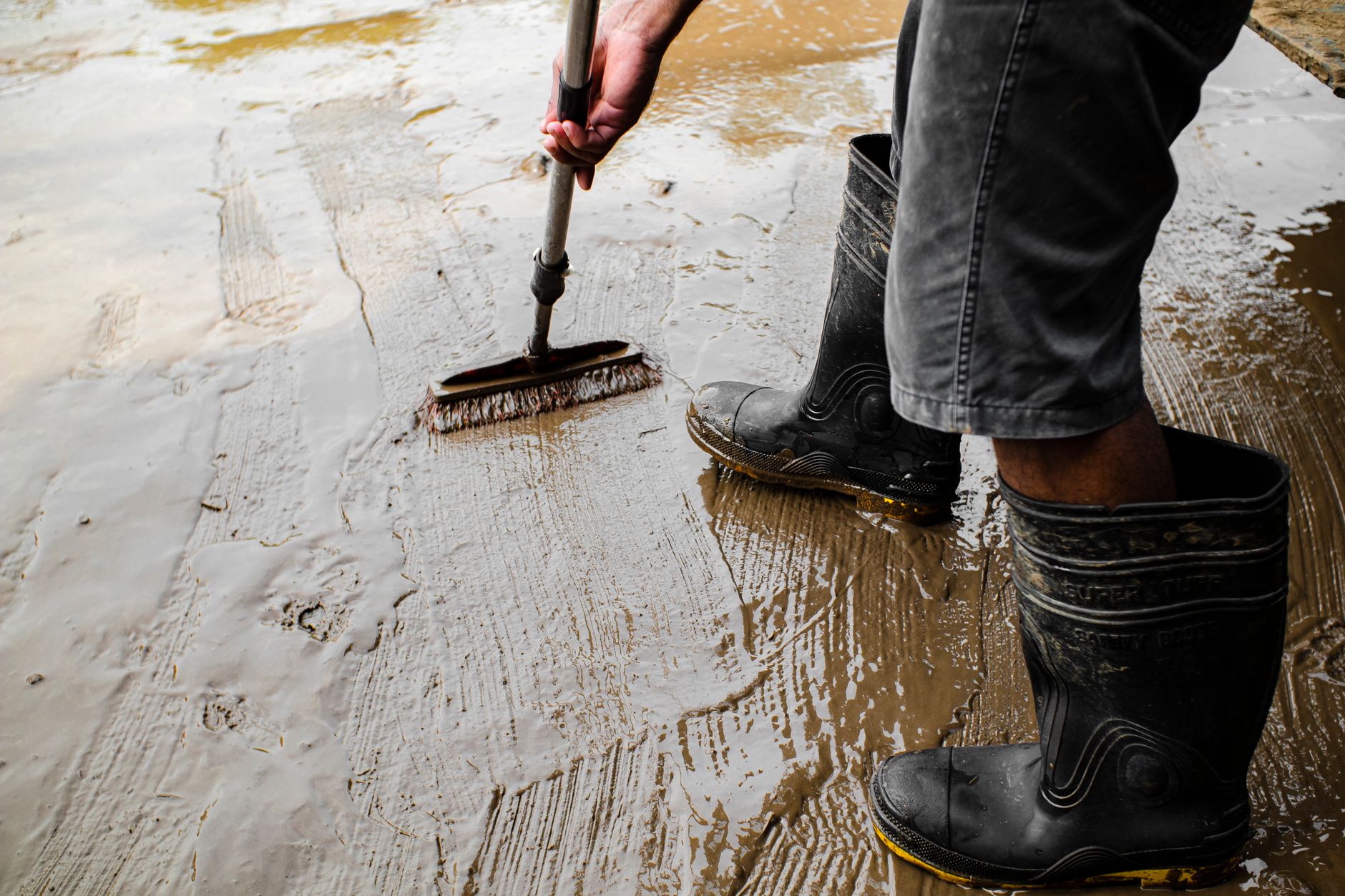
Crawler robots are usually the safer choice when the interior is wet, irregular, and hostile to traction. Tracks spread weight, tolerate slippery residue better, and climb over small debris that can stop a narrow wheel. If your lift stations have steep floor transitions, uneven concrete, ragging, sediment, or a need to approach pump bases and corners close up, crawler designs tend to hold their line better and give steadier footage.
Wheeled robots deserve a hard look when the route into the station is cleaner and more repeatable. They are often quicker to deploy, simpler to hose down, and easier to maneuver in chambers with flatter floors and cleaner perimeters. On a resort or campus with well-maintained package stations and good access hatches, a wheeled unit can be the more practical inspection robot rental or owned asset because setup friction stays low and crews will actually use it.
Buyers should compare the platform against their worst routine station, not their easiest one. Ask for proof on four points: traction on biofilm, ability to cross cable protectors or lip transitions, turning performance in narrow wet wells, and recovery when the robot meets stringy debris. A robot that works in a demo bay but needs babysitting in your dirtiest station is the wrong machine.
- Choose crawler first if the station has slick residue, broken surfaces, debris, sediment, or steep changes in elevation.
- Choose wheeled first if the station offers flatter travel paths, cleaner surfaces, tighter deployment windows, and easier washdown.
- Treat tether management, ingress protection, and decontamination time as buying criteria, not afterthoughts.
- Request recorded runs from conditions close to your own station class before signing a purchase or robot pilot program.
Which sensors actually matter in a lift-station inspection robot?
Mobility gets the robot into the space. Sensors determine whether the inspection is worth anything. At minimum, most buyers should want high-quality low-light video, strong onboard lighting, image stabilization, and a way to capture stills and annotated inspection records. Wastewater environments do not forgive weak optics. Fogging, glare, and dirty splash zones punish mediocre camera systems fast.
Gas sensing is often the deciding feature. If you want the robot to support pre-entry assessment, its atmospheric readings need to line up with how your team manages permit-required confined spaces. OSHA's sewer guidance is explicit about oxygen, combustibles, hydrogen sulfide, and carbon monoxide, so those are the benchmark sensors to evaluate first. If the robot cannot give trustworthy readings, you have a camera rover, not a serious lift-station inspection platform.
Depth awareness also matters more than many first-time buyers expect. A useful robot should help you judge water level, grease cap thickness, pump-submergence conditions, and the distance to critical components. Add communications to that list. Below-grade spaces punish wireless links, so ask how the system handles reinforced concrete, metal covers, and long runs from the operator position. On some properties, tethered reliability beats elegant wireless claims every time.
- Primary sensor set: low-light camera, powerful lighting, still capture, video recording, and operator-readable time stamps.
- Safety sensor set: oxygen, combustible gas, hydrogen sulfide, and carbon monoxide.
- Operational sensor set: distance or depth awareness, temperature where relevant, and clear battery and link-health status.
- Data requirement: exportable inspection records your maintenance or CMMS workflow can actually use.
What site conditions should push a buyer toward one design or a hybrid workflow?
Campuses, resorts, and industrial properties do not fail in the same way. Campus stations often scatter across wide grounds and get inspected by lean maintenance crews, so portability and fast deployment matter. Resort properties usually care about odor control, guest adjacency, and avoiding ugly daytime interventions, which makes repeatable remote checks especially attractive. Industrial sites may bring harsher chemical exposure, more debris, and a stronger need for sensor discipline and decontamination procedure.
Some stations are poor candidates for a single robot standard. A deep wet well with aggressive buildup may need a crawler and a tethered operating method. A shallow duplex station with clean access may be better served by a lighter wheeled system. Buyers with mixed portfolios should not force one robot onto every site. They should define station classes and match equipment to each class.
This is also where a vendor neutral robot integrator earns its keep. Service Robot Co. works as an OEM-neutral partner for U.S. businesses, so the conversation can start with your station mix and service model instead of with one manufacturer's catalog. For buyers managing properties across several states, that matters. The winning program is usually the one that standardizes reporting, training, finance, and service while allowing hardware choices to vary by station type.
How should you evaluate deployment, support, and finance terms?
A strong lift-station program lives or dies on adoption. Ask who performs the site assessment, who maps the inspection workflow, who trains operators, how contamination control is handled, and what happens when the unit is down. If your stations are spread across a regional portfolio, on-site dispatch and remote triage are not nice extras. They are the difference between a usable asset and a cart in the shop.
This is why many buyers now test through a commercial robot demo, a robot pilot program, or inspection robot rental before committing to a broader rollout. That lets you learn actual deployment time, reporting value, and maintenance burden on your own assets. It also surfaces whether the platform fits your confined-space procedure and whether your team will trust the data.
Finance structure belongs in the same conversation. Some operators will buy outright. Others will prefer robot as a service, robot leasing for business, or another monthly payment model that avoids a large upfront hit. Service Robot Co. can structure selection, finance, deployment, training, and service as one program, which is often cleaner for facility groups that want one partner and one number through the whole life of the equipment.
What does a good buying checklist look like?
Good buyers write the acceptance test before they shop. That means defining the stations to be inspected, the defects the robot must reveal, the gas readings it must capture, the communication distances it must survive, and the turnaround time the crew can tolerate. Without that discipline, you end up comparing spec sheets instead of field outcomes.
Insist on evidence from your own environment. A valid demo should show entry setup, operator workload, footage quality on real wet surfaces, sensor response, record export, washdown, and pack-out time. If the system is meant to reduce confined-space entries, the result should be measured in entries avoided, inspection consistency gained, and decision quality improved, not in vague talk about automation.
Wastewater buyers are right to be skeptical. Lift stations are unforgiving. But the category is maturing for a reason. Between the hazard profile, the staffing squeeze, and the growing pressure to manage aging infrastructure better, a well-chosen lift-station inspection robot can become one of the more sensible pieces of equipment in a facility operator's toolkit.
- Define your station classes before you request quotes.
- Test on the dirtiest representative station, not the cleanest one.
- Verify gas sensing against OSHA-relevant thresholds and workflow.
- Measure deployment time, decontamination time, and report quality during the pilot.
- Buy support coverage and operator training with the robot, not after the first failure.
Frequently asked questions
Sources
- OSHA Confined Spaces Overview
- OSHA Permit-Required Confined Spaces Standard
- OSHA Sewer System Entry Appendix
- EPA Clean Watersheds Needs Survey Release
- EPA Intelligent Water Technology Brief
- EPA 2024 Water Workforce Report to Congress
- CDC Confined Space Awareness Material
- ASCE 2025 Wastewater Infrastructure Report Card