
Key takeaways
- On large auction lots, navigation through changing vehicle rows matters more than patrol speed or flashy hardware.
- Specify plate capture around rear plates, front plates, paper temp tags, and VIN exceptions, not just clean daytime reads.
- Outdoor patrol succeeds only when weather tolerance, connectivity failover, and live human response are designed in from the start.
- Buy the service plan with the robot: remote triage, field dispatch, and replacement coverage decide real uptime.
What should an auction operator prioritize first?
On a large outdoor lot, buy for movement, capture, and response in that order. The right patrol robot must navigate rows that change daily, read both metal plates and paper temporary tags in harsh light, and hand suspicious activity to a live person quickly enough for someone to act.
Start with four non-negotiables: dynamic navigation between parked vehicles, evidentiary grade plate and VIN capture, communications that survive dead zones, and a response workflow tied to gates and staff. According to the National Auto Auction Association, member auctions sold more than 8 million wholesale used vehicles in 2025, including 820,000 digital-only transactions. That is not a static parking field. It is a reshuffled inventory operation.
If a vendor leads with top speed, a tall camera mast, or vague AI claims, you are hearing a demo pitch, not a buying guide. For auto auctions, the useful autonomous patrol robot is the one that keeps context when lanes move, a transporter blocks an aisle, a paper tag curls in the wind, and the overnight team needs a verified alert instead of another clip to review later.
How dynamic is a large auto auction lot, really?
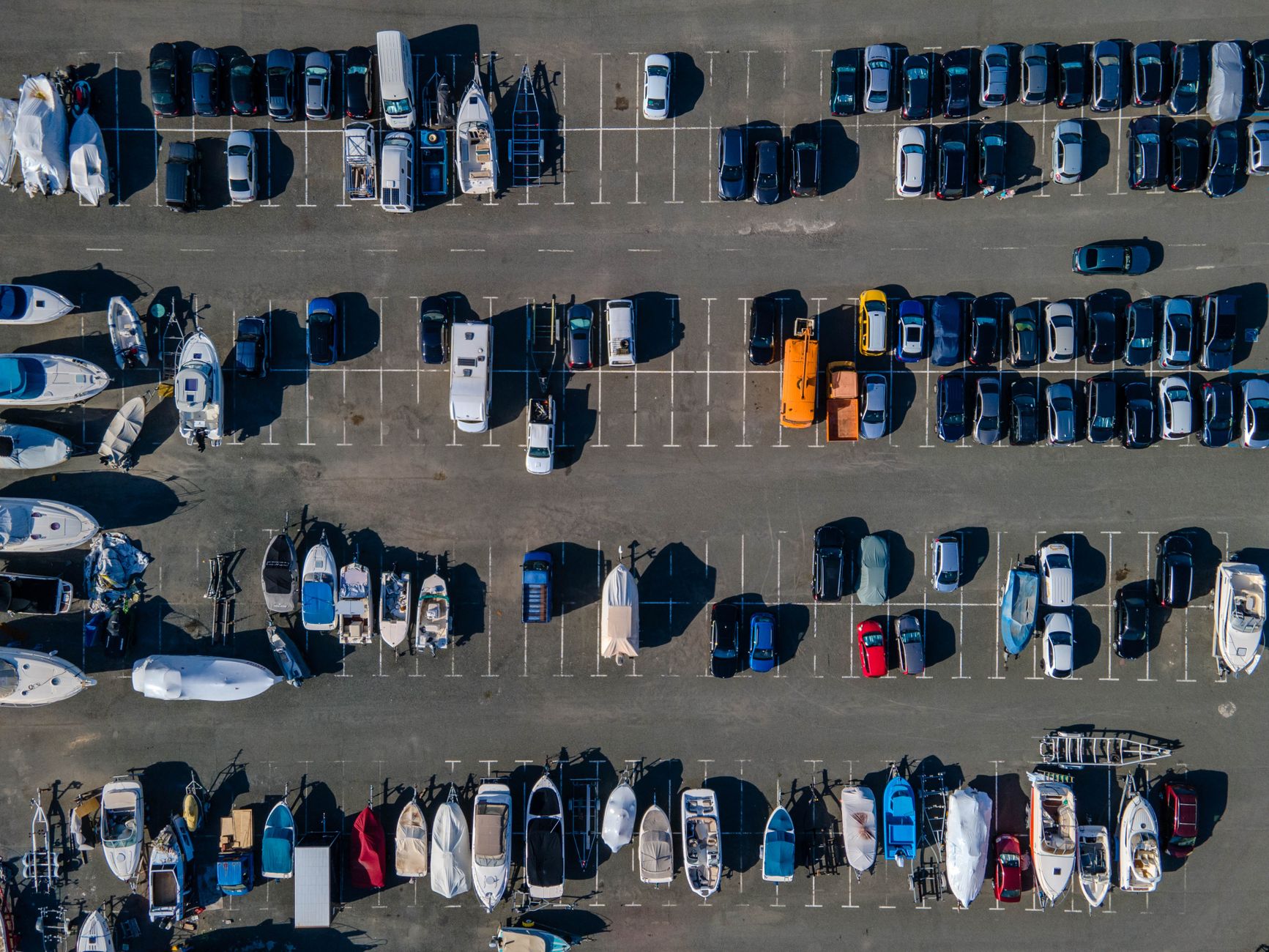
Large auction properties change faster than most security technology assumes. The National Auto Auction Association says it has more than 345 domestic and international auto auction members, and its AuctionNet data service says 265 participating member auctions, representing 85 percent of U.S.-based member auctions, contribute more than 150,000 sales per week. Inventory turns, staging moves, gate queues, and transport activity are not occasional disruptions. They are the lot's normal pulse.
That matters because patrol logic built for office campuses or fixed industrial yards often breaks down here. A robot on an auction lot should treat curbs, medians, gates, and buildings as permanent, and vehicle rows, cones, flatbeds, and overflow lines as temporary. Ask how quickly maps can be refreshed, how temporary no-go zones are pushed, and how the robot marks a lane as blocked without losing the rest of its patrol.
Can the robot navigate changing lanes without babysitting?
This is the make or break question. Auction lots create long reflective corridors, narrow cut-throughs, open gates, blind crossings, and dead ends created by fresh arrivals. Good patrol behavior is not just about staying on a GPS path. It is about low-speed confidence around bumpers and mirrors, sensible rerouting when a row is rebuilt, and recovery when a route that worked yesterday no longer exists tonight.
Run the acceptance test in the messy part of the yard, not on the empty frontage road. A buyer should insist on seeing the robot recover from ordinary lot disorder without constant teleoperation. The bar is simple: the robot should either continue the patrol safely or ask for precise help with enough context for a remote operator to intervene fast. Anything that freezes too often will not survive this setting.
- Re-run a patrol after a row has been partially reshuffled and confirm the robot keeps the route or requests a targeted remap.
- Block a usual cut-through with a transport truck and check that the robot detours and returns to its patrol area cleanly.
- Add a temporary no-go zone around unloading activity and verify the rule takes effect immediately.
- Degrade one positioning or network input and confirm the robot still behaves safely and predictably.
What imaging stack is needed for plates, temp tags, and VINs?
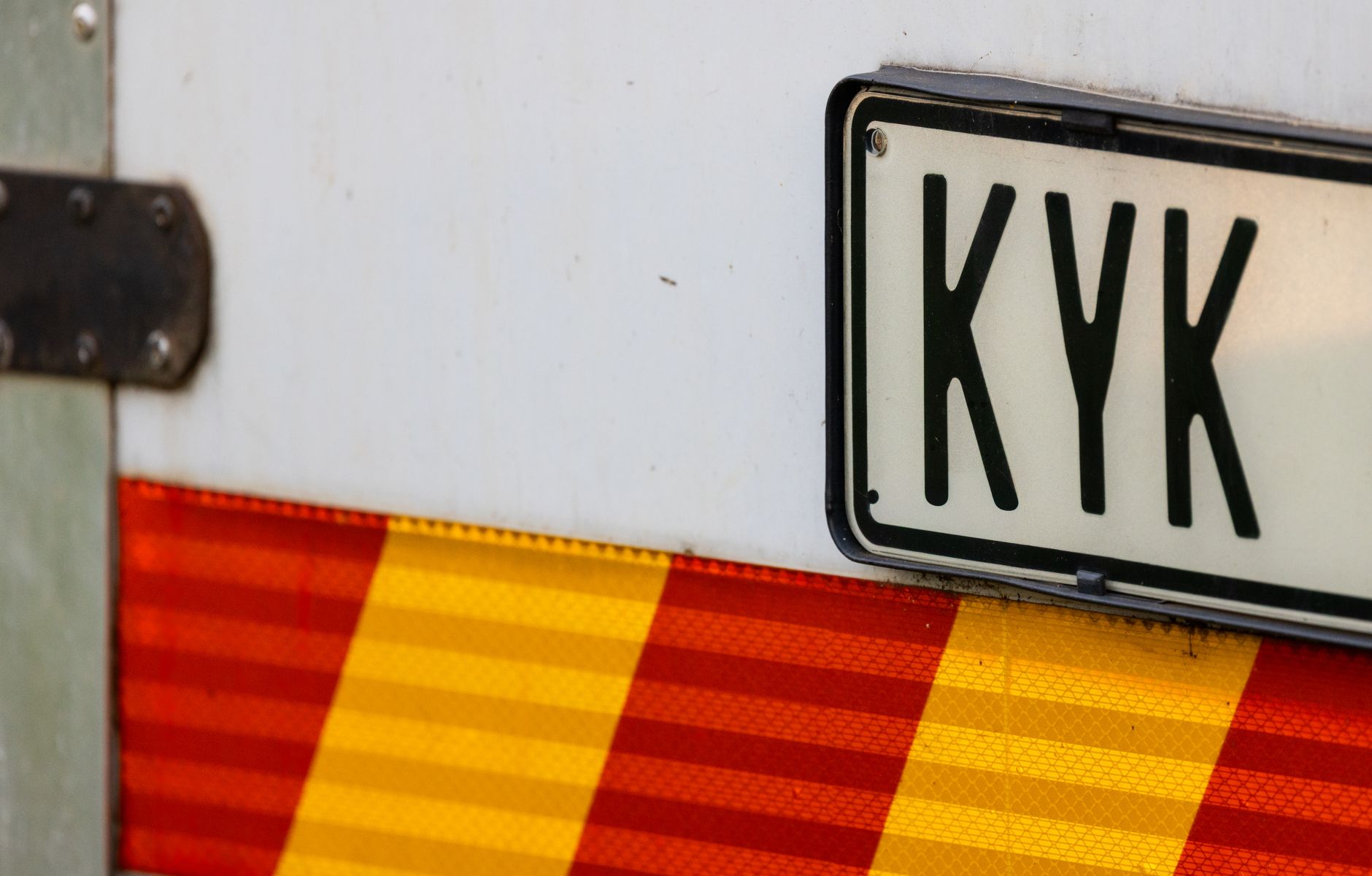
Plate capture on an auction lot is not the same as plate capture at a tidy office entrance. In 2025, AAMVA updated its License Plate Standard and says temporary and alternative plates should follow that standard. AAMVA also says plates should remain visible from at least 75 feet. Pair that with NHTSA's rule that each motor vehicle carries a 17-character VIN, and the brief becomes clear: the robot has to collect useful identity data even when the easiest marker is missing, dirty, bent, or temporary.
NAAA's own inspector training stresses the importance of VINs and accurate photos in condition reports. That is a clue for buyers. Do not ask only for plate-read accuracy in a sunny parking lot. Ask for sample captures of rear plates, front plates where required, windshield VIN views when accessible, paper tags in plastic sleeves, and night scenes with glare from pole lights. The output should include confidence scoring, timestamps, and a clean exception path for a human reviewer.
- Rear metal plates with frames, dirt, or dealer inserts.
- Paper temporary tags that wrinkle, fade, or sit behind glossy plastic.
- Sunrise and sunset glare across reflective paint and wet pavement.
- Vehicles parked nose-to-fence or tail-to-tail where the read angle is poor.
How much weather tolerance is enough?
Outdoor lots punish lazy specifications. NOAA's National Centers for Environmental Information says 2025 was the fourth-warmest year on record for the contiguous United States, with temperatures 2.6 degrees Fahrenheit above the 20th-century average. The same NOAA summary says July 2025 alone produced 1,434 flash flood warnings, the second-highest July total in 40 years. Heat, sudden rain, dust, and surface glare are normal buying conditions for outdoor patrol equipment now.
Ask for the operating temperature range, rain and dust ingress rating, traction behavior on painted stripes and wet sealcoat, camera performance after a muddy splash, and what happens when condensation hits a lens at 3 a.m. A patrol robot does not need to be invincible. It does need to fail predictably, protect its evidence, and resume service quickly after the weather turns. If the answer is basically avoid bad nights, it is the wrong machine for an auction yard.
Why is connectivity a design problem, not an afterthought?
Many outdoor robot pilots stumble here. The FCC says the National Broadband Map uses propagation modeling for mobile coverage and warns that real experience can vary based on the end device, cell site capacity, and terrain. The FCC's mobile filing guide models 4G LTE coverage at at least 5 Mbps down and 1 Mbps up, and 5G-NR at 35 Mbps down and 3 Mbps up. Those are useful benchmarks, but they are not proof that your far row or gate pocket actually has dependable throughput at midnight.
A serious patrol deployment starts with a lot survey, not a carrier screenshot. Check coverage at the gatehouse, behind metal canopies, beside stacked trailers, and in the deepest inventory rows. Then specify local autonomy during brief outages, buffered video and event storage, automatic failover between Wi-Fi and cellular where appropriate, and health alerts when bandwidth drops before patrol quality collapses. A robot that stops every time perfect bandwidth disappears is not ready for a large auto auction lot.
What does live response look like when something matters?
Patrol value comes from shortening the time between detection and action. According to the National Insurance Crime Bureau, 659,880 vehicles were reported stolen nationwide in 2025, and one vehicle was still stolen every 48 seconds. NICB also says more than one-third of all vehicle thefts occurred in the top 10 metropolitan areas by volume. On an auction lot, that means the robot should be treated as an early verification tool, not a wandering camera cart.
When a gate is tailgated, a person lingers between rows, or a vehicle moves at the wrong hour, the event flow should be crisp. A human reviewer needs a live view, a map pin, the nearest gate context, and the last good plate or VIN capture. If policy allows, the robot can announce itself or turn on a visible deterrent. But the real requirement is operational: somebody on your side must know what to do next, and the robot vendor must support that chain instead of ending the job at notification.
- Push the alert to a staffed desk or on-call responder with live video and exact location.
- Attach the best recent plate, temporary tag, or VIN evidence to the event automatically.
- Record a short pre-event and post-event clip so context survives even if the robot moves on.
- Escalate from review to yard response, gate lockdown steps, or law enforcement contact according to your SOP.
How should you structure the buy and rollout?
Start with one representative patrol zone, not the whole campus. Include a busy gate, a deep row section, and at least one area where temporary inventory stacks up. A commercial robot demo or robot pilot program is useful only if it runs through normal disorder, poor weather, and real overnight staffing. Some operators begin with a security patrol robot lease structure because it lowers commitment while they prove patrol completion, capture quality, and incident workflow on the live lot.
Financing matters, but service matters more. If you are comparing purchase or lease options, monthly payment programs, or robot leasing for business, tie them back to uptime terms. Ask who owns remote triage, who provides on-site dispatch, how emergency robot replacement works, and whether loaner units are written into the contract. A weak service plan can erase the value of a strong patrol spec very quickly on a multi-acre site.
This is where Service Robot Co. fits naturally. We are a full-service commercial robot integrator for U.S. businesses, and we stay OEM-neutral so the buy starts with the lot's realities, not a single manufacturer's catalog. For auction operators that want one vendor for robot deployment and integration, financing, training, and field service, we handle the full lifecycle through a nationwide U.S. engineer network. One partner and one number is often worth more than a slightly prettier demo.