Key takeaways
- Yes, daily autonomous cleaning is practical in many outpatient offices, but mainly for repeatable floor care in waiting areas, corridors, and open support space.
- It is not a substitute for between-patient disinfection in exam and procedure rooms, where clinical turnover and high-touch surfaces still need human attention.
- CDC guidance supports a daily or twice-daily rhythm in outpatient areas, which makes recurring robotic floor runs operationally useful.
- Small buyers usually succeed when they choose robot as a service or commercial cleaning robot rental with maintenance included and a clear support plan.
The short answer for a small clinic
Yes. A robot can clean a busy medical office every day if the task is defined correctly. In a small outpatient setting, the best use case is not every square foot and every sanitation task. It is the repeatable floor work in waiting areas, reception loops, broad corridors, and other zones that collect steady foot traffic.
That distinction matters. According to the CDC, outpatient waiting and admission areas should be cleaned at least once daily, consultation and examination areas at least twice daily, and minor procedure rooms before and after each procedure, with an end-of-day terminal clean as well. A robot fits the recurring floor-care portion of that schedule, but it does not replace the manual disinfection and room-reset work that clinical staff and environmental services still own.
So the buyer question is not Can a robot clean the whole office by itself. It is Can a robot reliably take the most repetitive daily floor task off my staff without getting in the way. In many medical offices, the answer is yes.
- Best-fit zones: waiting rooms, front desk approaches, main hallways, open treatment-adjacent corridors, and larger staff circulation paths.
- Human-owned zones: exam tables, sinks, counters, handles, keyboards, tight alcoves, cluttered rooms, and any area that needs between-patient disinfection.
- Best-fit operating windows: before opening, over lunch if traffic dips, after the last patient, or in short scheduled blocks between peaks.
Which areas can a robot truly own each day?
A small-footprint clinic does not need hospital scale to justify autonomous floor care. It needs repetition. If the same traffic lanes get dirty every day, a commercial robot cleaner can take ownership of those lanes with much better consistency than an already stretched staff member squeezing the task in late or skipping it when the schedule runs hot.
The practical map usually starts with the waiting room perimeter, the path from entrance to reception, and the main exam corridor. Those are the places where dust, tracked-in debris, and moisture build up predictably. They also tend to be the least clinically complex spaces, which makes them easier to clean without interrupting patient care.
This is where a robot floor cleaner rental or commercial cleaning robot rental becomes attractive for small offices. You are not buying a science project. You are buying dependable, repeatable floor coverage on the same route, every day, in the same building, with the same thresholds and turns.
Where does human cleaning still carry the load?
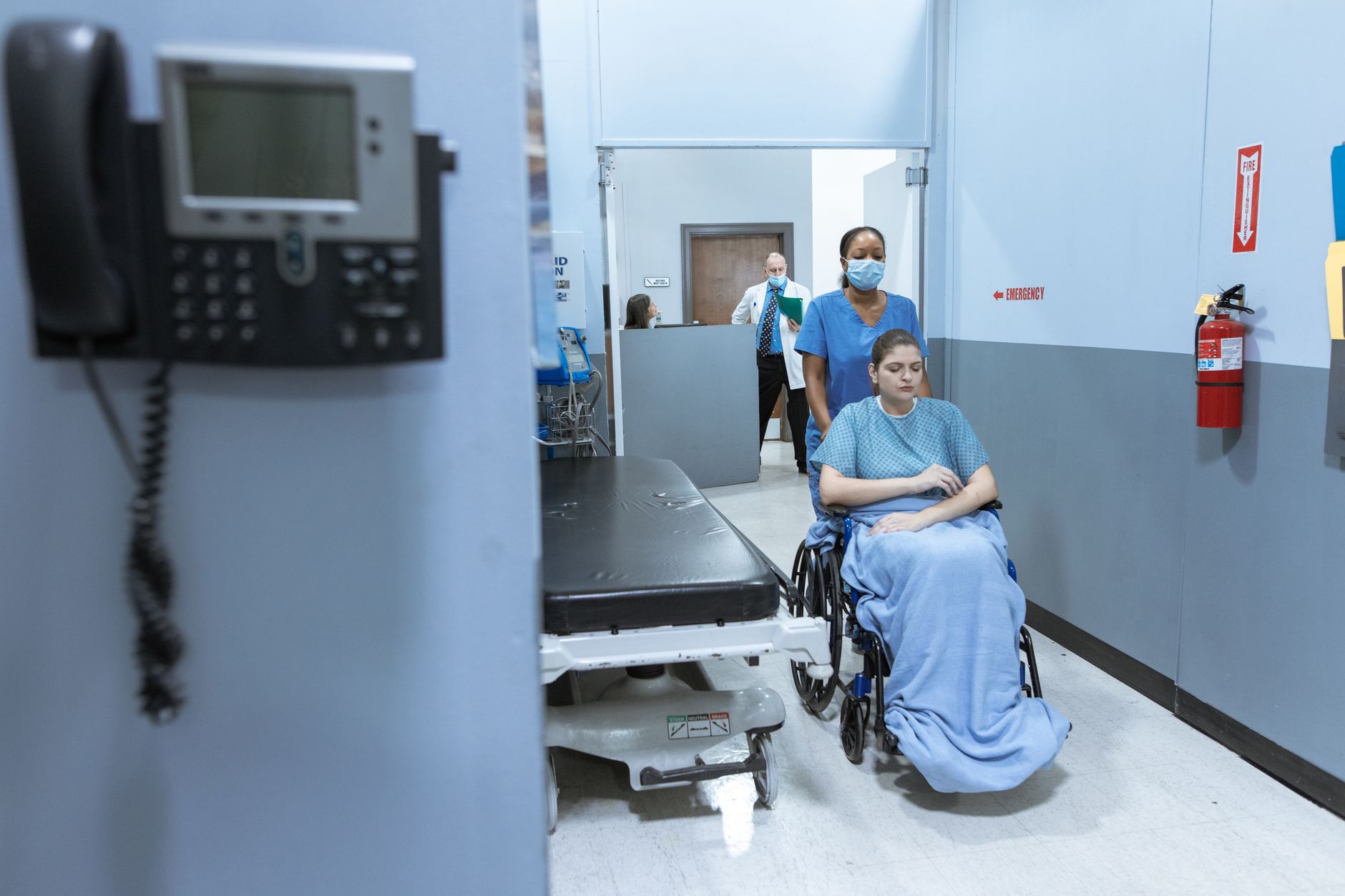
The limit is not intelligence. It is workflow. In a busy medical office, exam rooms and minor procedure spaces change status constantly. One room is occupied, the next has a nurse resetting instruments, another needs a fast wipe-down before the next patient. That work is dynamic, close to the patient zone, and full of high-touch surfaces that a floor robot should not be trusted to manage.
CDC guidance is explicit here. Consultation and examination areas need high-touch surfaces addressed at least twice daily, and minor procedure rooms need cleaning and disinfection before and after each procedure, plus end-of-day terminal cleaning. That cadence is far more granular than a floor robot route.
The right operating model is mixed. Let people handle patient-adjacent disinfection, spills, sharps awareness, and room turnover. Let the robot own the low-dexterity, repeatable floor passes outside those moments. That split is what makes healthcare disinfection robot planning practical instead of unrealistic.
How much space is enough to justify daily autonomy?
There is no magic square-foot threshold that decides this. Small outpatient buyers should judge fit by route quality, not bragging-rights size. A robot earns its keep when it can complete a meaningful loop without constant rescues, blocked paths, or furniture that gets rearranged every hour.
The stronger test is operational friction. If a staff member now spends part of every day or every evening on the same floor path, and that path stays reasonably open, autonomy can make sense even in a modest clinic. If the floor plan is fragmented into tiny rooms, narrow dead ends, and unpredictable storage spillover, the robot will create more supervision than value.
According to the Bureau of Labor Statistics, ambulatory health care services employed about 9.233 million people in June 2026 and included 774,559 private establishments in the fourth quarter of 2025. That matters because the outpatient market is enormous and highly varied. A small office should not assume robotics is only for hospitals. It should assume fit depends on layout discipline and repeatable workflow.
- Green flags: straight or looping corridors, stable furniture, consistent flooring, predictable open hours, and a place to charge without blocking staff.
- Yellow flags: frequent carts left in hallways, narrow pinch points, rugs or floor transitions that snag machines, and waiting rooms that stay full all day.
- Red flags: constant room-to-room clutter, no reliable charging location, and no period in the day when a machine can run without becoming a moving obstacle.
What does a workable daily schedule look like in a busy office?
The best schedule is usually boring. That is a good sign. A robot should run when the clinic can count on relative calm, not when the front desk is triaging a line of walk-ins. Most successful small offices use one or two fixed windows, then leave spot response and clinical turnover to people.
A common pattern is one pass before the first patient, when the waiting room and corridor need a clean start. A second pass can happen after close, when the whole traffic path is open and the machine can cover the route without negotiation. Some offices add a short mid-day run if lunch creates a predictable lull.
This timing lines up with CDC floor-care guidance. The agency says floors in general inpatient and outpatient areas should be cleaned at least once daily, and it distinguishes that recurring floor task from higher-frequency disinfection of higher-risk surfaces. In other words, daily autonomy works best when it is slotted into the clinic's routine, not forced into patient turnover.
What changes in the staffing and infection-control math?
The immediate gain is not magic labor elimination. It is reliability. A robot janitor never forgets the main corridor because two medical assistants called out and the front office had to cover phones. In a clinic, consistency is often the real problem. Daily floor care is easy to postpone and surprisingly hard to standardize.
Labor context makes that more relevant, not less. The Bureau of Labor Statistics reports that the median hourly wage for janitors and building cleaners was 17.27 dollars in May 2024, and 17.75 dollars in the healthcare and social assistance sector. BLS also notes that many cleaners work evening hours because buildings are often cleaned while empty. For outpatient operators, that means daily floor care still consumes real labor and usually lands in the least convenient part of the day.
Infection control also becomes clearer when the division of labor is explicit. According to OSHA, employers need a written housekeeping schedule based on location, surface type, contamination, and the tasks performed in each area. A robot helps when it is assigned to the right task inside that written schedule. It hurts when buyers pretend a floor machine can stand in for patient-zone disinfection.
How should a small office buy and support one?
Small healthcare buyers usually care less about owning hardware and more about avoiding operational headaches. That is why service robot rental, robot leasing for business, and robot as a service are often a better fit than an outright purchase. The appeal is simple: no upfront capital pressure, monthly payment programs, and maintenance included in one operating line instead of a separate repair scramble later.
This is also where the phrase commercial robot rental actually matters. A clinic that wants to test daily autonomous cleaning may not want a long approval cycle or a large capex request. A commercial cleaning robot rental or robot floor cleaner rental structure can let the office validate route fit, staff adoption, and cleaning cadence before it commits more deeply.
For healthcare sites, support quality matters more than brochure language. You need remote triage, on-site dispatch when necessary, and a real robot maintenance service plan. If the machine sits idle for two weeks waiting on service, the small-footprint economics fall apart fast.
- Ask for site assessment mapping before any commitment.
- Ask what happens when the robot is blocked by people, carts, or a moved chair.
- Ask who handles staff training, route revisions, and go live support.
- Ask how emergency response nationwide or local dispatch actually works for your ZIP code.
- Ask for the clean division between robot floor care and human disinfection responsibilities.
Why Service Robot Co. fits this kind of deployment
For a busy medical office, the hard part is rarely finding a machine. The hard part is getting one that fits the floor, financing it sensibly, launching it without disrupting care, and keeping it running after the first month. That is exactly where Service Robot Co. is useful.
Service Robot Co. is an OEM-neutral, full-service commercial robot integrator for US businesses. That means the job is not to push one manufacturer. It is to pick the robot that fits your floor, then handle robot deployment and integration, financing, training, and service through one partner and one number.
For smaller outpatient buyers, that full-lifecycle approach is often the difference between a practical daily cleaning program and an abandoned pilot. If you want a free site assessment, a commercial robot demo, or a lease rental or sale structure that matches a small clinic's reality, the right integrator should make the project simpler, not heavier.