
Key takeaways
- Cleaning robots can maintain apparatus bays, but they cannot replace spill response, gear decontamination, or hazardous-material procedures.
- Specify separate dry-debris and wet-scrubbing workflows for soot, grit, salt brine, and tire marks.
- Test wet traction, drain crossings, door thresholds, water recovery, and navigation under open-door glare at the actual station.
- Apparatus movement must always preempt cleaning, with mapped exclusion zones, accessible emergency stops, and a documented abort procedure.
- Evaluate drain routing and wastewater rules before selecting detergents or releasing recovered water.
The short answer
Yes. A properly selected commercial cleaning robot can sweep and scrub much of a fire station apparatus bay, including routine soot residue, road grit, dissolved salt, and ordinary tire tracking. Success depends less on the label ‘robot scrubber’ than on traction, water recovery, drain-crossing ability, debris handling, and control of the cleaning schedule.
There are firm limits. A floor robot is not a hazardous-material cleanup device, a turnout-gear decontamination system, or a substitute for immediate response to fuel, oil, coolant, foam concentrate, or unknown chemicals. Departments should use it for repeatable floor care only after leaks and hazardous deposits have been isolated under station procedures.
The safest operating pattern is usually a scheduled run when apparatus is parked, engines are off, and no vehicle movement is planned. Dispatch activity must override the cleaning schedule instantly. The robot should stop in a known safe location without blocking a bay door, pedestrian route, drain, or the path of an outgoing unit.
Which apparatus-bay soils can a robot handle?
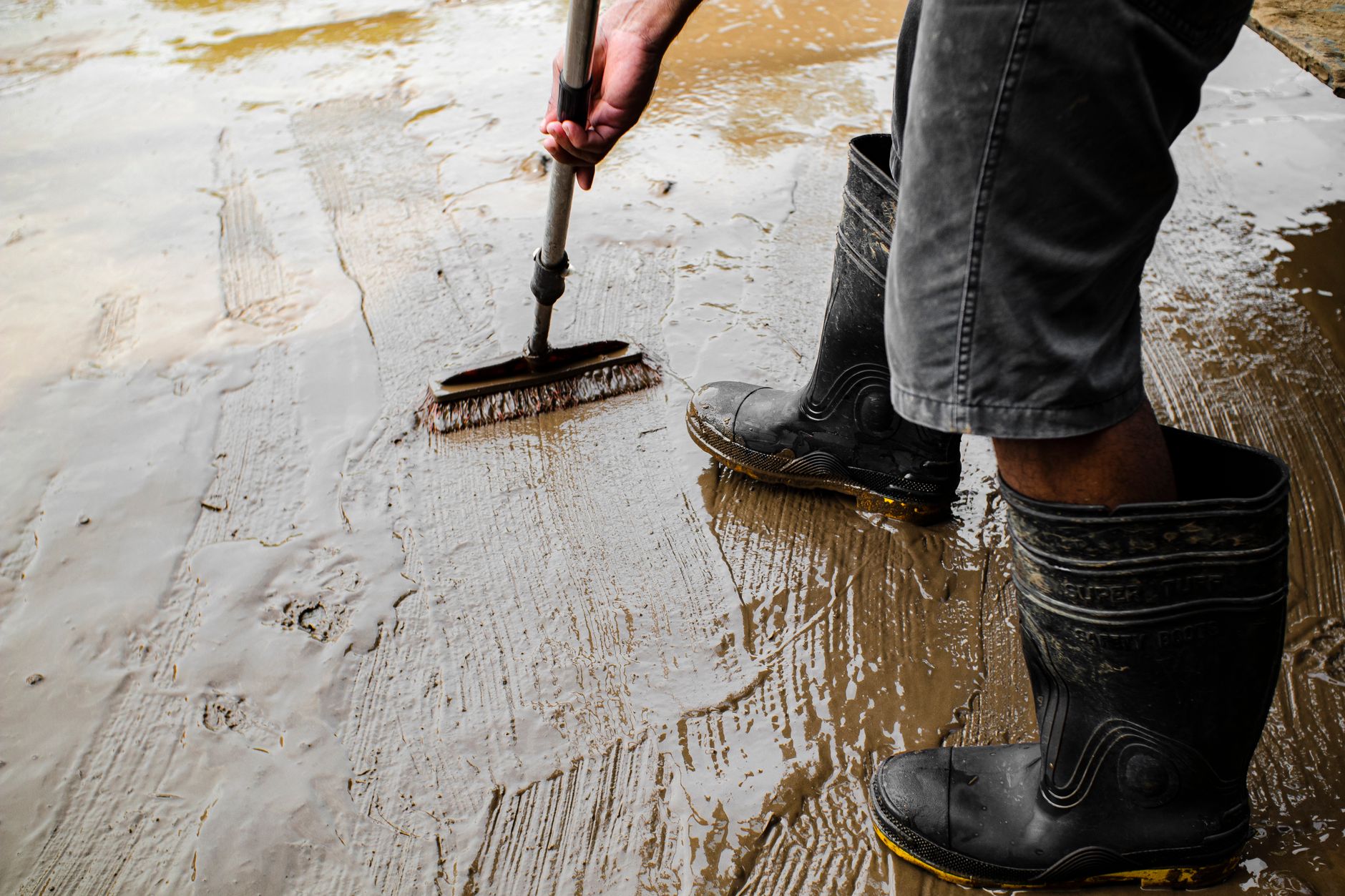
Loose sand, dried mud, leaf fragments, and granular road salt call for sweeping or vacuum pickup before wet scrubbing. Asking a scrub deck to ingest heavy grit accelerates pad wear, fills the recovery system, and can drag abrasive material across coated concrete. Large stones, wire, hose fittings, absorbent pads, and sharp debris still require a human pre-check.
Soot presents a different problem. Fine dry material should be captured rather than scattered into the air, so buyers should examine the pre-sweep enclosure, filtration, brush design, and dust containment. NIOSH reported in a 2026 fire-station evaluation that most apparatus-bay particulate it measured was smaller than 1 micrometer. Concentrations also spiked during engine starts and took about two hours to return to background in the station studied. Floor cleaning must therefore complement effective exhaust control, not stand in for it.
Road salt dissolves into scrub water but can leave a pale film after one pass. A practical winter program may require dry grit removal, a wet pass, and a controlled rinse pass. Tire marks are often more stubborn than salt. Require a live demonstration using the department’s actual floor coating, approved chemistry, pad, brush pressure, and dwell time before accepting a performance claim.
NIOSH also warns that fireground contaminants can transfer from gear to apparatus and station areas. Robotic floor care can reduce tracked residue, but it should remain inside the department’s dirty-zone controls. Never route a bay robot into kitchens, dormitories, offices, or other clean areas.
How do slopes, drains, and coatings change the specification?
Apparatus bays are intentionally demanding floors. The Department of Defense fire-station design criteria call for sealed concrete or water-based epoxy in a slip-resistant finish, floors sloped toward trench drains, and trench drains parallel to each vehicle centerline. Those features aid washdown, but they can unsettle a robot with small drive wheels, a low chassis, or a rigid squeegee.
Measure the steepest local slope, not merely the nominal architectural slope. Then test the robot fully loaded with clean water and again near the end of a run with the recovery tank carrying most of the weight. Watch for wheelspin, sideways drift, incomplete turns, and loss of the squeegee seal as the chassis crosses a valley or drain grate.
A robot should normally route along a trench drain or cross it only at validated points. Confirm that its wheels cannot drop into grate openings and that brushes, skirts, and squeegees clear raised edges. Inspect every expansion joint, patched spall, threshold, hose crossing, and wheel chock location during site assessment mapping.
Do not infer robot clearance from building clearance. The federal design criteria specify at least 14 feet of bay clearance with doors open and closed, but the critical robot dimensions are at floor level: body width, turning envelope, sensor overhang, squeegee width, and the gap remaining beside tires and fixed equipment.

What happens when the bay doors keep opening?
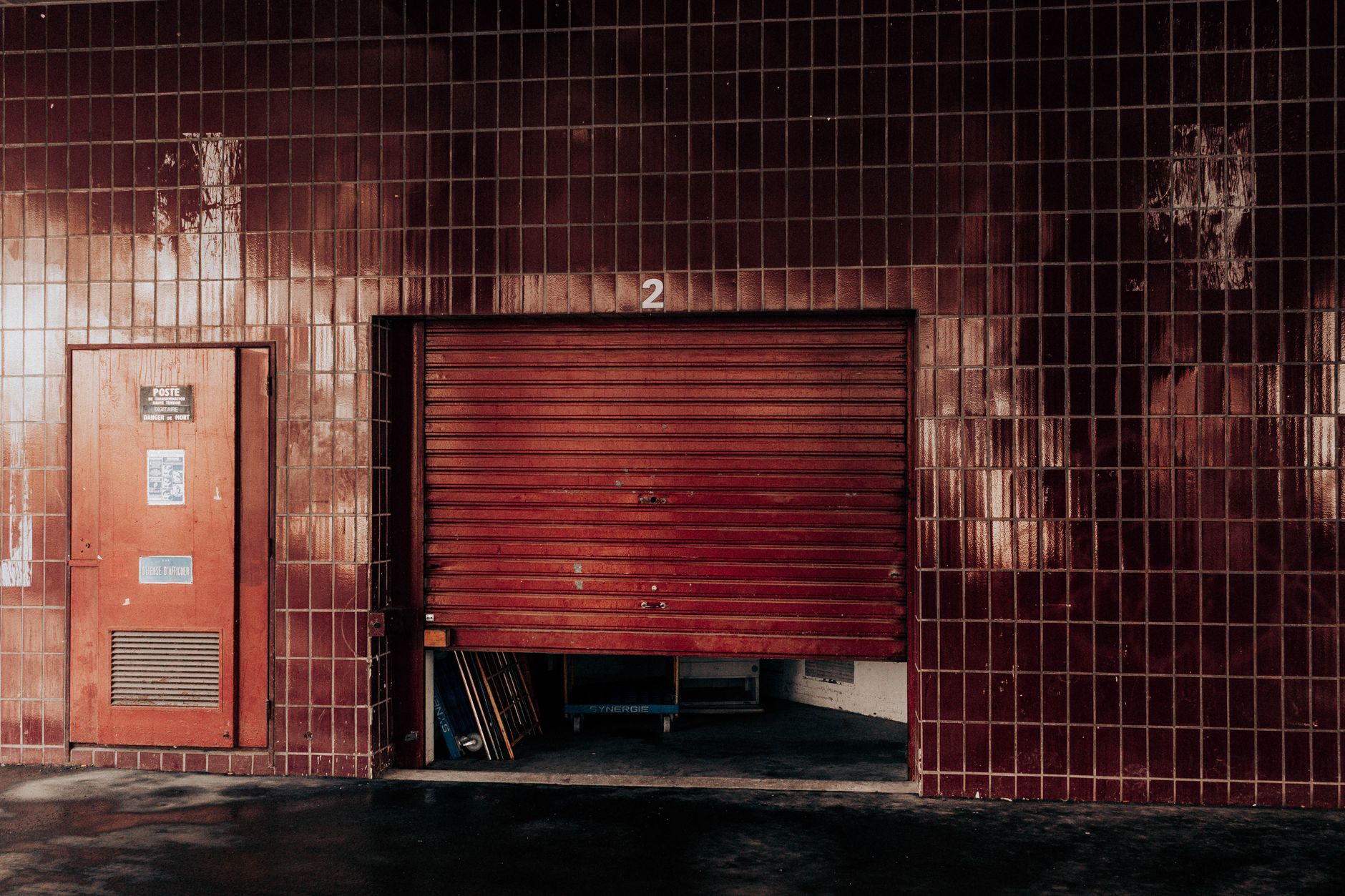
An open apparatus door changes several conditions at once. Bright sunlight can strike sensors, wind can move dust and leaves across the route, precipitation can create a fresh wet edge, and cold air can change condensation patterns. A map that works at midnight with closed doors may behave differently during a bright winter departure.
The pilot should include doors closed, partly open, and fully open at different times of day. Test the apron boundary from inside the building, including glare, shadows, rain, snowmelt, and the physical door threshold. Unless the machine is explicitly rated and validated for outdoor travel, map a conservative no-go band that keeps it inside.
Door movement should act as an operational warning, not an invitation for the robot to continue cleaning. A door-state input, dispatch signal, or crew command can pause a run, but the department also needs a simple manual procedure. On an alarm, personnel must be able to stop or remove the robot without entering an apparatus blind spot or delaying departure.
How should a department size the machine?
Start with cleanable square footage, not the bay’s gross area. Subtract parked apparatus footprints, cabinets, compressor pads, turnout racks, fixed bollards, drains the robot cannot cross, and permanent exclusion zones. Then divide the remaining floor into routes that can be completed without trapping the robot behind a vehicle.
Published maximum coverage is not the same as station coverage. Record actual route time, productive scrubbing time, refill time, tank dumping, debris removal, pad changes, charging, and any manual edge work. The pilot route should include the tightest turn and most contaminated winter section, not just an open rectangle.
Tank capacity must match the chosen water-flow setting and route length. Measure clean water dispensed and wastewater recovered during the pilot. Poor pickup can leave a slip hazard, overload drains, and carry salt toward living-space transitions. Specify the department’s acceptable drying time and verify it with the intended chemistry on both flat and sloped areas.
Traction deserves its own acceptance test. Run the robot on clean wet concrete, salt slurry, the steepest cross-slope, and representative tire residue. Evaluate starting, stopping, turning, and controlled recovery from wheelspin with tanks at different fill levels.
What operating rules protect crews and apparatus?
Vehicle movement always has priority. OSHA’s backover guidance notes that blind spots around large vehicles are not immediately obvious and recommends traffic plans, separation, spotters, cameras, and proximity detection as applicable. A robot is another moving object in that traffic system, even if it travels slowly.
Create exclusion zones around each apparatus, bay-door sweep, exhaust connection, charging lead, pedestrian door, and equipment staging point. Routes should never pass beneath deployed stabilizers, open compartments, hanging cords, hose beds being serviced, or vehicles undergoing checks. If apparatus may move, suspend autonomous operation and require positive confirmation before restarting.
Require obstacle detection from every travel direction, controlled stopping on wet slopes, audible and visible motion warnings, accessible emergency stops, and safe behavior after lost communications. Ask how the machine responds to a blocked route, moved vehicle, fallen hose, open drain grate, low battery, full recovery tank, and localization failure.
UL says its UL 3300 standard evaluates topics that include multidirectional mobility, fire and electric-shock hazards, user classes, and operating surroundings. Applicable certification does not replace a station risk assessment, but it is a useful procurement question alongside battery, charger, ingress-protection, and chemical-compatibility documentation.
Where should the recovered water go?
Do not treat a floor drain as automatic permission to discharge. EPA guidance for municipal vehicle washing says wash water should be contained, treated, reused, or routed as local requirements allow, and direct discharge to storm drains should be avoided. Confirm the drain destination and pretreatment permit with the sewer authority before the pilot.
The federal fire-station design criteria route apparatus-bay drains to an oil-water separator or an approved sanitary sewer treatment arrangement. EPA cautions that excessive flow can overwhelm a separator and that emulsifying detergents can carry oil through it. Approved chemistry must therefore match the station’s separator and discharge conditions.
Fuel, coolant, solvent, concentrated oil, and unknown incident residue require source control and the department’s spill procedure. EPA recommends dry cleanup for such releases rather than relying on an oil-water separator. Empty the robot only at an approved point, document what it collected, and clean tanks, filters, brushes, and squeegees before corrosive brine dries on them.
Apparatus-bay pilot and procurement checklist
A useful pilot lasts long enough to capture ordinary operations and the station’s hardest foreseeable season. Assign acceptance criteria before the demonstration so a visually impressive open-floor run does not overshadow weak pickup, wheelspin, or unsafe recovery behavior.
- Map cleanable area, vehicle footprints, turning envelopes, exits, door sweeps, drains, bollards, cords, hoses, and clean-zone boundaries.
- Measure narrowest passage, tightest turn, threshold height, grate geometry, steepest grade, and steepest cross-slope.
- Supply representative grit, salt film, soot residue, tire marks, and approved cleaning chemistry for the test.
- Verify dry pickup, edge reach, water dispensing, measured water recovery, drying time, and drain-crossing performance.
- Run with full and nearly empty clean-water tanks, then with a heavily loaded recovery tank.
- Test closed-door darkness, open-door glare, moving shadows, windblown debris, and the mapped apron boundary.
- Trigger blocked-route, low-battery, full-tank, lost-network, localization-loss, and emergency-stop events.
- Time the complete labor cycle, including inspection, filling, dumping, rinsing, charging, consumables, and manual touch-up.
- Write alarm-response, vehicle-movement, spill-response, lockout, restart, and stuck-robot procedures.
- Define training, preventive maintenance, remote triage, on-site dispatch, parts availability, and replacement-unit expectations.
Choosing one accountable deployment partner
No single machine architecture fits every firehouse. A small station may value maneuverability around tightly parked engines, while a multi-bay headquarters may need larger facility coverage, stronger water pickup, and longer autonomous routes. Comparing only advertised productivity obscures those differences.
Service Robot Co. works as an OEM-neutral, vendor-neutral robot integrator for U.S. businesses and public facilities. The team can assess the site, compare machines across manufacturers, arrange financing or commercial cleaning robot leasing, deploy and map the unit, train personnel, and support it through a nationwide U.S. engineer network.
That one-vendor lifecycle matters when a station is evaluating a floor scrubber monthly lease, a leasing structure, or a purchase. Buyers can define RoboCare™ service, go-live support, commercial robot repair service, and escalation responsibility in one operating plan instead of coordinating separate equipment, software, financing, and field-service contacts.
Frequently asked questions
Sources
- OSHA walking-working surface requirements
- NIOSH fire station diesel exhaust evaluation
- NIOSH guidance on contaminated firefighter gear
- Department of Defense fire station design criteria
- EPA municipal vehicle washing guidance
- EPA oil-water separator guidance
- OSHA backover prevention guidance
- UL consumer and commercial robot safety