Key takeaways
- Public aquariums usually need a smaller autonomous scrubber with strong edge coverage, not the biggest tank or widest deck.
- Wet entries, mist zones, stroller chokepoints, and dim exhibit corridors should drive robot selection before any discussion of battery life.
- Navigation quality matters more in aquariums than raw cleaning speed because routes tighten, lighting changes, and guests stop unpredictably at glass.
- A split workflow works best: overnight full-route scrubbing, early-morning touch-up passes, and manual response for live spill events.
- If you want commercial cleaning robot rental or robot leasing for business, pick a vendor neutral robot integrator that also handles service, training, and nationwide support.
What should an aquarium operator actually buy?
Most public aquariums should start with a compact to mid-size autonomous floor scrubber built for narrow public paths, frequent obstacle avoidance, and reliable performance on wet hard floors. The right unit is usually smaller than what looks impressive in a demo. In this setting, clearance, rerouting, and recovery behavior matter more than maximum tank size.
That is because aquarium traffic is awkward by design. Entries can be wet from weather and splash, exhibits often use dim lighting, families cluster around viewing windows, and dining pockets create localized spill zones instead of one uniform floor condition. A generic scrubber chosen for open retail or warehouse aisles can underperform fast in this mix.
The buying rule is simple. Choose for route geometry first, navigation second, and cleaning workflow third. Only after that should you compare battery capacity, reporting features, or robot leasing vs buying.
- Best fit for most aquariums: compact or mid-size walk-path scrubber with tight turning behavior
- Less ideal: very large units optimized for long straight runs and wide unobstructed corridors
- Critical capabilities: wet-floor traction, low-light navigation confidence, obstacle avoidance around guests, and strong manual takeover options
Why are aquariums harder than other visitor venues?
A public aquarium compresses several difficult floor-care environments into one visitor path. According to the National Aquarium accessibility page, guests encounter a 35-foot waterfall with mist at the main entrance. That is a strong clue for operators. Your first hundred feet may behave more like a splash zone than a standard lobby.
Traffic is also irregular. The National Aquarium says it welcomed more than 1.1 million guests in 2025, and major aquariums routinely host school groups, families, and peak-day surges. In practice, that means stop-and-go clusters, unpredictable pauses near exhibits, and periodic stroller or wheelchair congestion rather than a smooth forward flow.
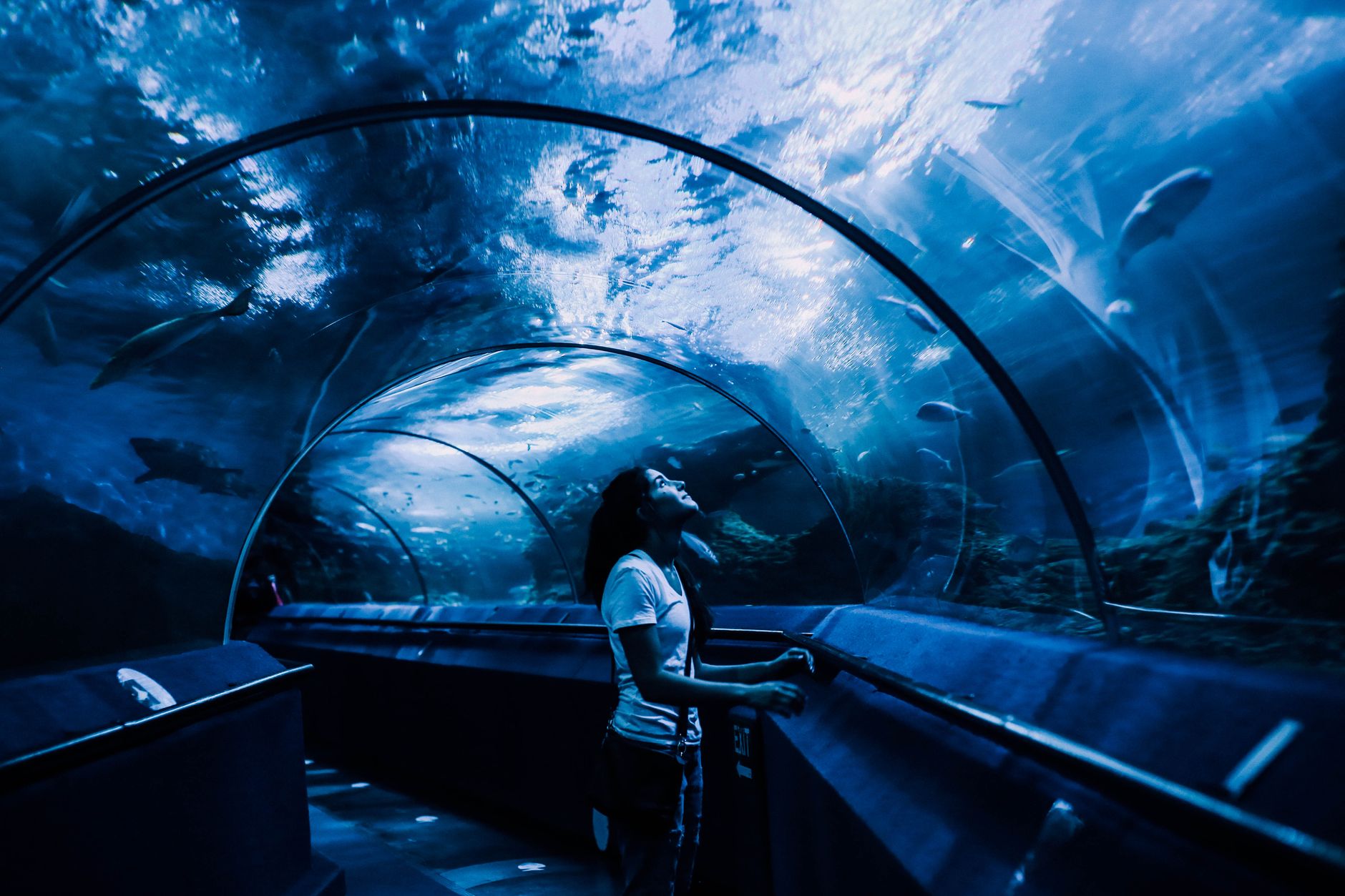
Lighting adds another wrinkle. The National Aquarium audio tour describes halls where the brightest light comes from aquatic habitats, and its accessibility guide notes that Jellies Invasion uses dim lighting. Monterey Bay Aquarium describes its deep-sea exhibit as inky dark. A robot that depends heavily on clean, bright visual cues can struggle in exactly the places where guest immersion is highest.
Food service is usually present too. Official aquarium visitor maps and FAQ pages show cafes, coffee shops, and permitted stroller circulation in many facilities. That creates predictable spill nodes near dining, restrooms, and family pause areas, even if the main exhibit path itself stays relatively clean.
How small is too small, and how big is too big?
In an aquarium, robot size should be set by the narrowest important route, not the widest concourse. The U.S. Access Board requires accessible routes to provide at least 36 inches of clear width in many conditions, with passing spaces required where routes are narrower than 60 inches. That does not mean your robot should fill those numbers. It means your machine has to operate without turning every pinch point into a guest conflict.
A useful rule is to leave generous human buffer on both sides of the robot in any route shared with wheelchairs, family groups, or strollers. Some aquariums restrict strollers, while others allow them through most of the building. Monterey Bay Aquarium, for example, permits strollers and wagons through much of the facility. If your path occasionally carries a stroller beside a wheelchair, a bulky machine becomes a moving bottleneck.
For most aquariums, the safer buy is a smaller deck that can complete more of the route autonomously and accept a longer cleaning window. The wrong large robot may promise higher hourly coverage, then lose that advantage when it hesitates in tight curves, gets parked out of guest circulation, or leaves perimeter dirt along exhibit bases and queue edges.
- Choose size from your narrowest live route, ramp landing, and exhibit turn, not your lobby photo op
- Favor tight turning and edge cleaning over maximum stated square-foot-per-hour coverage
- Ask for proof of operation on ramps, transitions, and curved visitor paths before final selection
What kind of navigation stack matters in dark and splash-prone paths?

Aquarium routes punish weak autonomy. Lighting shifts from bright entry zones to low-lit galleries. Reflections from glass and water can confuse perception. Guests stop without warning to watch animals, take photos, or gather children. Navigation quality is not a software luxury here. It is the difference between a useful machine and a parked machine.
Start with low-light reliability. If the route includes dim galleries, tunnels, or backlit tanks, the robot needs a navigation stack that keeps confidence when ambient light falls and visual texture changes. Next, test obstacle handling in real crowd conditions. A robot that reroutes smoothly around a lingering family group is far more valuable than one that cleans slightly faster in an empty demo corridor.
Splash tolerance matters as well. OSHA guidance on slips and trips emphasizes keeping floors clean and dry, keeping passageways clear, and using good lighting. CDC guidance flags spills, greasy floors, rain, and loose mats as common slip hazards. In an aquarium, the navigation system has to cope with entry mats, moisture variation, and occasional reflective wet patches without generating nuisance stops or risky path choices.
Do not buy from a specification sheet alone. Run the robot near glass, ramps, dim exhibit entries, and stroller choke points. If it loses localization, hugs obstacles too closely, or forces repeated staff rescues, the stack is not ready for aquarium duty.
What cleaning workflow works better than one big nightly run?
The best aquarium program is usually layered. Use the robot for the broad repetitive work, then build manual response around the messy parts that remain stubbornly human. That is a better operating model than expecting one autonomous pass to solve every floor-care need.
A strong baseline looks like this. Run full-route scrubbing overnight after food service closes and guest traffic clears. Follow with an early-morning touch-up on wet entry paths, vestibules, and cafe-adjacent lanes. During open hours, reserve the robot for only the quietest windows or keep it off the floor entirely if guest density is high.
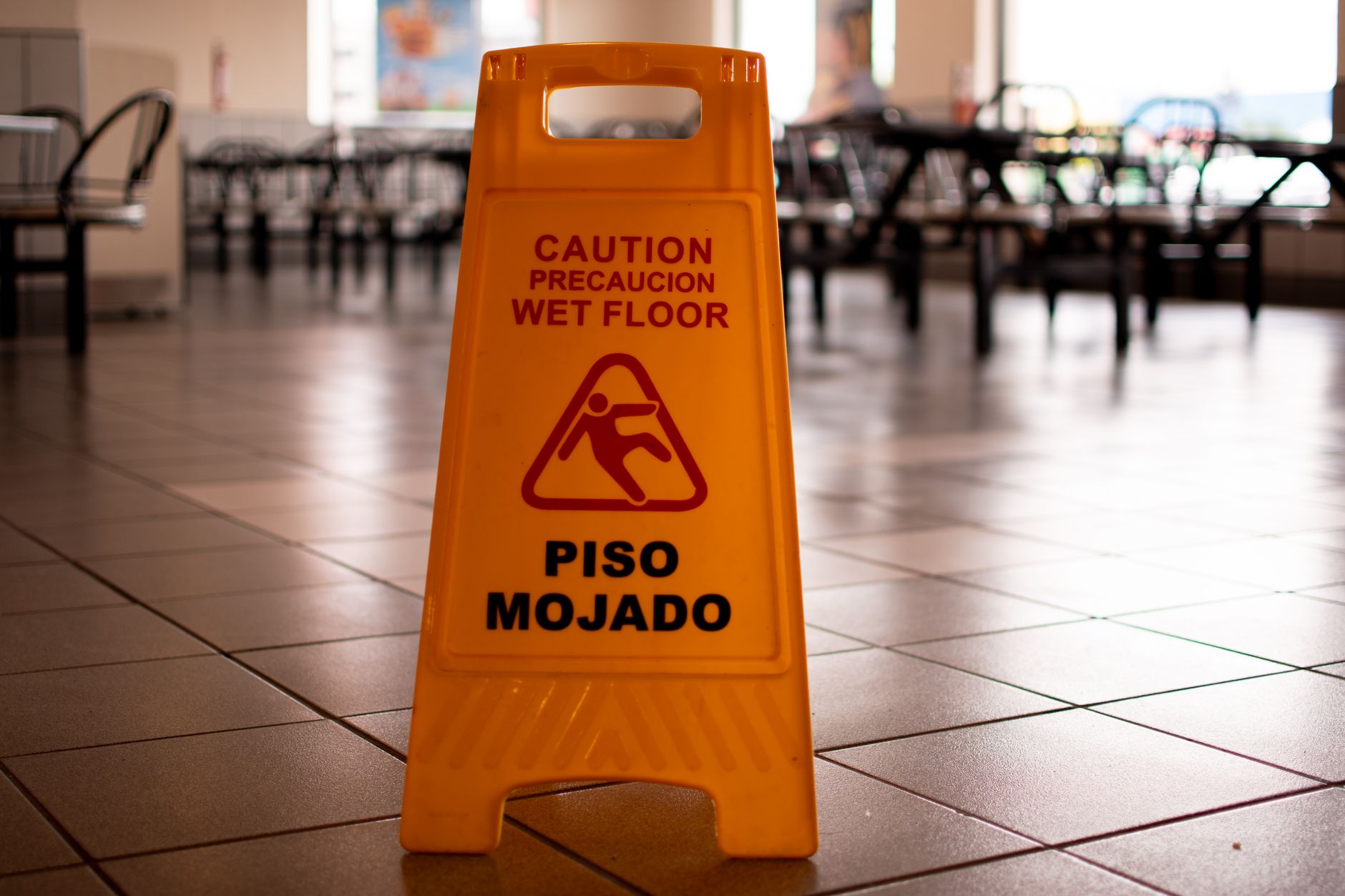
This matters because live spill response in aquariums is too variable. A stroller drink spill, a splash-heavy school-group arrival, or a restroom-adjacent mess near opening needs immediate manual attention, signage, and judgment. Even CDC floor-cleaning guidance still assumes wet-floor warnings and systematic cleaning toward the exit. Robots reduce routine burden, but they do not replace the human spill protocol.
If you are considering commercial cleaning robot rental, autonomous floor scrubber rental, or a floor scrubber monthly lease, this is the operational question to solve first. The machine must fit your shift design, not the other way around.
- Overnight: full autonomous scrub on primary hard-floor route
- Pre-open: focused touch-up on entries, dining edges, and family pause areas
- Open hours: manual spill response first, limited robot use only in low-traffic windows
- Close: recharge, refill, inspect squeegees, and confirm next route map before release
What should operators ask during a demo or site assessment?
Aquarium buyers should be blunt in demos. Nice straight-line cleaning in a bright empty hallway proves almost nothing. Your site assessment mapping should recreate the awkward parts of the building because that is where ownership success or failure will be decided.
Ask the vendor to run on a wet entrance approach, through a dim exhibit threshold, around benches, beside glass, and past the busiest cafe-adjacent zone. Ask how the robot behaves when a guest stops directly ahead, when a stroller partially blocks a curve, and when a mat edge lifts slightly. You want to see recovery, not marketing language.
Also ask about labor ownership. Who updates maps after exhibit changes. Who retrains staff after turnover. Who responds when a unit is down before a holiday weekend. These questions matter more than polished dashboard screenshots because aquariums cannot tolerate visible floor-care disruptions during peak visitation.
- Can the robot maintain localization in dim galleries and reflective glass corridors?
- How does it handle wet mats, ramp transitions, and splash-prone vestibules?
- What path width does it need to pass safely without creating guest obstruction?
- What is the actual recovery workflow after a blocked route or localization fault?
- Who provides on-site dispatch, remote triage, loaner units, and operator retraining?
Where Service Robot Co. fits in the buying process
Aquarium operators rarely need one more manufacturer pitch. They need a robot that fits the floor, the route, and the staffing pattern. Service Robot Co. works as an OEM-neutral commercial robot integrator for U.S. businesses, which matters here because aquarium layouts vary too much for a one-brand answer.
That lets an operator compare lease rental or sale, commercial robot rental, and robot financing for small business without backing into the wrong machine just because it was the only one on the truck. Service Robot Co. can handle site assessment mapping, robot deployment and integration, go-live support, training, and commercial robot repair service through a nationwide U.S. engineer network. One partner, one number, across the full lifecycle.
For facilities that want commercial cleaning robot rental, month to month robot lease, or maintenance included under a service robot rental structure, that neutral approach reduces a common aquarium mistake. Buying a generic scrubber first and discovering later that the route geometry never really fit.
How should an aquarium decide between rental, leasing, and purchase?
The right commercial model depends on route stability and internal support appetite. If your building layout changes often, your staffing bench is thin, or you want to prove the cleaning workflow before a fleet decision, commercial cleaning robot rental or a try before you buy pilot is usually the cleaner move. It keeps the operational question in focus.
If the route is stable and leadership wants predictable operating expense, a floor scrubber monthly lease or broader robot leasing for business can make sense, especially when maintenance included and emergency response nationwide are part of the program. That structure is often easier for multi-stakeholder public venues than a capital purchase tied to a single facilities budget cycle.
Outright purchase tends to fit best when the facility already knows its route map, charging location, staffing owner, and service process. Even then, aquarium operators should think beyond the unit. The real asset is reliable nightly coverage across wet entries, dark exhibit approaches, and food service edges, with downtime kept short enough that guests never notice.