Key takeaways
- Autonomous cleaning fits branches best when the site has repeatable open floor, predictable after-hours access, and modest daily debris.
- The hardest branch variables are not square footage. They are vestibule geometry, door clearances, carpet-to-hard-floor transitions, and customer-facing timing.
- A pilot should be judged on route completion, missed-edge exceptions, recovery from obstacles, and how little staff babysitting it needs.
- For smaller banks and credit unions, robot as a service or robot leasing for business often makes more sense than a capital purchase because maintenance included matters as much as the machine itself.
Does autonomous cleaning make sense in a branch bank?
Usually, yes, but only for the right slice of branch work. A cleaning robot is a strong fit when the branch has repeatable hard-floor areas, stable furniture layouts, and a cleaning window after close or before open. It is a weaker fit when most of the cleaning burden is detail work around chairs, brochure racks, queue stanchions, and tight corners that change every day.
Branch banking is its own buying category. These sites are compact, visible to customers, and unforgiving about timing. According to the FDIC, the June 30, 2025 Summary of Deposits covered more than 76,000 domestic offices operated by more than 4,400 FDIC-insured institutions. According to the NCUA, federally insured credit unions fell to 4,287 in the fourth quarter of 2025 while serving 144.7 million members. That is a huge installed base of small public spaces where consistency matters more than brute coverage.
The practical answer is this. If your branch wants overnight cleaning with no operator on lobby hard floors, vestibule tile, and predictable approach paths, autonomous cleaning can work well. If you expect one machine to replace every manual touch in an intricate branch layout, it will disappoint.
Which branch zones are the best fit first?
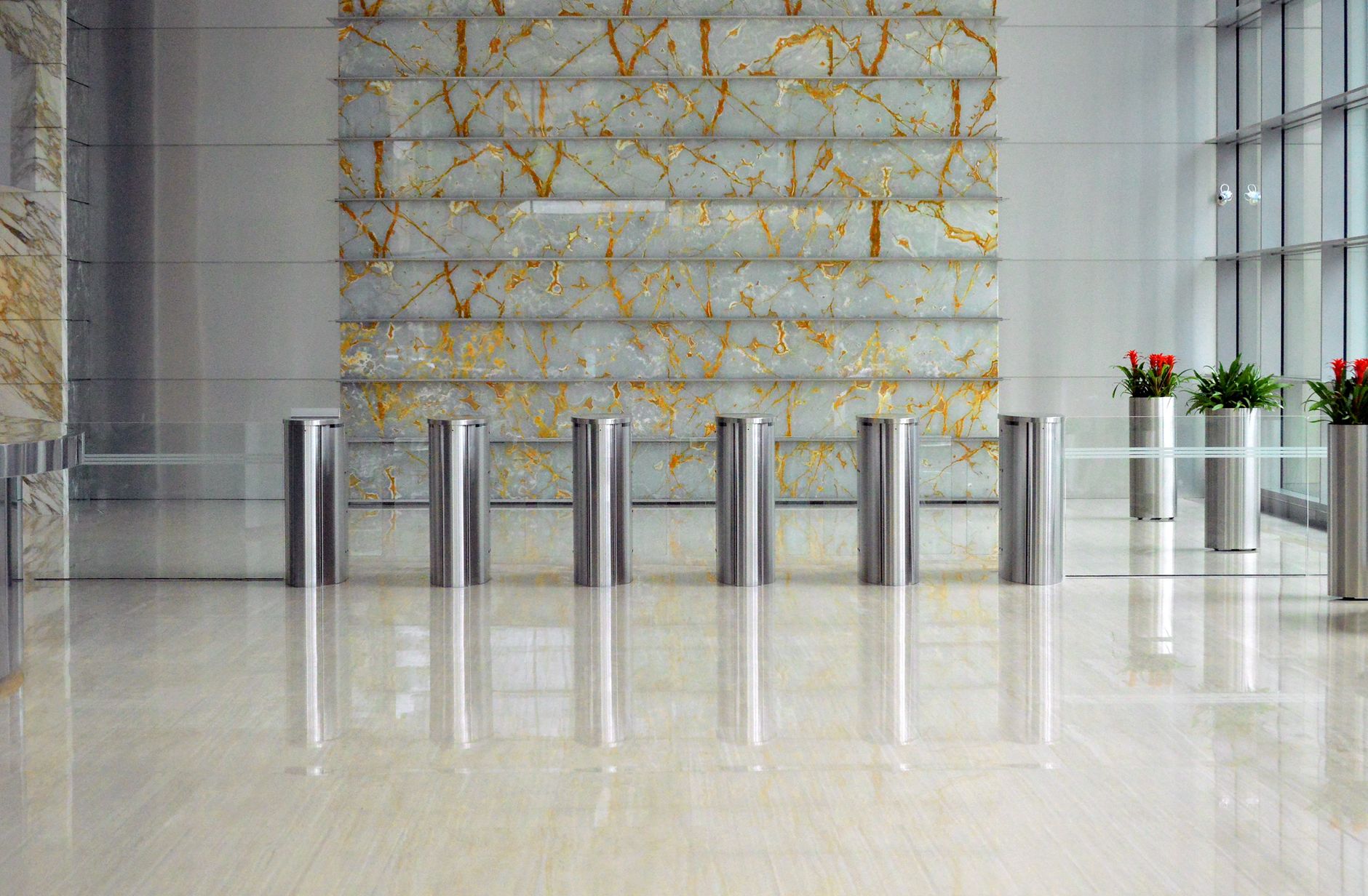
Start with the areas that behave like repeatable routes, not the areas that behave like handcrafted cleaning. Main lobbies with open tile or polished hard floor are usually first. Entrance vestibules can work too, provided the door geometry, mats, and thresholds are tame. ATM foyers are often viable if access can be scheduled and the floor plan is not pinched by bollards, trash cans, or brochure stands.
Mixed surfaces need a more selective lens. Hard-floor runs connected by small carpet islands are manageable only if the robot can cross transitions cleanly and still maintain route quality. Heavy carpeted waiting areas, corners around desk clusters, and under-chair detail zones often remain manual. The goal is not to force one robot everywhere. It is to assign automation where repetition is high and exception handling is low.
- Strong first-fit zones: open lobby hard floor, vestibules with stable mat placement, straight ATM foyer approaches, after-hours teller queue lanes
- Usually manual for now: dense seating pockets, under-desk areas, corners blocked by merchandising, stair edges, and irregular carpet detail work
What physical constraints matter more than square footage?
In branch environments, geometry beats area. A small branch with clean sightlines and disciplined furniture can be easier than a larger branch packed with freestanding fixtures. The U.S. Access Board says accessible routes need 36 inches of continuous clear width, though they can narrow to 32 inches at short points such as doorways. The same guidance sets thresholds at 1/2 inch maximum in new construction, beveled if above 1/4 inch. Those numbers are accessibility rules, not robot specs, but they are useful branch-screening benchmarks because the same pinch points that frustrate wheelchairs and carts also frustrate cleaning robots.
Floor transitions deserve their own inspection. The Access Board also notes that carpet edges and changes in level above 1/4 inch need proper treatment, with 1/2 inch the maximum height. In a branch, that means curled vestibule mats, loose carpet trim, aggressive transition strips, and uneven tile-to-carpet edges can matter more than another 1,000 square feet of open floor. A good site survey spends less time admiring the lobby and more time measuring thresholds, mats, and turning pockets.
How do lobbies and vestibules change the buying decision?
Because the branch is public theater. The machine is not hidden in a back corridor or a warehouse aisle. It is working where customers judge cleanliness, noise, and order in seconds. The American Bankers Association wrote in November 2025 that branches are shifting from transaction-focused spaces to relationship-driven ones. That means the floor is no longer just a maintenance issue. It is part of the customer setting for conversations about deposits, lending, and trust.
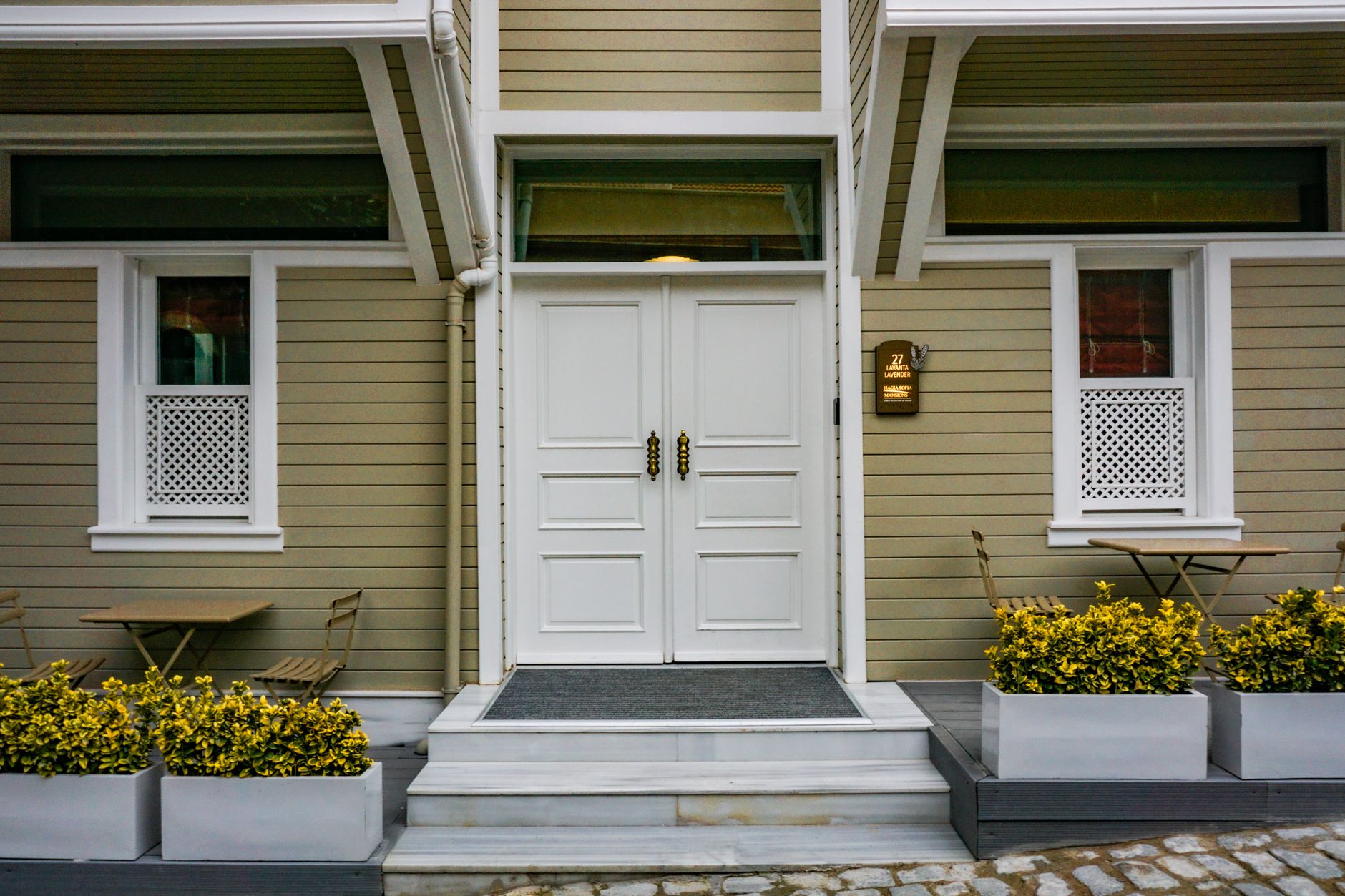
Vestibules add another wrinkle. They are tight, high-traffic, and often full of the things robots dislike: door swings, security hardware, mats that drift, and sharp floor transitions that collect grit. A robot that performs beautifully on open lobby tile can still struggle in a cramped entrance sequence. That is why many branches automate the main floor first and keep vestibules or ATM foyers on a shorter manual touch schedule until the route proves stable.
What labor and scheduling realities should banks weigh?
Autonomous cleaning is not just about labor replacement. It is about schedule reliability in a task category with constant churn. The U.S. Bureau of Labor Statistics says janitors and building cleaners had 2,447,700 jobs in 2024, a median hourly wage of 17.27 dollars in May 2024, and about 351,300 openings projected each year from 2024 to 2034. In other words, the labor pool is large, but the replacement cycle is relentless. Branch leaders feel that in inconsistent floor care, rushed after-hours work, and dependence on whichever crew actually shows up.
Branches also have narrow service windows. Cleaning cannot interfere with opening routines, security protocols, cash handling, or customer traffic. A robot earns its place when it delivers overnight cleaning with no operator during the same predictable window every day, then hands back the branch in ready condition before staff arrival. That reliability matters more in a branch than headline coverage claims.
How should you evaluate carpet and hard-floor transitions?
Treat transitions as a go or no-go item, not a footnote. The branch may only have a few of them, but each one can break route continuity, leave visible streaking, or force daily rescue. According to the U.S. Access Board, accessible changes in level can be vertical up to 1/4 inch and up to 1/2 inch if beveled. That does not guarantee a robot will handle them well, but it gives facilities teams a disciplined way to audit the floor before a demo.
Look closely at entry mats, carpet edge trim, moisture tracking near doors, and the exact place where hard floor meets carpet. In many branches, the right answer is not a single route that tries to do everything. It is one autonomous program for hard-floor zones and a manual pass for carpet detail. That is still a win. Banks do not need perfect autonomy. They need dependable autonomy in the square footage that consumes nightly time.
Rent, lease, or buy for a small branch network?
For many regional banks and credit unions, commercial cleaning robot rental or robot leasing for business is the cleaner decision. Not because ownership is wrong in principle, but because small-footprint branches expose a lot of operational unknowns early. Access rules vary. Managers change furniture. Vestibules behave differently in wet weather. A robot as a service structure lets you prove route fit, branch by branch, before locking into a long equipment life cycle.
This is also where service discipline matters more than hardware. A branch operator does not want three vendors for financing, deployment, and maintenance. Service Robot Co. acts as a full-service commercial robot integrator for U.S. businesses. We stay OEM-neutral, select the robot that fits your floor, finance it through lease rental or sale structures, deploy it, train the team, and service it through a nationwide U.S. engineer network. For a multi-branch operator, that one partner one number model is often the real buying criterion.
What should a branch pilot prove before rollout?
A serious pilot should answer operational questions, not stage a flashy demo. Can the robot finish its route within the actual cleaning window. Can it recover from chairs left out of place. Does it handle the vestibule only when mats are fixed, or can it tolerate small drift. How often does staff have to intervene. Does the branch manager trust the floor quality at open.
Keep the scorecard blunt. Measure route completion rate, exception frequency, average human assists per run, visible miss zones, and whether manual rework shrinks. If the pilot works, then scale carefully by branch archetype, not by region alone. Service Robot Co. usually recommends grouping branches by floor plan and transition complexity so rollout logic follows the building, not just the org chart.
A free site assessment is worth more than a generic brochure here. In compact retail banking spaces, a half-inch threshold, a drifting mat, or a badly placed brochure stand can decide the entire business case.
Where autonomous cleaning usually lands in branch operations
The most durable expectation is mixed cleaning, not fully hands-off cleaning. The robot handles repeatable hard-floor mileage. The janitorial crew handles detail edges, glass, restrooms, spot response, and the quirky corners every branch has. That division of labor is not a compromise. It is the operating model that keeps customer-facing sites presentable without pretending every task is equally automatable.
If your branch portfolio includes compact lobbies, controlled vestibules, and consistent after-hours access, autonomous cleaning is worth serious evaluation. If your sites are cluttered, carpet-heavy, and reset constantly during the day, start narrower. In either case, the right buying question is not Can a robot clean a bank branch. It is Which branch zones can be automated reliably enough to reduce nightly labor pressure without creating a new babysitting problem.

Frequently asked questions
Sources
- FDIC Summary of Deposits Press Release
- NCUA Q4 2025 Performance Data
- U.S. Access Board Floor and Ground Surfaces
- U.S. Access Board Entrances, Doors, and Gates
- U.S. Access Board Accessible Routes
- BLS Janitors and Building Cleaners Outlook
- ABA Banking Journal on Branch Evolution
- Federal Reserve Banking Survey 2025