
Key takeaways
- Use cleaning robots on smooth hard floors only after confirming flooring, finish, machine, pad, and chemical compatibility.
- Treat vinyl tatami, foam tiles, roll-out mats, and raised grappling decks as separate manual-care zones unless their manufacturer approves mechanized cleaning.
- A robot scrub cycle is not automatically disinfection because EPA label requirements include the surface, pathogen, dilution, application method, and wet contact time.
- Pilot the real route with hair, dust, thresholds, mat edges, and a realistic gap between classes before choosing a robot.
Which studio floors can a robot clean safely?
A cleaning robot is usually best assigned to a martial arts studio's smooth, level hard-floor zones, such as the lobby, viewing area, corridors, offices, and some sealed concrete, ceramic tile, terrazzo, or commercial vinyl floors. The floor manufacturer must approve the proposed pad, brush, cleaner, moisture level, machine weight, and cleaning method.
Do not assume the same robot should cross onto the training surface. Vinyl-covered tatami, interlocking foam tiles, roll-out wrestling mats, canvas surfaces, and raised grappling decks have seams, textured skins, compressible cores, and exposed edges that can trap liquid or catch cleaning hardware. These areas generally need specialized manual care unless the mat maker provides written approval for the exact machine process.
The practical answer is often a divided program. Let a commercial robotic floor cleaner handle robot-safe hard floors and dry debris routes, while trained staff clean and disinfect skin-contact mats according to their care instructions. That division protects the floor warranty and keeps an ordinary scrub pass from being mistaken for infection control.
Why are martial arts mats a special cleaning zone?
A dojo mat is athletic equipment, not merely flooring. Its surface texture controls traction, its foam core manages impact, and its seams influence how moisture moves beneath the training area. Excess liquid can enter joints or reach absorbent backing even when the vinyl face appears water resistant.
Manufacturer instructions vary sharply. One official vinyl-mat guide permits light misting and microfiber mopping but prohibits steam, hot water, power spraying, excessive wetting, alcohol products, and bleach. Another judo-mat guide calls for a damp, non-dripping mop, near-neutral soap, and no polishing machines. This variation is why a generic robotic floor scrubber specification cannot establish mat compatibility.
Zebra Athletics' 2026 care guidance says its mat backs should not be saturated and calls for cleaning side and bottom edges during a deep clean. It also warns that soap-based cleaners and bleach can damage foam or adhesives. A robot traveling only across the exposed top cannot inspect hidden moisture, lift modules, clean their edges, or confirm that the subfloor is dry.
How should the robot handle hair, dust, and loose debris?
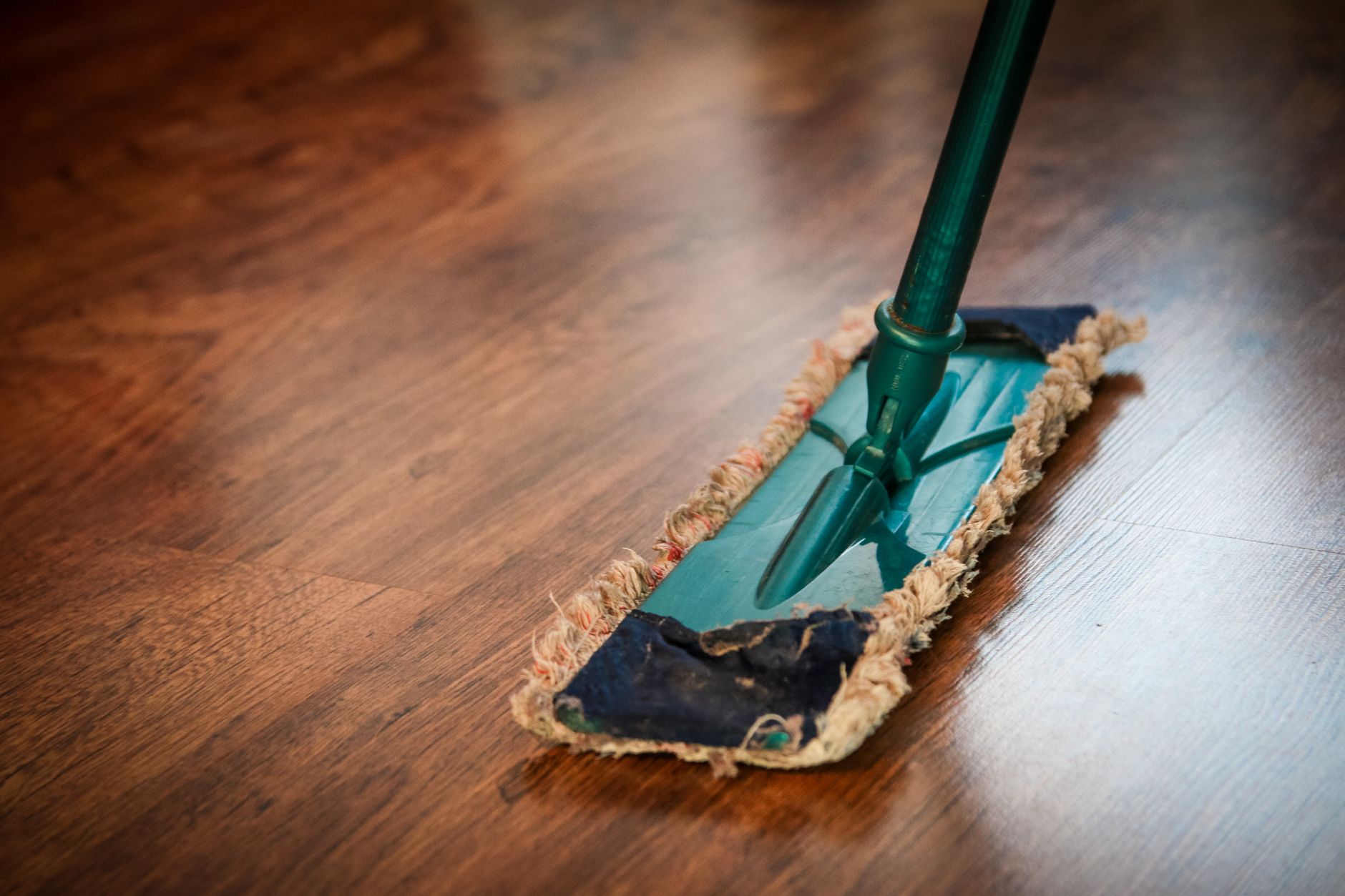
Hair is the daily nuisance that exposes weak machine selection. Long hair and fibers can wind around cylindrical brushes, axles, and caster assemblies. Fine dust may escape a coarse sweeping system, while an aggressive side brush can flick grit into mat seams instead of collecting it.
Start with a dry-pickup trial using the debris found after actual classes. Include long hair, lint from uniforms, fine outdoor grit, tape fragments, and dust from pads or bags. Inspect the floor after one pass, then inspect the brush chamber and wheels. Pickup percentage matters less than where the missed material goes.
Choose accessible brushes, removable hair guards, effective filtration, and a debris bin staff can empty without releasing dust back into the lobby. The Maple Flooring Manufacturers Association recommends dust mopping heavily used maple sport floors up to three times daily, but it opposes automated power scrubbing on maple. That distinction may support carefully approved dry pickup while ruling out wet robotic cleaning.
- Test along walls and mat borders, where side brushes tend to redirect hair.
- Check textured transition strips for grit left inside grooves.
- Record brush-cleaning time after each route, not just autonomous run time.
- Confirm that exhaust airflow does not blow dust onto freshly cleaned mats.
Can a cleaning robot disinfect the training floor?
Not by default. Cleaning removes soil and reduces germs, while disinfection depends on a registered product used exactly as labeled. The CDC's June 2025 guidance for athletic facilities says to clean shared equipment after each use, let it dry, follow manufacturer instructions, and focus on surfaces that contact bare skin.
The EPA requires operators to match the disinfectant label to the intended surface, use site, target organism, dilution, and application method. The surface must remain visibly wet for the full listed contact time. EPA uses a 10-minute label time as an example, and some approved products specify shorter periods. The actual label controls.
Many scrubbers apply liquid and recover it almost immediately. That can produce an effective mechanical clean but fail to provide the required wet dwell time. A defensible program may use the robot for debris removal on approved hard floors, followed by manual application of a mat-compatible disinfectant, its full contact period, any required rinse, complete drying, and a visual inspection.
What do thresholds and mat edges change?
Raised mat decks are often impassable boundaries rather than minor bumps. One martial arts flooring catalog lists mats at 1, 1.5, and 2 inches thick and offers dedicated ramps. A machine that approaches such an edge can stall, beach its cleaning head, damage edge trim, or climb partly onto a compressible surface before stopping.
The U.S. Access Board permits an untreated vertical change of no more than 1/4 inch on accessible routes. Changes up to 1/2 inch require a bevel no steeper than 1:2, and larger changes require ramp treatment. Those figures are accessibility benchmarks, not promises that a cleaning robot can traverse the same geometry.
Measure every doorway saddle, reducer strip, drain, mat frame, and ramp. Compare the measurements with the robot's published clearance and climbing limits, then test both travel directions with full tanks. If a transition is uncertain, map it as a no-go boundary and establish a safe manual relocation procedure instead of asking the machine to improvise.
How can a robot operate between classes?
Build the schedule backward from the next class. The available gap must contain debris pickup, cleaning, the disinfectant label's wet contact time, any rinse step, complete drying, inspection, and enough margin to remove the machine before students enter. A short turnover may accommodate dry vacuuming in the lobby but not a compliant mat-disinfection cycle.
Run routes only after athletes, bags, freestanding pads, and loose training equipment have cleared the area. Use a visible cutoff time, temporary access control, and an assigned employee who confirms that the route is empty. Bare feet should never meet a damp floor, and the robot should not weave through a class change.
An after-close route is usually easier to control. Overnight floor care can cover reception, corridors, changing-area hard floors, and other approved zones, while staff complete mat work. Between-class operation should be reserved for short, predictable routes that have already passed a robot pilot program.
- End the route early enough for inspection and recovery from a blocked path.
- Park and charge outside the athlete circulation path and away from exits.
- Keep mat mops, chemical containers, belts, and bags outside mapped lanes.
- Document who may pause, move, restart, and inspect the robot.
What should a dojo pilot test?
A commercial robot demo should reproduce the studio's difficult conditions, not an empty showroom pass. Run it after grappling and striking classes, when the real hair, sweat-adjacent debris, moved benches, open doors, and congested mat perimeter are present. Test every approved surface without allowing the machine onto excluded mats.
Service Robot Co. begins with a site assessment and matches the application across manufacturers as an OEM-neutral, vendor-neutral robot integrator. The evaluation can compare dry pickup, edge behavior, turning room, noise, route time, staff attention, consumables, and recovery from ordinary obstructions before robot deployment and integration.
- Obtain written floor and finish approval for machine weight, pad pressure, chemistry, and moisture.
- Weigh or photograph debris before and after representative runs.
- Test thresholds with tanks at operating levels and brushes engaged.
- Measure hands-on time for setup, bin emptying, hair removal, refilling, inspection, and charging.
- Verify that maps exclude mats, stairs, showers, spectators, and emergency routes.
Choose the service model after proving the floor fit
Machine capability comes first. Financing cannot rescue a robot that catches a puzzle-mat edge or violates a maple-floor warranty. Once the trial establishes a robot that fits your floor, compare purchase, robot leasing for business, and commercial cleaning robot leasing using the same route, service scope, and performance criteria.
A gym cleaning robot lease or robot floor cleaner leasing can support a measured trial before a longer commitment. Ask what maintenance is included, who performs remote triage, how on-site dispatch works, and what happens if the assigned unit is unavailable. Monthly payment programs should spell out consumables, training, software, repairs, and replacement responsibilities.
Service Robot Co. acts as one vendor for the whole lifecycle. We select across manufacturers, finance, deploy, integrate, train staff, and service each unit through a nationwide U.S. engineer network. For a dojo operator, that means one partner and one number when the route, floor, staff procedure, or machine needs attention.