

Key takeaways
- Automate a stable task family, not the entire product mix.
- Hardware installation, verified screwdriving, and machine tending are usually stronger first projects than variable sealant work.
- Specify payload and reach with the tool, cables, part, fixtures, and awkward poses included.
- A cobot label does not eliminate the need for a task-based risk assessment and appropriate safeguarding.
- Pilot the worst product variants and changeovers before approving production deployment.
Where should a high-mix shop automate first?
Start with a repetitive operation shared by a family of windows or doors, not an attempt to automate the whole line. Strong first candidates include hardware placement, recipe-controlled screwdriving, loading and unloading a machining station, and tightly bounded work next to a sealant process.
The winning task has stable part presentation, accessible work points, measurable quality, and enough recurring labor to matter. Product volume can change from order to order. The robot still earns its place if several variants share a datum, tool path, fastener family, or machine interface.
This is established industrial practice, not an automotive-volume requirement. According to the International Federation of Robotics, 64,542 collaborative robots were installed worldwide in 2024, up 12 percent from 2023, and their share of industrial robot installations reached 11.9 percent. The metal and machinery sector recorded 88,777 industrial robot installations that year, compared with 76,831 in 2023.
Which fabrication tasks are the best candidates?
Map the flow from profile preparation through final inspection and mark every repeated hand motion, queue, correction, and machine wait. The National Institute of Standards and Technology identifies machine tending, screwdriving, adaptive assembly, inspection, and adhesive application as practical cobot work in high-mix, low-volume manufacturing.
Give preference to operations with a common physical reference. A nest that locates the hinge edge, corner, or routed feature lets one program serve several dimensions through recipe parameters. By contrast, bowed extrusions, loosely stacked components, and parts located by eye create sensing and fixturing work that can eclipse the arm itself.
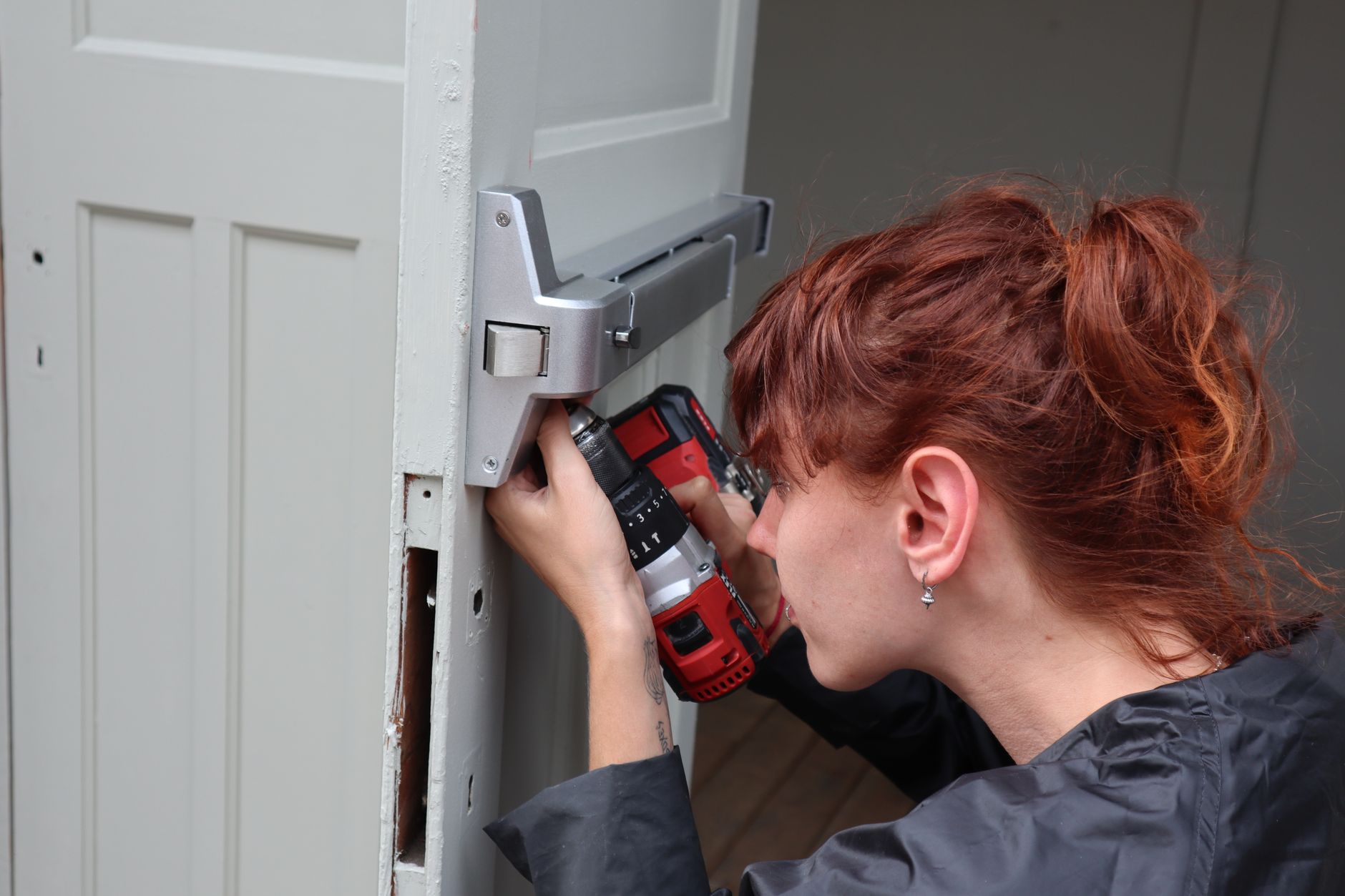
- Hardware installation: Place hinges, keepers, locks, operators, clips, and brackets when hole patterns and part orientation can be identified reliably.
- Verified screwdriving: Feed fasteners, control seating, and record torque or angle results by unit or recipe.
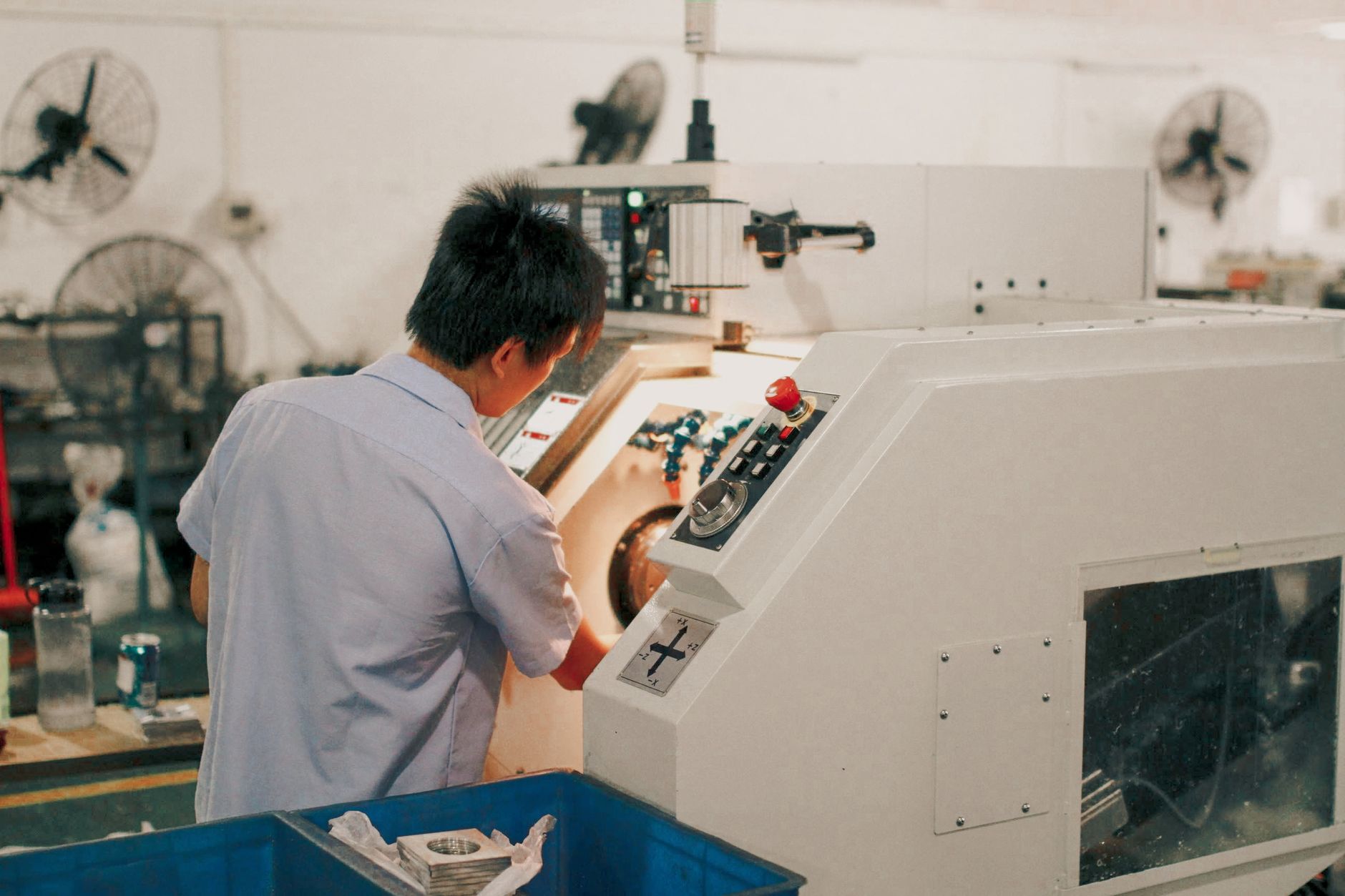
- Machine tending: Load and unload drills, routers, corner cleaners, saw cells, and machining centers while preserving the machine's existing interlocks.
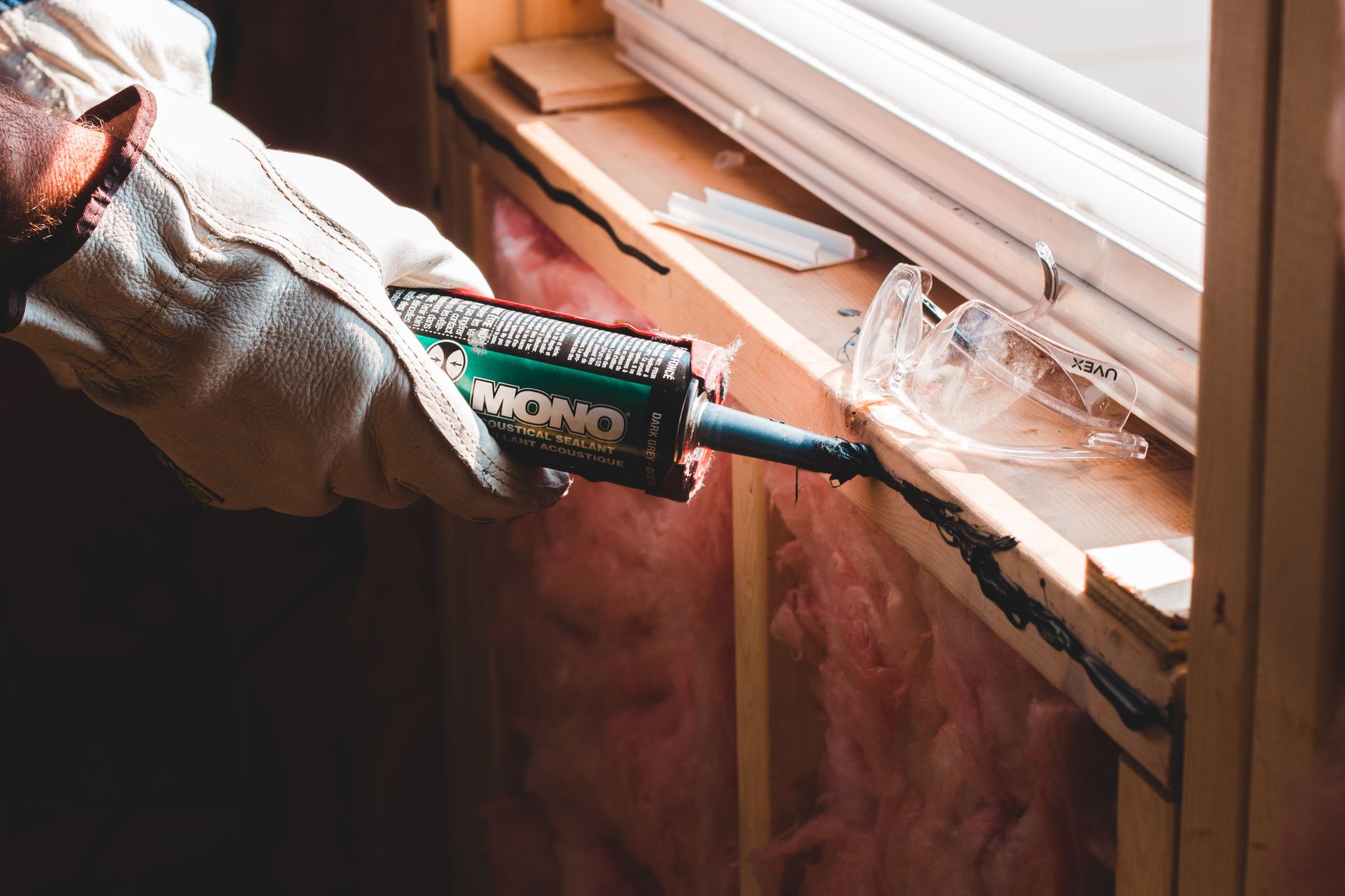
- Sealant support: Present or rotate a component, inspect bead presence, manage a repeatable dispensing path, or handle upstream preparation away from uncontrolled wet material.
- Inspection and marking: Check feature presence, read identifiers, confirm hardware, and mark accepted assemblies before the next operation.
How does product variety change the specification?
Do not choose an arm from the catalog payload alone. Build a load case that includes the gripper or screwdriver, compliance device, camera, cable package, fastener feed hardware carried on the wrist, and any part the robot must manipulate. Then evaluate reach at the least favorable orientation, where wrist geometry and moment loads often matter more than the nominal part weight.
Create a variant matrix covering frame and sash dimensions, left-hand and right-hand configurations, profile families, finish sensitivity, hardware packages, fasteners, and required recipes. Mark which differences can be handled in software, which need adjustable tooling, and which demand a physical change part. This exposes hidden changeover labor before the purchase.
High mix rewards simple datums and deliberate presentation. A modest fixture with hard stops, presence sensing, and clearly keyed change parts can outperform elaborate vision applied to an uncontrolled pile. Vision earns its cost when location genuinely varies or when the same camera can also verify components and workmanship.
NIST's guidance for small and midsize manufacturers recommends evaluating candidate workcells with methods ranging from quick screening to more detailed scoring. That discipline matters because the easiest demonstration is not always the station with the best production impact.
What makes robotic screwdriving reliable?
The arm is only one member of the fastening system. Reliability depends on screw feeding, bit engagement, axial compliance, hole location, joint stack-up, cable routing, recipe control, and a clear response to cross-threading or a missing fastener. Test those elements as one process.
Run trials on the widest expected tolerance combinations, including coated profiles, chips near pilot holes, thin sections, recessed locations, and fasteners near corners. A polished cycle on a flat sample proves very little. The pilot should expose marginal access angles, feeder jams, bit wear, cosmetic marking, and parts that shift under installation force.
Define acceptance from the finished joint backward. Useful records include fastener presence, achieved torque or angle, cycle completion, retry count, recipe identity, and rejected-unit disposition. If the existing manual specification is subjective, clarify it before automation. A robot can repeat an unclear standard with great consistency and still produce the wrong joint.
Keep human work where judgment carries value. An operator can load mixed hardware kits, resolve unusual variants, inspect appearance, and handle repair while the cobot performs the repetitive fastening pattern.
Where do cobots fit around sealant?
Sealant-adjacent work is attractive when the geometry is repeatable and the material state is controlled. A cobot can orient a frame beneath a dispenser, follow a programmed bead path, inspect for continuity, present spacers or backing components, and move completed work into a defined cure position.
It is a weaker first project when profiles arrive bowed, corner gaps vary widely, bead acceptance depends on skilled visual judgment, or stringing and nozzle cleanup interrupt nearly every cycle. Those conditions do not rule out automation, but they shift the project toward sensing, process control, and material management.
Test the actual sealant, primer, finish, temperature range, and cleaning method. Confirm that hoses do not tug the wrist, cured material cannot defeat a sensor, and maintenance access does not require reaching through a hazardous position. Recipe selection should tie dispensing parameters to the product identifier rather than rely on memory.
A sensible boundary is often partial automation. The cobot performs consistent presentation or dispensing, while a trained worker handles surface judgment, touch-up, and uncommon corner conditions. This preserves flexibility without pretending every extrusion behaves alike.
Does a cobot remove the need for guarding?
No. Collaborative capability is a design feature, not a blanket declaration that an application is safe. The tool, workpiece, fixture, machine, and expected human contact determine the safeguarding strategy. A powered screwdriver, sharp bracket, moving sash, or machine point of operation can create hazards even when the arm limits force.
OSHA states that robot risk assessment should consider programmed tasks, setup, maintenance, foreseeable errors, malfunctions, environmental conditions, and every worker function. Its technical guidance also identifies gripper failures, released parts, power screwdrivers, and nut runners as potential injury sources. OSHA's machine-guarding rule, 29 CFR 1910.212, requires protection from points of operation, rotating parts, flying chips, and similar hazards.
The current ANSI/A3 R15.06-2025 standard replaced the 2012 edition and addresses robot manufacture, integration, installation, and safeguarding. Apply a task-based risk assessment before commissioning, then validate the selected measures. Depending on the cell, those measures may include speed and separation monitoring, interlocked access, area sensing, limited-force operation, fixed guards, safe machine interfaces, or a combination.
Repeat the review when tooling, recipes, fixtures, speeds, or product geometry change. A high-mix cell needs controlled change management because a safe path for one casement configuration may create a pinch or impact hazard on a larger door assembly.
How should the pilot be judged?
Begin with a process map. NIST's 2025 Automation 101 guide lists ten common starting applications and advises manufacturers to map operations so the real sources of variation and trouble are visible. For a window or door shop, that means observing replenishment, fixture loading, recipe selection, quality checks, rework, and changeover as well as robot motion.
Use production-representative parts, operators, shifts, and contamination. Include the awkward variants and planned tooling changes. A commercial robot demo shows that a motion is possible; a robot pilot program determines if the entire workcell remains productive when fasteners run low, a profile is misloaded, or the next order requires a different handing.
Track operator touch time, good units produced, first-pass yield, changeover time, intervention causes, feeder faults, rejected cycles, machine waiting, and recovery time. Compare those results with the baseline process. Avoid basing approval on the robot's theoretical cycle time while ignoring staging and fault recovery.
Set a pass or fail threshold for every important measure before the trial. Also name the person who owns recipes, spare tooling, daily checks, and escalation. Try before you buy is valuable only when the trial has production criteria rather than showroom criteria.
What should the buying and deployment plan include?
Ask bidders to quote the complete cell boundary: arm, base, tooling, feeding, fixtures, sensing, machine communication, safety devices, controls, documentation, training, acceptance testing, spares, and service. Clarify exclusions. A low arm price says little about the cost or readiness of a productive station.
Commercial terms should fit demand risk. A collaborative robot arm lease, cobot leasing for manufacturing, monthly payment programs, or a lease purchase program may preserve capital while a shop proves recurring utilization. Compare robot leasing versus buying using the same scope, service response, maintenance obligations, end-of-term conditions, and expected production life. Do not assume that leasing automatically means RoboCare™ service.
Service Robot Co. acts as a full-service commercial robot integrator for U.S. businesses. As an OEM-neutral partner, it can assess the process, select equipment across manufacturers, arrange financing, handle robot deployment and integration, train the team, and service the installed unit through a nationwide U.S. engineer network.
That one-vendor lifecycle is particularly useful for a first high-mix cell. The shop gets one accountable contact for the free site assessment, tooling decisions, safety work, go-live support, remote triage, on-site dispatch, and later redeployment instead of coordinating separate vendors whenever the product mix changes.