
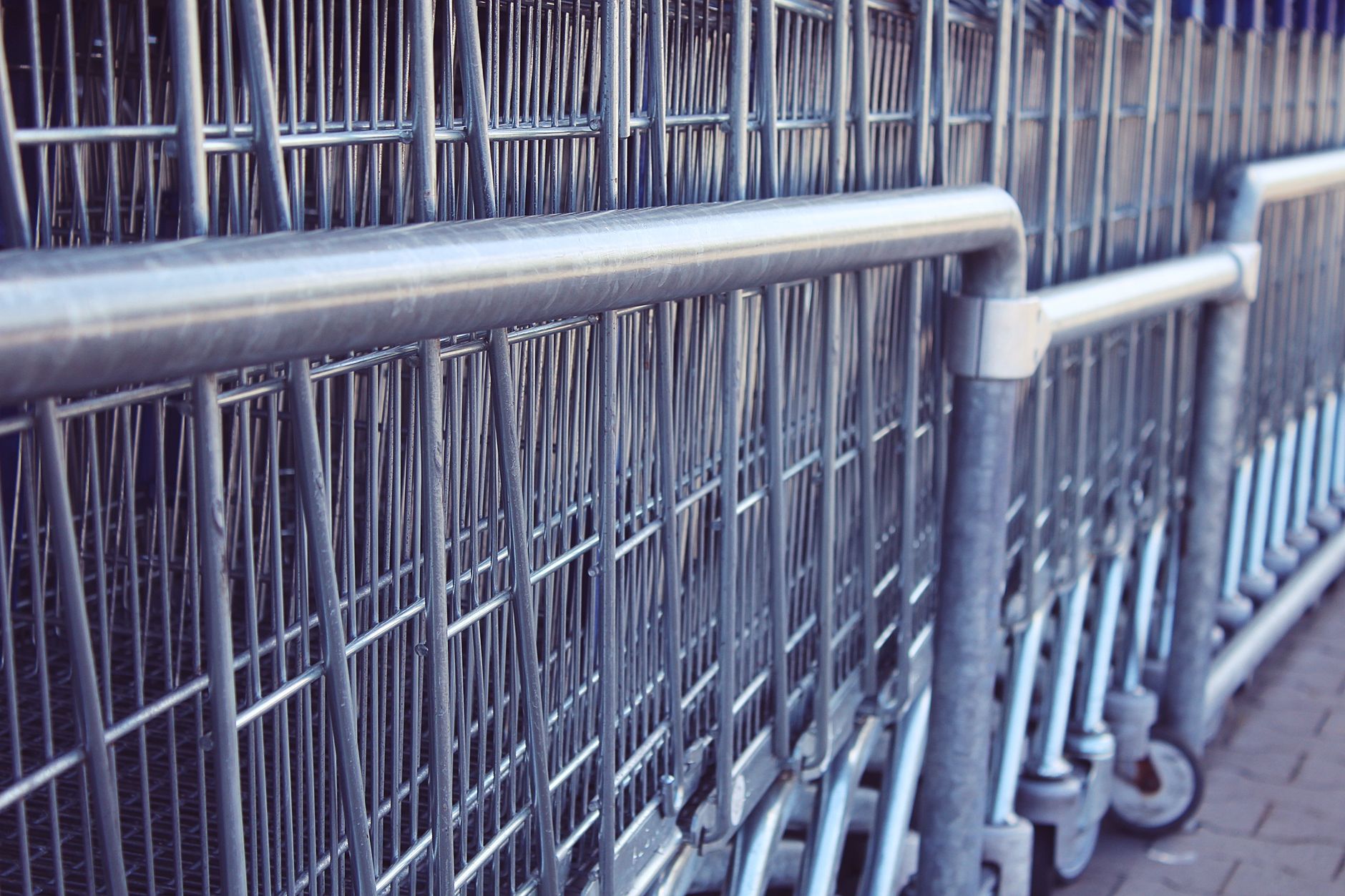
Key takeaways
- Choose by transport loop, not by brochure payload.
- Payload geometry, tow behavior, and stopping distance matter more than headline capacity.
- Cold rooms and wash areas usually need a different hygiene and hardware spec than outbound cart runs.
- Traffic control and dispatch integration decide daily uptime more than flashy autonomy claims.
- Most airline caterers get better results from a small mixed fleet than from one do-everything AMR.
What should an airline caterer buy first?
Choose by transport loop, not by brochure payload. Galley cart shuttles, meal rack moves, chilled staging, wash returns, and dock handoffs put very different demands on traction, hygiene, towing, and traffic control. The best AMR program in airline catering is rarely one machine doing everything. It is usually a small mixed fleet matched to a few repeatable routes.
That specialization matters because the operating backdrop is getting tighter. In a July 16, 2026 release of 2025 World Air Transport Statistics, IATA said the United States remained the world's biggest passenger market at 890.1 million arriving and departing passengers in 2025. In a separate January 29, 2026 traffic release, IATA reported full-year passenger demand up 5.3 percent with a record 83.6 percent load factor. When cabins are that full, late carts and missed replenishment windows have less slack to hide in.
So the buying rule is simple. Match geometry before weight, match cleanability before top speed, prove towing across every threshold and dock plate, and make dispatch integration part of the first pilot. If an AMR can do those four things on your real floor, it is a credible candidate. If it cannot, a higher payload sticker will not save the project.
Which loop are you really automating?
Most catering sites talk about cart transport as if it were one job. It is not. Outbound galley carts follow tight departure cutoffs. Meal racks may be tall, top-heavy, and awkward to secure. Refrigerated zones punish batteries, screens, and traction. Wash returns add splash, residue, and dirty-route segregation. Dock transitions add ramp breaks, strip curtains, and handoff timing to trucks or loaders.
Map each loop as its own operating class, then score candidate machines against it. A cart pulling robot that shines on outbound galley carts can be the wrong fit in a wash area, and a low deck carrier that is excellent for meal racks may be poor at towing cart trains. That is why specialized AMR selection beats a one-size fleet.
- Galley carts: focus on hitch geometry, caster alignment, lane width, and departure cutoffs.
- Meal racks: focus on deck capture, sway control, center of gravity, and tight handoff accuracy.
- Refrigerated zones: focus on condensation tolerance, glove-friendly controls, and queue dwell alarms.
- Wash returns: focus on splash resistance, cleanability, drain paths, and dirty-route separation.
- Dock transitions: focus on thresholds, dock plates, strip curtains, ramp restart, and handoff timing.
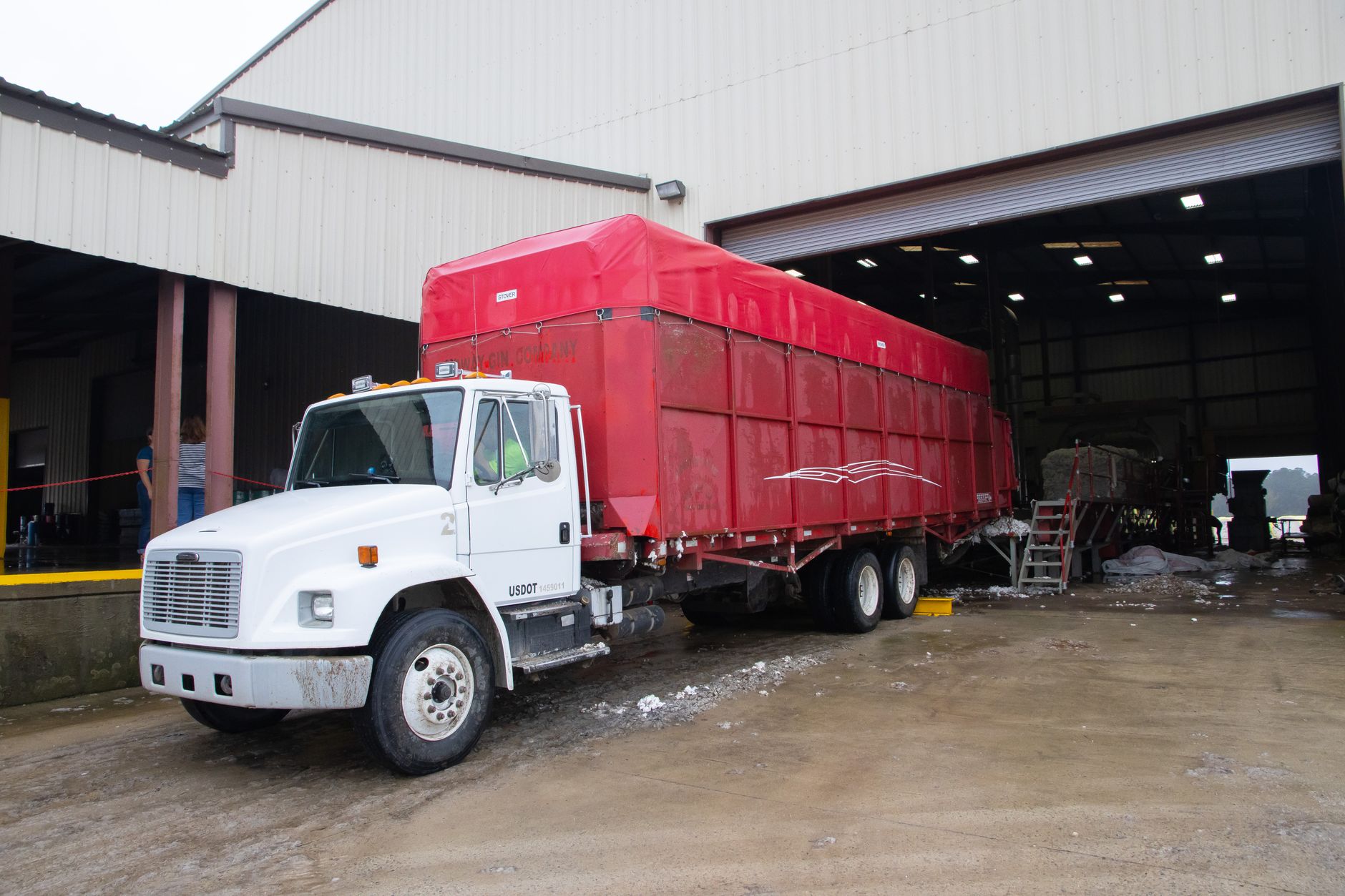
Why payload geometry beats payload rating
Payload numbers are where many AMR buys go wrong. A catering cart is not a neat box centered on a robot deck. It is a moving rectangle with caster scrub, overhang, shifting contents, and a center of gravity that changes as trays, beverages, and waste move around the cart. Meal racks are worse. They are tall, can sway on turns, and can block the operator's line of sight during manual fallback.
Measure five things before you compare robots: overall cart envelope, hitch height or deck capture height, wheelbase and caster layout, loaded center of mass, and the clearance needed at turns, doorways, and staging nests. Include the real add-ons such as dry ice bins, seals, trash bags, and paperwork pouches. A machine that clears the aisle on paper but clips a staging corner twice a shift is undersized in practice.
Geometry also decides floor pressure and stopping behavior. Narrow drive modules can concentrate weight on drains and cracked epoxy. Long trailers can swing wide into pedestrian lanes. The safest approach is full-scale route proving with your actual carts, your actual racks, and your busiest departure bank. Spec from that footage, not from a catalog table.
What hygienic design belongs in cold rooms and wash areas?

Airline catering is closer to food manufacturing than to generic warehouse transport. FDA guidance for interstate carriers and support facilities defines aircraft galley food-contact surfaces as number 3, 100 grit stainless steel and says food-contact and nearby non-food-contact surfaces should be corrosion resistant, smooth, easily cleanable, and free of open seams. Those are useful buying cues for any AMR that will work around prepared meals, sealed carts, and splash-prone handling points.
For refrigerated work, the robot does not have to refrigerate the food, but it does need to protect the cold chain. FDA guidance for retail food establishments says hot foods should be stored and held at 135 F or above and cold foods at 41 F or below. That means route design, dwell alarms, and queue management matter as much as the drive base. A cold-room AMR should boot fast after battery changes, read badges or touchscreens with gloves, and avoid exposed pockets where condensation can sit.
Wash-return zones deserve even stricter scrutiny. Look for sloped surfaces that shed water, sealed cable entries, bumpers that can be removed for cleaning, and wheel materials that do not load up with grease or rack debris. Keep dirty-return robots and outbound meal robots logically separated even if the hardware looks similar. Hygiene zones are an operations rule before they are a hardware rule.
How should traffic control work in a catering plant?
Free-roaming autonomy sounds attractive until the lunch wave hits the dish room, a manual tug blocks a blind corner, and three outbound flights release carts inside the same ten-minute window. Catering plants need rule-based traffic. That usually means one-way lanes in the tightest aisles, named hold points outside wash and chill rooms, pedestrian crossings with low-speed zones, and separate outbound and dirty-return corridors where space allows.
If you plan to mix robot types or brands, ask how the fleet manager shares jobs and status. VDA published VDA 5050 version 3.0.0 on March 17, 2026 as a communication interface for order and status exchange between central control and mobile robots. You do not need every machine to use that standard on day one, but you do need a clear path to shared traffic rules, common priorities, and one command view. Without that, a multi-vendor floor becomes a set of polite traffic jams.
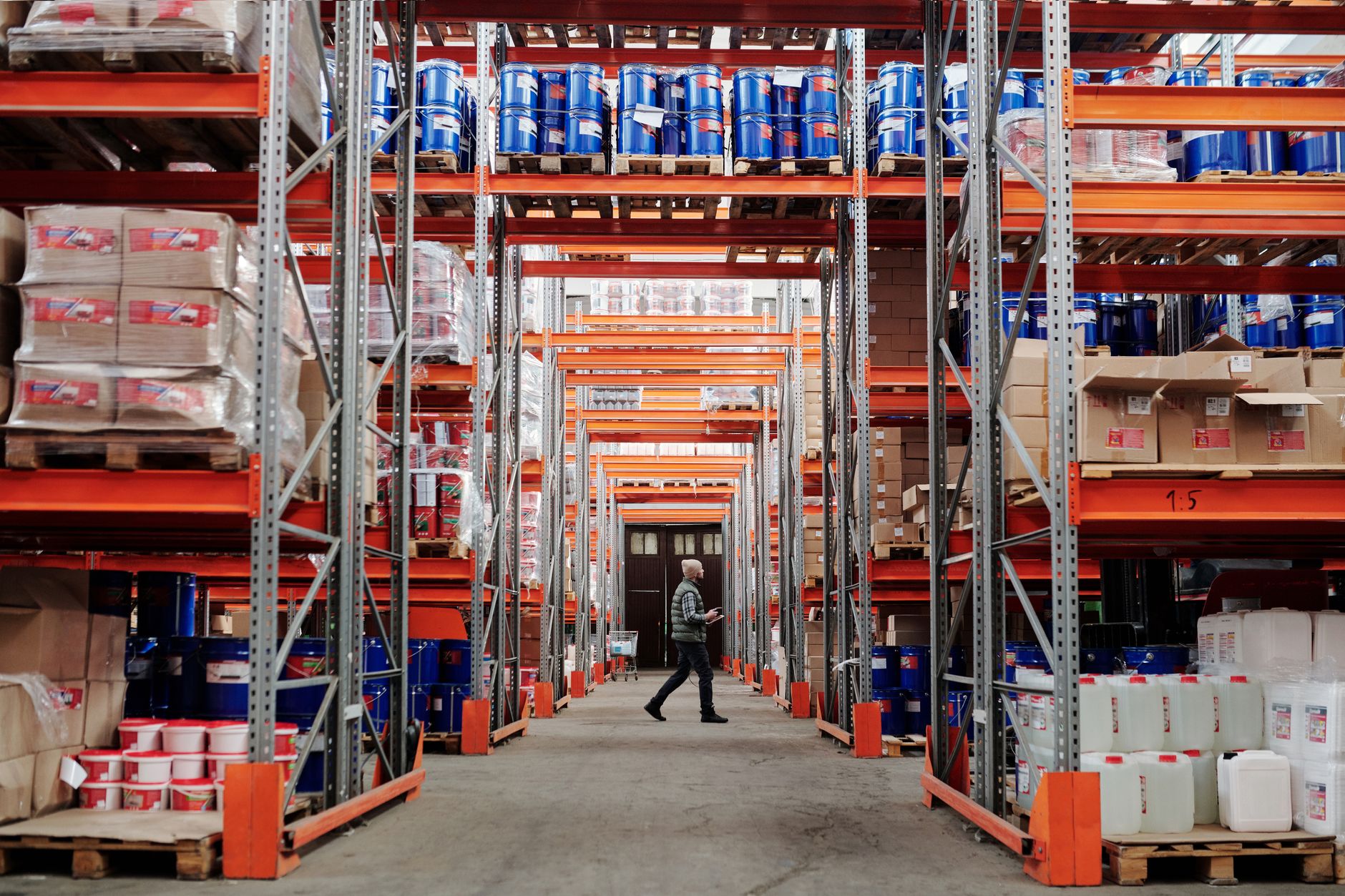
When does a tug beat a carrier?
Tug AMRs earn their keep when the manual job already screams for mechanical assist. OSHA notes that pushing and pulling carts places stress on the back, and that loads requiring more than about 50 pounds of force to move generally need mechanical assists. That is a practical screening test. If crews need a hard shove to start a loaded galley cart train, or if they fight it at strip curtains and slopes, start with a tug.
OSHA also says large, low rolling resistance wheels handle mixed flooring and gaps between elevators and hallways better, and that handles should sit at waist to chest height. Those human-factors points carry straight into AMR spec work. Your towing interface should minimize caster shock, keep the drawbar in a stable angle through thresholds, and leave a safe manual fallback when a person has to reposition a cart.
Low deck carriers win when the load is top-heavy, awkward to tow, or needs tighter positional accuracy at a handoff point. They also avoid some hitch wear and caster hunting. Many airline caterers end up with both. A tug for long cart trains and dock runs, and a carrier for meal racks, inserts, or special-service builds.
- Check tow-eye height under loaded and unloaded cart conditions.
- Test caster behavior after 90 degree staging turns, not just straight-line pulls.
- Measure restart performance on dock plates, drain channels, and cold-room thresholds.
- Prove emergency stop distance with a fully loaded train on your slickest floor.
- Confirm how the AMR handles a cart with one bad wheel or a misaligned brake.
What must dispatch integration do on day one?
Airline catering is dispatched by flight wave, not by generic point-to-point transport. FAA's preliminary CY2025 commercial-service enplanement report, dated July 8, 2026, lists Atlanta at 51,459,786 enplanements, Dallas-Fort Worth at 41,297,009, and Chicago O'Hare at 40,680,735. At airports of that scale, the robot cannot live in its own app. It has to take its work from the same clock that runs production, loading, truck release, and gate cutoffs.
On day one, the AMR layer should accept job type, flight or route identifier, ready time, cut-off time, origin zone, destination zone, cart class, and priority flags. It should publish pickup confirmation, drop confirmation, dwell exceptions, blocked-route alerts, and missed-cutoff risk back to supervisors. If you are evaluating an autonomous mobile robot lease or a short robot pilot program, insist on this data loop early. A demo that only moves empty carts on a quiet aisle proves navigation, not operations.
This is also where robot fleet management separates a nice gadget from a daily workhorse. Supervisors need one screen that shows queue age, battery state, congestion, and exception reason. They do not need a maze of disconnected vendor dashboards. BTS's DB20 program publishes monthly passenger-miles, seat-miles, load factors, enplanements, and performance. Your AMR layer should be just as measurable.
How should a U.S. caterer buy and deploy the fleet?
For most operators, the cleanest path is a scored pilot on one outbound loop and one dirty-return or chilled loop, then a staged AMR fleet deployment once the data is stable. That lets you compare a tug against a carrier, prove the hygiene model, and see how dispatch integration behaves under live departure pressure. It is also the right point to decide between purchase or lease, or another monthly payment structure.
Service Robot Co. fits this kind of work because we are an OEM-neutral, full-service commercial robot integrator for U.S. businesses. We pick the right robots across manufacturers, then handle financing, robot deployment and integration, site assessment mapping, training, go live support, and service through a nationwide U.S. engineer network. For an airline caterer, that means one vendor for the whole lifecycle instead of one company for hardware, another for software, and a third for field service.
That matters even more in specialized AMR selection. A cold-room carrier, a wash-area tug, and a dock-transfer cart pulling robot may not be the same machine. Buying them through one vendor neutral robot integrator keeps the floor coherent while still letting each loop get the hardware it actually needs.