
Key takeaways
- Start with the loaded travel envelope, not the unloaded robot width.
- Turning behavior at aisle ends and docks usually matters more than published top speed.
- In tight supermarkets, load transfer and pedestrian controls are as important as payload.
- Localization needs to be judged by repeatable docking in live aisles, not by map quality alone.
- A good pilot measures interventions, dock retries, and replenishment timing, not just miles traveled.
What should manufacturers prioritize first?
Choose the AMR that preserves clearance when loaded, docks repeatably, and slows predictably around people. In a narrow-aisle parts supermarket, the wrong unit is usually not the one that lacks payload. It is the one that fits a drawing but clips turn pockets, forces operators to step aside at every handoff, or hesitates so often that replenishment calls stack up. Vehicle width, turning behavior, transfer method, localization, and pedestrian controls matter more than brochure speed.
That selection logic fits the way a parts supermarket actually works. According to the Lean Enterprise Institute, a supermarket pull system replenishes what was withdrawn, with downstream use signaling upstream refill. That creates many short, repetitive runs with little tolerance for missed docks or traffic drama. In that environment, a compact AMR with clean handoffs often beats a larger machine with more capacity but more swept path.
OSHA adds the discipline that many buying teams skip. OSHA guidance says staged materials should sit within 25 to 50 feet of the point of use, and 29 CFR 1910.176 requires sufficient safe clearances, clear aisles, and marked permanent passageways. For a line-side supermarket, that means the robot has to support point-of-use replenishment without becoming the new obstruction in the aisle.
How narrow is too narrow for the robot you are considering?
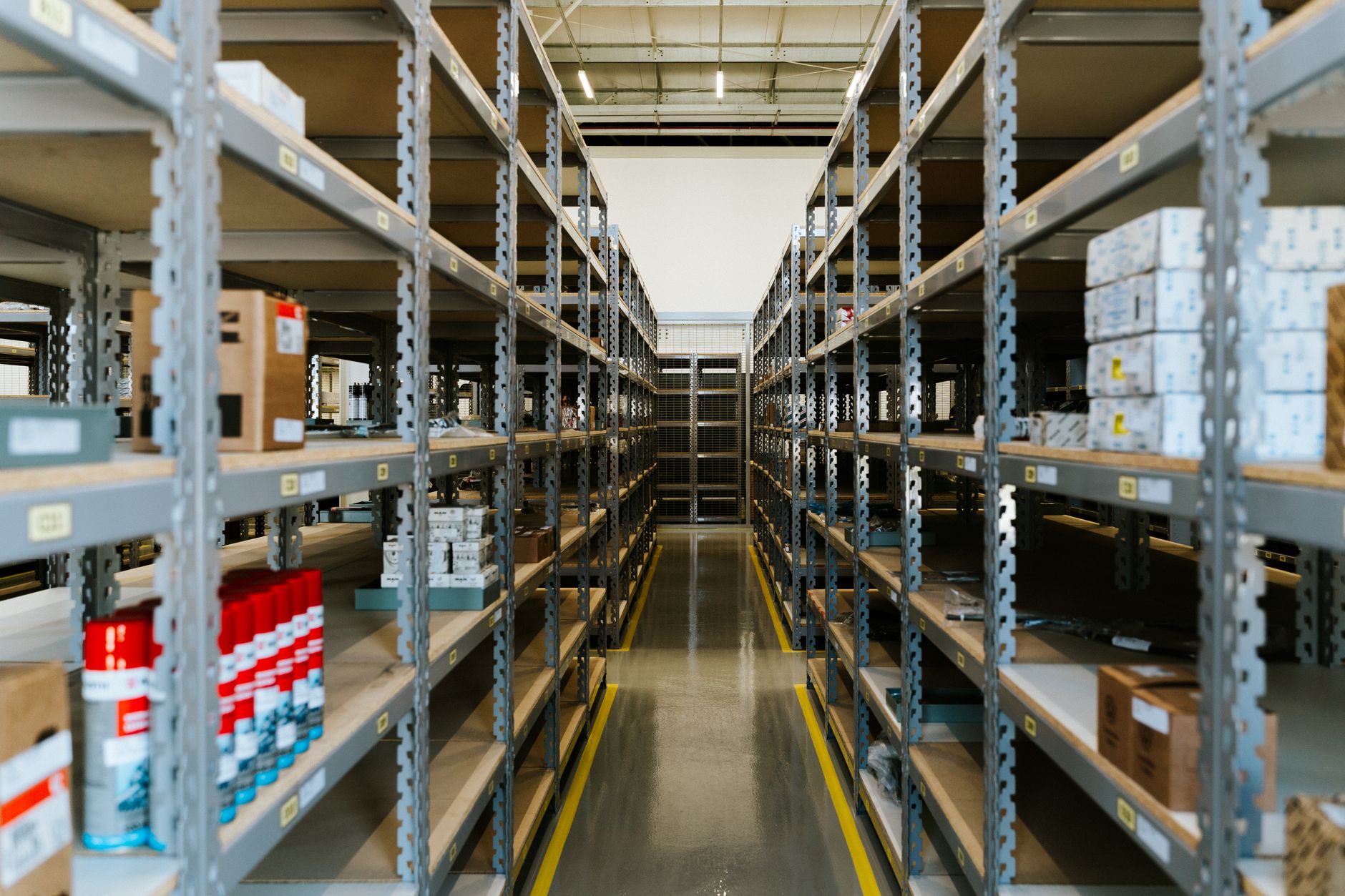
Do not judge aisle fit by chassis width alone. Use the loaded travel envelope, the true space occupied by the robot, its payload, and its side clearance during motion and docking. A machine that looks compact on a spec sheet can become awkward once a tote rack, side overhang, scanner mast, or operator access zone is added.
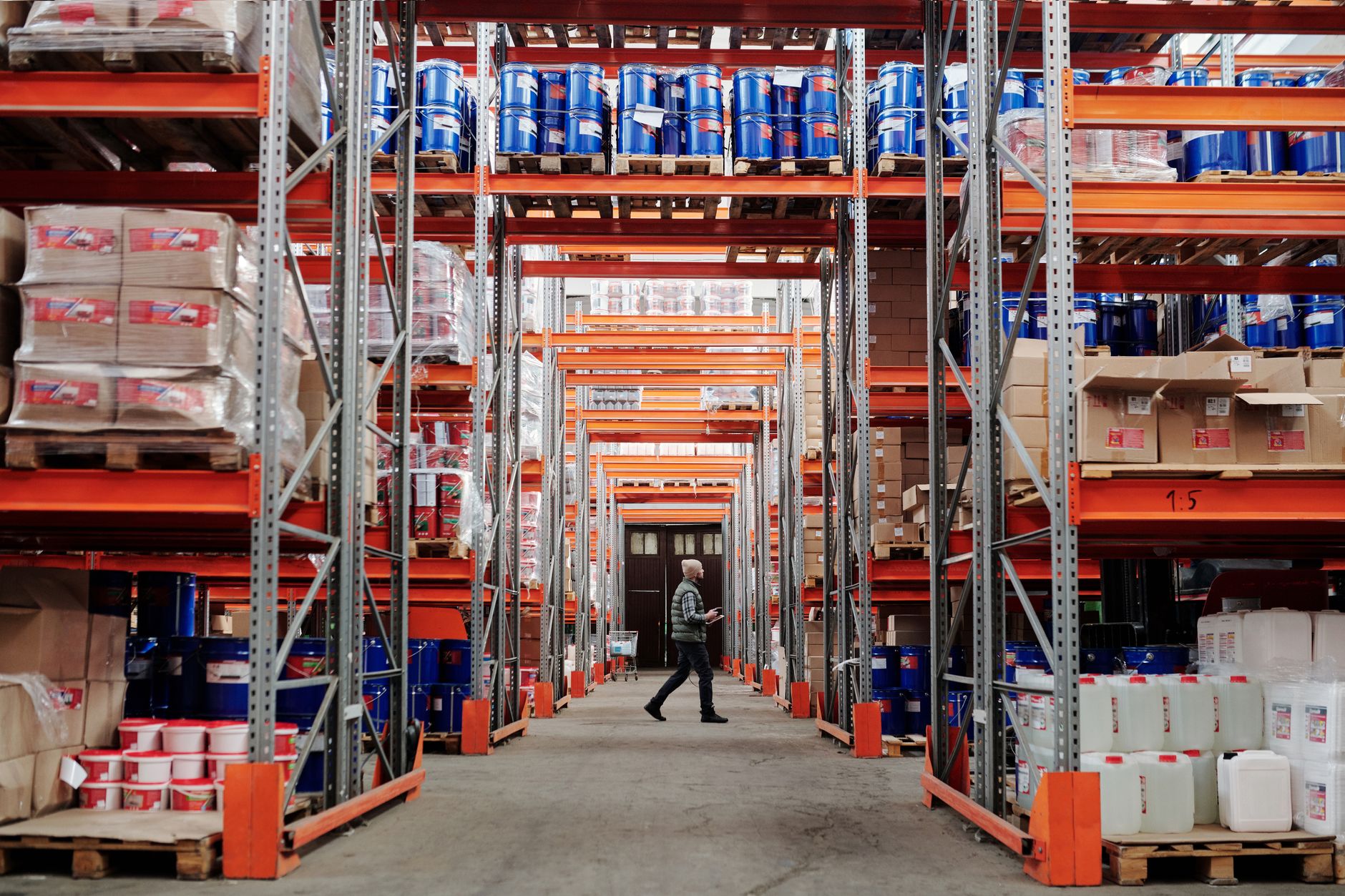
If your replenishment loop includes palletized inbound stock, the load shape matters immediately. According to the U.S. Forest Service, 48 by 40 inch pallets remained the dominant standardized pallet size in its most recent national pallet study, accounting for 35 percent of new wood pallets and 69 percent of recycled or remanufactured pallets. Even if the AMR is not carrying full pallets, those dimensions still shape supermarket docks, decant lanes, and replenishment staging.
In practice, narrow-aisle selection should be based on measured clearances in the live aisle, at the rack face, and at the turn pocket. The useful question is not Can the robot pass. It is Can it pass, dock, recover from a blocked lane, and still leave room for people and hand carts to work.
- Measure body width, loaded width, and any overhang separately.
- Include rack protectors, column guards, parked carts, and fire equipment in the aisle survey.
- Check end-of-aisle turn pockets, not just straight runs.
- Confirm clearance at the exact dock face where replenishment is handed off.
- Leave space for a pedestrian to pause safely outside the robot path.
Why does turning geometry decide real throughput?
Straight-line fit is the easy part. Real losses appear at ninety degree entries, aisle-end pivots, supermarket docks that are slightly out of square, and recovery moves around temporary clutter. A robot that needs repeated back-and-fill maneuvers will erode cycle time long before it runs out of battery or payload.
This is where turning geometry separates acceptable from excellent. Some mobile platforms can rotate with very little swing or translate sideways into a dock. Others need a larger swept path and more open pocket space to align. In a supermarket with tight replenishment windows, minimal correction moves are often worth more than a higher rated speed because every extra maneuver increases stop time and the chance of pedestrian interaction.
Test this early and under load. Run the candidate robot through the busiest aisle, then into two dock approaches with a partially parked cart and a crossing pedestrian. If manual interventions spike there, the vehicle is too large, too long, or too awkward for the route, even if the nominal aisle width says it should fit.
Which load transfer keeps the aisle clear and the operator out of the lane?
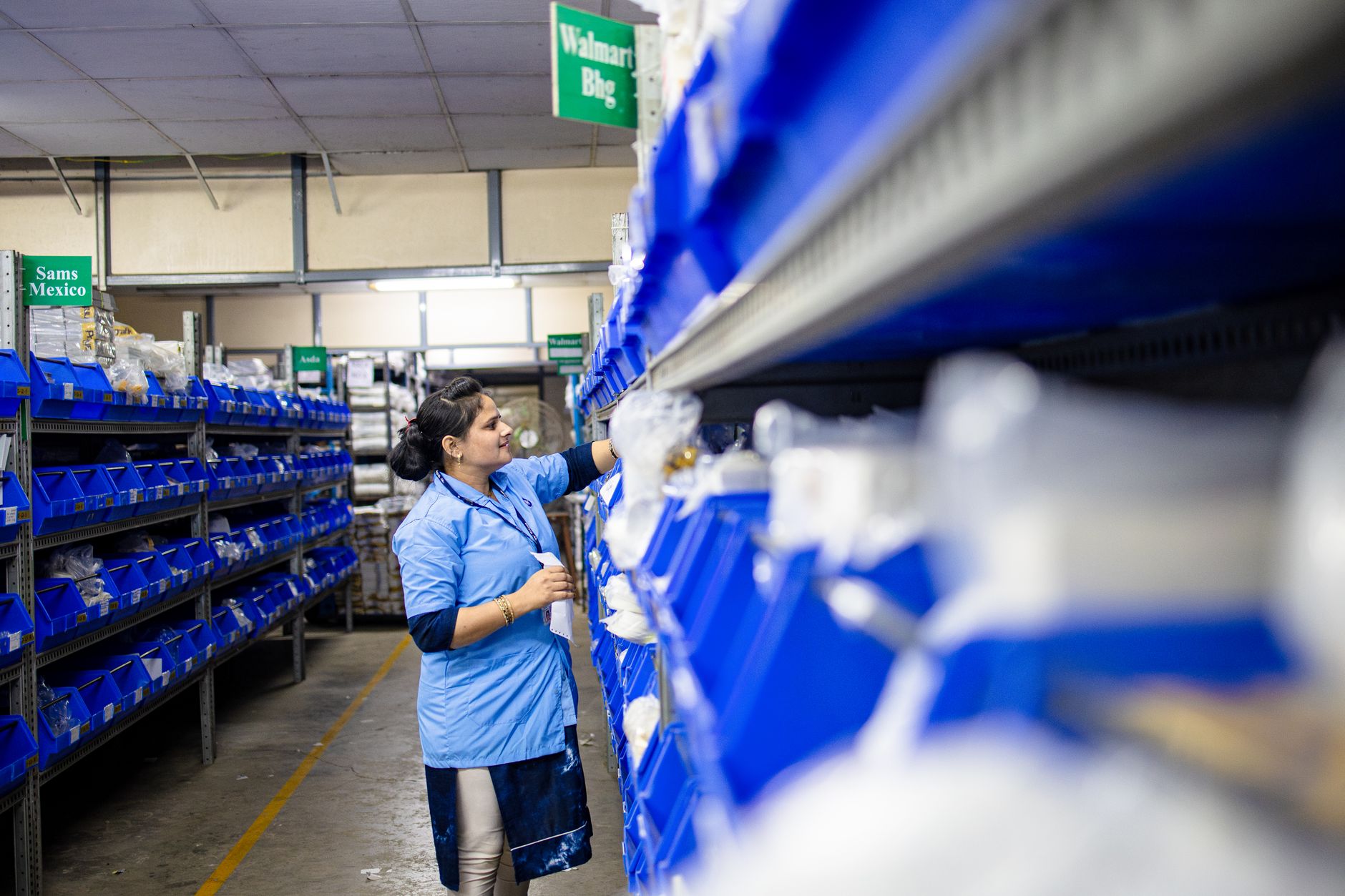
Load transfer is not a secondary feature in a line-side supermarket. It decides how long the robot blocks the lane, how much reaching the operator does, and how often replenishment turns into a two-person event. In tight aisles, the best transfer is usually the one that lets the operator receive or swap material from the work side, not by stepping around the robot nose.
A compact supermarket also rewards transfer methods that tolerate slight floor variation and repeated use. If the handoff requires millimeter-sensitive alignment every cycle, localization and dock wear become uptime issues. If the transfer is forgiving but leaves the load protruding into the aisle, you create a traffic issue instead. The right choice balances ergonomics, repeatability, and aisle discipline.
- Fixed-height shelf or rack-face handoff works well for small totes and high-frequency picks when the dock face is consistent.
- Cart exchange or cart-under transfer suits mixed kits and reusable containers, but the cart envelope must be included in aisle math.
- Lift deck transfer helps when parts must arrive at ergonomic height, though it adds alignment and cycle complexity.
- Conveyor or roller handoff can reduce touches into a machine or buffer, but it demands tighter docking accuracy and cleaner interface control.
What localization holds up in repetitive racks and daily change?
A3 draws a useful line between path-following and real autonomy. In its robot safety FAQ, A3 defines an AGV as following a predefined guidepath, while an AMR navigates using obstacle avoidance and trajectory planning rather than a predefined path. For a parts supermarket, that distinction matters because flexibility is valuable, but flexibility without repeatable final positioning is just another form of drift.
Natural-feature localization is often enough in a stable rack field, especially when the route is short and the dock faces are clean. But repetitive rack geometry, temporary carts, empty pallets, and changed slotting can make a map look more certain than it should. If your supermarket includes reflective wrap, glass partitions, or shiny guards, that risk increases. The buying question is not just How does it map. It is How often does it hit the dock correctly on the fifth day of production after the floor changed.
The standards trend is moving the same way. The current ISO draft overview for 3691-4 adds a section for trucks intended for use in very narrow aisle environments, expanded person detection and safeguarding language, additional side-detection testing, and an annex for clearance management based on localization systems. It is a draft, not a final purchasing rule, but the signal is clear. In tight aisles, localization is a safety and throughput issue, not just a navigation feature.
What pedestrian controls matter most on a mixed manufacturing floor?
Pedestrian behavior is where many otherwise sensible AMR projects unravel. A3's ANSI/A3 R15.08-3-2026, published on April 23, 2026 as a 77 page user standard, centers risk assessment, the current operating environment, and management of change. That is exactly the right frame for a parts supermarket, because the aisle is not static. A pallet appears, a return cart gets parked badly, a rack face shifts, and the safe path changes with it.
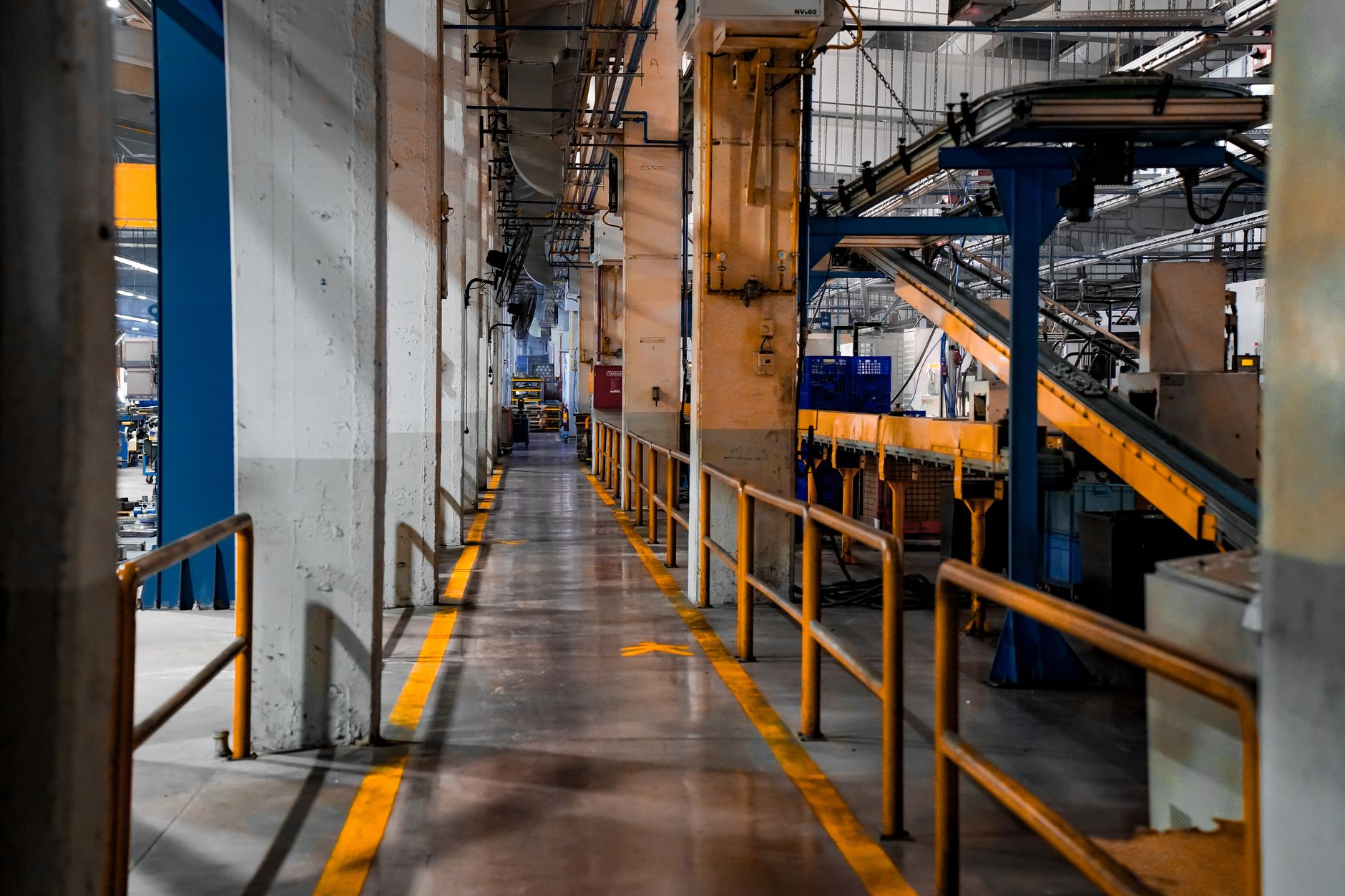
OSHA's baseline is still useful here. Permanent aisles should be marked, passageways kept clear, and mechanical handling routes given sufficient safe clearance. On the floor, that translates into speed zones, clear stopping behavior at blind corners, side-detection coverage that matches the loaded envelope, and visible or audible warnings that help people predict what the robot will do next.
The best pedestrian package is usually boring by design. Slowdown zones at pick faces, no-go rules for chronic clutter spots, conservative corner behavior, and explicit revalidation after layout change outperform flashy autonomy claims. If the robot can technically squeeze by a parked cart but forces a worker against the rack, the application is wrong even if the machine never makes contact.
How should you score a pilot before scaling the fleet?
Do not score a pilot by miles traveled or hours powered on. Score it by the friction it removes from replenishment. According to the U.S. Bureau of Labor Statistics, manufacturing still had 477,000 job openings in June 2026. That is why repetitive transport automation has appeal in the first place. The point is to pull walking and chasing out of skilled work, not create a babysitting job around a temperamental machine.
A strong pilot stays narrow. Pick one supermarket loop, one or two shift patterns, and a small set of dock types. Then measure the moments that expose poor fit. Dock retries, blocked-path minutes, late replenishments, operator touches, and pedestrian slowdowns will tell you far more than a generic uptime number. If those indicators are clean, scale becomes much easier.
- Manual interventions per shift.
- Blocked-path minutes and the cause of each blockage.
- Dock retry rate under normal traffic.
- Late replenishment calls versus baseline.
- Operator walking or touches removed from the loop.
- Near-miss reviews after layout or staging changes.
Where does Service Robot Co. fit in this decision?
This is one of those applications where the robot is only half the purchase. Service Robot Co. works as a full-service commercial robot integrator for U.S. businesses, and that matters in narrow-aisle supermarkets because selection, mapping, dock design, training, and service all affect outcome. The company is OEM-neutral, so the starting point is not a preferred manufacturer. It is the aisle, the load, the handoff, and the people who share the lane.
That is especially useful for plants comparing autonomous mobile robot leasing, material handling robot leasing, or robot leasing for business with a purchase. Procurement should follow fit, not the other way around. A site assessment mapping pass, a measured pilot, and a phased deployment with no shutdown usually reveal the right machine class faster than a generic quote exercise. After that, monthly payment programs, purchase or lease structures, and lifecycle service become practical tools instead of distractions.
For manufacturers that want one partner for the full lifecycle, Service Robot Co. can pick the right robots across manufacturers, then finance, deploy, integrate, train, and service every unit through a nationwide U.S. engineer network. That one partner, one number model is valuable when the application is unforgiving. In a tight supermarket, uptime depends as much on go-live support, remote triage, and on-site dispatch as it does on the base vehicle itself.