
Key takeaways
- Buy for alarm quality and evidence, not for patrol theater.
- Thermal imaging is the anchor sensor, but acoustic, gauge, and leak data close the blind spots.
- Out-of-band communications, local autonomy, and self-docking matter more than top speed in remote shelters.
- The best program ties the robot to ticketing, remote review, and field dispatch, not to a standalone app.
What should a telecom inspection robot actually cover on one round?
Telecom operators should buy an inspection robot for evidence, not theater. The right machine patrols narrow equipment rooms and remote shelters, captures thermal images of power and cooling gear, reads analog and digital indicators, checks for water and refrigerant trouble, survives weak backhaul, docks without babysitting, and hands every alarm into a human workflow with photos, trend data, and site context.
That bar is higher than a basic patrol bot because the estate is huge and dispersed. According to the Wireless Infrastructure Association, the United States ended 2025 with 158,500 purpose-built cellular towers, 254,850 macrocell sites, 198,100 outdoor small cells, and 830,350 indoor small cell nodes. ASHRAE notes that telecom and datacom rooms run a relatively constant 24 hour load profile and can carry load densities 10 to 100 times a typical office building.
So the buying question is not can it drive around. It is can it catch the failures that force a truck roll or a network hit before customers notice. Start with sensor quality, comms resilience, docking, and alarm handoff. Everything cosmetic sits lower on the list.
- Radiometric thermal imaging tied to visible-light evidence
- Reliable OCR and computer vision for gauges, meters, and alarm lights
- Leak detection matched to the actual site risks, not a generic payload
- Store-and-forward communications with an out-of-band or fallback path
- Self-docking, safe-park behavior, and recovery after power events
- Direct handoff into the NOC, CMMS, or field dispatch workflow
Why is thermal imaging the anchor sensor?
Thermal imaging is the anchor payload because most telecom-room pain starts as heat. Loose terminals, overloaded breakers, failing power supplies, unbalanced battery strings, clogged coils, sticking dampers, and dead fans usually declare themselves thermally before they fail outright. ASHRAE's 2021 guidance puts the recommended inlet range for common datacom classes A1 through A4 at 64.4 to 80.6 F, and A1 allowable operation at 59 to 89.6 F, so the robot should flag drift against both the operating band and each room's baseline.
Do not buy on color palettes alone. The camera needs radiometric output, enough resolution to read small temperature differences at rack distance, and a visible-light pair so an engineer can tie each hot spot to a breaker, lug, or fan tray. The better programs trend the same asset over time. One warm image rarely proves much. A rising delta over three patrols does.
When does acoustic sensing earn its place?
Acoustic sensing earns its keep when the room contains rotating or pressurized gear. A good microphone or ultrasonic package can catch rough fan bearings, compressor distress, relay chatter, door leaks, and water leaks that are still too small to show visibly. The US Department of Energy recommends acoustic or sound-based technology for leak detection and notes that permanent systems can monitor for leaks 24/7.
But treat acoustics as a second lens, not a replacement for thermal. Shelters are noisy, reverberant boxes. The robot should compare clips against a site baseline, attach timestamps and location, and avoid crying wolf when a generator exercise or HVAC mode change shifts the sound profile. Good audio classification lowers nuisance alarms. Bad audio creates them.
Why are gauge reading and visual evidence still non-negotiable?
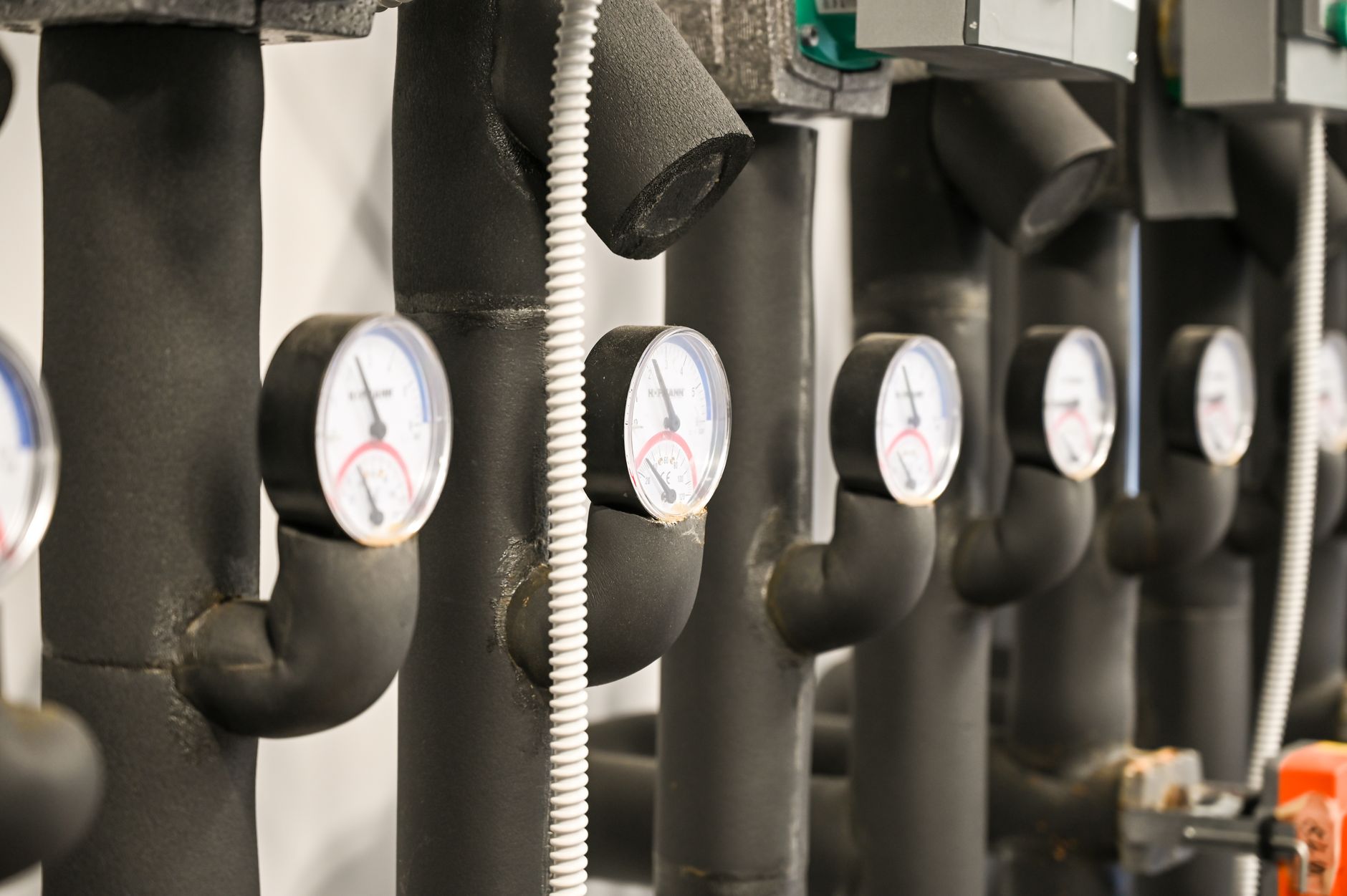
Gauge reading sounds mundane until you look at what still sits outside the network. Many rooms still depend on round pressure gauges, panel meters, alarm lamps, breaker trip flags, sight glasses, and local controller screens. If the robot cannot read those points cleanly under glare, dust, and low light, it misses exactly the evidence a field technician would check first.
Ask for more than OCR. You want confidence scoring, image retention, and cross-checks against telemetry where telemetry exists. An operator should be able to see the raw image, not just a parsed number, because the image settles arguments fast. Visual evidence also matters after an alarm. A ticket that says high room temp is weak. A ticket with a thermal frame, a gauge image, and the room location is actionable.
What leaks and contamination should the robot detect?
Leak detection in telecom shelters usually means four risks: roof or wall water intrusion, condensate overflow, refrigerant loss from comfort-cooling gear, and battery-room gases where the chemistry calls for them. EPA says ozone-depleting refrigerant systems with a full charge of 50 pounds or more need corrective action when leak thresholds are exceeded, with repair or a retrofit or retirement plan within 30 days. EPA also says HFC leak-repair provisions at 40 CFR 84.106 began on January 1, 2026 for affected appliances with 15 pounds or more.
Not every remote shelter carries a charge that large, but the point stands. Early leak evidence has operational and compliance value. Moisture control matters just as much. ASHRAE says dew point is the better control variable for datacom rooms and recommends corrosion checks at least twice a year when operators want the expanded humidity envelope. If copper corrosion exceeds 300 angstroms per month or silver exceeds 200, the room should run drier. A robot that can pair leak clues with moisture and visual data is far more useful than a single-purpose sniffer.
How should the robot communicate from a room full of radios and metal?
A telecom inspection robot needs the humility to assume the network may be the failing asset. That means local autonomy, store-and-forward logging, and at least one fallback path for alerts. If the primary backhaul drops, the robot should finish a safe route or park, cache evidence locally, and push alarms once connectivity returns. Live teleoperation is helpful, but do not make it a hard dependency for routine patrols.
Cyber rules matter here. CISA's December 4, 2024 guidance for communications infrastructure tells operators to use an out-of-band management network that is physically separate from the operational network. The same guidance calls for secure centralized logging, encrypted transport for remote logs, and off-site copies so records cannot be quietly altered or deleted. CISA separately warned on June 13, 2023 that internet-exposed management interfaces should be removed from exposure or protected with a separate policy enforcement point. A robot that shares casual access with production gear is a bad buy.
What separates a useful dock from a stranded machine?
The dock determines whether the robot is a steady inspection worker or an expensive object blocking an aisle. In telecom sites, the dock should sit on conditioned power, tolerate brief outages, recover cleanly after power returns, and stay clear of egress paths, HVAC discharge, and housekeeping traffic. A good dock also gives the robot a known reference point for health checks, clock sync, data upload, and lens cleaning if the payload supports it.
Ask what happens when the dock is blocked, dirty, or de-energized. The answer should include a safe park posture, battery reserve rules, remote reboot options, and a clear alert to the operator before the machine strands itself. Endurance matters, but graceful failure matters more. A robot that can admit trouble early saves more truck rolls than one with a heroic brochure runtime.
Why does the integration model matter as much as the robot?
Telecom estates punish one-size-fits-all buying. A dense indoor room, a rural shelter with rough floor transitions, and a hub site with battery, HVAC, and fuel systems may need different chassis, sensor stacks, and mounting geometry. This is where a vendor neutral robot integrator earns its keep. Service Robot Co. selects the right platforms across manufacturers, then handles robot deployment and integration around the actual site risks rather than forcing every property into one template.
That also changes the commercial path. Some operators start with an inspection robot lease, a commercial robot demo, or a try before you buy pilot. Others want leasing, robot leasing for business, or purchase or lease options with monthly payment programs and RoboCare™ service. Service Robot Co. can support that whole lifecycle for US operators, from site survey and commissioning through training, remote triage, commercial robot repair service, and field support through a nationwide engineer network. One vendor for the whole lifecycle. One partner, one number.
How should alarms escalate into action?
The robot should plug into the same operating discipline that runs the network, not into a side app nobody watches. DOE notes that issue tracking works best when alarms can be assigned to an owner, discussed in comments, and closed only after the action is complete. That is the right frame for telecom rooms. Every exception needs a severity level, evidence bundle, assigned owner, timer, and closure test.
A practical workflow keeps humans in the loop at the right moments. Minor drift can open a maintenance ticket. Ambiguous evidence can trigger a remote review. Clear danger, such as a rising breaker hot spot, visible water path, or cooling failure, should page the NOC and dispatch the right technician with the robot's data attached. The point is targeted escalation, not alarm spray.
- Advisory: trend the condition and reopen on repeat detection.
- Work order: assign local maintenance with thermal, visual, and gauge evidence attached.
- Remote engineering review: pull a live view or the latest patrol package before dispatch.
- Critical event: notify the NOC immediately, preserve logs off-site, and send the field technician to the exact asset and room zone.
Frequently asked questions
Sources
- Wireless Infrastructure Association 2025 stats
- ASHRAE telecom and datacom facilities chapter
- CISA communications hardening guidance
- CISA internet-exposed management guidance
- DOE leak detection and repair guidance
- DOE EMIS issue tracking guidance
- EPA stationary refrigerant leak repair rules
- EPA HFC leak repair FAQ