
Key takeaways
- Treat the robot map as a controlled operating document that changes with every major gallery reset.
- Protect lots with mapped exclusion zones, physical stand-off space, conservative speeds, and a pre-run inspection.
- Measure sound in the actual showroom because polished floors, glass cases, and sparse rooms can magnify disturbance.
- Match pads, brushes, water flow, and chemistry to each floor finish before autonomous cleaning begins.
- Choose a lifecycle partner that can finance, deploy, train, monitor, and service the equipment nationwide.
Can autonomous cleaners work safely around valuable lots?
Yes. Cleaning robots can maintain auction house showrooms without disturbing delicate lots, changing displays, or client previews, but only when the operating plan treats every exhibition reset as a controlled change. The robot needs approved routes, generous exclusion zones, suitable floor-care settings, and a human inspection before each run.
The safest approach does not depend on obstacle detection alone. High-value furniture may have slender legs, sculpture can project beyond its plinth, and temporary ropes may be difficult for a machine to perceive consistently. Those hazards belong in the map as no-go areas, with their full footprint and overhang accounted for.
Quiet autonomous cleaning is best assigned to predictable windows, such as before viewing hours, between installation shifts, or after a sale. During public hours, a smaller route can cover open circulation areas at reduced speed while staff retain immediate authority to pause or redirect the machine.
Why is an auction showroom harder to map than an ordinary lobby?
An auction showroom is closer to a changing exhibition than a fixed commercial interior. Plinths appear overnight, temporary walls divide galleries, rugs alter traction, and a dining table may occupy yesterday's turning area. A map that was safe for the previous sale can become misleading after a single installation shift.
Treat site assessment mapping as version-controlled operational data. Each approved map should identify its room configuration, effective date, cleaning modes, dock position, restricted areas, and the employee who released it. Retire obsolete versions so a night crew cannot accidentally launch last week's route.
Not every adjustment requires a full remap. A localized display change can often be handled with a revised exclusion polygon and a short validation run. Moving walls, relocating the charging dock, changing doorway geometry, or materially altering traffic flow calls for a fresh mapping and acceptance process.
The practical rule is simple: inspect before every scheduled run, edit after meaningful display changes, and remap when the room's navigable structure changes. A facilities lead and an exhibitions or property representative should approve the result together.
What should the remapping workflow include?
Begin with the installation plan, but verify it on the finished floor. Drawings rarely show electrical cords, easel feet, protective felt, low display platforms, or the actual position of stanchions. The final walk-through should occur after the lots and barriers are in place.
Validation should cover more than successful navigation. Observe stopping distance on the real surface, turns beside plinths, recovery around unexpected obstacles, edge behavior near rugs, and the return path to the dock. If the machine hesitates or repeatedly replans beside a valuable object, widen the exclusion zone instead of accepting marginal behavior.
A useful change-control record captures the old configuration, the new hazard, the map revision, the test route, and the approver. Photographs taken from fixed reference points help the next shift confirm that the physical room still matches the released map.
The National Park Service's museum housekeeping guidance says cleaning in collection spaces should be careful, gentle, and directed toward preservation rather than appearance alone. Although auction lots are not museum collections, that preventive-care principle is an excellent standard for high-value showroom work.
- Freeze lot movement while a map validation run is underway.
- Map the complete envelope of each object, including projecting arms, leaves, frames, and bases.
- Test deliberate obstructions such as a moved chair or newly placed stanchion.
- Confirm that emergency exits, staff paths, and public accessible routes remain open.
- Release the map only after reviewing the robot's route history and any interventions.
How should temporary barriers and public routes be handled?
Velvet ropes, retractable belts, floor tape, and sign stands help organize a preview, but they are not interchangeable from a navigation perspective. A low chain can be physically present yet difficult to detect from every approach. Enter temporary barriers in the map, then place them consistently at marked floor positions.
Public accessibility must remain part of the layout review. The U.S. Department of Justice's 2010 ADA Standards specify a 36-inch minimum clear width for walking surfaces on an accessible route. A reduction to 32 inches is permitted only for a segment no longer than 24 inches and under the standard's spacing conditions.
Turns need additional attention. The U.S. Access Board explains that a 180-degree turn around an obstruction less than 48 inches wide generally requires 42 inches on the approaches and 48 inches at the turn, unless the turn provides 60 inches of clearance. A robot route, dock, wet-floor control, or temporary display should not consume that required space.
Keep mapped cleaning lanes distinct from visitor routes whenever possible. If they must overlap, schedule wet cleaning outside viewing hours and verify that the recovered floor is dry before reopening. OSHA regulation 29 CFR 1910.22 requires workplaces to keep walking-working surfaces clean, orderly, and, to the extent feasible, dry.
What safeguards protect delicate furniture, art, and collectibles?
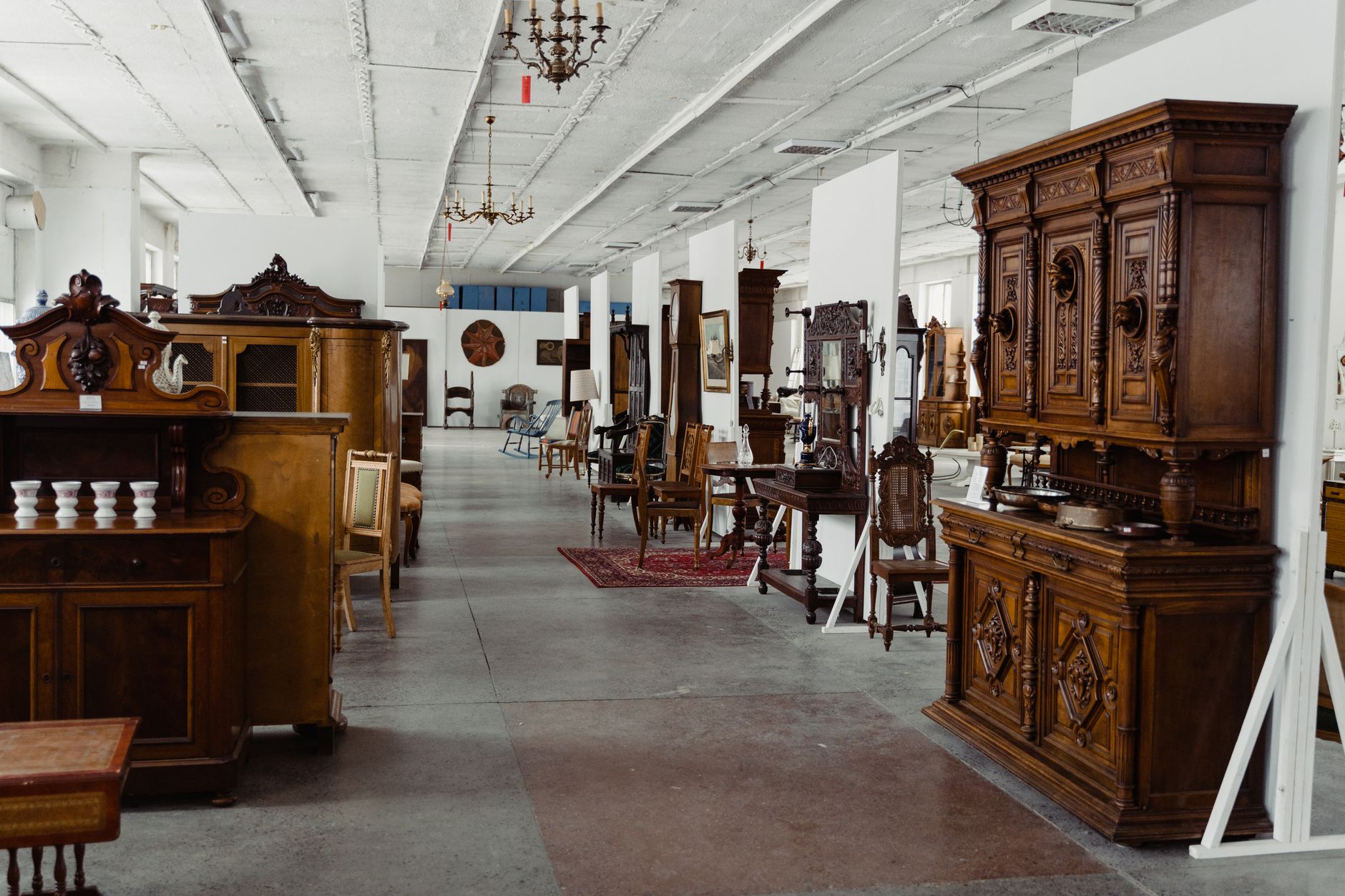
Start with stand-off distance. Establish it through real stopping and turning tests, then add margin for the object's fragility, projection, stability, and replacement difficulty. The planned path should never rely on the robot brushing a curtain, rope, pedestal, or display case to find its boundary.
Create permanent no-go areas for cases, rostrums, registration desks, cables, stairs, and other fixed hazards. Add temporary zones for each sale. For a sculpture with an overhanging element or a table with leaves extending beyond its legs, map the widest horizontal envelope rather than the footprint touching the floor.
Separate object care from floor care. The National Park Service's Museum Housekeeping Handbook warns that vacuum equipment, cords, and attachments should not contact museum objects. Auction facilities should apply the same discipline by prohibiting autonomous equipment from cleaning plinths, cases, rugs beneath lots, or the objects themselves.
Assign manual detail work to trained staff after the robot completes open floor areas. Corners behind easels, narrow gaps between lots, and spaces beneath fragile furniture are poor candidates for autonomous coverage. Leaving those zones untouched is preferable to chasing a misleading coverage percentage.
How can cleaning remain quiet during previews and sales?
Do not judge sound from a brochure alone. Measure the complete cleaning cycle in the actual room, including vacuum or brush noise, wheel vibration at expansion joints, warning tones, water pickup, and docking. Hard floors, glass cases, tall ceilings, and lightly furnished galleries can make modest mechanical sounds conspicuous.
Test from places that matter: the rostrum, telephone-bidding desks, client seating, consultation tables, and adjacent galleries. Record the background level, the passing level, and any brief peaks. A worker-noise limit is not a suitable guest-experience target, so acceptance should be based on audibility and disruption within the showroom.
Use multiple operating profiles. A quiet public-hours profile can reduce speed, avoid narrow display clusters, and suppress nonessential audio within applicable safety requirements. The deeper floor washing, edge work, and dock servicing can occur after close.
Schedule around the auction calendar, not merely the building clock. Photography, condition reporting, preview receptions, live bidding, and post-sale collection create different sensitivities. Overnight cleaning with no operator still needs an on-call employee who can respond to an alert or blocked route.
How do robots preserve the appearance of polished floors?
Auction floors are part of the presentation. Residue, swirl marks, dull bands, and standing water become especially visible under gallery lighting. Before deployment, test the selected pad or brush, cleaning chemistry, water flow, and recovery settings on an inconspicuous area of every finish.
Build a floor matrix that links each mapped zone to its approved method. Polished concrete, stone, resilient flooring, sealed wood, and decorative rugs can require different treatment. The robot should never infer that a newly exposed surface belongs to the old zone simply because a display moved.
Use dry soil removal before wet cleaning when grit is present. Then inspect recovery performance at turns and stops, where moisture can accumulate. The final acceptance criterion is not merely that the route completed, but that the floor is clean, dry, uniformly presented, and free from new marks.
The National Park Service recommends a written housekeeping plan developed with appropriate preservation expertise for spaces containing collection objects. Auction houses can adapt that discipline by documenting approved chemicals, consumables, restricted surfaces, response procedures, and sign-off responsibilities.
What should an auction house expect from an integrator?
A showroom pilot should reproduce real change, not a permanently empty demonstration lane. Test at least two representative display configurations, temporary barriers, public-hour quiet operation, after-hours floor washing, an unexpected obstruction, and a blocked return to the dock. Track interventions as closely as cleaned area.
Service Robot Co. is an OEM-neutral commercial robot integrator for U.S. businesses. It evaluates equipment across manufacturers, then handles robot deployment and integration, financing, training, and service through a nationwide U.S. engineer network. The auction house gets one vendor for the full lifecycle instead of separate contacts for hardware, commissioning, and repairs.
That structure is useful when the commercial model must fit a changing sales calendar. An auction house can compare purchase, robot leasing for business, service robot leasing, and commercial cleaning robot leasing options without allowing the financing format to dictate the machine. RoboCare™ service programs and clear response procedures should be evaluated alongside navigation and floor performance.
The final specification should define who owns map revisions, who approves routes after a gallery reset, how remote triage works, and when on-site dispatch begins. Good service coverage protects more than uptime. It prevents staff from improvising unsafe routes around irreplaceable property.