
Key takeaways
- DMV robot cleaning works best with perimeter daytime passes and full overnight scrubs.
- Protect ADA circulation first: keep 36-inch routes, 60-inch turns, and 30-by-48 clear spaces open.
- Spot cleaning should focus on entrances, ticket kiosks, counter fronts, and spill-prone seating rows.
- Security rules call for hard no-go zones, supervised starts, and docks outside public choke points.
- A pilot succeeds faster when one partner handles selection, deployment, training, and service.
Can a floor robot work in a live licensing office?
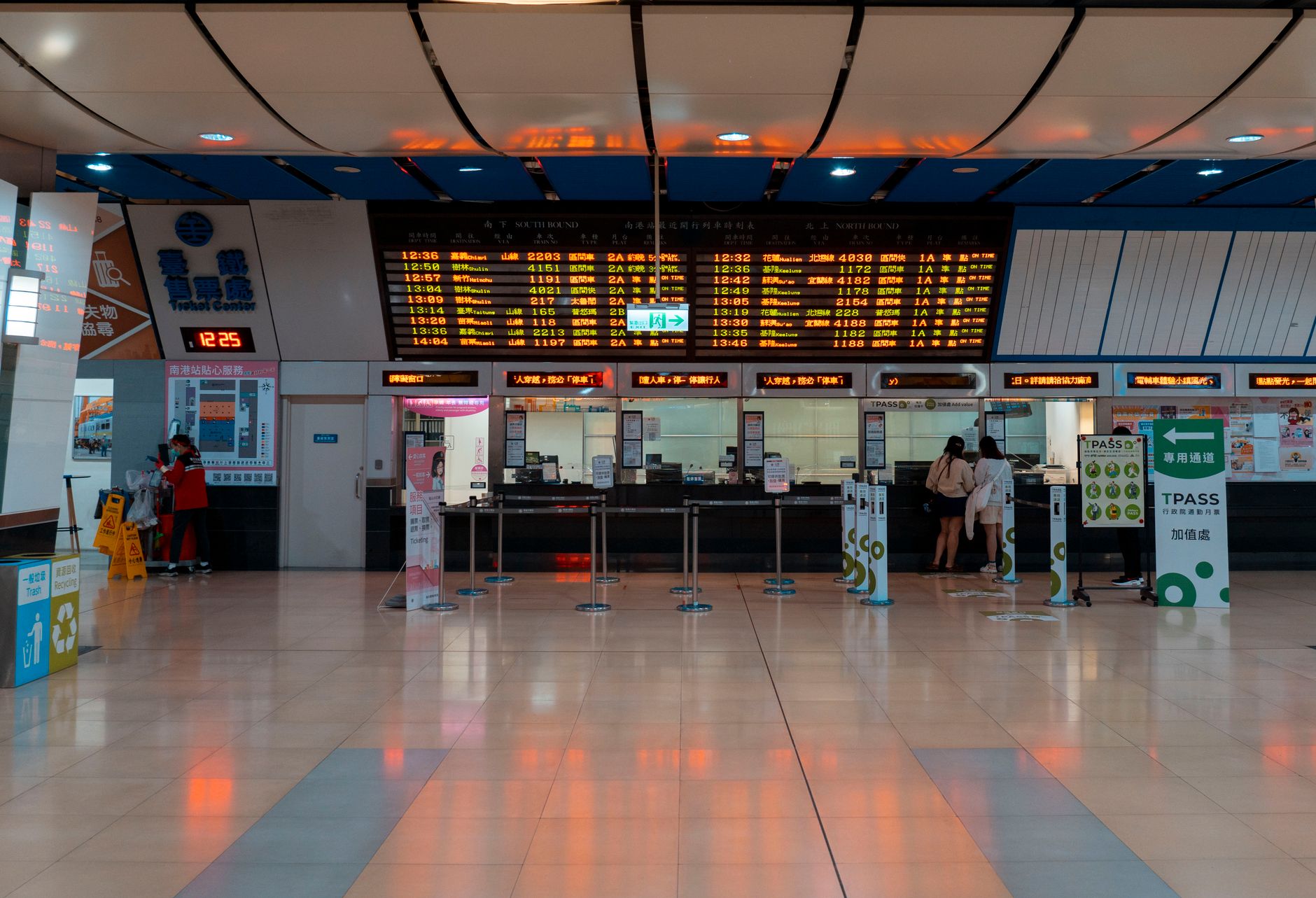
Yes, if the program is built for the way a motor-vehicle office actually breathes. A floor robot can keep a DMV lobby presentable during business hours, but not by roaming straight through the center of a packed line. The practical model is narrower than that: short daytime routes around the perimeter and queue edges, fast human-triggered spot cleaning when grit or spills appear, and a deeper autonomous floor scrubber run after close.
That matters because these buildings do not behave like ordinary back-office suites. Their traffic comes in pulses, people bunch at kiosks, chairs pin down part of the floor plate, and some zones cannot be crossed without staff oversight. A good deployment accepts those constraints up front, maps around them, and treats the robot as part of the daily operating plan instead of a novelty parked by the wall.
The result is not zero manual work, and it should not be sold that way. The robot handles repeatable floor miles. Staff still own exceptions: dropped paperwork, drink spills, restroom resets, and any cleaning task that touches counters, kiosks, or seating arms. What you gain is steadier floor condition across the longest, dullest stretches of the shift.
Why are these floors so punishing?
DMV and licensing-center traffic is deceptively abrasive. People arrive from parking lots with dust, road salt, rainwater, and fine grit on their shoes, then grind it into the same queue lanes for hours. Counter fronts darken first. Vestibules break down next. The lanes between ticket kiosks, document-check stations, and fixed seating stay dirty because they absorb the same repetitive footfall pattern all day.
The scale of the user base explains why these offices never stay quiet for long. According to the Federal Highway Administration, the United States had 237,655,885 licensed drivers and 284,614,269 registered motor vehicles in 2023. That is the operating backdrop for public licensing agencies. Add the Transportation Security Administration's May 7, 2025 REAL ID enforcement, which pushed travelers without compliant credentials back toward state licensing offices, and credential counters remain a live public-service choke point rather than a sleepy clerical function.
There is also a timing problem. Maryland's Motor Vehicle Administration said in July 2025 that its real-time dashboard publishes live branch wait times, average visit duration, and appointment-type data. That is a useful signal for operators elsewhere. Demand is not flat from opening bell to close, so a scrubber robot route cannot be flat either.
How should daytime routes be drawn around queues and chairs?
Start with the geometry the public must keep, not the geometry the robot would prefer. The U.S. Access Board says accessible routes need at least 36 inches of continuous clear width, with wider allowances at certain turns and obstructions. Turning spaces need a 60-inch diameter minimum, and clear floor space at service elements is 30 by 48 inches minimum. In a licensing office, those dimensions are not design trivia. They are route boundaries.
That means the best daytime path is usually a border route. Run the machine along vestibules, wall edges, queuing-stanchion exteriors, and the backs of fixed seating blocks, then use short inward cuts only where the office has enough slack to keep accessibility intact. Avoid the instinct to chase every open patch. A robot that repeatedly noses into half-open queue lanes creates friction, invites stoppages, and teaches staff to turn it off.
Map the chairs as permanent obstacles, but treat queue stanchions and overflow lines as dynamic. In many branches, the public-facing floor has a morning shape, a midday shape, and a late-afternoon shape. Build several approved daytime missions rather than one giant route. That is how a commercial cleaning robot lease or pilot program becomes workable on a live government floor.
Where does spot cleaning matter most?

Daytime success usually comes down to a handful of soil magnets. Entrances collect the first layer. Ticket kiosks and document-check tables create tight turns and shoe pivots. Counter aprons catch the dirt that falls out of folders, envelopes, and bags. Seating banks collect crumbs, moisture, and residue where people settle in for a wait that runs longer than expected.
OSHA requires walking-working surfaces to be kept clean, orderly, sanitary, and as dry as feasible, and it requires hazards such as spills to be corrected or guarded. CDC guidance for community facilities adds a related point: clean high-touch surfaces regularly and other surfaces when visibly dirty. Put together, those rules support a two-part operating model. Let the robot own recurring floor soil, and keep a human response loop for anything wet, sudden, or hand-contact heavy.
- Re-hit vestibules and the first 20 to 40 feet inside the front door after weather events or lunch-hour spikes.
- Use a short robot pass around ticket kiosks, photo-check stations, and queue starts during known lulls, not at peak ticket pull times.
- Assign a porter or supervisor to trigger manual cleanup for spills, dropped drinks, mud clumps, and restroom approach zones.
- Treat counters, touchscreens, pens, and seating arms as manual cleaning work, not robot work.
What should happen after the last ticket is called?
After hours is when the floor robot earns its keep. The public is gone, chairs and stanchions are stationary, and the machine can run longer uninterrupted passes with better coverage and fewer courtesy stops. This is the window for the full autonomous floor scrubber route: queue lanes, counter fronts, vestibules, perimeter edges, and the hard-surface areas between fixed seating blocks that were too sensitive to attack aggressively during the day.
A good night program is not just one long mission. It is a sequence. Start with debris pickup or a dry pass in the worst tracked-in zones, then scrub the main public path, then return to edge-heavy sections where grit gathers against chair legs and baseboards. If the branch has mixed flooring, stop the robot before carpet or mats it is not meant to handle, and hand the remainder to manual tools.
This is the part of the schedule where overnight cleaning no operator sounds attractive, but mature operators phrase it more carefully. You want no constant operator walking beside the machine. You still want supervised launch, a verified first lap after remaps, and a clean recovery routine at dock or charge.
- Open hour minus 60 to 30 minutes: run a short perimeter touch-up if traffic has thinned and security staff approve it.
- Close to plus 90 minutes: complete the main scrub of lobby lanes, counter aprons, vestibules, and circulation paths.
- Second night block: run edge sections, seating islands, and any repeat pass on gritty entries after the main soil load is removed.
- Before morning open: verify docked status, tank recovery, pad condition, and exception alerts so staff do not inherit a dead machine at 8 a.m.
How do security rules change the rollout?
Security restrictions do not kill the project, but they do narrow the right design. Public-service counters often sit beside employee-only corridors, cash-handling points, licensing-photo stations, testing rooms, records storage, and back-counter paper flow. Those boundaries should be hard-coded as no-go zones from day one. If a branch expects the robot to pass through a secure threshold, treat that as a staffed escort event, not as routine autonomy.
Dock placement deserves the same discipline. Do not park a scrubber where it blocks egress, narrows an accessible path, or invites tampering from the public. Put it in a low-visibility support area with water access, charging access, and sightlines that let supervisors confirm status quickly. The launch checklist should include signage, chemical handling, and a named owner for exceptions, not just a start button.
This is another reason pilots should start with one branch and a narrow scope. Security, facilities, and front-counter operations need a shared rhythm before a rollout expands. Once that rhythm exists, mapping standards, no-go templates, and training language can be copied across similar offices far more easily than people expect.
Why does the buying model matter as much as the machine?
Public-facing floors are unforgiving of half-owned deployments. If procurement buys hardware, facilities owns the water closet, janitorial owns the route, and nobody owns service, the program will sag the first time a sensor faults before a busy morning. That is why many operators start with a commercial cleaning robot lease, an autonomous floor scrubber lease, or a floor scrubber monthly lease while they prove the branch template. The operating question is not just purchase or lease. It is who stands behind uptime, training, remaps, and field response.
Service Robot Co. fits that gap as a full-service, OEM-neutral commercial robot integrator for U.S. businesses. It picks the right robots across manufacturers, then finances, deploys, integrates, trains, and services every unit through a nationwide U.S. engineer network. For a DMV-style environment, that matters because one vendor can own the site assessment mapping, go-live support, and robot maintenance service plan instead of leaving branch managers to referee between disconnected parties.
For some operators, leasing and monthly payment programs make the most sense because they keep the project in operating expense and reduce the risk of buying the wrong machine for a difficult floor. For others, a longer-term finance structure is better once the route library is stable. The common thread is simple: buy the support model with the robot, not after the first breakdown.
What should operators measure in the first month?
The first 30 days should answer one question: is the floor staying cleaner with less disruption, or is the robot just moving around? Coverage percentage alone is not enough. DMV operators need to see whether queue edges stay presentable at noon, whether rainy-day recovery is faster, and whether staff trust the machine enough to leave it in the plan instead of treating it as optional equipment.
Keep the scorecard tight and visible. Review it weekly with facilities, janitorial leads, and the branch manager. Small route edits early are normal. Repeated manual rescues, blocked docks, and inaccessible chair bays are not.
- Completed route count versus scheduled route count by daypart.
- Manual intervention count, including obstacle rescues and spill overrides.
- Soil rebound in four fixed zones: vestibule, kiosk area, counter front, and seating bank.
- After-hours finish time and docked-ready status before opening.
- Staff-reported exceptions, especially around accessibility, queue interference, and security concerns.