

Key takeaways
- Use open-hours patrols for light debris, fresh drips, and rapid hazard reporting, not deep scrubbing.
- Run the heavier debris pickup and grease-cutting scrub after food is covered and crowds have left.
- Treat movable displays, cords, mats, queues, and temporary stock as daily route-planning variables.
- Keep people responsible for spill escalation, edges, inaccessible spaces, and verification of the finished floor.
Can cleaning robots work in a busy public market?
Yes, provided the cleaning program separates daytime patrol work from the heavier post-close scrub. During public hours, a compact cleaner can collect loose produce fragments, track dry debris, monitor selected lanes, and alert staff to conditions that need immediate human attention. After closing, a larger autonomous scrubber can make slower, wetter passes with stronger agitation and more complete recovery.
That division matters. A crowded food hall is not a warehouse with predictable aisles. Shoppers stop abruptly, children change direction, vendors roll out displays, and grease migrates from cooking stalls into common walkways. Asking one route and one cleaning mode to handle every condition produces weak cleaning and frequent interruptions.
The robot should become one layer in the market's floor-care system. Porters still handle urgent spills, broken containers, corners, stairs, floor drains, and spaces blocked by merchandise. The machine takes over repeatable square footage so those people can concentrate on exceptions and detail work.
Why are market floors unusually demanding?
Indoor markets combine several soil types that call for different treatment. Leaf fragments, twist ties, paper, onion skins, and packaging scraps should usually be collected before wet scrubbing. Sugary drinks and crushed fruit leave tacky films, while cooking oil and tracked grease demand compatible detergent, agitation, dwell time, and dependable liquid recovery.
The safety stakes are real. In a NIOSH trial involving approximately 17,000 food-service workers across 226 school districts, highly rated slip-resistant footwear reduced slipping-related workers' compensation claims by 67 percent. That study tested footwear, not robots, but it shows why wet and greasy floor exposure deserves a layered prevention program.
OSHA regulation 29 CFR 1910.22 requires employee walking-working surfaces to be clean, orderly, sanitary, and, to the extent feasible, dry. It also calls for regular inspection and correction of hazards such as leaks and spills. A robot can support those duties, but it does not transfer the employer's responsibility to inspect, guard, and correct a dangerous area.
What should an open-hours patrol actually do?
Daytime operation should favor short routes, low noise, restrained water use, and immediate liquid pickup. Good patrol zones include broad perimeter lanes, entrance tracks, seating approaches during quiet periods, and circulation spines with enough room for people to pass comfortably.
The machine should yield early around queues, wheelchairs, strollers, vendor carts, and anyone whose movement is hard to predict. If congestion rises, the operating plan should pause the route or send the robot to a holding point. Continuous motion is not the goal. Safe, useful cleaning is.
A practical open-hours assignment has tightly defined limits:
- Collect light dry debris with a dustless method before it is crushed into the floor.
- Make low-moisture passes only where recovery leaves the surface acceptably dry.
- Detect or report a spill that exceeds the machine's approved cleaning profile.
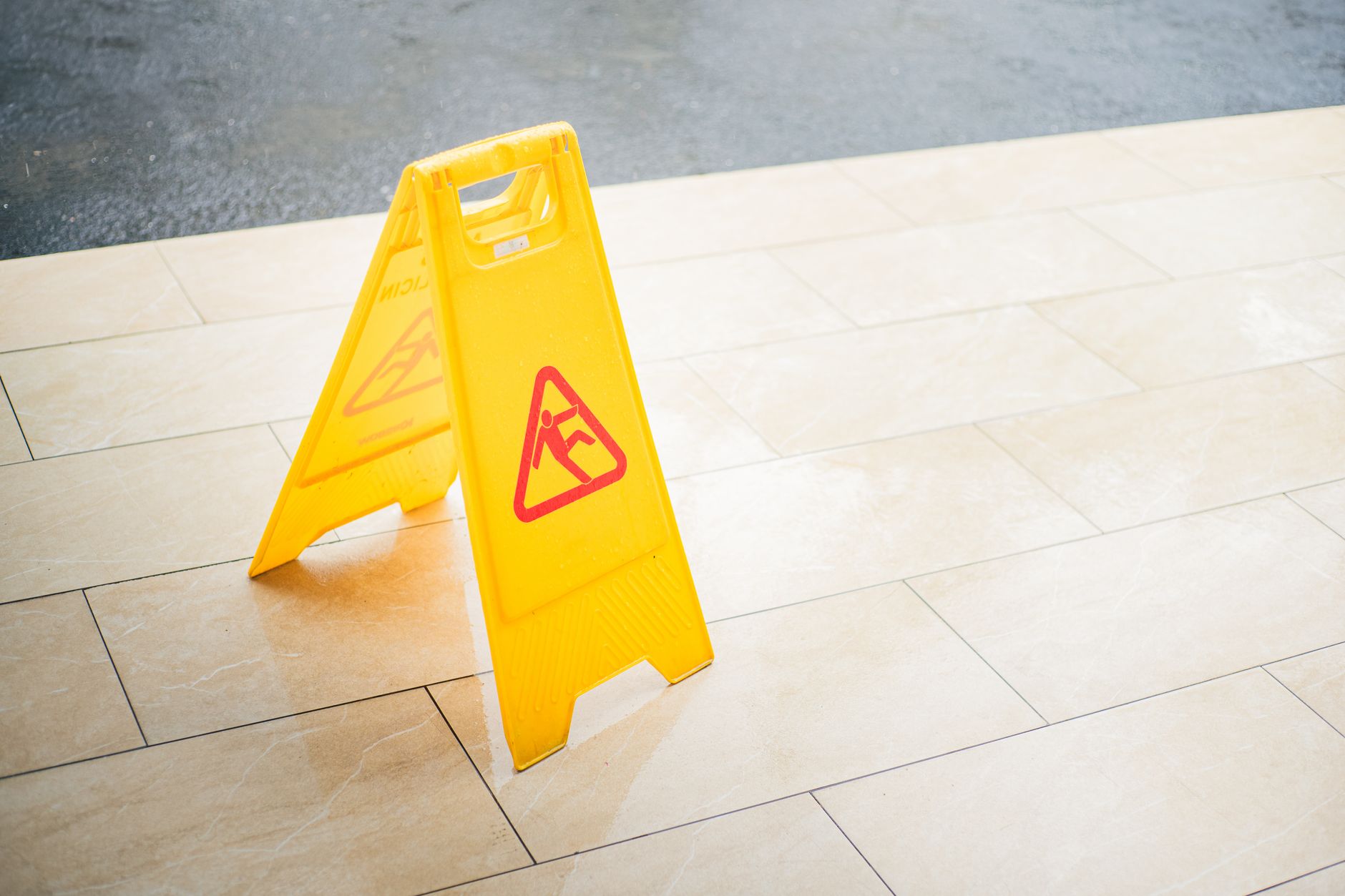
- Stop outside active spill-response zones while staff place signs and remove hazards.
- Avoid exposed-food areas when robot movement could spread dust, spray, or cleaning fluid.

The heavier scrub belongs after close
Post-close cleaning begins with a floor reset. Vendors pull displays back to agreed parking lines, staff remove cartons and large debris, mats are lifted, cords are secured, and problem areas are marked. The robot can then follow an unobstructed map instead of improvising around a different obstacle every few feet.
Use a debris-first sequence. Dry pickup protects squeegees, filters, and recovery systems from stems, labels, bands, and fibrous produce waste. The scrub pass can then concentrate on greasy traffic lanes, sticky seating areas, entrances, and transitions between cooking stalls and shared corridors.
A 2024 cleaning specification for Cleveland's West Side Market illustrates the distinction. It described roughly 17,000 square feet of common walkways and entrances in Market Hall, ongoing debris and spill response during public hours, and machine scrubbing three times per week during closed hours. That is a site-specific schedule, not a universal prescription, but the operating split is instructive.
Food safety changes the cleaning schedule
The FDA's 2022 Food Code is the agency's most recent full edition and serves as a model for state and local rules. It says physical facilities should be cleaned as often as necessary and, except for spills or accidents, cleaning should occur when the least food is exposed, such as after closing. Local health requirements still govern each market.
The same code calls for dustless floor-cleaning methods under normal conditions. That supports controlled wet cleaning, vacuuming, and other methods that do not throw debris toward food, utensils, linens, or single-use articles. Open-hours routes should therefore stay away from active preparation and exposed displays unless the site's food-safety lead has approved the procedure.
Do not treat a floor scrubber as food-contact sanitation equipment. Use approved chemicals at the specified concentration, prevent cross-use of tools between incompatible areas, empty recovered liquid at an authorized location, and clean the machine itself. Vendor leaseholds and common areas also need explicit ownership, especially where grease crosses the boundary.
How should a market choose and pilot a robot?
Start with soil and geometry, not a product brochure. A commercial robotic floor cleaner must pick up the market's real debris, recover liquid on its actual flooring, turn through the narrowest approved route, and operate around realistic pedestrian behavior. Demonstrations on an empty, freshly cleaned aisle reveal very little.
A useful commercial robot demo covers an entire operating cycle: opening conditions, a representative busy period, vendor reset, and the post-close wash. Compare an autonomous floor scrubber lease and purchase path using the same acceptance measures, including completed area, interventions, residual soil, drying performance, edge work, setup labor, and recovery after an obstruction.
- Test loose leaves, paper labels, small packaging fragments, sugary residue, and representative grease film.
- Record where squeegees smear contamination or leave water near grout, drains, and transitions.
- Confirm that staff can stop the unit, isolate a spill, edit a temporary zone, and resume safely.
- Inspect floors after drying under the lighting customers actually see.
- Review maintenance access, consumables, remote triage, on-site dispatch, and backup-unit terms before approval.
Scheduling, ownership, and measurement
Create separate maps for patrol cleaning and the post-close scrub. Assign named staff to inspect the opening route, place and remove warning signs, clear displays, respond to alerts, and verify the floor before the public returns. The robot's completion report is evidence of activity, not proof that every surface is clean.
Track completed square footage as a share of assigned area, interventions by location, repeat soil, drying exceptions, manual edge time, and missed routes. Those records reveal blocked zones, failing consumables, poor vendor reset habits, and floor sections that need a different brush or manual method.
Do not hide persistent trouble behind an average coverage figure. A robot that repeatedly skips the greasy lane beside a cooking stall may report a strong completion rate while missing the market's most consequential soil. Review exceptions by zone and by time of day.
One partner should own the operating result
Public markets rarely benefit from choosing a machine in isolation. Service Robot Co. acts as an OEM-neutral commercial robot integrator for U.S. businesses, matching equipment to the floor, soil, traffic, and closing window rather than forcing one manufacturer's catalog onto every site.
The company can finance, deploy, integrate, map, train, and service each unit through a nationwide U.S. engineer network. That gives an operator one vendor across the lifecycle, including robot deployment and integration, go-live support, remote triage, and field service. When comparing a commercial cleaning robot lease, robot leasing for business, or a financed purchase, ask for one accountable operating plan and clearly defined maintenance coverage.