
Key takeaways
- Compact floor robots fit nightly hard-floor lanes, not chemistry-heavy detail work.
- Ventilation and local exhaust matter more than automation when odor and nail dust are the main complaint.
- Fresh solvent spills, disinfection steps, and tight edges still require staff.
- Beauty schools need stricter route control, simpler SOPs, and tighter traffic planning than a typical salon.
Can a compact robot actually help here?
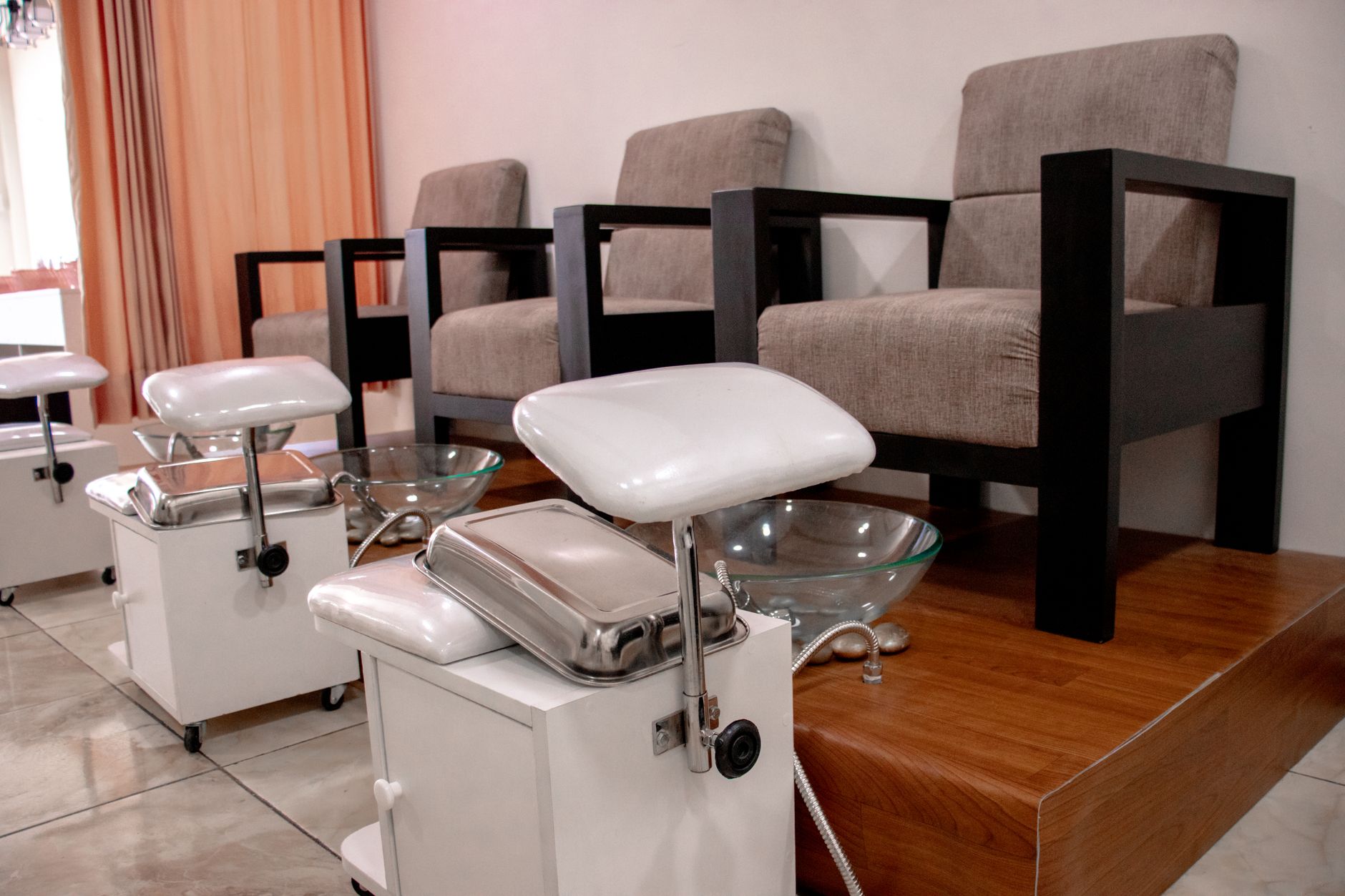
Yes, but only for the part of the burden that is broad, repetitive, and on the floor. In a nail salon or beauty school, a compact autonomous scrubber or vacuum can take over routine passes on open hard-floor lanes, waiting areas, corridors, and classroom perimeters. It cannot replace the hands-on work around manicure tables, pedicure stations, chemical storage, and fresh spills.
The safest fit is small facility cleaning after close or before first appointment, once chairs are pushed in, cords are lifted, and loose tools are off the floor. Some sites can also run short daytime loops, but only on predictable paths with staff nearby and customer traffic low.
If your main pain is dusty floors, tracked-in debris, and nightly mopping, automation can help. If your main pain is odor, sticky worktops, soaked cotton, tool sanitation, or residue baked onto chair bases, staff still own the job. The real win comes from dividing the work cleanly instead of asking one machine to do everything.
Why are these floors trickier than they look?
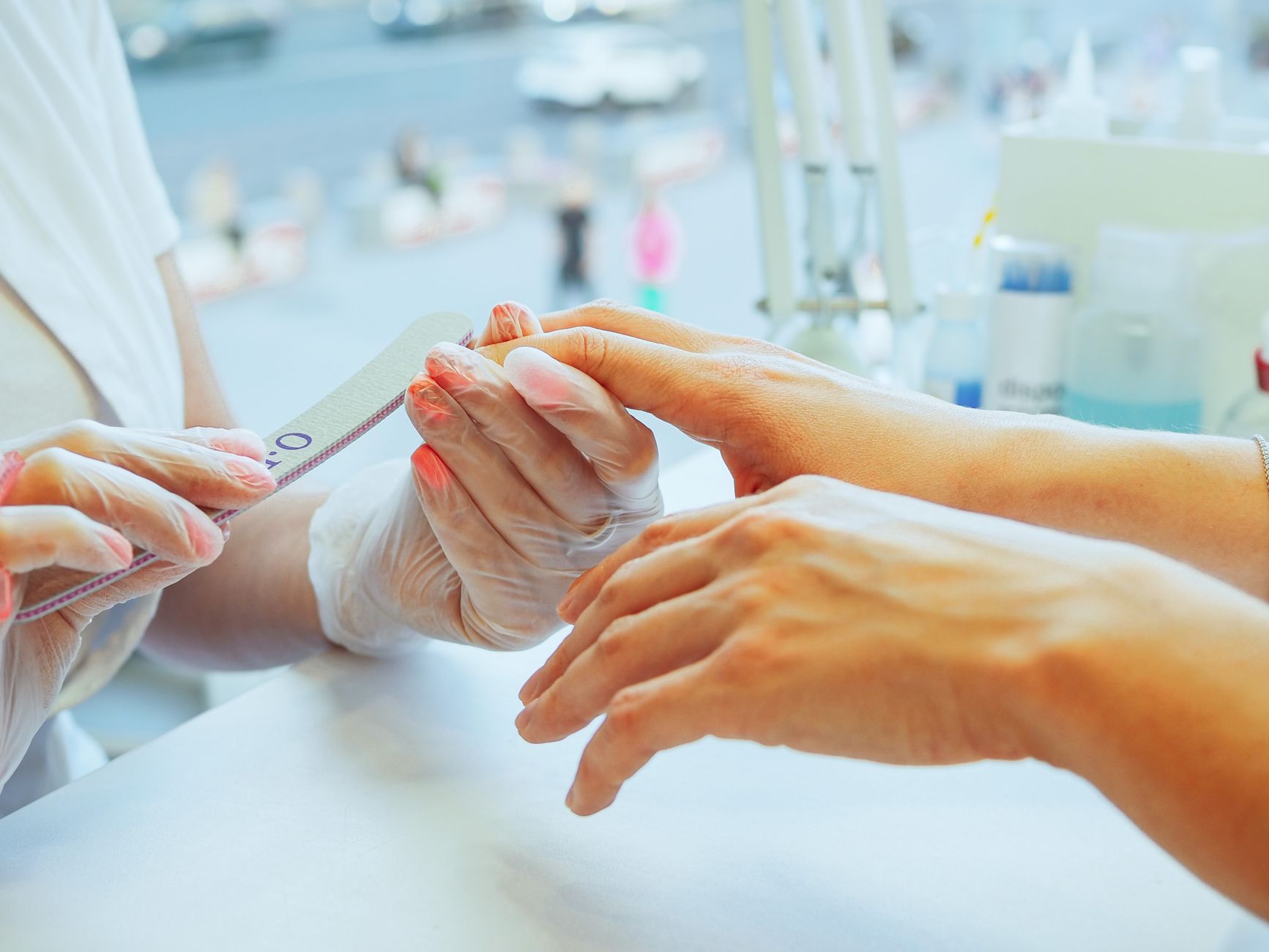
These facilities pack several headaches into a small footprint: clipped nail dust, hair, powder, lotion, solvent residue, and constant chair movement. According to a CDC nail technician page updated January 16, 2026, the United States has over 400,000 active nail technicians, and the agency notes that workers can be exposed to dozens of chemicals as well as awkward, repetitive tasks. That is why the environment punishes vague automation claims.
OSHA's nail salon guidance says workers may breathe harmful vapors, dusts, or mists from products that include acetone, ethyl acetate, methacrylates, quaternary ammonium disinfectants, formaldehyde, and toluene. A compact robot can keep settled debris from being tracked around the room. It does nothing to stop vapors at the source, which is why air control and floor automation have to be planned separately.
What work can be automated safely?
What fits well is repeatable floor work. That includes daily dry pickup on hard floors, light scrub passes on open circulation lanes, entry cleanup after rainy traffic, and perimeter cleaning in reception, retail displays, hallways, and student corridors. Those are tasks where consistency matters more than judgment.
For many sites, the sweet spot is overnight cleaning no operator in pre-cleared zones, followed by a brief staff walkthrough at open. That is where a compact machine earns time back. It handles the boring square footage, while staff handle the exceptions.
The best candidates have hard floors, consistent furniture placement, and at least one path that stays usable from week to week. Tight sites can still work, but the robot should be treated like a scheduled floor tool, not like a roaming janitor.
- Open hard-floor lanes between stations once stools and cords are reset
- Reception, waiting areas, hallways, student corridors, and retail edges
- Light daily soil, tracked dust, and hair that has settled onto the floor
- Repeatable closing or pre-open runs with a clear charging spot
Which tasks still belong to staff?
The tasks that stay manual are the ones that involve chemistry, infection control, or tight geometry. Fresh polish remover spills, primer drips, adhesive residue, saturated wipes, and anything pooled around outlets or cords need a person, not an unattended machine. OSHA lists acetone with a flash point of 0 degrees Fahrenheit and a lower explosive limit of 2.5 percent. Treat volatile spills accordingly.
OSHA also requires walking-working surfaces to be kept clean, orderly, sanitary, and, to the extent feasible, dry. Hazardous conditions such as spills have to be corrected before employees use the area again. In practice, that means a robot is not your spill-response plan. Staff need a fast manual protocol for isolating, ventilating, and cleaning the spot.
Detail work also stays human: under manicure tables, around pedicure chairs, behind rolling carts, along baseboards, on chair rings, and anywhere residue needs scraping rather than scrubbing. Tool disinfection, bowl turnover, table wipe-downs, and trash handling remain hands-on jobs.
- Fresh chemical spills and any cleanup governed by an SDS
- Tabletops, armrests, chair bases, pedicure basins, and tool-contact surfaces
- Corners, cable nests, toe-kicks, and tight furniture clusters
- Spot calls that need a judgment decision right now
Dust and odor control is a ventilation job first
Nail dust and chemical odor are often the real complaint, and that is where owners need to stay disciplined. According to the CDC, good ventilation and local exhaust at workstations are core controls for nail salons. Portable exhaust units and downdraft ventilated tables attack the problem where it starts. Floor cleaning comes after that, not before.
NIOSH guidance on artificial fingernails says a downdraft face velocity of 620 feet per minute over a 13 by 4 inch opening works well, with an exhaust fan of at least 250 cubic feet per minute. In another NIOSH evaluation, a recirculating manicure table measured at 62 cfm was judged inadequate; after it was modified to 235 cfm and vented outdoors, personal exposures dropped by more than tenfold.
That is source capture in plain terms. If odor is the headline problem, start with closed containers, source capture, and outdoor exhaust. A robot can remove settled dust from the floor so less debris gets spread under shoes and chair casters. It cannot replace local exhaust, and it should never be sold as an air-quality fix.
How do beauty schools change the equation?
Beauty schools add another layer. They have more simultaneous activity, more rolling kits, more novice operators, and more schedule churn than a typical salon. Traffic peaks around class changes, practical exams, and clinic hours. That usually pushes the best robot window to after the last class, before first class, or a tightly managed midday block.
If the school teaches hair services as well as nails, the air plan gets stricter. OSHA says some hair smoothing products may release formaldehyde above permissible limits, and its guidance for salon owners and beauty schools lists limits of 0.75 parts per million over an 8 hour shift and 2 ppm over 15 minutes. A floor robot is useful here, but only after the ventilation and product-handling plan is sound.
The CDC also notes that approximately 46 percent of nail technicians born outside the United States do not speak English well. On mixed training floors, that argues for short visual SOPs, simple route names, and hands-on go-live training. Automation only sticks when the people resetting the room can understand it quickly.
How should a small site buy the right fit?
For small facilities, the buying question is usually less about raw square footage and more about fit: dock placement, turning room, water handling, obstacle recovery, and how much prep the closing crew can realistically do. A machine that shines on a wide open floor is not the same thing as a machine that can snake through manicure lanes without constant babysitting. Small-site automation lives or dies on fit.
This is where a vendor neutral robot integrator earns its place. Service Robot Co. picks the right robot across manufacturers, then handles purchase or lease, robot financing for small business, deployment, integration, staff training, and service through a nationwide US engineer network. For an owner comparing commercial cleaning robot leasing, autonomous floor scrubber leasing, or robot floor cleaner leasing options, one vendor for the whole lifecycle is more useful than a stack of spec sheets.
That also changes the financing conversation. Some salons and schools want a commercial robot lease, robot leasing monthly arrangement, or leasing structure with RoboCare™ service and no upfront capital. Others prefer ownership. The right answer can be a month to month robot lease, a longer robot leasing for business plan, or a direct buy, but only after the floor and service model make sense.
What does a sensible first pilot look like?
The best first move is a small, disciplined robot pilot program. Map one repeatable zone, usually reception plus circulation lanes, then measure what staff still touch by hand after the run. If the robot consistently clears the broad floor work and the manual checklist shrinks to detail cleaning, you have a real fit. If staff have to rescue the machine again and again during the shift, you do not.
Service Robot Co. approaches that as turnkey robot deployment, not a box drop. The process should start with a free site assessment, then route mapping, go-live training, service response, and clear rules for chemical spills, table reset, and charging. For operators who want to try before you buy, that pilot tells you quickly whether a compact unit fits your lanes, your close routine, and your tolerance for prep.
- Hard-floor lanes that stay mostly consistent day to day
- A storage and charging point away from solvent handling
- A closing checklist that lifts cords, closes containers, and repositions stools
- A morning walkthrough so staff can handle edges, spills, and sanitation details