

Key takeaways
- A cobot can repeat a validated bead path, but metering, fixturing, surface preparation, and material control determine the bond.
- Long RV panels often require a linear rail, indexed fixture, or coordinated part motion rather than a longer arm alone.
- Bead inspection should verify continuity, position, width, and height before the joint becomes hidden.
- Every model recipe must control the path, flow, speed, standoff, inspection limits, and adhesive working window.
- Nozzle care, purge logic, and planned service are production requirements, not housekeeping details.
How do cobots improve RV sealant application?
Cobots can apply repeatable adhesive and sealant beads to RV sidewalls, roofs, floors, frames, window openings, and interior assemblies. The arm carries a dispensing nozzle along a programmed path while a metering system regulates material flow. That combination controls bead location, cross section, start points, corner behavior, and cutoff more consistently than an operator working across a long panel by hand.
The arm alone does not guarantee a sound joint. A capable cell also needs controlled surface preparation, reliable part location, stable material temperature and pressure, a nozzle sized for the specified bead, and inspection before the bond disappears beneath the mating panel. Cure conditions and assembly timing must be treated as part of the automation recipe.
The production setting is substantial. The RV Industry Association reports 342,220 wholesale RV shipments in 2025, including 306,191 towables and 36,029 motorhomes. At that volume, reducing bead variation, excess material, rework, and repetitive reaching can matter across thousands of assemblies without forcing every plant into inflexible dedicated machinery.
Which RV joints are good candidates?
The best first application has a defined joint path, repeatable part presentation, measurable bead requirements, and enough recurring volume to justify programming and validation. Long, awkward beads are especially attractive because manual application can require walking, stretching, ladder work, and repeated gun repositioning.
The engineering team should begin with the joint specification, not the robot catalog. It must define substrates, cleaning and priming steps, allowable gaps, bead geometry, open time, clamp or fixture requirements, cure conditions, and the inspection record needed for release.
- Perimeter sealing around roof, wall, floor, window, door, hatch, and slide-out assemblies
- Structural or semi-structural bonding of laminated panels, reinforcement members, trim, and floor components
- Gasketing beads around penetrations, vents, access panels, utility interfaces, and exterior attachments
- Short recurring beads on cabinets and interior modules when fixtures can locate each variant accurately
How should a cell reach full-length panels?
RV bodies create a reach problem that cannot be solved by arm reach alone. A pedestal-mounted cobot may cover a compact subassembly, but a full sidewall or roof can require a linear rail, an indexed fixture, coordinated conveyor motion, or two work zones. The preferred layout keeps the nozzle in a favorable orientation and avoids programming near singularities or the edge of the arm envelope.
Reach studies must include the dispenser, hoses, dress pack, nozzle, and safe bend radii. Material hoses add drag and can shift the tool center point if routing is poor. Simulating only the bare arm produces a cell that looks adequate on screen and struggles around corners, tall features, or the far edge of a panel.
Part location also matters. Hard stops and datum pins may be sufficient for rigid frames. Flexible laminated panels may need distributed support plus vision or probing to compensate for bow and placement error. For very large parts, moving the panel through indexed stations can be simpler than sending the arm down a long axis.
What should bead inspection measure?

A presence check is not enough. A useful inspection plan looks for continuity, lateral position, width, height or cross-sectional area, start and stop placement, corner fill, skips, bubbles, tails, and material on forbidden surfaces. The exact reject limits must come from joint testing and the adhesive process specification.
A two-dimensional camera can catch missing material and obvious path drift, but it cannot reliably prove bead height. A laser profile sensor or other three-dimensional method is better when cross section matters. Flow, pressure, temperature, robot speed, and dispense-valve state should also be logged because they can reveal a process shift before visible defects become common.
NIST distinguishes robot repeatability from accuracy. An arm may return consistently to the same point while that point remains offset from the intended joint. First-article measurement, tool-center-point calibration, fixture checks, and periodic path verification are therefore essential. Inspection images and process data should be tied to the unit or panel serial number when traceability warrants it.
How do open time and curing shape production?
Cure behavior sets the real pace of the cell. The U.S. Sikaflex 252 product data sheet, for example, lists a 35-minute open time and 40-minute skin time at 23 degrees Celsius and 50 percent relative humidity, with an application range of 10 to 35 degrees Celsius. Those figures are product-specific, but they show why dispense, mating, fastening, and clamping must be scheduled as one process.
Another polyurethane adhesive-sealant data sheet lists a 50 to 60-minute tack-free time and a typical cure rate of 4 millimeters per 24 hours. A skin on the surface does not mean a thick bond line has cured through. Joint depth, humidity, temperature, substrate permeability, and chemistry can all alter the practical handling window.
The recipe should prevent a panel from advancing when the elapsed time between dispensing and mating exceeds the validated limit. Plants also need rules for breaks, line stops, material changes, and environmental excursions. Cure racks, clamps, temporary fasteners, or downstream supports must hold geometry until the joint has enough strength for handling.
Nozzle maintenance protects the process
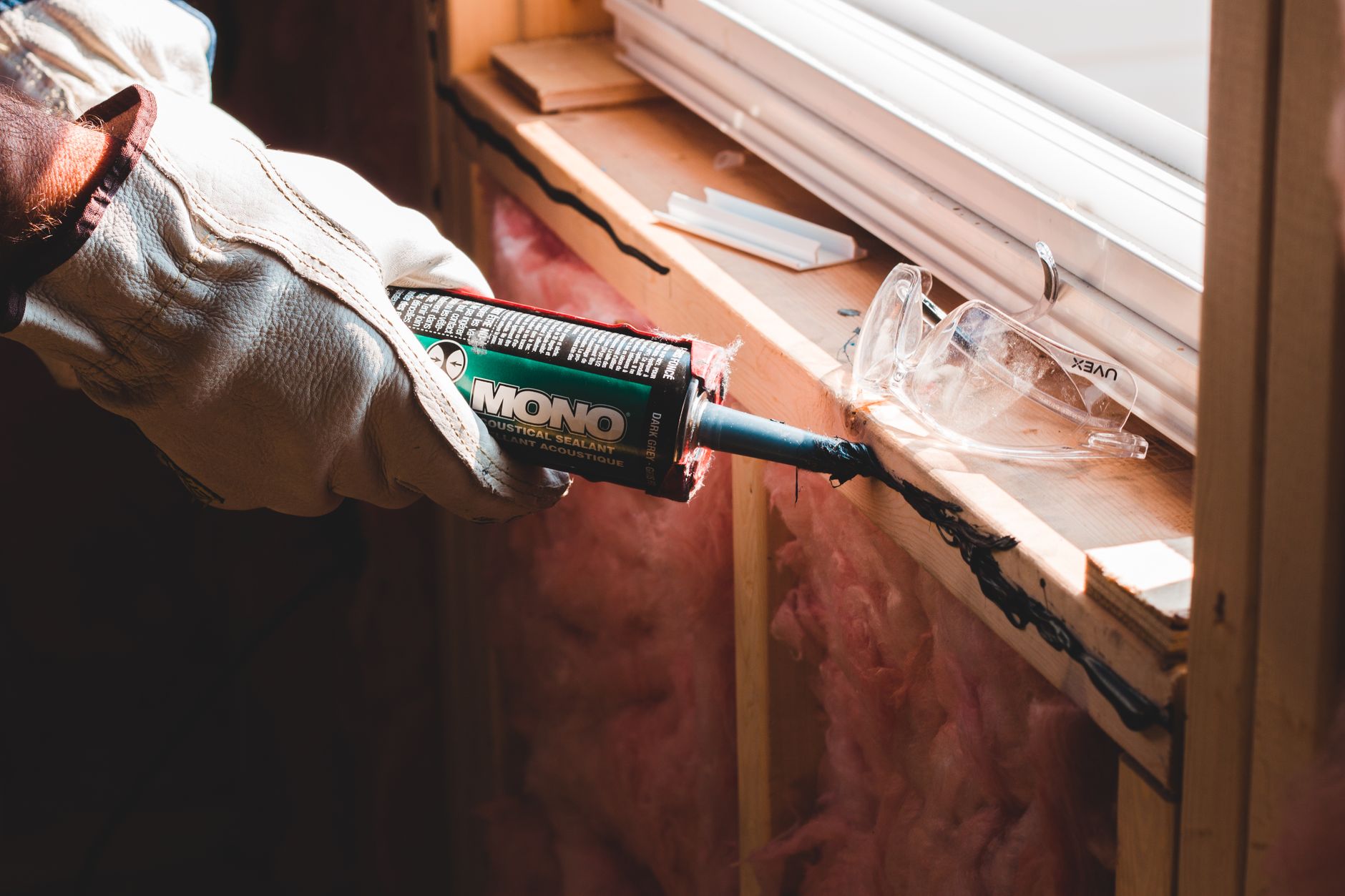
A partially cured nozzle changes backpressure and bead shape long before it stops dispensing. Good cell design includes automatic purge or recirculation logic, a covered purge cup, a repeatable nozzle-cleaning station, pressure monitoring, and a safe procedure for tip replacement. Two-component materials may require a timed purge after idle periods so mixed material cannot harden in the static mixer.
Maintenance intervals must follow the selected valve, material, and duty cycle. One current dispense-valve manual for a typical automated application using moderately abrasive sealant calls for daily checks for visible leakage or damage, inspection at least every two weeks, and several maintenance checks monthly or every 30,000 cycles. Those are equipment-specific intervals, not universal rules, but they illustrate the required discipline.
Track nozzle life, purge volume, pressure trends, material lot, and failure mode. Keeping prequalified tips, mixers, seals, and cleaning tools at the cell prevents a cheap consumable from stopping an RV line. Operators should never improvise with a damaged or enlarged nozzle because the resulting bead is no longer the validated process.
How can one cell handle frequent model changes?
High-mix RV production favors recipe-driven automation. Each model and option code should call a controlled package containing the path, tool orientation, bead size, flow rate, travel speed, standoff, start and stop behavior, purge sequence, inspection limits, and expected material usage. Fixtures and connectors should be mistake-proofed so the cell can confirm that the correct part is present.
Offline programming can shorten changeovers, but every new recipe still needs a dry run, collision review, first-article bead inspection, and joint validation. Golden-part images and approved process records give production a known reference. Revision control matters because a quiet CAD change can move a seam, opening, bracket, or fastener into the dispensing path.
A practical robot pilot program should begin with a representative family of products, not the easiest single model. Include short and long units, common option packages, realistic panel variation, scheduled breaks, material replenishment, and recovery from an interrupted bead. That test reveals if cobot leasing for manufacturing or permanent ownership fits the production pattern.
Safety, deployment, and lifecycle support
A collaborative arm does not make the entire application collaborative. The nozzle can create pinch, puncture, pressure-injection, chemical, and hot-surface hazards. Long rails, moving fixtures, clamps, and unexpected restart add further risks. OSHA says collaborative applications require an application-level hazard analysis and risk assessment, ideally involving the employer and workers.
ISO 10218-2:2025, published in February 2025, addresses the integration, commissioning, operation, maintenance, and decommissioning of industrial robot applications. The assessment may lead to guarded areas, monitored stops, reduced-speed setup modes, safe access for nozzle service, lockout procedures, or separation monitoring. The correct measures depend on the complete cell and its tasks.
Service Robot Co. acts as an OEM-neutral, full-service commercial robot integrator for U.S. businesses. The team can conduct a free site assessment, select the arm and dispensing equipment across manufacturers, arrange collaborative robot arm leasing, financing, purchase or lease, integrate inspection and controls, train operators, and support the cell through a nationwide U.S. engineer network.
That one-vendor lifecycle is useful when the cell combines motion, material handling, vision, safety controls, and production data. Monthly payment programs or a cobot lease can reduce the initial capital burden, while robot deployment and integration, remote triage, on-site dispatch, maintenance, and operator training remain under one point of responsibility.
Frequently asked questions
Sources
- RV Industry Association 2025 shipment report
- RV Industry Association 2025 industry profile
- OSHA industrial robot safety guidance
- ISO 10218-2:2025 overview
- NIST robot accuracy and repeatability guidance
- Sikaflex 252 U.S. product data sheet
- Polyurethane adhesive sealant technical data sheet
- Automated dispense valve maintenance manual