
Key takeaways
- Specify the adhesive process first, then choose the cobot around its payload, reach, path, and safety demands.
- Keep the two components separate until the dispense valve and size every purge from actual mixed volume and idle time.
- Verify ratio, flow, pressure, temperature, and bead geometry because robot repeatability alone cannot prove a sound bond.
- Calculate mixers, purge material, cleanup, and changeover loss as production costs before comparing automation proposals.
What should manufacturers specify first?
A successful cell starts with the sealant data sheet, not the cobot catalog. Document the required ratio, allowed off-ratio tolerance, component viscosities, target bead geometry, production flow rate, work life, cure conditions, and maximum permitted idle time. Those values determine the pumps, mixer, valve, controls, hose conditioning, and inspection method.
The cobot must then carry the complete dispensing package through the required path at a stable speed. Its rated payload must cover the valve, static mixer, brackets, sensors, hose dress, and dynamic hose forces. Reach studies must include every joint orientation, approach move, purge station, service position, and potential collision with the fixture.
Treat pot life as a control limit. Keep resin and hardener separate until they reach the dispense valve, minimize downstream mixed volume, and trigger a purge before material can gel inside the mixer. The best specification connects material behavior, metering performance, robot motion, inspection, and waste accounting in one acceptance test.
- Approved material, batch range, storage temperature, and conditioning rules
- Ratio by weight and volume, including the adhesive maker's tolerance
- Target bead width, height, location, start point, stop point, and allowable gaps
- Minimum and maximum flow rate across every production recipe
- Work life, open time, mixer or nozzle life, and cure schedule
- Required records for each part, batch, recipe, alarm, purge, and inspection result
Why do mix ratio and pot life dominate the design?
Two-part sealants can have radically different processing windows. A current 3M data sheet lists one structural adhesive at a 100:27 ratio by weight, a 100:31 ratio by volume, more than 60 minutes of work life, and 20 minutes of open time at 23 degrees Celsius. Another 3M adhesive uses a 10:1 ratio and has a 3-minute work life. A cell designed around the first material could clog or produce unusable joints with the second.
Ratio must be defined on the same basis used by the metering system. A weight ratio cannot be entered as a volume ratio unless component densities support the conversion. Temperature also matters because it changes viscosity, pressure loss, flow balance, and reaction speed. Material conditioning should follow the adhesive supplier's permitted range, with actual temperature measured near the process rather than inferred from room temperature.
Pot life, work life, and open time are not interchangeable. Pot life often describes a mixed mass, while material dwelling in a narrow static mixer can heat and react differently. Open time governs how long the bead can wait before parts are joined. The control recipe should therefore hold distinct timers for mixer dwell, part assembly, and cure handling.
Which pumping and mixing equipment fits the process?
Choose metering technology from viscosity, abrasiveness, ratio, flow range, shot pattern, and maintenance needs. Positive-displacement piston systems suit repeatable shots and high pressures. Paired progressive-cavity pumps suit continuous, low-pulsation beads and can tolerate changing viscosity when properly sized. Bulk pails or drums may also require follower plates, ram unloaders, agitation, vacuum preparation, or conditioned hoses.
Pump accuracy must be evaluated as a two-channel system. Nordson EFD currently specifies plus or minus 1 percent fluid-volume accuracy for one paired progressive-cavity platform, but equipment capability is not the same as finished-process capability. Feed pressure, entrained air, worn seals, filler settlement, cavitation, hose compliance, and an obstructed mixer can still disturb the delivered ratio or bead.
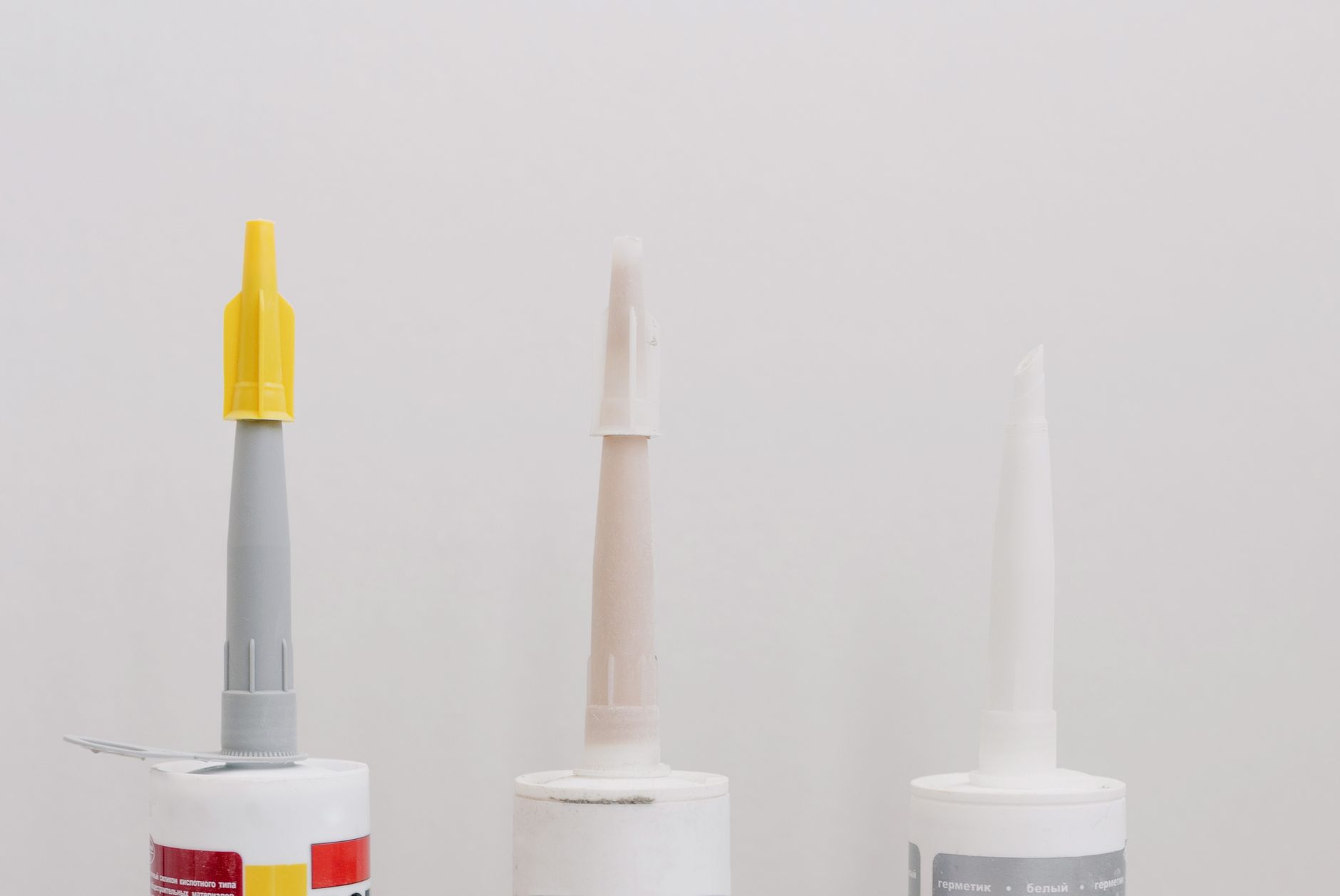
Static mixer geometry is chemistry-specific. Nordson EFD's selection guidance suggests 15 to 24 elements for epoxies and 24 to 36 for polyurethanes, with higher ratios generally tending toward more elements. More elements can improve mixing, yet they also add backpressure and retained volume. Confirm the final mixer through cured samples, destructive testing, and production-rate trials rather than accepting a catalog rule as proof.
Place the valve as close to the mixer as practical so only a small volume becomes reactive. Balance the A-side and B-side flow paths, provide pressure sensing upstream of the valve, and make the disposable mixer accessible without forcing technicians into awkward contact with uncured material.
How should purge cycles be engineered?
A purge cycle is a measured production operation, not an arbitrary squirt into a bucket. A 2022 Nordson dispensing manual states that the mixed purge shot must expel the entire contents of the mixer. Establish that volume from the selected mixer and downstream nozzle, then validate it by examining color, cure, and ratio at the transition.
Use an idle-time warning before the conservative mixer-life limit, followed by an automatic purge or controlled fault. The right action depends on the material, staffing, and safe waste handling. A cell should never restart after a long pause merely because the cobot is ready. It should confirm that the material path is fresh, pressure has stabilized, and the purge was completed.
Graco's ratio-check guidance warns that the first shots can be skewed while system pressure builds. It calls for purge shots until pressure stabilizes and recommends using the production flow rate and shot size during validation. For continuous dispensing or material-sensitive checks, its guidance says the test shot should be at least 15 percent of the combined metering-pump volumes.
Record every purge by cause: scheduled idle purge, restart, ratio alarm, material change, mixer replacement, maintenance, or operator command. That history reveals chronic micro-stops, oversized mixers, unstable supply pressure, and upstream delays that quietly consume sealant.
What should bead inspection actually verify?
Robot path repeatability does not prove that usable sealant reached the joint. Inspection should combine process evidence with bead evidence. Process sensors watch A-side and B-side pressure, pump displacement, calculated ratio, flow, temperature, valve state, and purge completion. Bead inspection checks what landed on the part.
A two-dimensional camera can detect presence, continuity, gross width, start and stop position, and some contamination. A three-dimensional profile sensor adds bead height and cross-sectional area, which is useful when deposited volume affects squeeze-out or bond-line fill. Neither method replaces validation of cure or adhesion, so destructive tests and laboratory checks remain part of process qualification.
Teach limits from engineering requirements and measured good parts, not from a cosmetically attractive bead. Run a measurement-system analysis across colors, surface finishes, ambient light, part tolerances, and expected lot variation. Define disposition for a gap, excess bead, misplaced start, sensor failure, and uncertain reading before go-live.
Ratio monitoring at the point of dispense can add another layer. 3M's current adhesive-monitor documentation describes continuous checks of mix ratio, temperature, and cure status, plus time-stamped records. The appropriate sensor set depends on the approved chemistry and traceability requirement, but the principle is sound: verify both the process and its physical result.

How do consumables and changeovers alter the business case?
The visible disposable mixer is only one consumable. Include retained mixed material, automatic purges, startup stabilization shots, ratio-check samples, drip cups, nozzle caps, wipes, gloves, release liners, cleaning media, filters, seals, and rejected parts. Record consumption per good part and per operating hour so low production volume does not hide expensive idle purging.
Calculate mixed-material loss as retained volume per mixer change, plus purge volume per event, multiplied by actual event counts. Keep base and catalyst loss separate when one side is discarded during priming or ratio verification. Also track labor for mixer replacement, waste labeling, cleaning, restart checks, and quality release.
Changeover waste usually grows with the wetted path. Group compatible jobs, put the mix point near the valve, and avoid long mixed hoses. For frequent chemistry or color changes, dedicated wet-end modules may consume less material than flushing a shared circuit. Disposable static mixers are attractive for short-pot-life materials because the reacted section can be removed instead of solvent-cleaned, but the discarded mixer and trapped adhesive still belong in the cost model.
Design the changeover recipe as carefully as the production bead. It should identify the correct material, confirm lot and expiration data, prevent incompatible cross-connection, prime both sides, stabilize pressure, complete a ratio check, install the approved mixer, purge the verified volume, and release a test bead before good production resumes.
A cobot still requires application-level safety
A collaborative arm does not make a dispensing cell automatically safe. The sharp nozzle, high fluid pressure, hot conditioned material, chemical exposure, pinch points, fixtures, and unexpected hose motion all affect the risk assessment. A guarded or speed-and-separation arrangement may be more appropriate than unrestricted proximity during dispensing.
ISO 10218-2:2025, published in February 2025, covers integration, commissioning, operation, maintenance, and decommissioning of industrial robot applications and cells. Apply its system-level approach to the entire cell, including the end effector and process equipment. Safe speed and force settings must be validated with the installed applicator, not assumed from the bare arm.
Plan safe modes for mixer replacement, nozzle cleaning, pressure relief, drum change, sampling, teaching, and jam recovery. Maintenance access should isolate stored fluid pressure and robot motion while preserving the evidence technicians need to diagnose ratio or purge faults.
How should manufacturers buy and validate the cell?
Specify acceptance around good parts, not a dry robot demonstration. The factory and site tests should cover all recipes, lowest and highest flow, cold startup, planned and unplanned pauses, empty-container detection, air introduction, blocked-mixer response, ratio drift, purge timing, changeover, inspection rejects, record retention, and safe recovery.
Service Robot Co. acts as an OEM-neutral, full-service commercial robot integrator for U.S. businesses. That lets the project start with the sealant, takt time, pumping package, and safety case before selecting the arm. The same partner can finance, deploy, integrate, train, and service the cell through a nationwide U.S. engineer network.
Buyers comparing a collaborative robot arm lease, cobot leasing for manufacturing, outright purchase, or leasing program should use the same process specification. Robot financing for small business changes cash flow, not the required ratio capability or quality evidence. A commercial robot demo or robot pilot program is useful only when it dispenses the real material onto representative parts at production conditions.
This one-vendor lifecycle also matters after go-live. Robot deployment and integration, dispensing maintenance, operator training, remote diagnosis, and field service should share one escalation path. When a bad bead appears, the plant should not have to arbitrate among the arm, pump, vision, and controls vendors before production can recover.
Frequently asked questions
Sources
- 3M two-part structural adhesive technical data
- 3M short-work-life structural adhesive specifications
- Graco two-component ratio-check guidelines
- Nordson EFD progressive-cavity pump specifications
- Nordson EFD static mixer selection guide
- Nordson mixed-purge setup manual
- 3M adhesive mix monitoring documentation
- ISO 10218-2:2025 robot application safety standard