
Key takeaways
- A cobot can remove operators from the blast zone, but the abrasive process still belongs inside a guarded, ventilated enclosure.
- Stable part presentation matters as much as robot repeatability because hidden faces, fixture shadows, and loose parts create uneven finishes.
- Nozzle bore, pressure, media flow, angle, standoff, and traverse speed must be controlled together as one process recipe.
- Finish verification should measure the required surface condition, not merely confirm that the robot completed its path.
When does a cobot blasting cell make sense?
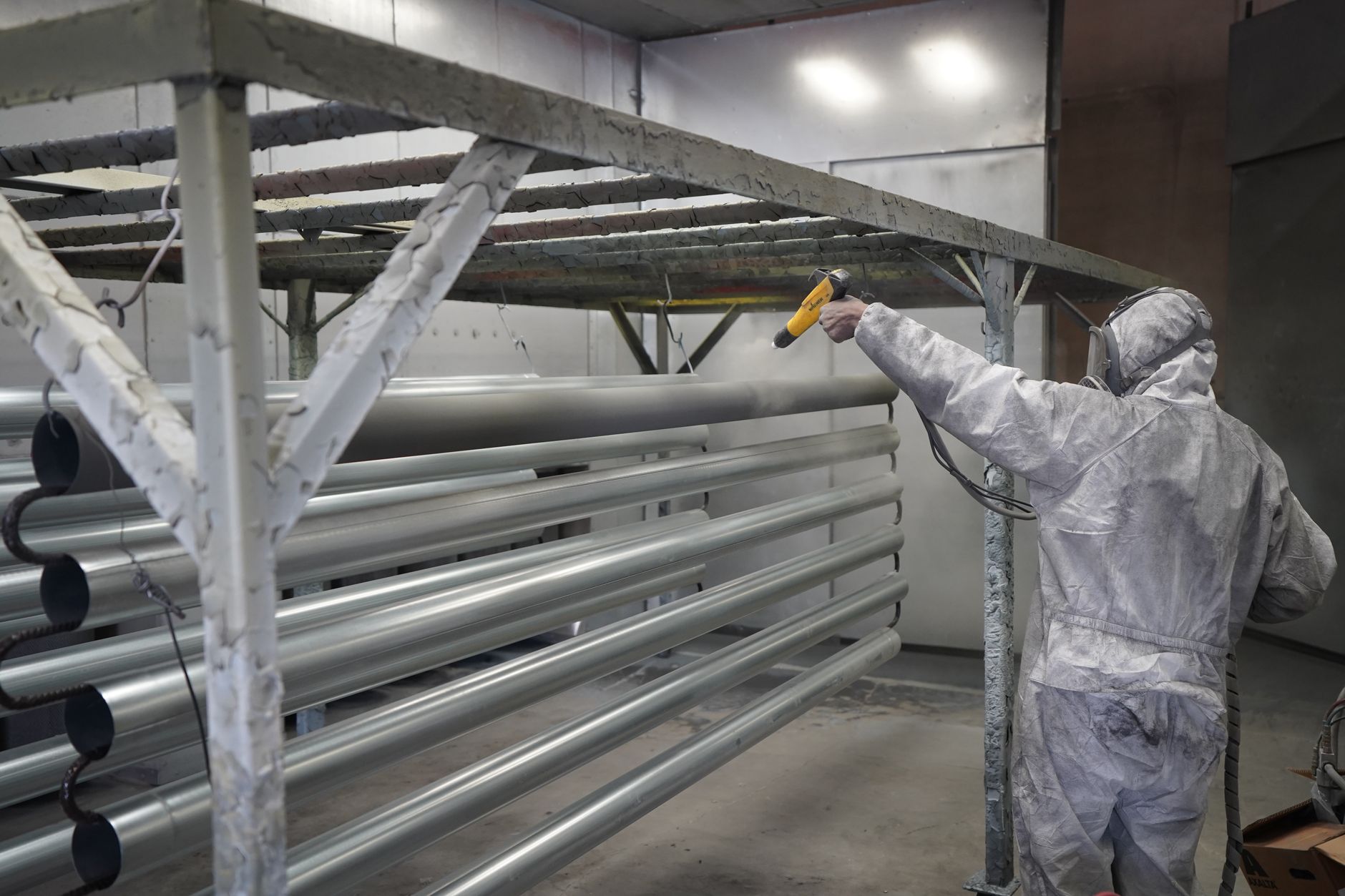
An enclosed cobot cell is a strong fit for small parts that require repetitive abrasive blasting with consistent coverage. The robot can manipulate the nozzle or present the workpiece while operators remain outside the dusty, noisy blast envelope. This reduces routine exposure and gives the shop a repeatable motion recipe.
The best candidates arrive in recognizable part families, sit securely in a fixture, and have a finish requirement that can be measured. Parts with deep blind passages, highly variable contamination, tangled geometry, or unpredictable masking may still require manual judgment or a hybrid process.
Automation does not make the abrasive harmless. NIOSH identifies enclosed blast-cleaning machines, cabinets, local exhaust ventilation, and automated equipment operated from an enclosed booth as engineering controls. The practical goal is controlled separation between people and the blast process, not an unguarded arm working beside an operator.
Why does a collaborative arm still need an enclosure?
The word collaborative describes capabilities of the robot system under defined conditions. It does not neutralize a high-velocity abrasive stream, airborne contaminants, ricochet, compressed-air failures, sharp parts, or pinch points created by fixtures and positioners.
For that reason, most automated blasting applications should be treated as hazardous process cells. Interlocked access doors, guarded transfer points, safe media isolation, emergency stops, and verified stopping behavior belong in the design. OSHA's robotics technical manual also calls for a documented application risk assessment before commissioning.
Door opening should stop robot motion and positively interrupt blasting. Restart should require a deliberate command after the enclosure is secured. Maintenance modes need their own controls because nozzle changes, fixture clearing, and recovery work place technicians closer to stored pressure and residual media.
How should dust and media be contained?
Containment begins with inward airflow. OSHA's ventilation rule requires blast-cleaning enclosures to maintain continuous inward airflow at openings, minimize escaping dust, and clear dusty air before the enclosure is opened. It also requires tight doors and regular inspection and replacement of abrasive-resistant baffles at small openings.
A sound cell therefore coordinates the robot, blast valve, exhaust fan, door locks, and dust collector. After blasting stops, extraction continues for a validated clearance period before access is released. Differential pressure, airflow status, and collector condition should become permissives in the cell controls, not readings that nobody watches.
Media choice does not eliminate the need for exposure assessment. NIOSH recommended against silica sand as a blasting abrasive in 1974 and still advises engineering controls, work practices, respiratory protection, and air monitoring for substitute media. The removed coating and the substrate can introduce lead, silica, or other hazardous constituents even when the fresh abrasive appears benign.
For respirable crystalline silica, OSHA sets an action level of 25 micrograms per cubic meter and a permissible exposure limit of 50 micrograms per cubic meter, both calculated as an 8-hour time-weighted average. Combustible media or dust also requires a separate fire and explosion review, including grounding, bonding, suitable collection equipment, and safe handling of recovered material.
Which components must resist abrasive media?

Abrasive rebounds attack more than the nozzle. Wrist joints, seals, cable jackets, connectors, vision windows, hoses, valves, fixtures, and door hardware all sit in the wear field. A standard dust-ingress rating should not be treated as proof that a component can survive direct particle impingement.
Use sacrificial sleeves, wrist covers, replaceable window films, abrasion-resistant hose routing, guarded connectors, and liners where rebound is concentrated. Keep valves, regulators, sensors, and electrical hardware outside the cabinet when the process permits. Any protective cover must preserve joint motion and avoid trapping media against seals.
Cell layout should make worn items easy to inspect without dismantling the robot. Record service life by blast hours, media type, pressure, and observed wear. That evidence is far more useful than a generic calendar interval because sharp grit, glass bead, steel media, and reclaimed abrasive erode components differently.
How should small parts be presented?
Robot repeatability cannot rescue poor fixturing. The nest must establish a repeatable datum, resist blast force, avoid part movement, and expose every specified surface. Keyed loading, part-presence sensing, and mistake-proof orientation prevent a correct robot path from being applied to an incorrectly loaded component.
There are three common arrangements. The robot can move the nozzle around a fixed part, hold a small part in front of a fixed nozzle, or coordinate with a rotary positioner. Holding the part can simplify hose management and keep the nozzle hardware away from the robot wrist. Moving the nozzle offers more freedom around larger or multi-face components.
Fixtures create shadows, so contact points should sit on noncritical surfaces or change between stages. Replaceable fixture inserts can absorb wear without sacrificing datum accuracy. For mixed production, validated quick-change nests are usually safer than adjustable fingers that invite inconsistent setup.
How does nozzle wear change the process?
Nozzle wear quietly changes the blast recipe. As the bore enlarges or becomes irregular, air demand, pressure, media velocity, pattern shape, and surface profile can drift. The robot may follow the same path perfectly while the finish moves outside specification.
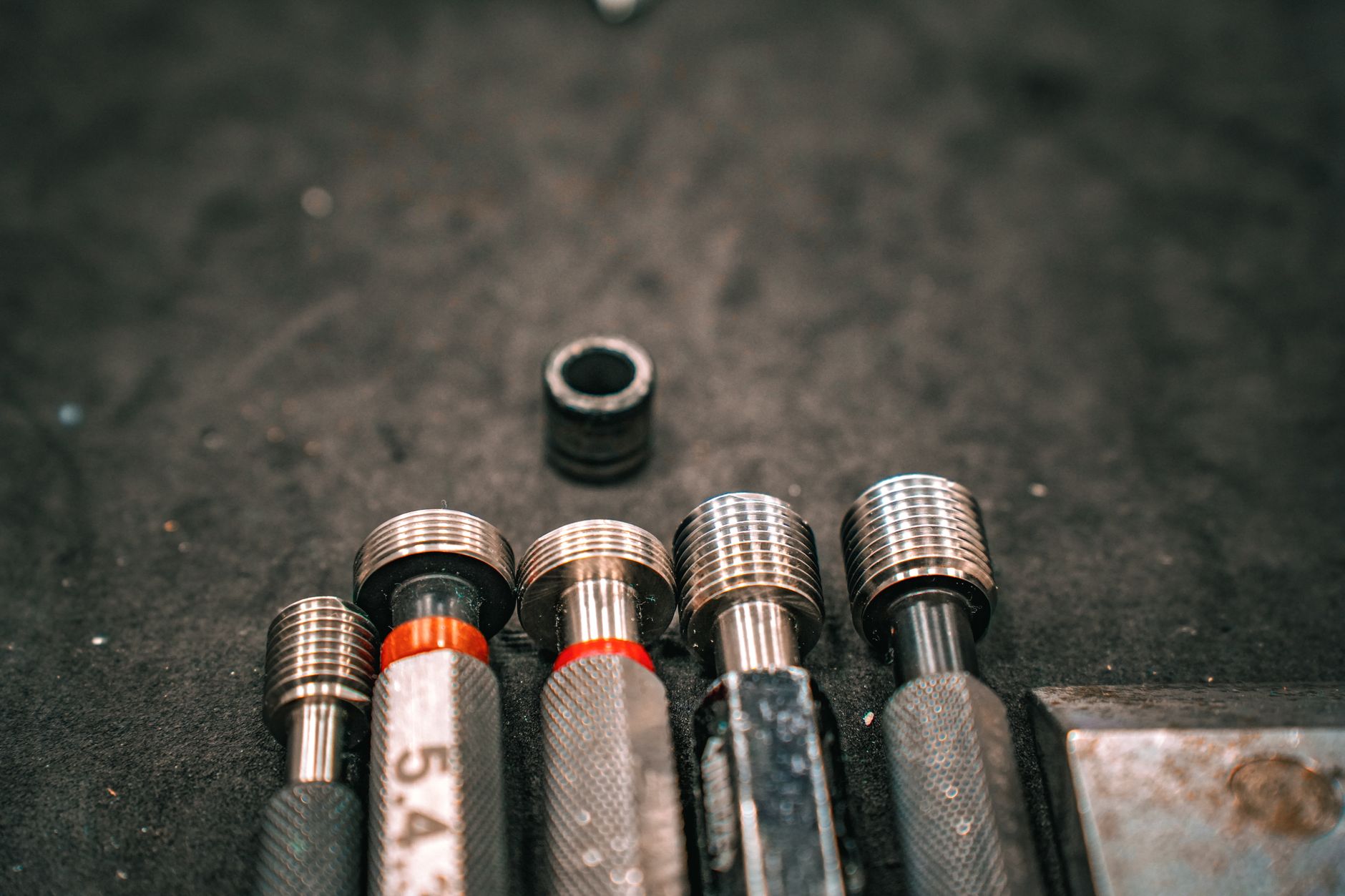
A current abrasive-equipment guide recommends measuring the bore with a nozzle gauge and replacing the nozzle when the orifice has worn more than 1/16 inch beyond its original size. Treat that threshold as equipment-specific guidance, then confirm the limit through process capability data for the actual media, nozzle material, and finish requirement.
The recipe should capture nozzle pressure near the working end, media flow, abrasive condition, standoff, impingement angle, traverse speed, overlap, and part orientation. Trend nozzle bore and accepted-part results together. If pressure compensation merely feeds more air through a badly worn nozzle, it can conceal deterioration rather than control it.
Automatic blasting also needs a fail-safe media cutoff. OSHA requires blast-cleaning nozzles to use an operating valve that must be held open manually in manual applications. In an automated cell, the safety design should provide equivalent positive shutdown through monitored valves and interlocks appropriate to the machine's risk assessment.
How is the finish verified?
Inspection should test the engineering requirement behind the blast operation. That may be coating removal, visual cleanliness, texture uniformity, surface profile, edge coverage, adhesion preparation, or cosmetic appearance. A completed robot cycle proves motion occurred. It does not prove the surface is acceptable.
For blast-cleaned steel, ASTM D4417-21 describes field, shop, and laboratory methods for measuring surface profile and notes that profile height affects coating performance. ISO 8503-2:2012, confirmed as current in 2022, describes visual and tactile grading with comparators for shot-blasted or grit-blasted steel at the applicable cleanliness grades.
Build inspection around an approved master and the governing drawing or coating specification. Use first-part approval after a recipe, media, fixture, or nozzle change. Then apply a sampling plan tied to process risk, with escalation when trend data begins moving toward a limit.
Machine vision can flag missed regions or gross color differences after dust is removed, but reflective parts and subtle texture changes can fool ordinary cameras. Profile instruments, comparators, microscopy, cleanliness tests, or adhesion tests may still be required. Inspection records should retain the recipe revision, media lot, nozzle status, fixture identity, and result.
What should a pilot prove?
A commercial robot pilot program should use representative good parts, difficult geometries, realistic incoming contamination, and the intended downstream coating or finishing step. Test the full process window, not a polished demonstration built around one easy sample.
Measure accepted parts per hour, rework, media used per accepted part, compressed-air demand, collector pressure drop, loading time, inspection time, and maintenance interventions. Include deliberate fault trials such as a misloaded part, blocked extraction, worn nozzle, empty media supply, open door, and interrupted cycle.
The economic case is strongest when blasting is a recurring bottleneck, exposure controls already consume labor, and finish variation causes rework. Shops should count fixtures, extraction, media recovery, inspection, spare wear parts, training, and service alongside the robot. A low robot price cannot compensate for an incomplete process cell.
Who should own deployment and support?
A blasting cell crosses robotics, machine safety, ventilation, compressed air, abrasive handling, fixturing, controls, and quality assurance. Dividing those responsibilities among disconnected vendors creates gaps at the exact interfaces where failures occur.
Service Robot Co. acts as a full-service commercial robot integrator for US businesses. As an OEM-neutral, vendor neutral robot integrator, it can select the appropriate arm and process hardware, arrange financing, complete robot deployment and integration, train the operating team, and service the installed unit through a nationwide US engineer network.
That one partner, one number model is especially useful for abrasive applications because maintenance belongs in the original design. A collaborative robot arm lease, cobot leasing for manufacturing, or another financing structure should still include fixtures, containment, finish validation, spares, and response expectations. The lifecycle is the cell, not merely the arm.
Frequently asked questions
Sources
- OSHA ventilation standard for abrasive blasting
- OSHA respirable crystalline silica standard
- OSHA robotics technical manual
- NIOSH guidance on substituting silica blasting media
- NIOSH abrasive blasting hazard overview
- ASTM D4417-21 surface-profile standard
- ISO 8503-2 surface-profile comparator procedure
- Blast nozzle wear gauge guidance