Key takeaways
- Bag-opening cobots pay off when the same sack size and pour point repeat every batch.
- Local exhaust at the cut station matters as much as gripper choice for flour and spice dust.
- Food-contact surfaces need a documented washdown and allergen changeover plan.
- Vision or weight checks catch partial empties and stray liner fragments before they reach the mixer.
- Technicians stay responsible for allergen sequencing, knife changes, and first-bag approval.
Should you automate bag opening in an ingredient room?
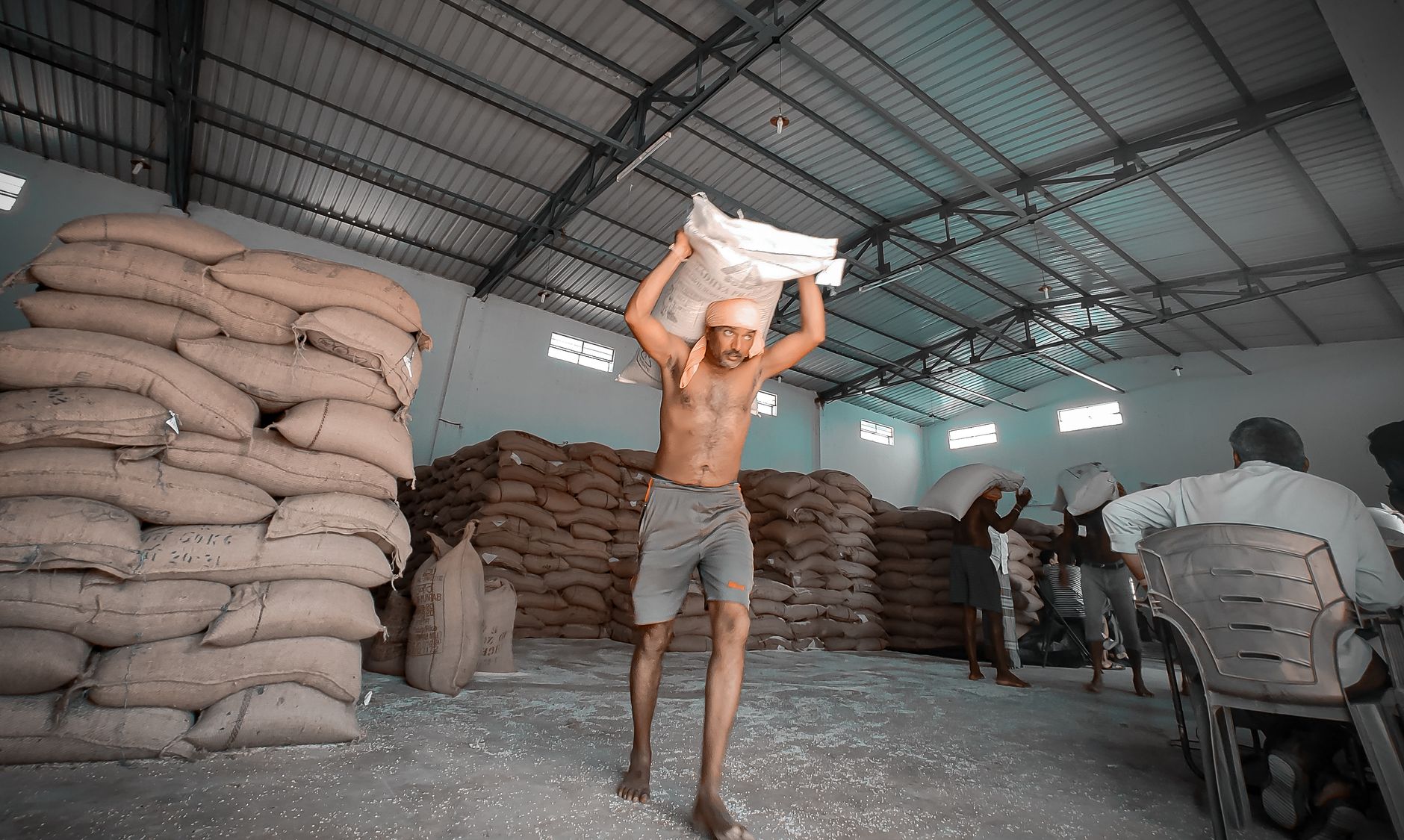
Ingredient rooms live on repetition: lift a sack, slice, pour, discard, repeat. It is tiring work, and it generates dust every time a blade bites woven poly or paper.
A collaborative robot arm fits when bags arrive in predictable sizes, sit on a stable pallet or table, and empty into the same hopper or intermediate bin. It is a weak fit when every supplier sends a different sack geometry weekly and QA has not signed a standard cut path.
The honest starting point is one SKU family on one shift, not every allergen line in the plant on day one.
Which motions can a cobot own in the cell?
Most cells combine lift, orient, cut, invert, and shake. The lift may be a vacuum assist or a mechanical clamp on reinforced bags. Orientation uses a fixed nest or a light barcode scan so the cut line lands where recipe control expects.
Cutting belongs in a guarded station with a disposable or sanitized blade module. Inverting and dwell time release packed flour or sugar that would otherwise stay in the corners. A short shake cycle beats forcing the arm to whack the bag against the hopper.
Some plants stop at intermediate containers. The cobot empties into a wheeled bin that a person moves to the mixer. That split keeps the robot out of washdown zones that change every hour.
- Pick from pallet or table nest
- Present bag to fixed cut fixture
- Invert over hopper with timed dwell
- Optional shake or vibration assist
- Discard empty sack to lined waste chute
How do dust extraction and housekeeping interact with the robot?
Flour, starch, cocoa, and spice fines behave like fuel when they stay airborne. NIOSH manual material handling guidance treats dust alongside force and posture because all three drive injury and contamination risk.
Capture at the cut point with a hood tied to your plant dust collection system. Keep negative pressure in the cell relative to packaging areas when allergens are involved. Robots do not replace explosion mitigation programs where combustible dust rules already apply.
Schedule wipe-downs on end effectors and nests between allergen runs. Log each changeover so QA can tie a batch to the cleaning record.
What food-contact and sanitary design choices matter?
Separate food-touch parts from frame hardware that never meets product. Use materials your sanitation team already approves for utensils and hoppers. Avoid porous grips that trap powder in seams.
Mount electronics and controllers outside splash zones. Route cables so washdown spray does not pool on connectors. If the room is chilled, spec heaters or condensate paths so dew does not drip into open hoppers.
Document which tools are single-allergen dedicated versus shared with full tear-down. Auditors will ask for that map before they ask about cycle time.
How do you prevent foreign material from reaching the mixer?

The classic failures are liner fragments, cut twine, and partial empties. A mesh or grate above the hopper catches large pieces. Weight check after pour flags bags that still feel heavy.
Some cells add a brief vision pass on the empty sack before discard. Others rely on operators to spot-check one bag per pallet. Pick the level of inspection that matches your hazard analysis, not the fanciest sensor quote.
Track discard counts. A sudden rise often means blade wear or a supplier changed bag laminate without notice.
How should variable bag sizes be handled?
Standardize on as few sack formats as procurement allows. Each format gets a recipe: pick height, cut depth, invert time, and shake profile.
When a new size appears, run manual first articles before the recipe goes live. Teach points should reference fixture datums, not eyeball offsets on the hopper rim.
If suppliers rotate graphics but keep dimensions, store recipes by SKU barcode rather than by artwork.
What does operator safety look like at the cell?
Collaborative speed limits help when people replenish pallets inside the reach envelope. They do not replace guarding around sharp cut tools. Use interlocked doors that drop power to the blade when opened.
Train staff on pinch points at clamps and vacuum cups. BLS injury data still shows overexertion and repetitive motion among the largest shares of serious workplace cases in private industry, which is why removing the hundredth manual lift matters even when the arm is slow.
Keep a written recovery path when the bag jams. Nobody should reach across a live cut station to tug poly.
Where does Service Robot Co. fit in a bag-opening pilot?
We are a vendor-neutral integrator. We match payload and washdown rating to your room, finance the cell monthly if that fits capital plans, and integrate dust hoods, scales, and reject logic before production batches run.
A sensible pilot automates one hopper and one sack format for four to six weeks, compares foreign-material rejects and empty weights against manual baseline, then expands only if QA signs the data.
We also train maintenance on blade modules, vacuum filters, and force-limit resets so night shift can recover without waiting for a specialist flight.
Bring us your messiest allergen changeover. If we cannot document a safe sequence, we will say so before you cut floor openings for ductwork.