
Key takeaways
- Cobots add the most value as flexible handlers between dedicated wire-processing stations.
- Batch size 1 is technically practical when clean job data drives every cut, termination, label, and kit position.
- Source and destination labels must complement required conductor colors, not replace them.
- Quality gates should inspect the wire itself, not merely confirm that a machine cycle finished.
- The best pilot measures complete accepted kits delivered to assembly, not the arm's motion speed.
Where does a cobot fit before panel assembly?
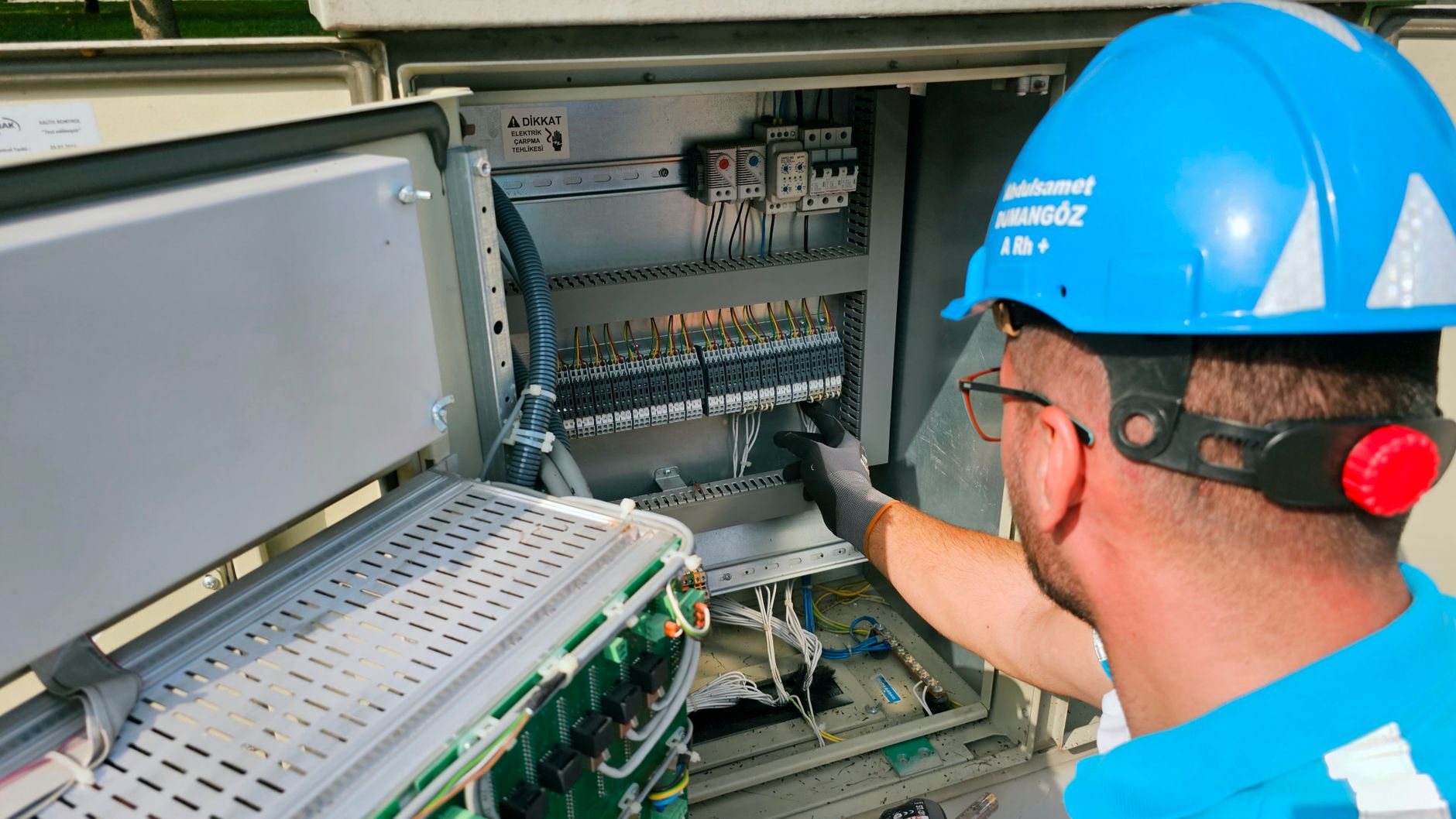
A cobot can turn digital panel data into installation-ready wire kits before a technician touches the enclosure. The arm selects and presents wire to dedicated modules for measuring, cutting, stripping, ferruling, printing, inspection, and ordered discharge. The finished conductors then move to manual panel assembly.
The distinction matters. A collaborative arm is a flexible handler, not a substitute for a calibrated cutter or crimp press. The processing stations perform the controlled work. The cobot moves pliable wire through them, changes the production sequence, and places each completed conductor in the correct kit location.
This architecture is most attractive in high-mix shops where repeated manual measuring and tool handling consume skilled time. It is less compelling when a fixed automatic wire machine already covers the entire product mix, or when engineering records cannot reliably provide lengths, end treatments, and terminal assignments.
Which operations belong inside the cell?
The cell should begin at a controlled wire supply and end with a traceable kit. Between those points, each station needs a narrowly defined job and a machine-readable result. That division makes faults easier to isolate and keeps process capability tied to the correct tool.
Fraunhofer IWU has demonstrated cobot-guided tooling that can grip, strip, crimp, and insert cable ends. Its research head uses force-controlled crimping, while a separate deposition tool can lay as many as 4 wires simultaneously. For panel shops, the nearer-term pattern is usually simpler: prepare the conductors robotically, then leave routing and termination to people.
- Select the specified wire family, gauge, color, and reel identity.
- Meter the calculated length and cut it with allowance rules already resolved in engineering.
- Strip each end to its own length, including full or partial strips where the termination requires it.
- Apply the specified ferrule and crimp profile, with tooling and material identity recorded.
- Print source and destination identification, then place the wire in installation sequence rather than in a loose pile.
How does high-mix job data control the workcell?
High-mix automation succeeds or fails upstream. The cobot needs a production record for every conductor, not a drawing that an operator must interpret at the machine. Current 2026 production-wiring documentation identifies useful fields such as wire number, color, cross-section, source terminal, destination terminal, calculated length, end treatment, bundle number, connection number, and routing information.
That record should become the cell's work instruction. It selects the reel, processing recipe, ferrule feed, print string, inspection limits, and discharge position. Revision control is essential. A released job must remain immutable on the floor, and a revised drawing should create a new production revision instead of silently changing an active queue.
Import validation deserves its own gate. Missing lengths, unsupported gauges, unknown ferrules, duplicate wire IDs, and absent terminal assignments should stop only the affected records and report an explicit reason. Quiet defaults are dangerous because they can produce a neat, repeatable batch of incorrect wires.
Start with the data your shop can sustain. A spreadsheet export can support an early robot pilot program, but direct electrical CAD integration becomes valuable as job frequency grows. The governing principle is one approved record per physical wire, carried from engineering through preparation, assembly, and final test.
Wire identification is part of production
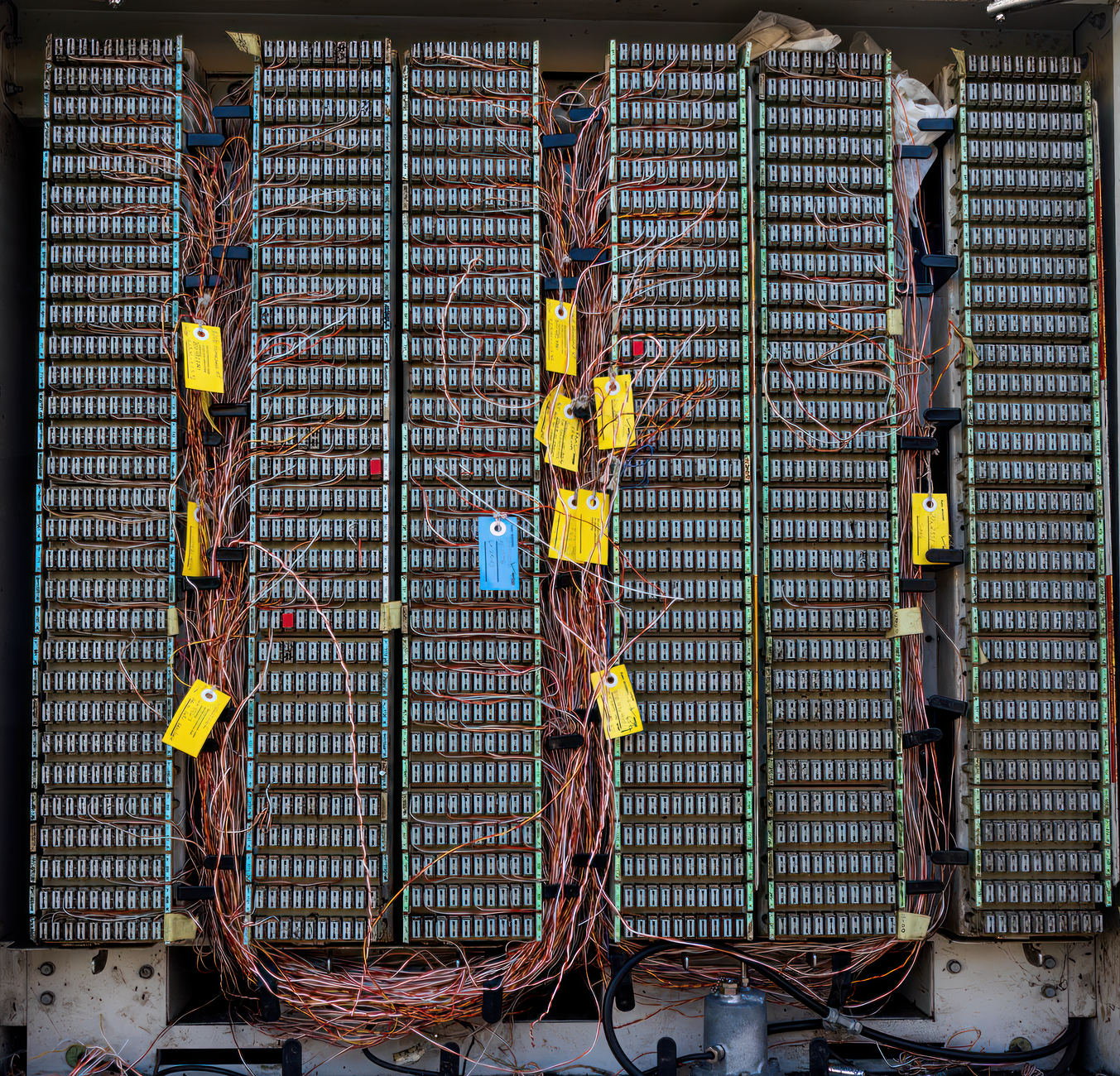
A legible label is not a cosmetic extra. It is the link between the prepared conductor, the schematic, and the technician's next termination. Print the source and destination close enough to each end to remain readable after routing, while respecting bend zones and the strip area.
Color and printed identity perform different jobs. UL Solutions notes that NFPA 79 conventions include black for ungrounded AC and DC power conductors, red for ungrounded AC control, blue for ungrounded DC control, and orange for excepted circuits. If another identification method is used within that scope, the method must be posted visibly inside the main control panel. Applicability still depends on the machine, customer requirements, and jurisdiction.
International work may also invoke IEC 60445:2021+A1:2026, which covers conductor and terminal identification using colors or alphanumeric notation. The safe rule is simple: printed source and destination data should complement required safety colors. It should never overwrite or contradict them.
The cell should verify print presence and readability before discharge. It should also preserve wire order. A correctly marked conductor can still waste assembly time if technicians must search through a tangled bin to find it.
What quality checks belong in the process?
A completed robot cycle proves only that the sequence ran. It does not prove that the conductor is acceptable. The control plan should inspect the characteristics created at each station and reject the individual wire before it contaminates a kit.
Commercial inspection equipment can examine every moving wire end for strip length, conductor diameter, pulled strands, spread strands, insulation residue, and seal defects. Published systems also use ferrule-presence sensing, crimp-force monitoring, crimp-height measurement, and pull-out testing. Choose checks according to the conductor, ferrule, terminal requirement, and applicable standard.
One current robotic preparation specification performs a pull-out check on every ferrule-treated conductor before release. That is stronger than testing only the first piece, although scheduled destructive samples and tool verification may still be required by the shop's quality plan.
- Confirm cut length against the job tolerance after calibration and at defined sampling intervals.
- Inspect stripped ends for damaged strands, residual insulation, and incorrect strip length.
- Verify ferrule identity, presence, crimp height or force signature, and required pull performance.
- Check label content, contrast, orientation, and association with the correct physical wire.
- Record reel, ferrule lot, recipe revision, inspection result, and reject reason for traceability.
What batch sizes are practical?
Batch size 1 is technically credible. One current control-cabinet machine specification supports single-wire jobs with as many as 36 loaded wire variants and reports production-time reductions of up to 50 percent. Another published configuration covers 0.5 to 6 mm² conductors without manual intervention. These are supplier capabilities, not guaranteed results in every shop.
Throughput ratings also need context. Published equipment specifications range from roughly 285 finished wires per hour for one integrated configuration to 360 double-ended wires per hour for another. A compact strip-and-ferrule station is rated as high as 1,200 conductors per hour, but it performs a narrower task. Those figures are not directly comparable with accepted, labeled, sorted kits from a complete robot workcell.
For a custom panel, the practical batch is often one cabinet released in installation sequence. For repeat builds, grouping identical wire records can reduce feeder and recipe changes, provided the output is automatically separated by panel. A mixed daily queue may use micro-batches by stocked gauge and color, followed by job-specific sorting.
Do not chase a large lot merely to keep the cobot moving. Excess work in process creates revision exposure, consumes storage, and makes shortages harder to see. The best lot is the smallest set that fits the loaded consumables, remains traceable, and arrives at assembly in the order technicians need it.
Design the handoff for manual assembly
The handoff should feel like a prepared route, not a box of wire. Sequence conductors by cabinet, mounting plate, duct region, or terminal strip. Use divided trays, indexed rails, taped chains, or another carrier that prevents mixing and protects printed ends.
Technicians should scan or acknowledge the kit revision before starting. Each wire then needs an unambiguous next action: pick, route, land the source, land the destination, and confirm completion. Exceptions such as field-routed conductors, shielded cable, jumpers, and unsupported terminals should appear in the same work instruction rather than in a separate tribal process.
Measure the handoff as part of the cell. Useful pilot metrics include accepted wires per staffed hour, first-pass yield, minutes spent searching or reworking, kit completeness, and panel wiring time. Arm utilization alone can look excellent while assemblers wait for missing conductors.
How should a panel shop scope deployment?
Begin with the wire population, not a preferred arm. Sample real jobs and classify conductor sizes, insulation types, colors, ferrules, strip lengths, labels, finished lengths, and daily variation. Then run representative records through a commercial robot demo using production materials. Include awkward short wires, dark insulation, fine strands, and frequent changeovers.
Service Robot Co. approaches this as an OEM-neutral, vendor neutral robot integrator for US businesses. We can compare a collaborative robot arm lease, a dedicated preparation machine, and a hybrid robot workcell against the shop's actual mix, then handle robot deployment and integration, operator training, and go-live support.
The commercial structure can match the operating case. Options may include cobot leasing for manufacturing, robot leasing for business, purchase, and monthly payment programs. A pilot or try-before-you-buy path can establish accepted-kit output before a wider commitment, subject to the selected equipment and program terms.
After launch, Service Robot Co. remains the single vendor across the lifecycle. Remote triage, a robot maintenance service plan, and on-site dispatch through a nationwide US engineer network keep responsibility clear. The panel shop gets one partner and one number for financing, deployment, training, service, and future cell changes.