Key takeaways
- A cobot can connect inspection, case packing, and pallet staging when product flow is predictable and packaging is grip-worthy.
- Payload calculations must include the heaviest permitted block, tooling, utilities, reach, acceleration, and case weight.
- Cold-room success depends on rated components, condensation control, hygienic construction, and a documented sanitation method.
- Format changeovers work best with recipes, keyed guides, quick-change tooling, and automatic verification.
- A pilot should prove package integrity, sanitation, recovery, and sustained throughput before a full deployment.
Where does a cobot fit in the cheese packing line?
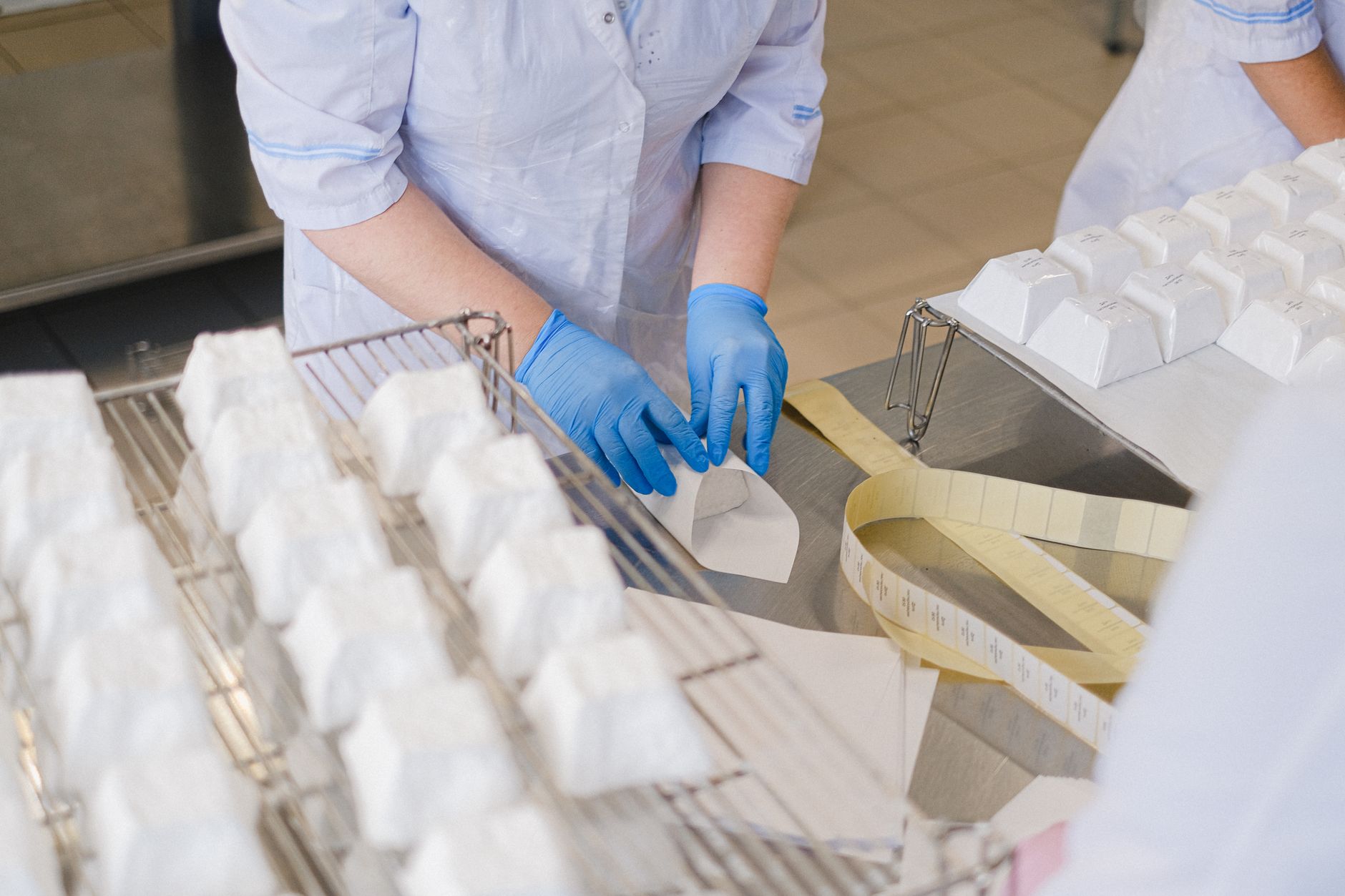
Cobots fit cheese-block packing when wrapped blocks leave inspection in a repeatable orientation and must be loaded into cases, presented for labeling, or staged for palletizing. The best cell removes repetitive lifting without creating a new hygiene risk or starving upstream equipment.
A practical flow begins with a conveyor or indexing station that establishes block position. Vision or fixed sensors verify presence, orientation, label placement, seal condition, and reject status. The collaborative robot arm then grips an accepted block, loads the specified case pattern, and releases rejected or suspect packs to a controlled lane.
Downstream, the same cell may square a case, place a divider, or present the filled case to closing equipment. Pallet prep can mean orienting sealed cases for a separate palletizing station, building a low-rate pallet directly, or placing cases on an indexed outfeed. The right boundary depends on payload, line rate, sanitation zones, and the amount of human access required.
The handoff from inspection to packing
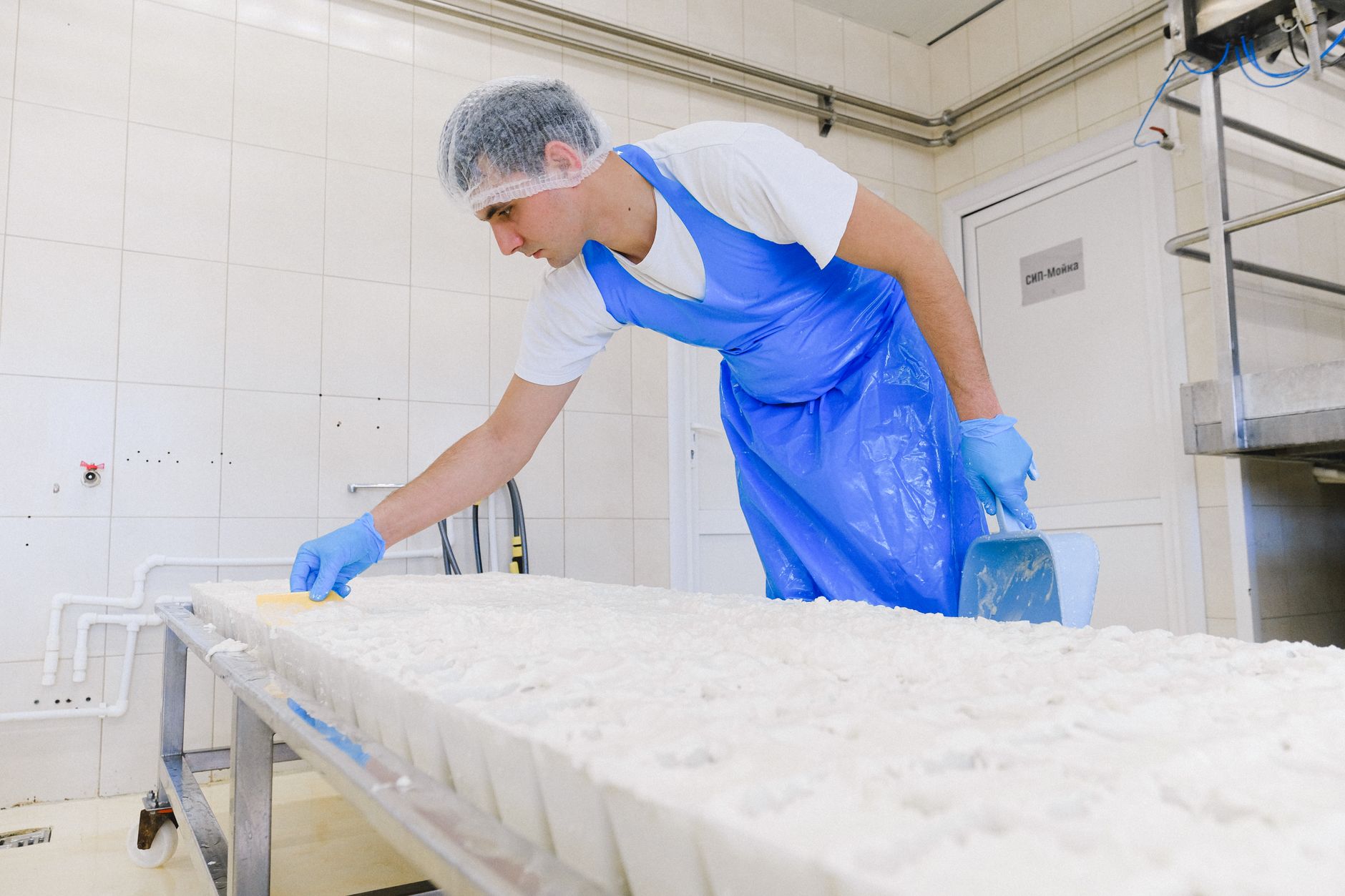
Inspection must produce an actionable result, not merely an image. Each block needs a clear pass, reject, or manual-review state tied to its conveyor position. If tracking is lost after a stop or belt slip, the cell should hold product and re-establish identity instead of guessing.
Wrapped cheese presents subtle defects. Loose film, folded seals, trapped product, wet surfaces, and skewed labels can defeat an otherwise reliable grip. A top-mounted vision view may inspect labels and gross geometry, while side views or dedicated sensors check seal edges that disappear beneath a suction tool.
The transfer design should preserve inspection evidence. The cobot must not cover the defect before the reject decision, press a marginal seal against a guide, or drop a rejected block into a location where it can rejoin conforming product. Recipe-controlled destinations and reject-bin presence sensing close that gap.
How should payload and reach be calculated?
Start with the heaviest real package, not the nominal label weight. A USDA cheddar specification permits approximately 10-pound prints and blocks weighing from 40 to 44 pounds. A cell designed around a nominal 40-pound block can therefore be undersized before the gripper is attached.
Rated payload is only the opening calculation. Add the complete end effector, valves, sensors, adapters, cable support, and the portion of hoses carried by the wrist. Then check the combined center of gravity and allowable wrist moments at the longest reach, during the fastest move, and in an emergency stop.
Case handling changes the scale quickly. Four blocks at the USDA maximum contain 176 pounds of cheese before corrugated board, liners, or dividers are counted. That may justify packing individual blocks with one cobot and assigning sealed-case palletizing to a higher-payload machine or another material-handling method.
The ergonomic case is also concrete. The NIOSH Revised Lifting Equation starts with a 51-pound load constant, but only under ideal lifting conditions, and then reduces the recommended limit for reach, travel, asymmetry, frequency, and coupling. Repeated cold-room lifts of awkward wrapped blocks deserve a task-specific assessment, not a comparison with 51 pounds alone.
What changes inside a cold room?
Low temperature affects grease viscosity, seals, cable jackets, sensors, pneumatics, and battery-backed controls. Every component in the cell should be checked against its specified ambient and humidity range. A robot rated for a cool production floor is not automatically suitable beside an evaporator or in a washdown zone.
Condensation is the sharper hazard. Warm, humid air reaching cold metal can leave moisture on the arm, tooling, vision windows, connectors, and package film. FDA inspection findings have associated Listeria observations with condensation lines, cooler floors, and a cheese-grinder food-contact surface, which shows why water management cannot stop at direct product-contact parts.
Keep airflow from blowing condensate or dust toward exposed product and packaging. Use sloped, drainable surfaces, protected connectors, drip-free utility routing, and enclosure ratings matched to the sanitation method. Vision windows may need air management or a cleaning routine because a thin film of moisture can degrade inspection before operators notice it.
Planned transitions matter too. If portable tooling or replacement components enter from a warm room, define an acclimation and inspection procedure. Do not start production while moisture is forming. Record pre-operation checks for dry surfaces, intact seals, clear optics, and correct air pressure.
Hygienic tooling protects the package and the product
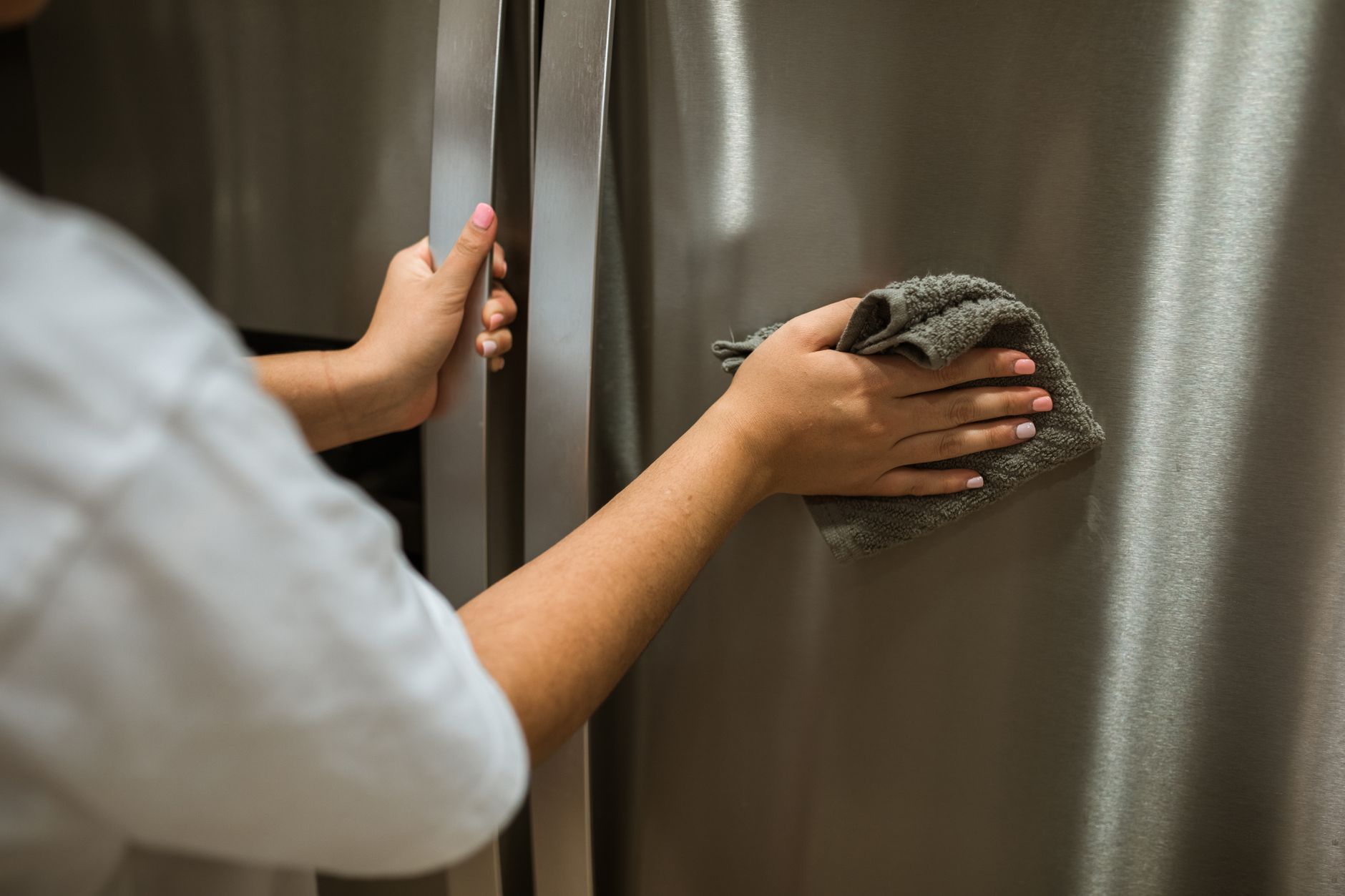
FDA requirements in 21 CFR 117.40 call for food-processing equipment to be adequately cleanable, installed to permit cleaning and maintenance, and built with corrosion-resistant, nontoxic food-contact surfaces that withstand the intended environment and cleaning procedures. Those principles apply to the gripper, brackets, fasteners, cable routing, guards, and adjacent structure.
USDA's 2022 dairy equipment guidelines add practical design discipline: minimize exposed threads, avoid bolted construction in product-contact areas when possible, isolate lubricated bearing assemblies, and identify assemblies requiring disassembly and manual cleaning. The guidance also calls for mechanical handling when product-contact parts are too large or heavy for manual handling.
A wrapped block still demands careful surface classification. Tooling that can drip, shed soil, or transfer residue onto exposed cheese, an open package, or the food-contact side of packaging may belong in the product-contact risk envelope. The plant's food-safety team should make that determination during hygienic design review.
Vacuum tooling is often gentle and format-tolerant, but wet or wrinkled film can leak. Mechanical clamps tolerate imperfect surfaces but can crease film or concentrate force near seals. Hybrid tooling can add retention, yet every cup, pad, spring, vacuum passage, and fastener adds a cleaning and inspection obligation.
The 3-A sanitary design framework calls for product-contact surfaces that are durable, crevice-free, impervious to moisture, drainable, accessible, and smooth to a maximum 32 Ra. Applying those principles to removable gripper parts makes sanitation more repeatable and gives inspectors fewer hidden niches to question.
Changeovers should be designed, not improvised
Cheese lines may alternate among 10-pound formats, 40 to 44-pound blocks, different film structures, label locations, case counts, and divider patterns. A reliable changeover controls four things together: product recipe, mechanical guides, tool configuration, and case presentation.
Store taught positions, grip forces, vacuum thresholds, inspection regions, case patterns, and reject destinations in a version-controlled recipe. Mechanical guides should be keyed or position-indicated so an operator cannot create a plausible but incorrect setup. If tooling changes, coded identification should confirm the installed tool before automatic motion begins.
Changeover acceptance should use known-good and known-defect samples. Confirm that the cell detects the new format, rejects bad seals or labels, grips without package damage, completes the case pattern, and recovers correctly after a stop. Measure changeover duration from the last good unit of one format to the first sustained good run of the next.
Quick-change hardware only earns its place when it remains hygienic. Tool couplers need protected mating faces, inspectable seals, controlled storage, and a sanitation method for disconnected utilities. A fast swap that introduces pooled water or an unverified vacuum connection is not a productive changeover.
Safety is determined by the complete application
The cobot definition is often misunderstood. A collaborative-capable arm does not make the entire cell safe by itself. The moving cheese block, sharp case edges, gripper fingers, pallet corners, conveyors, and stored pneumatic energy all contribute hazards.
ISO 10218-2:2025 addresses integration across design, commissioning, operation, maintenance, and decommissioning. The risk assessment should define normal production, sanitation, jam clearing, tool changes, teaching, restart, and pallet exchange. Safe speed and separation may be preferable near case or pallet hazards, while guarding may permit higher production speed elsewhere.
Recovery deserves special attention. After a vacuum loss, conveyor fault, or protective stop, the controls must know if a block remains secured and if a case is partly filled. Guided recovery screens, safe access positions, and explicit disposition rules prevent duplicate packs, crushed film, and unexpected motion.
What should a dairy plant prove in a pilot?
A robot pilot program should run the real assortment at production temperature, including the slickest film, the heaviest accepted block, marginal seals, wet-looking packages, deformed cases, and planned sanitation chemicals. A short commercial robot demo with ideal samples cannot expose the faults that dominate a long shift.
Track first-pass inspection agreement, false rejects, dropped or damaged packs, grip retries, cases completed per hour, stoppage causes, recovery time, changeover time, sanitation time, and environmental swab findings under the plant's food-safety plan. Review results by format and shift. Averages can hide one troublesome film or one recurring handoff failure.
Service Robot Co. acts as an OEM-neutral, vendor neutral robot integrator for US businesses. The company can perform the site assessment, select equipment across manufacturers, arrange purchase or lease and monthly payment programs, complete robot deployment and integration, train plant staff, and support the installed unit through a nationwide US engineer network.
That one-vendor lifecycle is useful in dairy packaging because the arm, vision, tooling, controls, sanitation method, training, and robot maintenance service plan must work as one cell. Plants get one partner and one number for integration, remote triage, on-site dispatch, and ongoing service instead of coordinating separate suppliers when production is waiting.
Frequently asked questions
Want a robot working for you?
Tell us the job and the site. We will recommend the robot, quote the lease, and keep it serviced.
Sources
- USDA dairy equipment design guidelines
- USDA cheddar cheese procurement specification
- FDA preventive controls compliance guide
- FDA environmental sampling guidance
- FDA food-plant warning letter on condensation and Listeria
- 3-A hygienic design principles
- ISO 10218-2:2025 robot application safety standard
- NIOSH Revised Lifting Equation manual