
Key takeaways
- Cobots can load fixtures, connect test fittings, operate controls, present each flow path, and route failed units.
- Seal force must be controlled and verified because too little causes false leaks while too much can hide defects or damage finishes.
- A wet cell must protect the complete electrical chain and safely contain both water and stored pressure.
- Serial-level pressure curves, recipe revisions, calibration status, and reject reasons turn testing into usable quality evidence.
- Product-specific production tests should screen every unit without confusing end-of-line testing with certification or burst testing.
Where does a cobot fit in a leak-test cell?
A cobot can automate the repetitive handling around a plumbing fixture leak test. It picks or receives a faucet or valve, presents its ports to sealed test fittings, actuates handles or cartridges, holds each required orientation, and moves the tested unit to the correct discharge lane. The pressure controller and leak instrument still make the measurement. The cobot makes the physical sequence repeatable.
This approach fits high-mix production because motion, tooling positions, test recipes, and acceptance limits can change by part number. It is particularly useful when operators currently spend more time threading adapters, opening valves, rotating assemblies, and recording results than judging the product itself.
The cell should not apply one generic pressure cycle to every fixture. The current ASME A112.18.1/CSA B125.1 standard covers many distinct plumbing supply fittings, and their required tests differ. Engineering must translate the applicable standard, certification plan, drawing, and internal risk criteria into a controlled recipe for each product family.
What happens during an automated test cycle?
A sound cycle separates handling, sealing, stabilization, measurement, and disposition. That separation makes faults easier to diagnose. If pressure never reaches its setpoint, the system can distinguish a bad interface seal from a leaking product instead of simply producing a red light.
The cobot can also operate the product during the test. A multiport faucet may require hot-side, cold-side, mixed-flow, closed-valve, diverter, and cross-flow states. The tool must reach each control without scratching plated surfaces or applying a torque that differs materially from normal use.
- Identify the fixture or carrier and load the matching robot, tooling, and test recipe revisions.
- Seat the part against hard datums, confirm presence and orientation, then clamp it independently of robot position where practical.
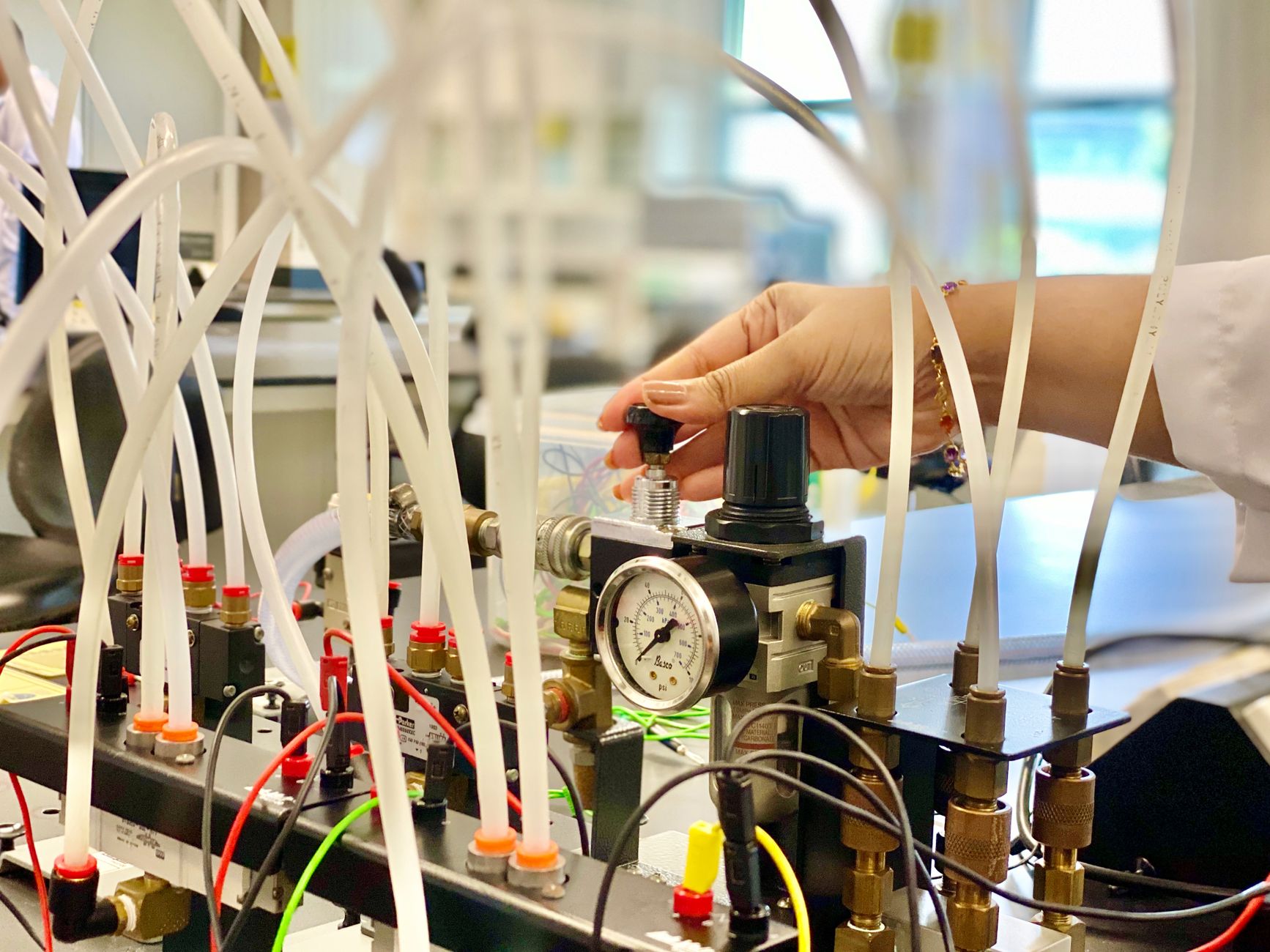
- Connect rated quick couplings or compliant test heads and verify seal engagement before admitting pressure.
- Fill and purge trapped air, stabilize pressure and temperature, then acquire leak rate, pressure decay, or flow data.
- Actuate every required control state and repeat the specified measurement on each relevant flow path.
- Depressurize, verify zero stored pressure, disconnect, mark the result, and route the unit to pass, retry, or reject handling.
How much sealing force is enough?
The connection interface is often the hardest mechanical problem. O-rings, face seals, tapered seats, threaded ports, and flexible hoses all need different engagement. Too little compression creates a fixture-side leak that falsely condemns a good product. Too much can deform a polymer inlet, mar a decorative finish, or temporarily close a defect that appears after release.
Use compliant tooling with a defined compression window, mechanical stops, replaceable seal cartridges, and sensing that confirms engagement. Robot force feedback can help detect a missing washer or a misloaded part, but it should not be the only means of retaining a pressurized connection. A fixed nest, rated clamp, or locked coupling should carry pressure loads.
Pressure requirements show why that distinction matters. The 2024 plumbing supply fitting standard uses 20 plus or minus 2 psi and 125 plus or minus 2 psi for specified seal tests, held for 5 minutes under defined temperature conditions. It also includes 500 psi, 1-minute pressure-envelope tests for certain fittings. Those are qualification requirements, not automatic instructions to expose every production unit to 500 psi. End-of-line limits must be approved for the actual product and test purpose.
How should the cell be built for water and pressure?
Treat the workstation as a wet process from the first layout. Sloped stainless trays, drains, splash shields, drip-free couplings, hose restraints, pressure relief, and a monitored dump valve keep routine residual water from becoming an electrical or slip hazard. A dry standing area and quick access for cleanup also matter.
Ingress protection applies to the installed system, not just the arm. Check the robot, end tool, valves, pressure sensors, vision equipment, connectors, junction boxes, cables, and control cabinet. NEMA guidance describes Type 4 as resistant to hose-directed or splashing water and windblown dust. Type 4X adds corrosion resistance. The lowest-rated exposed component can still dictate the cell's practical limit.
Stored pressure remains hazardous even with a force-limited arm. The cell should prevent tool release while pressure is present, detect a failed depressurization step, and place hoses outside likely operator exposure. OSHA notes that many robot incidents occur during setup, testing, adjustment, and maintenance, so recovery and service modes deserve the same scrutiny as automatic production.
How can one cell handle product variation?

Variation arrives in several forms: port spacing, thread type, body geometry, handle travel, outlet count, finish sensitivity, and the number of hydraulic states. A useful cell absorbs predictable variation without asking the robot to compensate for a loose or poorly located fixture.
Start with family fixtures that provide common carrier datums. Add keyed adapter plates, coded seal cartridges, and automatic tool identification. A vision check can select the correct grasp and verify that handles, hoses, or caps are present. The product ID should call the recipe, but physical tooling confirmation should block a mismatched adapter before pressure is enabled.
Robot programs should use taught frames and parameter tables rather than copied programs for every stock-keeping unit. New variants can then change positions, forces, actuation angles, stabilization times, and acceptance thresholds without fragmenting the control logic. During a commercial robot demo or robot pilot program, run the worst cases: the smallest sealing land, the longest handle sweep, the most reflective finish, and the fixture with the greatest retained water.
What data should the system capture?
A pass or fail bit is too thin for serious quality control. Store the unit or batch ID, product variant, recipe revision, actual pressure and temperature, fill and stabilization times, pressure curve or measured leak rate, sensor identity, calibration status, alarms, retries, overrides, final disposition, and timestamp. Tool and robot program revisions belong in the same record.
This creates a digital birth record that can expose gradual drift. Rising stabilization time may point to a worn seal, while a cluster of failures on one cavity, shift, or component lot may indicate a production issue. Keep fixture-interface failures separate from confirmed product leaks so maintenance noise does not contaminate defect reporting.
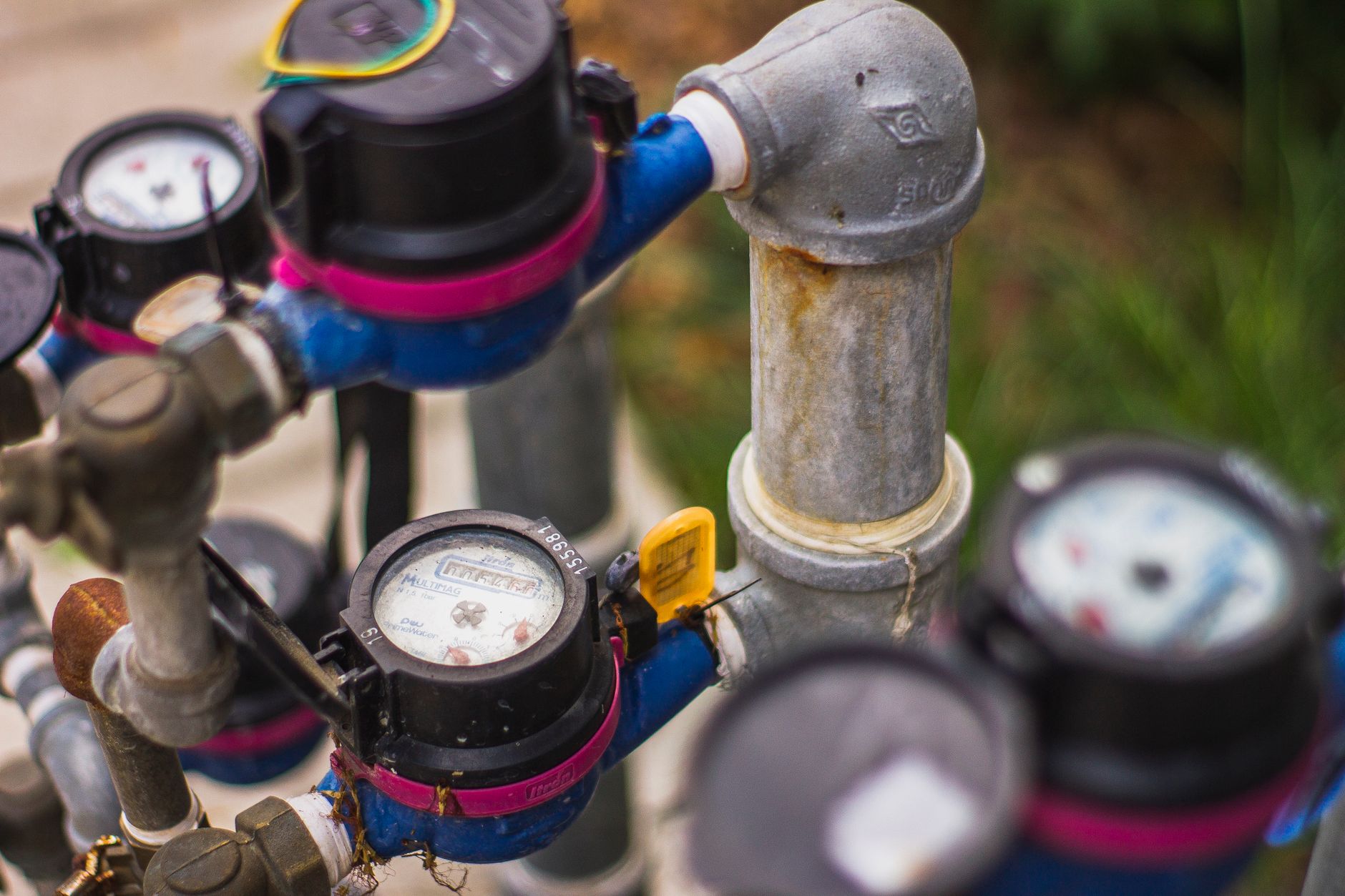
NIST defines metrological traceability as a documented, unbroken calibration chain in which each link contributes to measurement uncertainty. A calibration sticker alone does not make a result traceable. The test method, operating conditions, calibration history, and uncertainty must support the claim. NIST also says there is no universal recalibration interval, so intervals should reflect accuracy needs, stability, environment, history, and applicable requirements.
What should happen after a failed test?
A failed unit should leave the normal product stream under positive control. The cobot can place it in a locked reject nest, apply a label, or send it to a staffed review station. The record should state the failed step and measured value, not merely label the unit defective.
Retries need strict rules. One automatic retry after reconnecting may be valuable when the system detects an interface-seal fault. Repeated testing until a unit passes destroys the meaning of the data. If a product fails the defined measurement twice, or if the result breaches a hard safety limit, the controller should prevent release to the pass lane without authorized review.
Design rework as its own traceable path. After repair, the fixture receives a new test event linked to the original failure. That preserves first-pass yield, prevents silent retesting, and gives engineers evidence about recurring failure modes and repair effectiveness.
From pilot cell to supported production
The best first project has meaningful manual handling, stable test physics, several repeatable product families, and enough volume to justify automatic connections and data capture. Measure current cycle time, first-pass yield, false-reject rate, adapter change time, water consumption, ergonomic exposure, and tester uptime before comparing automation concepts.
Service Robot Co. acts as an OEM-neutral, full-service commercial robot integrator for U.S. businesses. We select the arm and peripherals across manufacturers, then handle robot deployment and integration, training, financing, and service through a nationwide U.S. engineer network. That gives a plant one vendor for the whole lifecycle instead of separate contacts for the robot, wet tooling, controls, financing, and field support.
Commercial terms can match the rollout. A collaborative robot arm lease, cobot leasing for manufacturing, robot leasing for business, or other monthly payment programs can support a pilot and phased expansion. Options such as RoboCare™ service, a free site assessment, and try before you buy should still be evaluated against the same technical gate: safe pressure control, capable measurement, repeatable sealing, clean data, and a tested recovery plan.