
Key takeaways
- A strong lens cell automates loading, polishing, inspection, and reject sorting as one controlled loop.
- In optics, delicate gripping and contamination control matter at least as much as arm speed.
- Metrology only pays back when it is tied to recipes, calibration discipline, and traceable records.
- Small and mixed batches often benefit most because flexible cells protect scarce skilled labor and reduce rework.
What does a productive lens cell actually automate?
A good cobot cell automates the handoffs around polishing and inspection, not just the polishing contact itself. It picks lens blanks or semi-finished lenses from clean trays, seats them in the fixture, manages polishing force through a closed loop, then presents each part to vision or optical metrology before routing passes and rejects into separate bins. For brittle glass and high-value polymer optics, the real gain is repeatability with gentler handling than a rushed operator can sustain all shift.
This layout fits precision optics because flexible automation is now standard factory capital, not exotic kit. According to the International Federation of Robotics, U.S. factories installed 38,000 industrial robots in 2025, up 11 percent year over year, and U.S. robot density reached 307 per 10,000 manufacturing employees. For lens shops, the message is not that every bench should be automated. It is that compact, instrumented cells are now a normal way to protect quality and labor.
The cell pays best when polishing, inspection, and segregation are repetitive but recipes change often. That is common in lens work, where diameter, curvature, material, coating sensitivity, and cosmetic criteria can shift from order to order even inside the same week.
Why is delicate gripping harder than it looks?
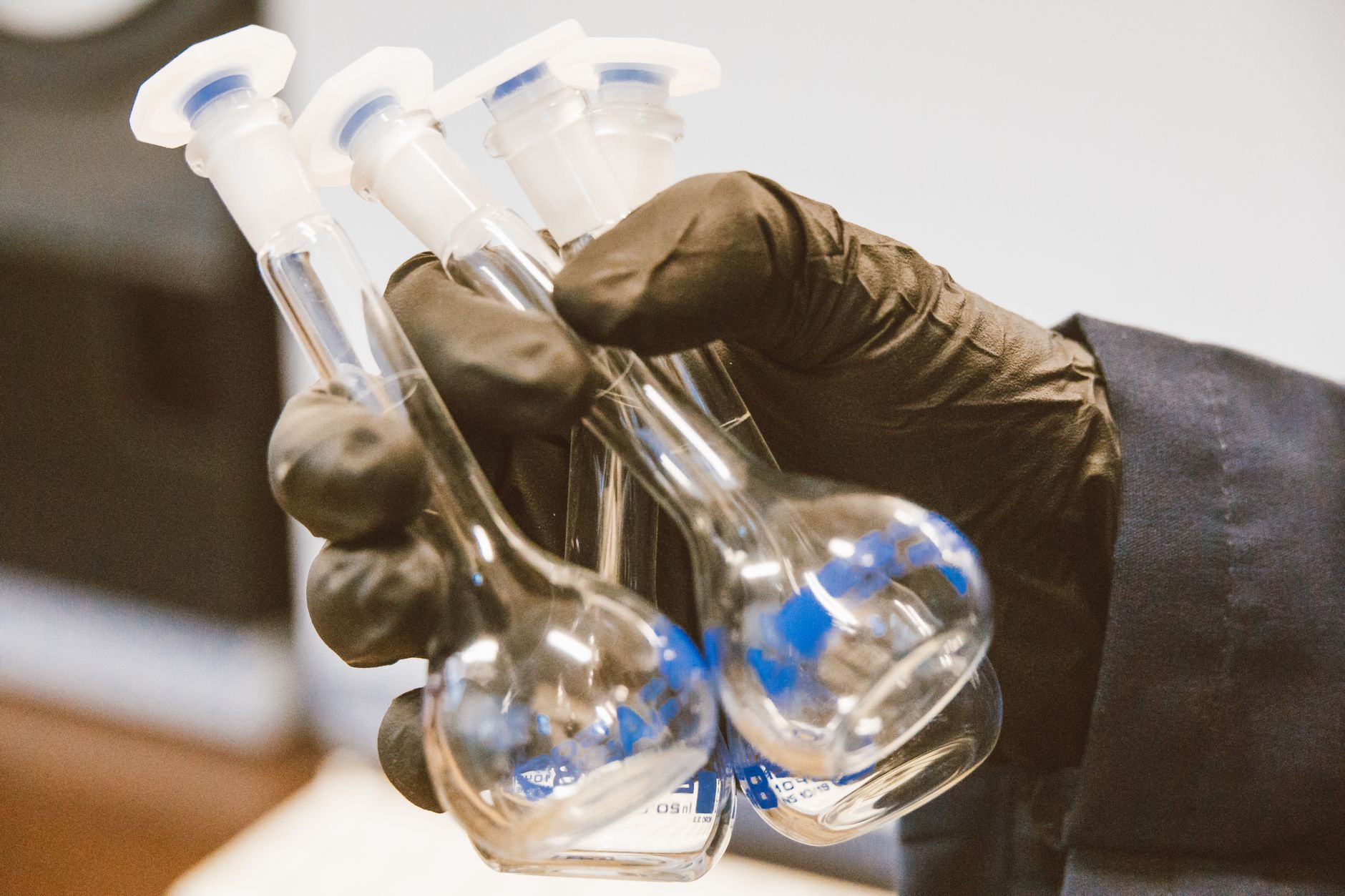
Lens handling usually fails at the edges. Vacuum can lose hold on wet surfaces or leave residue where you do not want it. Hard fingers can bruise a polymer edge or chip glass that would have survived the polish cycle itself. The right end effector typically grips on a non-critical diameter, uses compliant contact materials that do not shed particles, and limits clamp force so the part can self-seat instead of being shoved into alignment.
The deeper point is that gripping is really part of the measurement chain. The gripper has to establish the same datum every cycle, confirm orientation, and recover cleanly from rotated, nested, or slightly stuck parts. If the lens leaves the picker in a different pose each time, downstream force control and inspection data become noisy before the process even starts.
- Grip on non-optical surfaces whenever the part geometry allows it.
- Confirm pick success with vacuum sensing, force confirmation, or both before motion toward the polisher.
- Use contact materials that tolerate slurry, cleaning fluids, and repeated wipe-downs without particle shedding.
- Design fingertips and nests as quick-change tooling so one cell can cover a family of lens geometries.
How does the cobot control polishing force without bruising the part?
In lens finishing, force is the process. A useful cell closes the loop on normal force, position, dwell time, and tool condition instead of replaying a blind path. That lets the robot float into contact, hold a narrow force window, and back off cleanly when a pad loads up or slurry changes the feel of the interface.
This is where a cobot cell earns its place in precision manufacturing. The arm can approach gently, absorb small height variation, and record the actual force history for every lens. That matters because the same nominal recipe can behave differently when the pad is fresh, the fixture is warm, or the incoming blank has a slight thickness shift.
When force drifts outside guardbands, the cell should branch immediately. Some parts go to a controlled rework loop, some go to full inspection, and some go straight to reject. Carrying a damaged lens deeper into the process only makes the scrap more expensive.
Contamination control cannot be bolted on later
Optical polishing is messy in a very specific way. Slurry, fines, swarf, and cleaning residues can ride on a gripper, a nest, or a tray edge and then light up as false defects under inspection. A cobot cell therefore needs a dirty zone and a clean zone, with deliberate transitions between them rather than casual wipe-down habits.
The clean transition is usually a rinse, blow-off, controlled wipe, or drying step followed by part presence and surface checks before vision inspection. Reject lanes need physical separation so a cosmetically bad lens never shares a tray or fixture with accepted work. In optics, contamination control is part of yield, not housekeeping.
- Keep splash-prone polishing hardware and clean inspection hardware in separate physical zones.
- Use non-shedding gripper pads, protected cable routing, and nests that do not trap slurry.
- Create dedicated locations for in-process, cleaned, and rejected parts so lots cannot mix by accident.
- Make guards and fixtures easy to access for validated cleaning between materials, coatings, or customer programs.

Recipe changes are where small-batch economics are won

In mixed-batch optics, changeover time can erase the value of automation. A good cell stores recipes by part family, then calls the right grip geometry, force setpoints, inspection tolerances, and disposition rules from the work order or scanned tray ID. The target is not one universal recipe. It is fast, disciplined swaps with fewer manual edits and fewer opportunities for quiet drift.
According to the U.S. Census, ophthalmic goods manufacturing counted 426 employer establishments in 2023. According to the SBA Office of Advocacy's March 10, 2025 manufacturing fact sheet, small manufacturers represent 98 percent of manufacturing firms and employ 4.8 million workers. That is why flexible cells matter. Many optics plants are not giant single-product lines. They are smaller operations where one cell may touch dozens of SKUs in a week.
Quick-change nests, recipe version control, and guided first-article verification usually matter more here than chasing the absolute fastest cycle time. The business win comes from holding precision while the order book stays mixed.
Where should metrology sit in the loop?
Inspection should not be a separate island if the polishing step can still react. A stronger design presents the lens to machine vision for cosmetics and orientation, then to the measurement instrument that matters for the process, such as curvature, thickness, centration, or surface figure, before final disposition. When a result comes back near the limit, the cell can send the part to corrective polish or manual review instead of treating every miss as dead scrap.
The labor stakes are real. The U.S. Bureau of Labor Statistics says the occupation group that includes ophthalmic laboratory technicians had a median annual wage of $47,060 in May 2025, and BLS says quality control inspectors had a median annual wage of $48,570 in May 2025 with about 66,700 projected openings per year. Automation does not remove the need for those people. It protects their time for first-article judgment, release decisions, and root-cause work instead of repetitive loading and sorting.
NIST's traceability guidance is useful here. The agency explains that traceability belongs to the measurement result, tied back through a documented calibration chain with stated uncertainty. In practice, a cobot cell should log the instrument used, the calibration status, the recipe revision, and the measured result, not just a pass or fail bit.
Traceability is now part of the product
For regulated optical work, a clean audit trail is no longer clerical overhead. The FDA says its Quality Management System Regulation became effective on February 2, 2026 and incorporates ISO 13485:2016 by reference for device quality management. In the FDA's QMSR FAQ, the agency also says investigators may review records created before that date and may inspect management review, quality audits, and supplier audit reports that previously had exemptions under the older rule set.
That changes how a polishing and inspection cell should be specified. Each lens should carry a digital history that includes lot, material, tool or pad ID, slurry batch, recipe revision, force trace, inspection images, metrology result, and final disposition. If a customer questions a surface defect six months later, the plant should be able to reconstruct the exact process state that produced that part.
Even outside FDA-regulated programs, the same discipline pays back. Fast root-cause work depends on being able to separate a bad material lot from a worn pad, a bad recipe edit, or a drifting measurement station without guesswork.
What is the real payback in small and mixed batches?
Small-batch automation lives or dies on redeployment, scrap avoidance, and schedule stability. The U.S. Bureau of Labor Statistics projects nearly 1 million openings in production occupations each year, on average, from 2024 to 2034. In that environment, using scarce optics staff to ferry parts between polishers, vision stations, and reject bins is expensive work assigned to the wrong hands.
The better economics are often indirect. A cobot cell can run through breaks, after hours, or during operator handoff without the shift-to-shift variation that shows up as cosmetic fallout. It can also keep inspection discipline tighter by presenting every lens to the same camera pose and the same measurement station, which reduces false rejects and makes process drift easier to spot earlier in the lot.
This is why cobot leasing for manufacturing, collaborative robot arm leasing, or robot leasing for business can make sense for smaller plants. The first justification is rarely raw cycle time alone. It is the combined effect of labor focus, lower rework, better traceability, and the ability to run a consistent process on short and recurring orders.
- Best fit is frequent repeat work in families of parts, not one-off prototype jobs.
- First wins usually come from labor redeployment and lower rework before they come from headline throughput.
- Recipe governance and measurement discipline matter more than maximum arm speed.
- Lightly attended or after-hours runs widen the payback window for small plants.
What should a U.S. integration partner bring to this cell?
This kind of project is not just a robot arm plus a gripper. It is fixturing, force tuning, metrology handshakes, contamination control, safety validation, and service after go-live. Service Robot Co. fits here as a full-service commercial robot integrator for U.S. businesses. We stay OEM-neutral, pick the right hardware across manufacturers, and handle robot deployment and integration, training, financing, and field service through a nationwide U.S. engineer network.
For manufacturers that want a cautious entry point, the commercial structure matters too. A phased deployment with no shutdown, a pilot cell, or finance through purchase or lease can make more sense than forcing a large capital program onto a narrow optics line. That is especially true when the first target is a polishing and inspection cell, where the gains come from precision, traceability, and labor focus rather than brute volume.
In practice, one vendor for the full lifecycle simplifies the risky parts. The plant gets one team to tune recipes, connect metrology, train operators, and keep the cell running after launch instead of stitching together separate hardware, service, and finance relationships.
Frequently asked questions
Sources
- International Federation of Robotics: US Robot Industry Returns to Double Digit Growth
- U.S. Census Bureau: Ophthalmic Goods Manufacturing Profile
- SBA Office of Advocacy: Manufacturing Statistics 2025
- U.S. Bureau of Labor Statistics: Dental and Ophthalmic Laboratory Technicians
- U.S. Bureau of Labor Statistics: Quality Control Inspectors
- U.S. Bureau of Labor Statistics Career Outlook: Manufacturing Job Opportunities
- NIST: Metrological Traceability
- FDA: Quality Management System Regulation FAQ