Key takeaways
- Chemical bottle packing cobots pay when label accuracy and segregation matter as much as cycle time.
- OSHA Hazard Communication deadlines in 2026 and 2027 force tighter label and SDS discipline on every SKU.
- Ventilation, spill kits, and zone separation belong in the cell design, not in a footnote after go live.
- Vision before case close catches turned labels and mixed hazard classes faster than manual spot checks.
- Collaborative arms fit sealed bottle lines when recipes repeat and humans still own changeover and emergencies.
Why are sealed chemical bottles still hand-packed in 2026?
Filling and capping may be automated, yet orienting bottles, applying secondary labels, and building mixed-SKU cases still pulls technicians into repetitive reaches. Specialty formulas in small glass or HDPE bottles punish a crooked label or a wrong hazard pictogram.
Collaborative robot arms fit when the same bottle families ship daily and the bottleneck is consistent presentation to a labeler or case erector, not exotic one-off sizes. They are a weak default when every batch changes container shape or when open dispensing happens at the same bench.
According to the Association for Advancing Automation, North American companies ordered 8,940 robots in the second quarter of 2026, with non-automotive customers taking 56 percent of units. Chemical and pharmaceutical producers sit in that broader industrial mix even when they never appear as a separate line item in the press release.
The International Federation of Robotics reported preliminary global industrial robot installations of about 621,000 units in 2025, with chemicals and pharmaceuticals among strongly growing sectors in its 2026 outlook commentary. That volume keeps packaging engineers comparing cobot cells against hiring another experienced packer.
What makes specialty chemical bottles different from food packaging?
Sealed bottles still carry hazard communication obligations on every shipped container. A cobot that rotates the wrong face to a print station can pass weight check and still fail an outbound audit.
Many specialty lines run flammable solvents, corrosives, or oxidizers in the same building with different segregation rules. Automation must respect storage class boundaries, not only throughput.
Bottle surfaces may be curved, coated, or slightly oily from mold release. Grippers and label applicators need validation on the worst bottle from each lot, not the cleanest sample from the QC shelf.
End-of-line automation in other industries may chase cases per minute alone. Here, success is measured in correct GHS elements, lot traceability, and zero incompatible mixes in a case.
How do updated Hazard Communication rules affect the packing line?
OSHA extended key compliance dates in January 2026 for its revised Hazard Communication Standard. Manufacturers, importers, and distributors evaluating substances must meet modified provisions no later than May 19, 2026, according to the Federal Register notice.
Mixture-related manufacturer compliance moves to November 19, 2027, with employer program updates for mixtures due May 19, 2028. Packing lines feel that wave as new pictograms, signal words, and precautionary statements reach the floor on updated labels.
OSHA label update provisions allow updated labels to ship with containers already released for distribution rather than forcing relabel of every unit in the warehouse when classification changes. That does not relax the need for the packing cell to verify the label on the bottle it touches today.
Small container rules still matter on specialty lines. OSHA requires full label elements on outer packaging when individual bottles at or below 100 milliliters cannot fit them, and allows minimal labeling on containers at or below 3 milliliters when a full label would interfere with normal use.
- Treat each SKU hazard class as a hard gate before the robot picks.
- Keep SDS revision dates visible to the lead during changeover, not only in a binder off the floor.
- Log label vision fails with lot code so quality can tie back to supplier print runs.

Where do ventilation and spill response fit around a cobot cell?
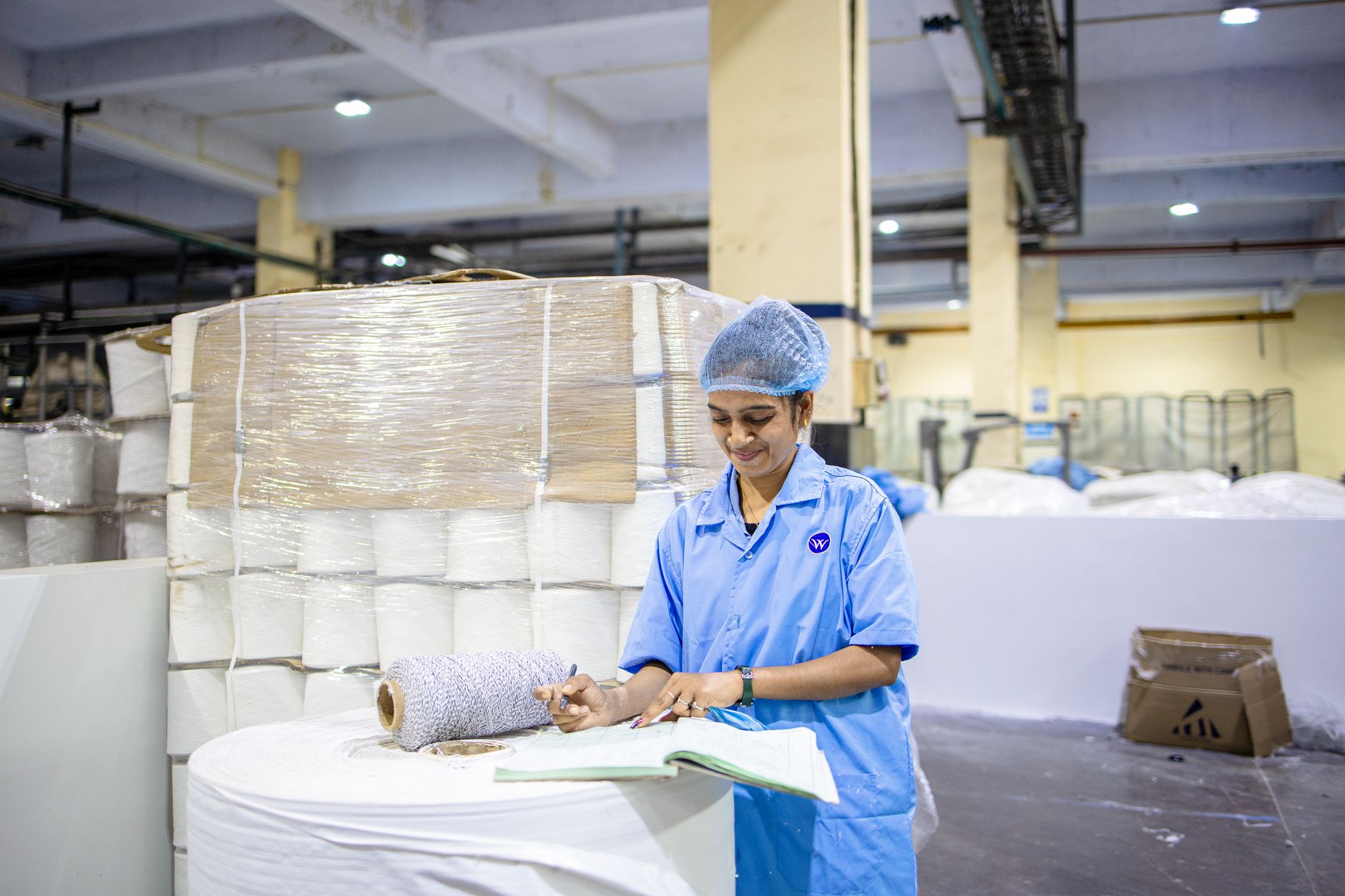
Packing sealed bottles is not the same as open blending, yet residual drips on closures and crushed cartons still create slip and air-quality issues. Local exhaust near labelers that use solvents, and clear spill kit placement within arm reach of the human lead, belong in the layout drawing.
If your plant already classifies flammable storage cabinets and limits ignition sources, map those zones on the robot teach pendant no-go list. A mobile arm crossing a paint line boundary without engineering review is an easy way to fail a walkthrough.
Spill response drills should name who pauses the cobot, who blocks the conveyor, and who documents the event. Robots do not replace the trained responder when a case cracks in the cell.
How should grippers handle glass, HDPE, and coated bottles?
Lightweight glass needs compliant cups or soft jaws with force limits so the arm never treats a bottle like a steel bracket. HDPE may flex under vacuum, so nest support beats a single top cup.
Anti-static or textured finishes can fool a vision system before they fool a human. Run fingerprint and dust tests from a real production pallet, not from a lab sample wiped clean.
Tooling change parts should match your sanitation window. A gripper with hidden grooves that trap label adhesive will fail audit before it fails mechanically.
What should label verification cover before case packing?
A fixed camera pair can confirm product identifier, pictogram presence, barcode registration, and lot print contrast on the panel your customer scans. Missing a turned bottle is cheaper to stop at the cell than at a distributor receipt.
Vision adds cycle time. It pays when mislabeled bottles already trigger holds, rework, or customer credits. Skip camera checks on the first pilot only if you accept full manual audit at line speed.
Separate vision fail from applicator fault in the HMI so maintenance does not replace print heads when the root cause is a skewed pick.

How tight is segregation on mixed outbound cases?
Many specialty houses build variety packs or multi-SKU shippers for distributors. A cobot must never place incompatible hazard classes in the same case because a WMS shortcut said the weights balanced.
Build explicit recipe maps: allowed bottle IDs, max count per class, and dunnage rules. Hard interlocks beat operator memory on Friday afternoon loads.
When in doubt, stop the line and call the safety lead. Automation should make that pause cheap, not rare.
How do labor and injury rates frame the business case?
U.S. Bureau of Labor Statistics data for 2024 show chemical manufacturing at 1.6 total recordable cases per 100 full-time workers, with 1.0 cases involving days away, restriction, or transfer. The rate is lower than many heavy industries, yet packing still adds repetitive motion and pinch points at case sealers.
PMMI reported in August 2026 that 72 percent of surveyed U.S. packaging and processing end users already utilize robotics, with a projected 10.3 percent compound annual growth rate for the market from 2025 to 2031. Specialty chemical packers are often late adopters within that cohort because validation cost feels higher than in food.
Cobots remove steady reach-and-rotate work; they do not remove the need for a lead who owns first-article checks after a formula change.
How do you coordinate with labelers and case equipment?
The labeler or print engine should own applicator faults. The robot should interlock on ready, apply complete, and fault signals so it never presents a bottle while the peel arm is mid-cycle.
Case erectors and tape heads need the same discipline. Map permissives in a single integration table during site acceptance testing.
If conveyors index bottles, agree on encoder behavior when a jam clears. The arm should stop rather than chase a moving bottle through a skewed guide.
When does changeover still belong to people?
New bottle height, label artwork, hazard class, or dunnage plan stays human-led with a signed first-article. The cobot recalls validated recipes; it should not infer from a similar SKU.
Document minimum teach data: nest ID, grip force band, label panel angle, and reject routing. Without that, every seasonal formula becomes a week of tuning.
Keep a manual lane for true odd lots while the cell runs the daily set.
Where does a full-service integrator fit the first cell?
Specialty chemical packing sits between EHS rules, OEM labeler quirks, and floor space never designed for a six-axis arm. Service Robot Co. works as a vendor neutral commercial robot integrator for U.S. manufacturing plants. We match arms, grippers, and vision to your line signals, then finance, deploy, train, and service through a nationwide engineer network.
Collaborative robot arm rental with maintenance included can carry one orient-and-pack station through a product launch on operating budget before you commit capital to a second line. One partner number covers interlocks, validation support, and the monthly service plan after go live.