Key takeaways
- Cold-room cobots earn hours when case mix repeats but manual palletizing drives overtime and ergonomic claims.
- Rated payload drops at extended reach, so layer plans must be validated at temperature, not on the warm shop floor.
- Condensation and frost change grip and sensor performance more than raw cycle time on the arm.
- Mixed case patterns need WMS or line signals the cell trusts before it builds a load.
- Cobot rental for manufacturing lets you prove cases per hour through a peak season before capital buys a second cell.
When does a cobot beat manual palletizing in a freezer?
Frozen food processors often palletize mixed cases at the end of a blast line while forklifts wait and crews rotate out of the cold room every twenty minutes. Manual stacking works until SKU mix turns a stable pattern into a leaning load.
Collaborative robot arms fit when cases arrive labeled, squared, and within a weight band your gripper can hold at freezer temperature. The cobot can pick, orient, and place layers on a pallet while a human stays at the wrap station or QC bench. It does not replace your food safety sign-off on hold and release.
Cobots are a weak default on one-off promotional stacks or volumes so low that warm-up and defrost time eats the shift. They earn hours on repeating retail and foodservice patterns that run every production day.
Why does cold air change payload math?
Arm lubricants stiffen and drive torque rises as ambient temperature drops. A payload chart tested at room temperature overstates what the same reach can lift beside a running evaporator.
According to the U.S. Bureau of Labor Statistics, private industry manufacturing reported 355,800 total recordable injury and illness cases in 2023, with a total recordable case rate of 2.8 per 100 full-time workers. Food manufacturing still contributes through repetitive lifting and slip events at wet freezer entries.
Engineering should validate layer weight and reach together in the actual cold room before anyone signs a cycle time target. A robot that meets rate on the first layer but stalls on the fourth is still a bottleneck.
How do condensation and frost affect the cell?
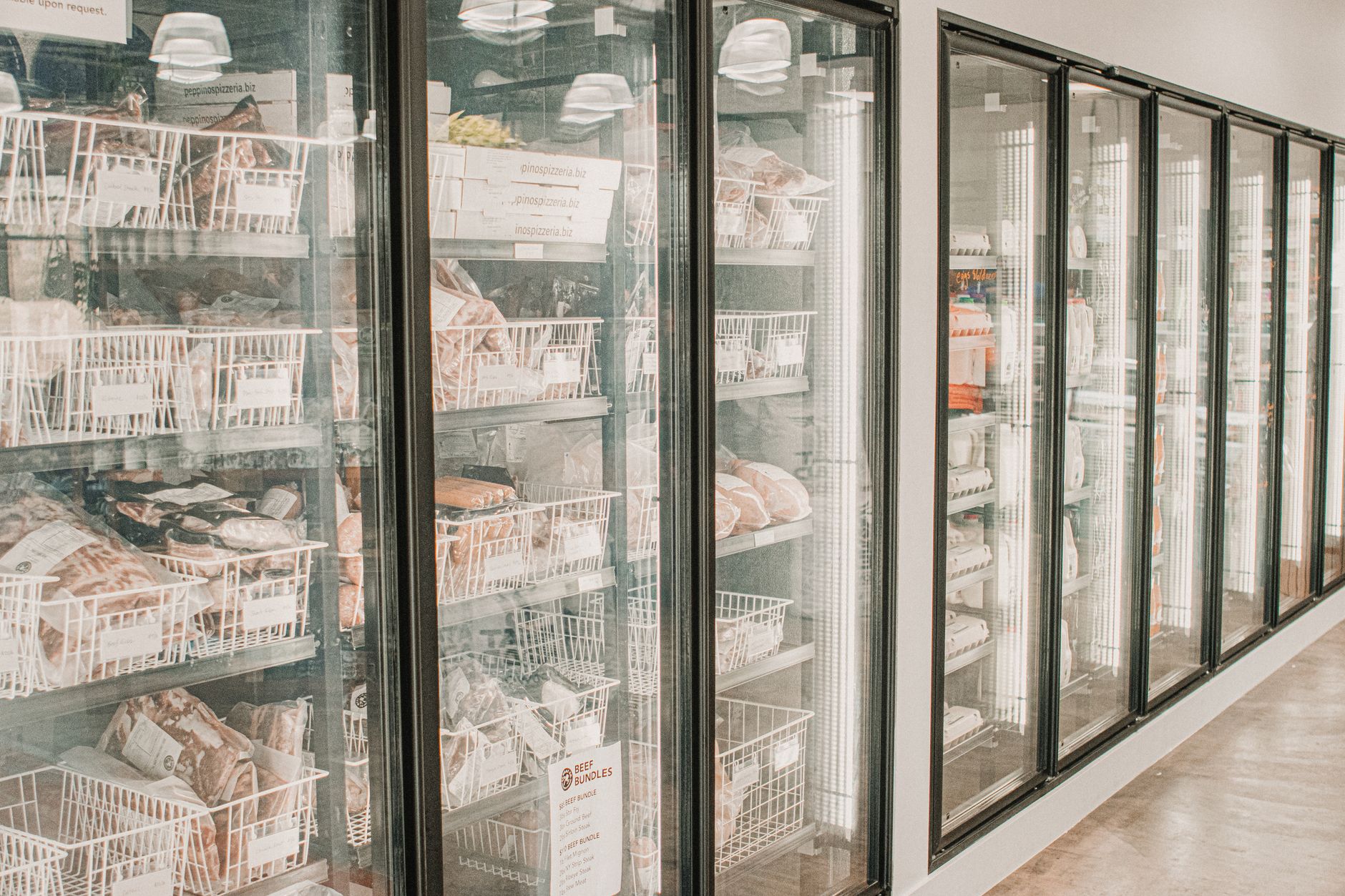
Warm cases never stay warm long once the door opens. Condensation on tooling and cameras can blur reads and drop vacuum hold until the surface dries or defrosts.
Plan heater zones, scheduled wipe intervals, and spare gripper pads rated for cyclic cold. Keep electronics in insulated enclosures where your sanitation plan allows.
Defrost cycles on the room itself can raise humidity fast. The cell should pause or slow when vision confidence drops instead of placing blind.
- Log frost events against pallet counts to spot trends.
- Keep anti-slip floor mats at the human side of the pallet station.
- Separate reject bins for crushed corners before wrap.
What tooling survives frozen corrugated?
Vacuum cups need compounds that stay flexible below freezing. Mechanical clamps need jaw surfaces that grip wet corrugated without tearing panels.
Slip-resistant layer sheets or corner boards may be part of your load spec. The robot sequence must account for placement time, not only case picks.
Glove-friendly teach pendants and large stop controls matter when operators wear insulated gloves and cannot fine-tune a screen with bare fingers.
How should mixed case patterns be fed?
Retail mixed pallets fail when the WMS pattern disagrees with what the line actually shipped. The cobot needs a single source of truth for SKUs, quantities, and layer order.
Barcode scan at pick confirms case identity before placement. A mismatch should hard stop the layer, not build a load you unwind at the dock.
Program libraries keyed to customer program beat re-teaching from scratch when Monday returns to the same club-store pattern.

What does freezer-rated really require?
Freezer-rated labels on components mean tested operating ranges for grease, seals, and cables. They do not remove the need for sanitation access and wash compatibility on anything that touches food zones.
Cable dress and dress packs stiffen in cold. Route flex points where they are visible for inspection, not buried against a condenser line.
Keep manual override paths clear for partial pallets when a truck cutoff forces a pattern change mid-shift.
How do you plan defrost and downtime?
Room defrost schedules should map to cell state. Pause in a safe pose, clear partial layers, and document who restarts after drain pans finish.
Cobot rental for manufacturing with maintenance included lets you measure true uptime through a spring peak on operating budget before you capital buy a second arm for the night shift.
What should traceability record?
Each pallet should tie program ID, case count, layer completion time, and operator release to what your customer audit already expects. When a receiver reports a shifted load, you need the shift and pattern version.
Reject data for crushed or mislabeled cases should be counted separately from hold inventory. Failures often trace to upstream taper before they trace to the arm.
How do you validate a pilot without fooling yourself?
Run side by side with manual palletizing on the same customer programs for at least one full production week, including your heaviest mixed-SKU day. Track shifted loads, film breaks, and cases per hour separately.
Include a deliberate wrong SKU and underweight case in the daily startup check. If the cell cannot reject both on the first shift, do not trust it on the tenth.
When does outside integration beat adding another cold-room temp?
Plants often hire seasonal palletizers before they fix pattern libraries or slip tooling. Service Robot Co. acts as a full service commercial robot integrator for U.S. food processors. We are OEM neutral on arms, grippers, and vision, then finance, deploy, integrate, train, and service through a nationwide engineer network.
A first site visit maps case weights, freezer layout, and where human release must stay final. One customer program on one lane is enough to prove pattern data before you tie the cell to outbound scorecards.