
Key takeaways
- Cobots reduce exposure best when they move people away from the dust plume and pair the process with source capture.
- Force control is what turns sanding from handcraft into a repeatable process window.
- Abrasive changes, housekeeping, and finish checks decide whether exposure stays low after go-live.
- Safe sanding cells need guarding, risk assessment, and maintenance procedures, not just a collaborative arm.
Can cobots really reduce dust and strain here?
Yes. A cobot can reduce worker exposure during composite-panel sanding by moving the worker out of the dust plume and off the vibrating hand tool. The arm carries the sander, holds a repeatable contact force, and keeps the nozzle, shroud, and work angle in the same relationship pass after pass. That means less time with a person breathing the cloud, less shoulder and wrist loading, and fewer quality swings caused by fatigue.
It is not magic. The dust still exists, and a bad cell can simply automate a dirty process. The win comes when the cobot is paired with source capture, controlled abrasive changes, and finish checks that do not send someone back to hand blend the whole panel. In that setup, people stop being the first line of exposure control and become supervisors of a more contained process.
The risk is real enough to justify the effort. According to NIOSH, the OSHA permissible exposure limits shown for fibrous glass dust are 15 mg/m3 for total dust and 5 mg/m3 for the respirable fraction. NIOSH also lists inhalation and skin or eye contact as exposure routes for fibrous glass dust, with irritation and breathing difficulty among the symptoms. BLS reported 946,290 private-industry DART cases tied to overexertion, repetitive motion, and bodily conditions across 2023 and 2024, with a median 24 days.
Why is hand sanding composite panels such a hard job?
Composite-panel sanding looks simple from a distance and feels punishing up close. The operator is usually holding a tool that vibrates, resisting tool torque, tracking edges, and trying to preserve a finish window across flat areas, radii, and repaired spots. On large panels that often means extended reaches, bent wrists, overhead passes, or long static postures while the dust stream rises straight into the breathing zone.
The material mix is another problem. Resin fines, glass fibers, fillers, primers, and worn abrasive all become part of the housekeeping burden. NIOSH describes musculoskeletal disorders as injuries driven by sustained force, vibration, repetitive motion, or awkward postures, which is almost a checklist for manual sanding. Once operators start chasing inconsistent finish by leaning harder or dwelling longer, the ergonomic penalty and the exposure penalty arrive together.
What does force control change on the panel face?
Force control is the quiet center of a good sanding cell. Manual sanding varies minute by minute as hands tire, stance changes, or an operator tries to feather a high spot. A cobot with force control holds a commanded normal force and adjusts as the panel surface moves under it. That keeps removal rate more stable, helps avoid gouging or fiber print-through, and keeps abrasive wear closer to the recipe instead of the mood of the shift.
It also makes quality measurable. A 2023 paper in the International Journal of Advanced Manufacturing Technology linked force-torque data from robotic sanding of fiberglass panels to quantitative surface roughness estimates, validated with a profilometer. A 2022 IFAC-PapersOnLine study on fiberglass panel defect removal paired robotic sanding with machine vision and before-and-after roughness measurements. The practical point is simple: if force is controlled, force data becomes useful instead of noisy.

How should abrasive changes be designed into the cell?
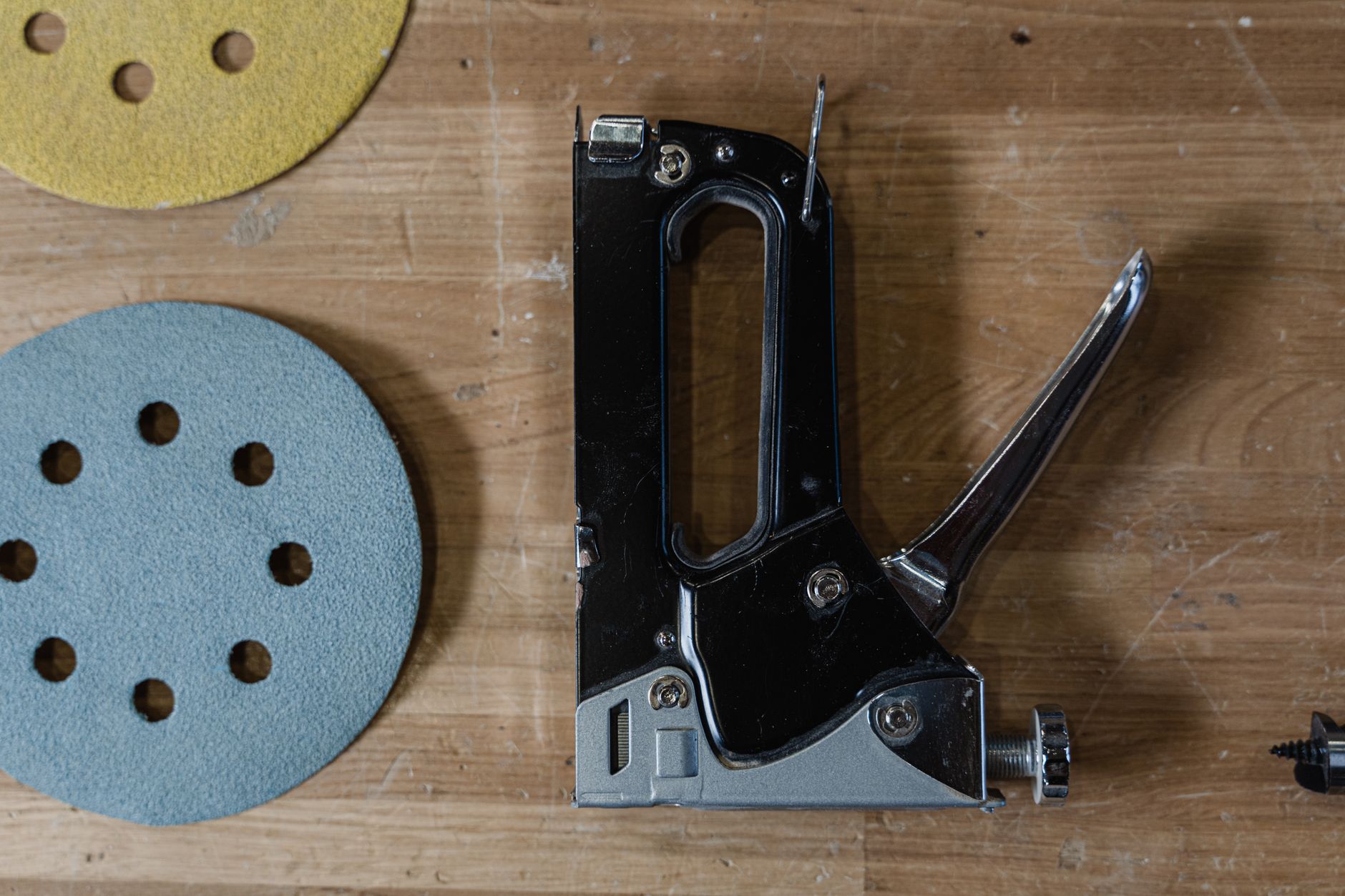
Abrasive changes are where many projects lose their discipline. Plants often focus on robot reach and forget that sanding media is the actual cutting interface. Grit sequence, pad hardness, disc diameter, dust loading, and wear criteria all need a recipe. If operators swap discs by feel alone, the process drifts back toward craft work and the person returns to the dirty part of the job.
The better pattern is to treat media change as a planned service task. Put the change point at a safe stop or outside the active zone, keep extraction running during removal, and trigger changes from a mix of part count, finish drift, force signature, spindle current, and vacuum-flow trend. Spent discs should go straight into contained waste, and the restart checklist should confirm the right grit, the right pad, and the right recipe before the next panel enters.
Where dust collection wins or loses the project
Dust collection is not a background utility here. It is part of the process. NIOSH testing on sanding controls found average dust levels 11 times lower when a ventilated sander was used instead of an unventilated one during body-filler sanding. In other sanding studies, vacuum controls reduced airborne dust 80 to 97 percent, and a two-hood local exhaust setup cut personal airborne fiber concentrations by more than 99 percent during disc and belt sanding.
Those numbers explain why cobots help. A robot repeats tool angle, standoff, and path far better than a person, so the shroud and pickup stay where capture works best. Design the cell around point-of-generation collection, short hose runs, clean filter monitoring, and enough airflow at the actual contact patch, not just at the main duct.
- Shroud the sanding head so capture starts at the abrasive, not across the room.
- Use local exhaust close to the work and verify airflow at the tool, not only at the collector.
- Add enclosure panels, curtains, or a draft direction that keeps the operator out of the plume.
- Ban dry sweeping and compressed-air cleanup. Use vacuum housekeeping and wet methods where panel chemistry allows.
How do you verify finish quality without re-exposing people?
The quality trap in sanding automation is rework. If every tenth panel still gets hand-blended, the exposure comes back through the side door. Good cells use layered checks: recipe confirmation before the cycle, live monitoring of force, current, cycle time, and vacuum status during the pass, then objective finish confirmation after the pass. A quick profilometer check on sampled parts can anchor the process, while vision can flag resin flash, pinholes, scratches, or missed zones.
That approach keeps humans out of the dust for most decisions. Inspectors do not need to hover beside an active tool. They review signals, examine the panel at a separate station, and send only the true exceptions to rework. Because the data is tied to a specific panel, abrasive lot, and recipe, the plant can tune the process without reopening the same exposure problem every shift.
What makes a sanding cell safe around people?
Safe cell design starts by rejecting a common misconception: collaborative does not mean fence-free. OSHA's robotics guidance points employers to a documented risk assessment and to safety functions such as protective stop, force limiting, speed limiting, and space limiting for collaborative applications. For sanding, the risk picture includes more than arm motion. The abrasive itself is a hazard, and so are pinch points between the arm, fixture, and panel, plus dust release during access.
During teaching, OSHA calls for reduced speeds of 10 inches per second or less. In normal operation, access control, clear floor markings, reachable emergency stops, and lockout for maintenance and abrasive changes are not optional details. They are what make the cell genuinely safer than the manual job.
- Interlocked gates or presence-sensing devices for any access into the restricted space.
- A dedicated inspection or media-change station outside the active sanding envelope.
- Protective stop and reduced-speed teach mode for setup tasks.
- Lockout and restart procedures that cover the robot, the sander, and the dust collector.
- Acceptance testing that measures real contact forces and checks capture performance on actual panels.
Why integration discipline matters as much as the arm
This is where integration discipline matters more than the arm brand. Composite sanding cells depend on the interaction among panel fixturing, force control, dust extraction, housekeeping, finish metrology, operator training, and service response. A plant can buy hardware and still miss the outcome if those pieces are split across too many vendors.
Service Robot Co. is built for that full lifecycle. We are a full-service, OEM-neutral commercial robot integrator for U.S. businesses, and we pick the right robots across manufacturers, then finance, deploy, integrate, train, and service every unit through a nationwide U.S. engineer network. For a plant evaluating cobot leasing for manufacturing, collaborative robot arm leasing, robot leasing for business, or a phased deployment no shutdown, that one-partner model matters. It means one team for robot deployment and integration, one robot maintenance service plan, and one path for on-site dispatch and remote triage when the cell needs attention.
In practice, the first step is usually a process review, not a quote. Panel size variation, resin and filler chemistry, current dust controls, abrasive consumption, finish spec, and rework rate all shape the cell. Some lines start with a cobot lease pilot on one panel family. Others prefer robot leasing for business, manufacturing plant robot leasing, or monthly payment programs once the sanding recipe is stable. The right entry point is the one that lowers exposure without adding operational drama.