Key takeaways
- Cobots work best on metered, singulated e-waste, not an uncontrolled heap of tangled devices.
- Pick confidence should govern action: sort clear items, divert uncertain ones, and stop for suspected hazards.
- Battery detection requires layered controls because vision alone cannot prove that a cell is safe.
- Human exception handling is part of the production system, not evidence that automation failed.
Where do cobots earn their place in an e-waste line?
Vision-guided cobots can separate exposed batteries, circuit boards, reusable modules, and other valuable components from a controlled e-waste stream. The sound operating model is selective automation: the robot handles recognizable, repeatable picks while uncertain, damaged, or hazardous objects move to trained staff.
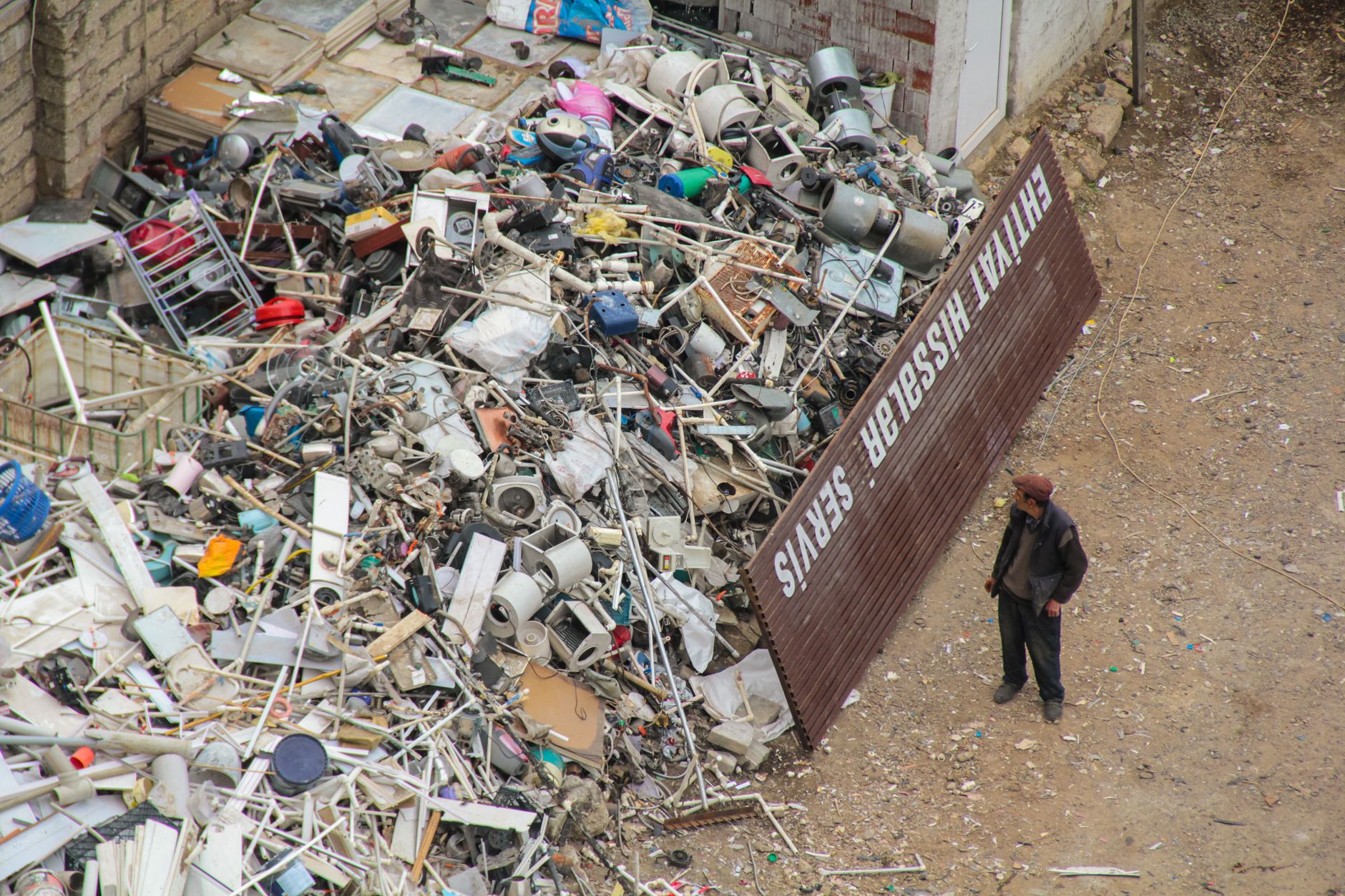
That distinction matters because discarded electronics arrive scratched, dirty, nested, partly dismantled, and mixed across generations. A cobot should usually work after coarse screening and feed preparation, where items can be presented in a shallow, illuminated layer. It is not a mechanical substitute for every manual sorter or a machine that should dig blindly through a deep pile.
The scale of the material opportunity is substantial. According to the ITU and UNITAR Global E-waste Monitor 2024, the world generated 62 million tonnes of e-waste in 2022, but only 22.3 percent was documented as formally collected and recycled. The report projects generation reaching 82 million tonnes in 2030.
What must the vision system actually recognize?
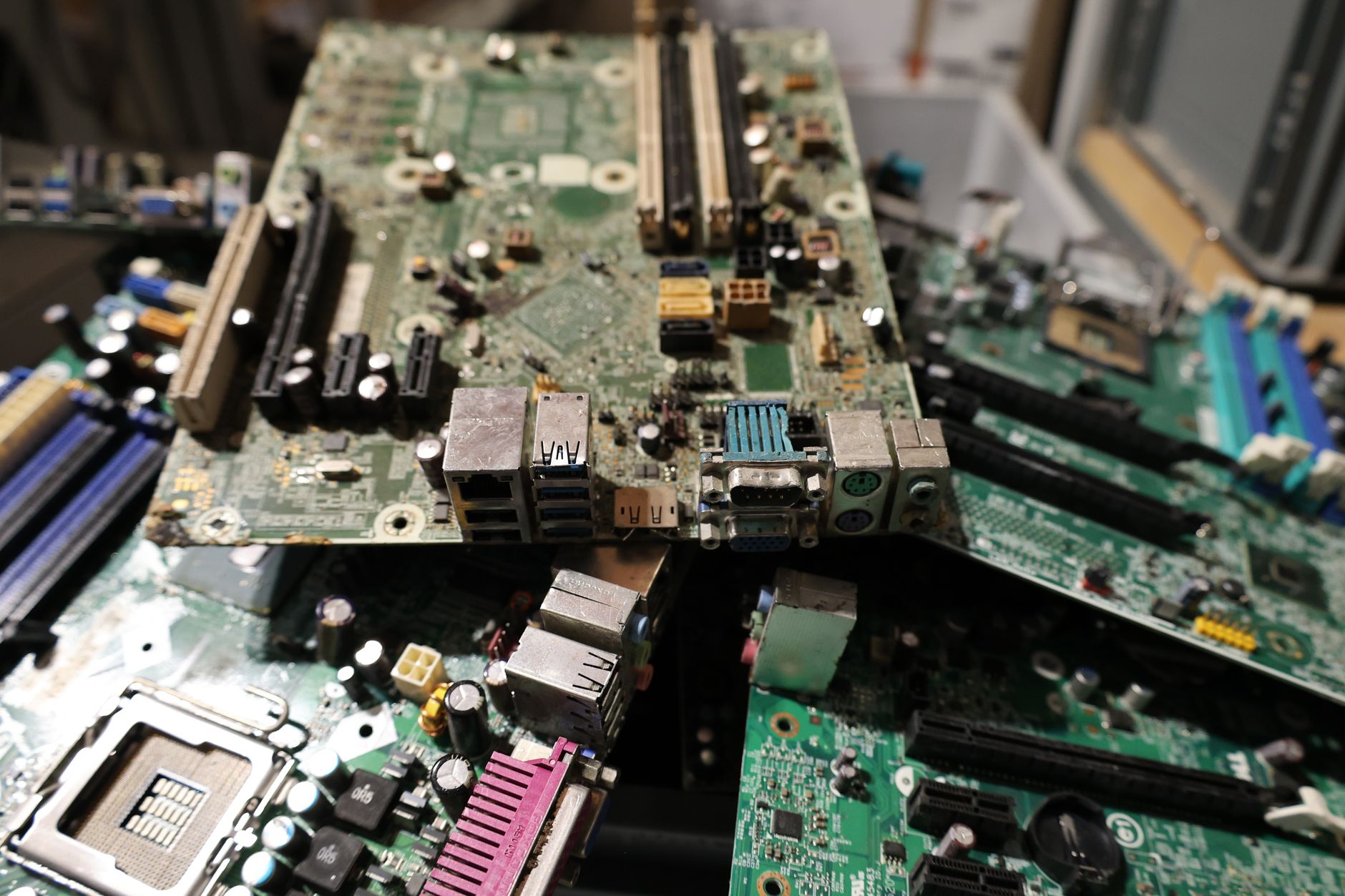
The camera must do more than label an object as electronic scrap. A useful perception stack separates three questions: what the item probably is, what condition it appears to be in, and where it can be grasped without crushing, puncturing, or dropping it.
Color and depth images can reveal board outlines, battery formats, connectors, heat sinks, drives, memory modules, and reusable assemblies. Controlled lighting reduces glare from metal shields and glossy housings. Depth sensing helps distinguish an exposed component from one partly buried beneath cables or broken plastic.
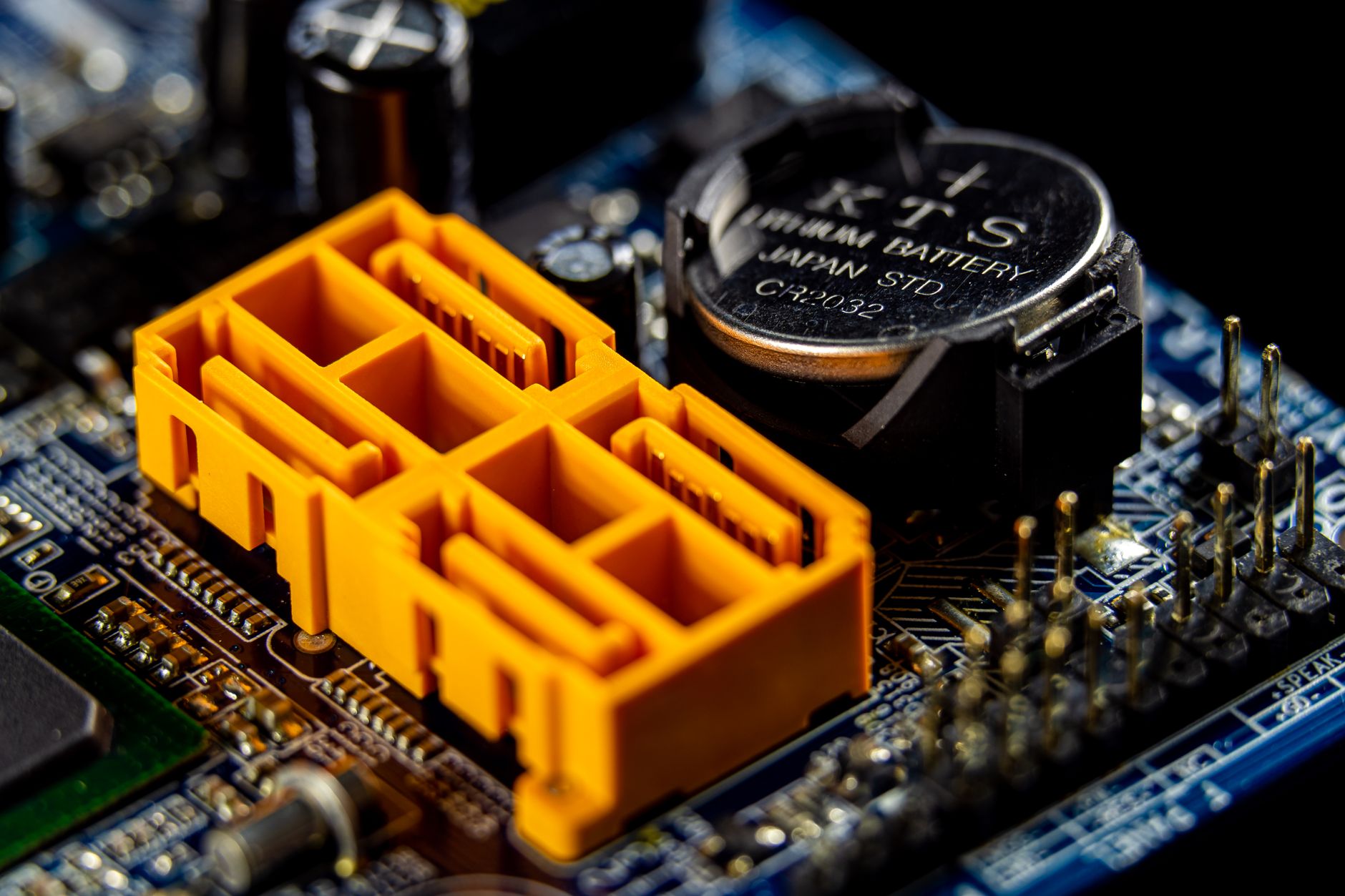
Condition deserves its own classification. A clean circuit board, a board carrying a battery, and a jagged board fragment create different handling requirements. Likewise, a cylindrical cell, a swollen pouch, and an unidentified silver packet should not share the same pick policy merely because a model assigns all three to the battery family.
Training data must reflect the plant's real inbound mix. Images from pristine products will not represent dust, missing labels, unusual orientations, occlusion, deformation, or locally common device types. New material should be sampled continually so model drift becomes visible before recovery quality deteriorates.
How should pick confidence control robot behavior?
A confidence score is not proof that a classification is correct. It is an input to a plant decision rule. The threshold for an ordinary plastic housing can be lower than the threshold for an object that might be an energized or damaged battery because the consequences of a false pick are radically different.
NIST's AI Risk Management Framework calls for performance assessment with uncertainty measures, benchmarks, reporting, and clearly differentiated human oversight roles. Applied to e-waste, that means the cell needs explicit responses for different confidence bands rather than a single pick or no-pick cutoff.
- High confidence and approved grasp: pick the item into its assigned recovery container.
- Intermediate confidence: divert it to an exception tray with the image, predicted class, and reason for review.
- Low confidence or conflicting sensor evidence: leave the object untouched, flag its location, and request intervention.
- Suspected battery damage, heat, smoke, or leakage: stop the affected process under the site's emergency procedure.
How should hazardous items be handled?
Lithium-ion batteries are the defining hazard. The U.S. Environmental Protection Agency documented more than 240 fires caused by lithium-ion batteries at 64 waste-management facilities between 2013 and 2020. Crushing, puncture, conductive contact, and an unsuitable drop into a mixed bin can turn a classification error into a serious event.
Battery control should therefore begin upstream. Remove obvious devices and loose cells before aggressive shredding, meter the remaining feed, and give the cobot low-force grasp strategies with controlled drop heights. Suspect items need a designated noncombustible quarantine route and a response plan developed with the site's fire-protection and environmental personnel.
Thermal sensing can identify an item already warmer than its surroundings, but a normal temperature does not certify a battery as safe. Vision also cannot reliably reveal every internal defect. Swelling, torn wrappers, corrosion, leakage, unusual geometry, and low classification confidence should all bias the system toward no-touch handling.
The EPA says lithium-ion batteries and devices containing them should not enter ordinary trash or municipal recycling. Its federal universal-waste guidance also distinguishes small and large quantity handlers at 5,000 kilograms of total universal waste accumulated on site, while warning that state rules can differ. The cell's routing logic, containers, labels, and records must match the facility's actual regulatory status.
Human exception handling is a production function
A good exception station makes ambiguity cheap to resolve. The operator should see the robot's image, proposed class, confidence, grasp point, and reason for deferral. They can then approve a pick, assign a new destination, isolate the object, or stop the line without reaching into an active robot space.
Exceptions should arrive in a controlled queue, not as an alarm torrent. Set ownership by shift, define response targets, and distinguish a routine unknown object from a battery alarm or mechanical jam. If staff repeatedly encounter the same adapter, enclosure, or battery format, those decisions become candidates for new training examples and revised handling rules.
Track overrides as operating data. A rising rate of battery false negatives may call for immediate intervention, while more benign unknowns may indicate a changed supplier mix or poor lighting. The goal is not zero human judgment. It is to reserve human judgment for the cases where context and caution carry the greatest value.
What makes the physical cell dependable?
The arm is only one element. A practical cell combines feed metering, singulation, stable lighting, calibrated cameras, an end effector suited to irregular objects, verified discharge chutes, full-bin detection, and traceable controls. Vacuum may suit flat boards, while compliant fingers may handle housings. Sharp fragments and loose wires can defeat either approach unless the feed is conditioned.
Test with representative lots that include the ugly tail of the distribution: black plastics, reflective shields, nested parts, tangled cords, leaking devices, and objects near payload or reach limits. Measure completed picks, failed grasps, drops, bin contamination, exception volume, recovery yield, and time lost to clearing the cell.
A collaborative arm does not automatically make the application safe for close human access. OSHA's robotics guidance says each application needs a documented hazard analysis and risk assessment. A sharp workpiece, pinch point, gripper, conveyor, or ejected fragment may require guarding or presence sensing even when the arm can limit speed and force.
Which numbers establish a credible business case?
Throughput alone can reward the wrong behavior. A cell that makes fast, careless picks may contaminate board grades, damage reusable modules, or send a battery toward a shredder. The business case should value recovered material, purity, avoided rework, safer exposure patterns, uptime, and the amount of skilled labor redirected to diagnosis and exceptions.
The Global E-waste Monitor reports that 2022 e-waste contained an estimated 31 million tonnes of metals, 17 million tonnes of plastics, and 14 million tonnes of other materials. Those global figures do not predict one plant's revenue, but they show why accurate separation and reuse matter. The EPA also notes that reuse, donation, and recycling conserve the metals, plastics, and glass embedded in electronics.
Build the financial model from weighed plant trials. Record inbound composition, recoverable mass by grade, saleable reuse yield, labor minutes per tonne, consumables, planned maintenance, false-sort cost, and downtime. Compare those observed results with the same line operating manually. A universal payback claim is less useful than a model grounded in the facility's contracts and material mix.
How should a plant move from pilot to production?
Begin with a bounded pick mission, such as exposed batteries and high-value circuit boards on one prepared stream. A commercial robot pilot program should run representative material across multiple shifts and operators. Acceptance criteria should include hazard misses, recovery purity, grasp reliability, exception workload, safe-stop behavior, and restart procedures.
Service Robot Co. acts as an OEM-neutral, full-service commercial robot integrator for U.S. businesses. That allows the cell to be specified around the waste stream rather than a predetermined machine. The same partner can assess the site, select equipment across manufacturers, complete robot deployment and integration, train the crew, and service the installed unit through a nationwide U.S. engineer network.
Procurement can also be matched to operational uncertainty. A collaborative robot arm lease, cobot leasing for manufacturing, financing, lease, or purchase structure can be evaluated after the pilot establishes real performance. Monthly payment programs and RoboCare™ service in the operating plan may help a plant preserve capital while keeping accountability with one vendor for the whole lifecycle.
Scale only after the exception process and safety controls hold up under normal variability. Add classes, shifts, or cells in measured stages, then keep reviewing model performance as inbound products change. That discipline turns a promising demonstration into a maintainable sorting operation.
Frequently asked questions
Want a robot working for you?
Tell us the job and the site. We will recommend the robot, quote the lease, and keep it serviced.